Post Construction Cleaning Definition: Scope and Steps
Post construction cleaning is the final clean after building or renovation work is finished and before a space is occupied, inspected, handed over, or opened for use. It removes fine dust, residue, and leftover debris that a broom never quite catches.
You're standing in a room that looks finished. The floors are down, the paint is dry, and the contractor's truck is gone. Then you drag a hand along the window sill and it comes away grey. The mirror has a faint film, and the top of the door trim still holds a white line. That is the moment a newly finished house in Kennesaw or Acworth stops feeling like a celebration and starts feeling unfinished.
A regular wipe won't fix it. The dust left by drywall sanding, cabinet install, and flooring work is finer than household dirt, and it hides on surfaces you don't touch every day. The post construction cleaning definition is about that gap: turning a job site into a space you can live in, show, or open.
Table of Contents
- What Post Construction Cleaning Covers and Leaves Out
- How It Differs From Deep and Move-Out Cleaning
- The Three Phases From Debris to Handover
- Room-by-Room Checklist for a Finished Space
- Safe Products and When to Call a Specialist
- Timelines, Cost Drivers and West Georgia Conditions
- Decide Between DIY and a Professional Clean
What Post Construction Cleaning Covers and Leaves Out
Think of a hotel that just finished a hallway renovation. Guests don't check in the hour the crew packs up. Someone still has to make every room usable and presentable, from the sill to the glass. Post construction cleaning is that final pass. Interim construction cleaning is different. It happens while the project is underway, so walkways stay passable and debris doesn't pile up in the work zone.
Crews often haul the big stuff. What they leave is the film. Fine dust settles on trim, sills, light fixtures, cabinet tops, vent covers, and glass. A maintenance visit aimed at crumbs and fingerprints usually misses that layer.
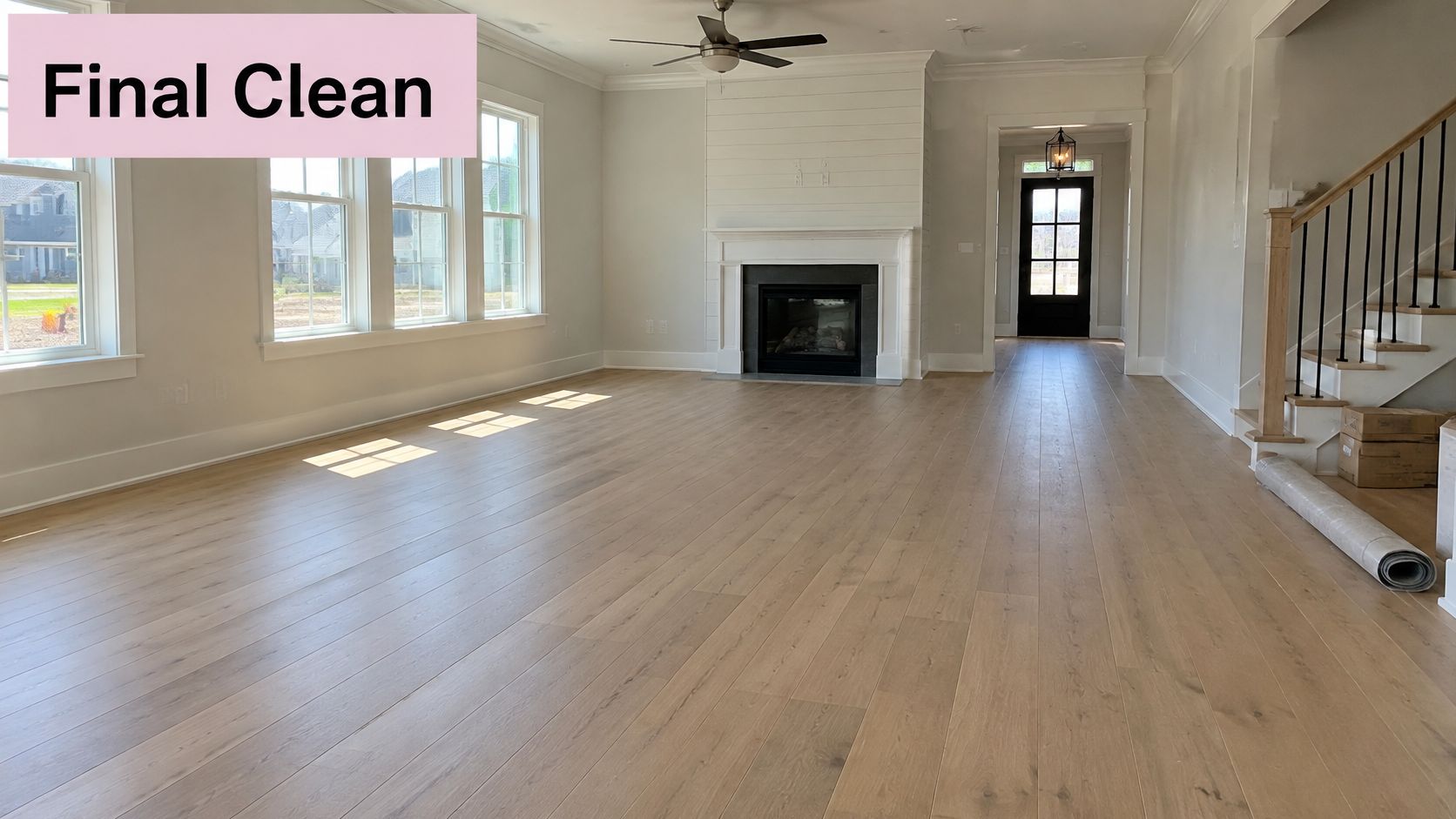
A Kärcher professional guide places this work between project completion and occupation, with the aim of making the premises ready for their intended use. The same idea lines up with OSHA's construction housekeeping rule, 29 CFR 1926.25, which calls for garbage and waste to be removed at frequent, regular intervals. Builders who already treat job site cleanliness for homeowners as part of the remodel make that final pass faster, because you're not starting under a pile of offcuts.
Scope at a glance
| Area | Included | Outside the scope |
|---|---|---|
| Floors | Vacuuming, sweeping and mopping of accessible floors | Subfloor repair or refinishing |
| Trim, sills and fixtures | Fine dust removed from trim, sills, light fixtures and cabinet exteriors | Replacing damaged trim or fixtures |
| Kitchens and bathrooms | Detail cleaning, fixtures, mirrors and surface wipe-downs | Plumbing, appliance or tile repair |
| Glass and windows | Mirrors, glass, doors, frames and reachable windows | Exterior window washing at height |
| Leftover debris | Sweeping up fine debris, packaging and scraps | Hauling out large demolition waste |
| Vents and registers | Wiping accessible registers and vent covers | Duct cleaning or HVAC repair |
| Suspected hazards | Ordinary construction residue only | Lead, asbestos or mold remediation by qualified specialists |
Practical rule: Run a finger along a door ledge or window sill. If grey film appears, the job isn't finished.
We start this work after contractors have completed the project and removed construction debris. The focus is fine dust on floors, accessible surfaces, fixtures, cabinet exteriors, kitchens, bathrooms, mirrors, windows, and finishing details. Repair, haul-away of demolition piles, and hazard remediation stay with the trades or a specialist.
How It Differs From Deep and Move-Out Cleaning
| Service | Main purpose | Dust and residue focus | Typical trigger |
|---|---|---|---|
| Post construction cleaning | Readiness after building work | High: fine dust, film and leftover debris | Renovation, new build or turnover after trades finish |
| Deep cleaning (Top-to-Bottom Deluxe) | Detailed refresh of a lived-in home | Low to moderate: built-up grime and buildup | First visit, seasonal reset or special occasion |
| Move-in or move-out cleaning | Final clean for an empty or nearly empty home | Moderate: kitchens, baths, appliances and closets | Lease turnover, sale or listing |
| Basic maintenance cleaning | Routine upkeep of a clean home | Low: surfaces and trash | Weekly, biweekly, every three weeks or monthly |
The question that decides the booking is simple. Did this dust come from construction? If the answer is yes, a lived-in deep clean or a routine visit is the wrong tool, even when the same counters and floors get wiped.
Deep cleaning, our Top-to-Bottom Deluxe, is for a home people already live in. It goes after built-up grime for a first visit, a seasonal reset, or a holiday when family is coming. Cooking film and soap scum are the usual targets, not drywall powder above the cabinets.
Move-in and move-out cleaning prepares an empty or nearly empty home for a listing, a lease turnover, or a new occupant. Kitchens, baths, cabinets, appliances, closets, and baseboards get the attention. Appliance interiors are included when they're arranged ahead of time. Minor household residue is incidental, not the reason for the visit.
Basic maintenance keeps a clean home clean on a weekly, biweekly, every-three-weeks, or monthly rhythm. Trash goes out with fresh liners, cobwebs come down, and counters, sinks, and faucets get cleaned. It assumes the heavy film is already gone.
A sequence that holds up
Many of the same surfaces appear in all four services. The source of the soil is what changes the plan.
- Post construction cleaning first, once the trades are done and bulk debris is gone.
- A deep clean or a move-in clean next, if you still want a lived-in refresh or an empty-home handover after that residue is gone.
- Recurring maintenance after you occupy, so the house doesn't slide backward.
A Woodstock rental can need more than one of these in the same year. Say the landlord renovates in spring, lists in summer, then places a tenant who wants biweekly upkeep. Those are separate bookings. Folding a remodel into a maintenance visit leaves both of you working from the wrong list.
The Three Phases From Debris to Handover
Cleaning out of order puts dust back on surfaces you already finished. Our detailed flow uses 12 steps in three phases: Prep (steps 1 to 4), Clean (steps 5 to 10), and Finish (steps 11 and 12).
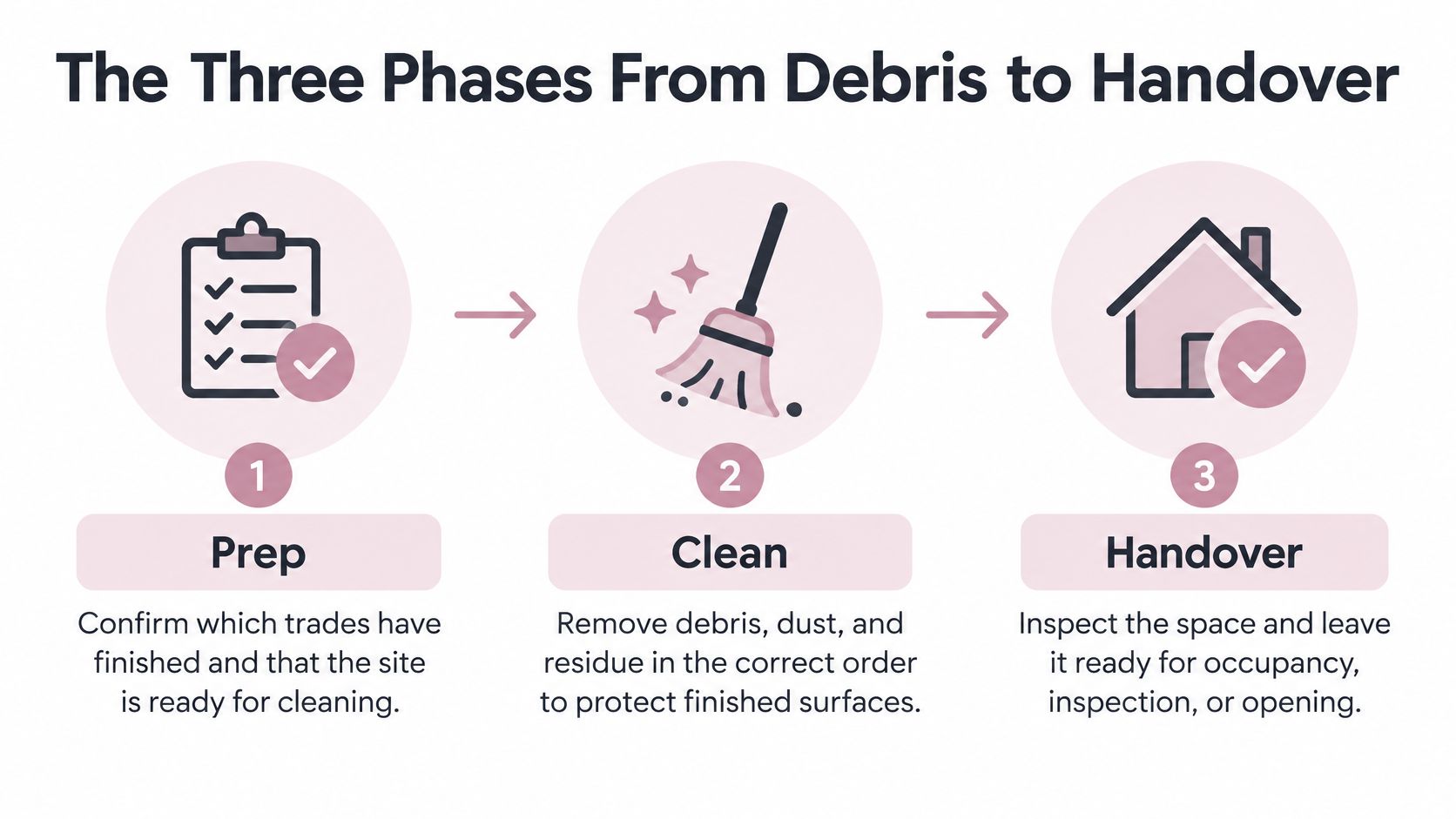
Prep
In Prep, we plan and prep supplies, declutter surfaces, empty trash with fresh liners, and pretreat bathroom and kitchen surfaces.
- Confirm the trades are finished and the site is safe to enter. Wet paint, open electrical work, and active cutting mean the clean should wait.
- Clear large debris the contractor left in corners, and set fresh liners in the bins so scraps don't get walked back through the house.
- Declutter surfaces so boxes, drop cloths, and loose hardware aren't blocking the wipe.
- Pretreat kitchens and baths where grout haze, adhesive, and sticky film are sitting. A short dwell time beats scrubbing a dry smear later.
Clean
The Clean phase is high and low dusting, hand dusting and wiping, wash and scrub, dry shine and polish, vacuuming, and mopping with the solution suited to the flooring.
- Dust high first: cobwebs, ceiling corners, fixture tops, and vent covers.
- Hand dust and wipe baseboards, doors, frames, and switches. Keep moisture out of electrical openings.
- Wash and scrub kitchens and bathrooms, including fixture bases.
- Dry shine glass, mirrors, and polished surfaces after the dusty edges are done.
- Vacuum with a HEPA-filtered machine instead of dry sweeping.
- Damp mop floors last, and rinse the cloth or change the water often so grey water doesn't travel into the next room.
The EPA Renovate Right booklet specifies a two-stage sequence for renovation dust: first a HEPA vacuum to remove dust and debris from all surfaces, then wet wiping and wet mopping with plenty of rinse water. Dry sweeping or an ordinary vacuum can redistribute fine particles instead of removing them. That order matters after drywall, flooring, cabinets, paint, or a remodel in Kennesaw, Acworth, Marietta, or a nearby community space, because fine dust settles past the immediate work zone.
Finish
- Walk every room looking for missed film, and lightly check whether dust transfers onto a clean cloth.
- Note any area that needs a follow-up visit, especially if a late trade is still scheduled.
A finished room at handover has no loose dust on ledges, no streaks on glass, clean reachable registers, and floors that don't show a construction film under ordinary light.
The cleaner reviews the completed work before leaving the home.
Room-by-Room Checklist for a Finished Space
| Area | Standard checklist items | Often missed |
|---|---|---|
| Ceilings and high walls | Cobwebs, dust on fixture tops and vent covers | Top of door frames and crown trim |
| Baseboards and doors | Dust and residue removed from trim, frames and knobs | Behind doors and in corners |
| Windows and glass | Interior glass, tracks and sills wiped | Window tracks where grit collects |
| Floors | Vacuumed, then damp mopped | Edges and toe kicks under cabinets |
| Kitchens | Cabinet exteriors, appliance fronts, sink and faucet | Top of upper cabinets |
| Bathrooms | Tile, grout haze, tub, toilet, mirror and faucet bases | Grout lines and the base of faucets |
| Closets and doors | Shelves, doors and hinges wiped | Hinge side of doors |
| Vents and registers | Accessible registers and grilles wiped | Ductwork beyond reach needs inspection, not wiping |
Use this at the final walkthrough, when you, a landlord, or a property manager can see each row before the keys change hands. Our post construction cleaning checklist is the same kind of list you can mark before you book.
Ceilings and high walls collect cobwebs and fixture dust that a floor-level glance never catches. The usual miss is the top of door frames and crown trim, where sanding dust rides the air and sticks.
Baseboards and doors need residue off the trim, frames, and knobs. People skip the strip behind an open door and the inside corners, then wonder why a white line shows up in photos.
Windows and glass should include interior glass, tracks, and sills. Grit lives in the track. If you only polish the pane, the next time someone opens the window that grit smears the glass again. After indoor painting by SuperiorPRO or any fresh coat, wait until the painter says the finish can be wiped, and keep cleaners off uncured paint.
Floors are vacuumed, then damp mopped. Edges and the toe kick under cabinets hold a ridge of dust the mop head never reaches unless someone works it on purpose.
Kitchens cover cabinet exteriors, appliance fronts, the sink, and the faucet. The top of the upper cabinets is the classic miss. Installers stand there, and the powder stays until someone climbs up.
Bathrooms need tile, grout haze, the tub, the toilet, the mirror, and faucet bases. Grout lines and the metal base of the faucet trap a paste that looks like a stain if it dries. Permanent grout discoloration is an install issue, not a wipe.
Closets and doors mean shelves, doors, and hinges. The hinge side stays dusty because the door is usually open while people clean the room.
Vents and registers get a wipe on accessible grilles. Dust inside the duct run is an inspection for an HVAC pro, not a cloth job. Cabinet interiors, oven or fridge interiors, and extra grout work are add-ons, and they have to be requested before the visit so the plan matches the house.
Safe Products and When to Call a Specialist
A lot of people assume any vacuum and a dry broom will do. They won't, if the dust might include hazardous particles. The EPA's guidance on reducing lead exposure at home calls for a High Efficiency Particulate Air (HEPA) vacuum on remaining surfaces and objects, including furniture and fixtures. Walls can be cleaned with a HEPA vacuum or a damp cloth. Non-carpeted surfaces get a damp cloth, and uncarpeted floors get a thorough mop. Where dust or debris from deteriorating lead-based paint is visible, EPA says to use only HEPA-filtered vacuums and not to dry sweep. Carpets and rugs should not be shaken or beaten.
That vacuum-then-wet order is the same sequence used through the clean itself. The point here is the tool and the stop line, not a second lesson in mopping.
Products that respect new finishes
We clean with natural, low-odor products, in the spirit of add sparkle and shine with your health in mind. The goal is a cleaner, fresher home with fewer harsh chemicals. That is not a medical promise, and a wiped surface is not a clearance test.
- Match the cleaner to the finish. Sealed hardwood, stone, and fresh paint don't all want the same liquid.
- Test a hidden spot before you use anything new on paint, stone, or sealed wood.
- Don't mix products. Two "gentle" bottles can still react.
- Ventilate with open windows or an exhaust fan, and keep children and pets off wet floors until they're dry.
Tell us about sensitivities or special-care needs before the visit. Those instructions are recorded in advance. Patios and garage aprons are a different job. If stamped concrete outside picked up slurry or clay, a guide on how to remove stains from stamped concrete is a better starting point than a household mop.
When cleaning should stop
Stop ordinary cleaning and get a qualified assessment first if you suspect lead paint dust, asbestos in older flooring or pipe wrap, mold, or heavy silica dust from cutting concrete or masonry. A maid visit handles ordinary construction residue on accessible surfaces. It does not remediate regulated contamination. Homes, offices, and amenity spaces around Kennesaw, Acworth, and Cartersville often involve older paint, sanding, drilling, or a lot of drywall, so ask the contractor what was disturbed before anyone wipes.
Does post construction cleaning remove hazardous contamination? No. It removes ordinary construction residue and fine dust from accessible surfaces. Suspected lead, asbestos, mold, or heavy silica dust needs a qualified assessment before any cleaning starts.
Why does dust keep returning after a clean? Settled fine particles get stirred by foot traffic, by HVAC systems pulling air through ducts that were open during the work, and by any trade still on site. Confirm the trades are finished and that the HVAC filter was replaced before the final walkthrough.
Timelines, Cost Drivers and West Georgia Conditions
A finished condo or a small rental usually moves faster than a whole house. Time grows with the number of rooms, the amount of fine dust, and how heavy the residue is. Finish carpentry, painting, and flooring each leave their own film, so ask whether those trades are still on site. Cleaning while they're working means paying for the same ledges twice.
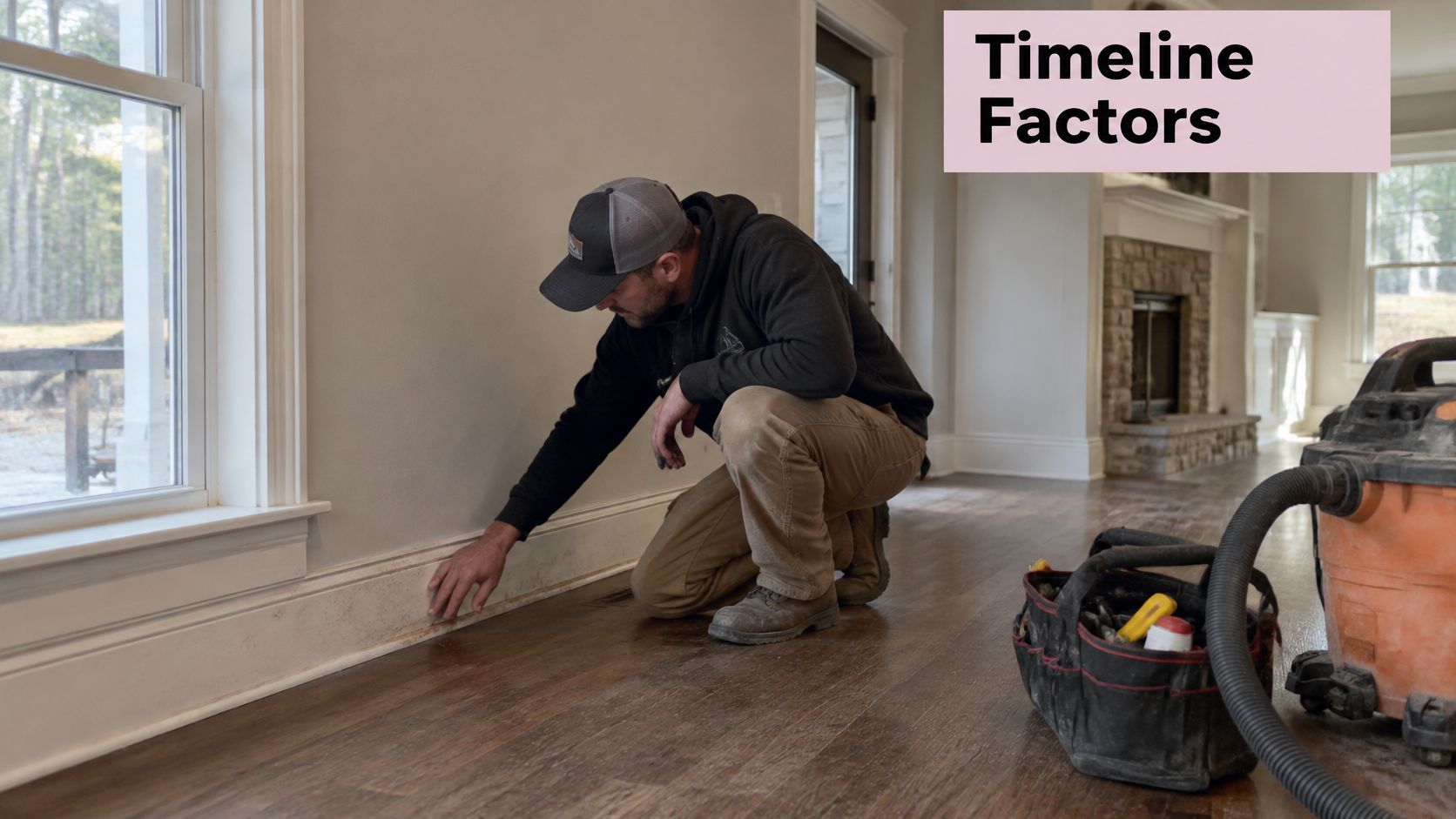
What changes the estimate
Cost is quoted after an estimate, so the number matches the actual space. The drivers we look at are straightforward.
- Square footage and how the rooms connect, including stairs.
- Bathrooms and kitchens, because fixtures take longer than open floor.
- How much residue is on site, from a light paint touch-up to widespread sanding dust.
- Access and parking, which matter on tight HOA streets.
- Floors that need special care, including new finishes that can't take a harsh cleaner.
- Whether an HVAC follow-up belongs with a technician after registers are wiped.
Our post construction cleaning cost guide walks through those scope factors without treating every house as the same job.
What West Georgia adds to the work
Local weather changes how the residue behaves. Georgia spring pollen and red clay tracked in during a renovation mean entries, thresholds, and floors need a slower pass. Clay smears if you wipe it dry. Pollen sticks to the same sills the drywall dust already coated.
Humid summers can leave residue tacky instead of dry and loose. OSHA's silica dust card explains that wet cutting reduces silica dust with a continuous stream of water on the blade, but the slurry has to be cleaned before it dries, because dried slurry can release silica dust back into the air. OSHA identifies shovels or a wet vacuum with a HEPA filter as suitable ways to remove that slurry. For a finished project in Kennesaw, Acworth, Powder Springs, or a nearby community, judge the clean by whether surfaces are ready for use, occupancy, or presentation, not by whether someone swept the visible dirt.
In Marietta, Woodstock, and Cartersville, many homes and HOA communities also set move-in and debris rules. Check those before you schedule, so a dumpster or a carpet crew isn't blocked on the same morning. Carpet cleaners and pressure washers often work beside this visit. Do the interior fine-dust work after heavy exterior washing, and before furniture comes back, so clay and overspray aren't walked onto clean floors.
Decide Between DIY and a Professional Clean
A small paint touch-up with no sanding may leave only light dust in one room. A whole-house remodel can coat several rooms in fine residue, making the choice less about effort and more about the amount of dust, the equipment available, and whether any hazards need assessment.
| Factor | Doing it yourself | Hiring a professional |
|---|---|---|
| Dust level | Light dust in one or two rooms | Heavy or fine dust across several rooms |
| Equipment | You need a HEPA vacuum and suitable cloths | Cleaners arrive with the supplies needed |
| Time | Your evenings or weekends, often over several days | A scheduled visit with a dedicated cleaner |
| Hazard screening | Stop if lead, asbestos or mold is suspected | Stop and call a specialist for assessment first |
| Consistency | Depends on your effort and experience | A cleaning professional follows the agreed service plan |
| Cost | Supplies plus your own time | Estimate based on the space and requested service |
DIY can suit a single room with light dust if you have a HEPA vacuum and suitable cloths, and there is no suspected lead, asbestos, or mold. Consider a professional clean when fine film covers several rooms, a handover date is fixed, or the work calls for more time than you can set aside. For help comparing providers, see this guide to choosing a post-construction cleaning company.
A vacuum purchase does not identify what dust contains. It also does not free up a weekend if you are working, packing, or preparing for a move.
What a scheduled visit looks like
Maid in America is locally owned, licensed, bonded, and insured, with a 4.9-star average across more than 400 public reviews. The cleaning professional arrives with supplies for the scheduled service, follows the agreed plan, and reviews the completed work before leaving.
Before booking, confirm that contractors have finished and removed construction debris. Then list the rooms and any requested details, such as baseboards, cabinet exteriors, or reachable windows. Ask what the service includes so the agreed scope is clear.
Maid in America also provides office and community amenity cleaning. Recurring residential cleaning can help maintain the home after the initial fine-dust cleanup, but it serves a different purpose.
For an estimate based on the space and your priorities, request one online or call the office. If fine film remains on the sills after renovation, Maid in America offers post-construction cleaning for homes, offices, and community amenities in West Georgia.


Maid in America provides reliable, personalized cleaning with natural products for homes, offices, and communities across West Georgia. Licensed, bonded, and insured, we’re locally and privately owned.
Get in touch with us today!
info@maidinamericaga.com