Deep Cleaning Definition: What It Includes and Costs
What does "deep cleaning" mean on a cleaning quote? It should describe a detailed, top-to-bottom removal of built-up dirt from more surfaces than a routine visit reaches. It does not by itself guarantee disinfection. Sanitizing a hard surface is a separate chemical result that reduces germs to a defined level, not a longer dusting session.
If the quote only says "deep" and the kitchen looks brighter afterward, has anything been defined? Plenty of homeowners around Kennesaw treat the phrase as a calendar event or as proof that germs are gone. Neither reading tells you which shelves, seals, or baseboards get hands-on work.
A useful deep cleaning definition names the rooms, surfaces, and tasks included. Hold any quote up to that list the way you'd check a grocery receipt. If the line isn't on the list, it isn't part of the clean, however thorough the visit sounds.
Table of Contents
What Deep Cleaning Means and What It Does Not Do
Say the counters in an Acworth kitchen already look fine after a weekly wipe. Routine cleaning is that reset: the counter, the sink, the stove top you can see. A deep clean is what happens when someone pulls the small appliances forward, washes the fridge-door seals, degreases cabinet fronts, and wipes the cabinet tops nobody has reached in a year.
Three traits set it apart.
Expanded scope covers the spots a maintenance visit usually skips: baseboards, cabinet faces, trim, light fixtures, accessible high surfaces, grout, and appliance exteriors. Physical removal means soil and grease leave the surface, rather than a shine sitting on top of film. A slower pace gives edges and corners real scrubbing instead of a pass with a damp cloth.
The rule to keep: a deep clean is defined by the rooms, surfaces, and tasks included, not by a label or a germ claim.
Cleaning, sanitizing, and disinfecting are different jobs
The U.S. Environmental Protection Agency defines cleaning as removing dirt and organic matter with soap or detergent. Sanitizing reduces bacteria to a specified safe level. Disinfecting uses chemicals to kill viruses and bacteria. The Centers for Disease Control and Prevention draws the same line: cleaning removes most germs, dirt, and impurities through water, soap, and scrubbing. Sanitizing reduces germs to levels public-health standards treat as safe. Disinfecting kills most germs.
An EPA technical resource puts numbers on the chemical claims. Sanitizing hard surfaces generally means at least a 99.9% reduction in germs. Food-contact surfaces may require a 99.999% reduction within 30 seconds. Disinfectants may be expected to inactivate 99.999% of germs on hard, nonporous surfaces when the product stays visibly wet for its labeled dwell time. The EPA published that comparison of the three terms on May 15, 2020. Those percentages describe product performance. They are not what "deep" means.
| Process | Goal | Benchmark | When it is needed |
|---|---|---|---|
| Cleaning | Remove dirt, soil, and organic matter | Soap or detergent with physical scrubbing | Routine upkeep and every deep clean |
| Sanitizing | Reduce germs to a level considered safe | At least a 99.9% reduction on hard surfaces | Food-contact surfaces and shared high-touch points |
| Disinfecting | Kill viruses and bacteria | Surface stays visibly wet for the label contact time | Specific illness or outbreak situations |
Dirt and organic film can block a chemical from reaching the surface, so cleaning comes first. A spray wiped off in three seconds didn't sit for its contact time, even if the bottle is the right one.
Practical rule: If disinfection is part of the job, the provider should name the product, the surfaces, and the contact time in writing. If they don't, you bought cleaning, and careful cleaning is still worth paying for.
Three questions about any germ claim
Before you accept a quote that talks about killing germs, ask:
- Which product: Is an EPA-registered disinfectant named, or is the claim just the word "deep"?
- Which surfaces: Are food-contact areas, bathrooms, or high-touch points listed, or is the promise for "the whole house"?
- What wet time: Will those surfaces stay visibly wet for the label's contact time, or is the plan spray-and-wipe?
Visible clean, less soil, sanitizing, and disinfecting are four different outcomes. A checklist of wiped trim isn't a kill rate. Clear written standards help here in other trades too. Pine Country Window Cleaning's service standards spell out what "above and beyond" includes on glass, which is the same habit you want on a house-cleaning quote: named tasks, not a vague upgrade.
Deep Cleaning Compared With Standard Cleaning
| Area | Standard cleaning | Deep cleaning |
|---|---|---|
| Baseboards | Wiped where visibly dirty | Dusted and wiped along the full length |
| Light switches and door frames | Quick wipe where reachable | Detailed wipe of switches, frames, and doorknobs |
| Ceiling fans and high dusting | Skipped or lightly dusted | Fan blades, light fixtures, and high cobwebs cleaned |
| Inside cabinets and appliance exteriors | Not included | Cabinet fronts and handles degreased; interiors when arranged in advance |
| Grout and tile | Mopped | Grout lines scrubbed and rinsed |
| Window sills and tracks | Not included | Wiped and cleaned |
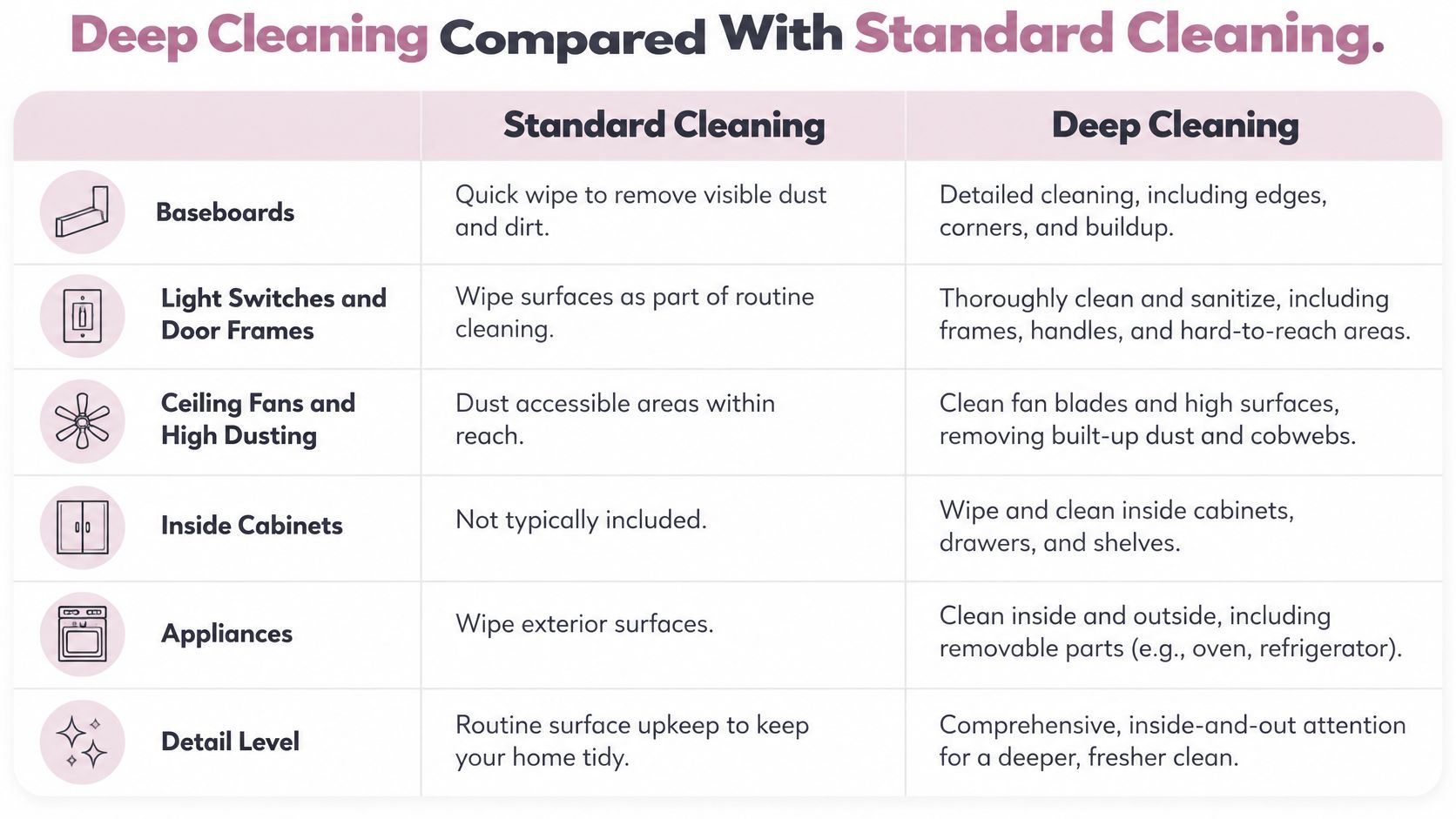
Every row follows one pattern. Standard cleaning keeps surfaces you already see fresh enough to use between visits. It fits weekly, biweekly, every-three-weeks, or monthly upkeep. Deep cleaning goes after edges, high dust, and film that collects over months. That work takes longer because it is hands-on, not because someone walks the same path twice.
A home that has gone a long stretch without a reset usually needs the wider pass before a recurring visit can keep up. Maintenance time isn't sized to clear a season of buildup off every fan blade and baseboard.
Picture a Marietta kitchen that looks fine after a standard visit. The counters shine. Grease can still sit on the range hood, the cabinet fronts, and the top of the fridge. Busy families and commuters in Marietta and Woodstock often live with that gap. Weeknights go to dinner and homework, so the edges wait.
If you can feel residue, start with the wider clean, then move to a recurring schedule so the next visit is maintenance instead of another rescue.
Deep Cleaning Checklist, Room by Room
Use this list to walk your own home, or to test whether a quote covers the same ground. Exterior film on siding and walkways is a different job. You can tackle indoor and outdoor spring cleaning on a separate outdoor list so the indoor scope stays about rooms, not the driveway.
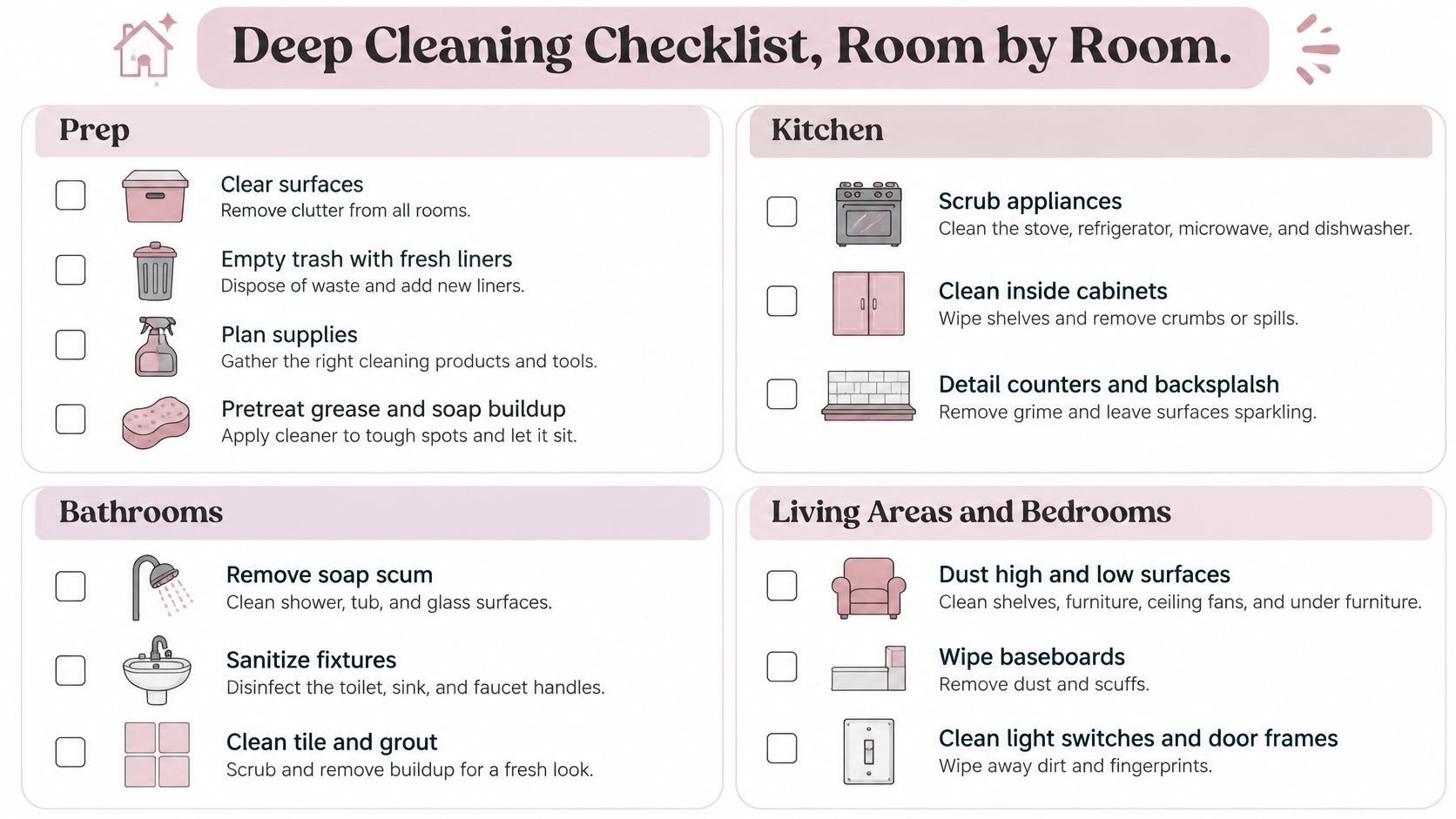
Before anyone scrubs
- Clear surfaces: Take papers, chargers, and small decor off counters so they can be wiped.
- Trash: Empty cans and drop in fresh liners.
- Pretreat: Loosen kitchen grease and bathroom soap scum before the main wipe, so you're not scrubbing dry film.
Kitchens and bathrooms
- Kitchen: Degrease the range hood and cooktop, wipe cabinet fronts and handles, clean the fridge front and top, wipe the microwave inside and out, clean the oven front, and reach behind appliances where you can.
- Bathrooms: Scrub the tub, shower walls, and grout lines. Clean the toilet base and the floor behind it. Wipe vanities and fixtures. Polish mirrors and glass.
Whole home, then floors
- High and trim: Dust ceiling fans, light fixtures, and vents. Wipe baseboards, door frames, light switches, and doorknobs. Take down high cobwebs.
- Living areas: Dust open surfaces, wipe electronics such as the TV and remotes, and vacuum upholstery and rugs.
- Bedrooms: Dust furniture and fans, vacuum carpets, sweep and mop hard floors, and make beds when you've asked for that.
- Floors last: Vacuum first, then mop with a solution matched to the flooring, including edges and corners.
- Finish: Clean reachable windows, sills, and tracks, polish mirrors, and do a last wipe of high-touch points.
Work high to low and dry before wet, so dust doesn't settle on a surface you already washed. Our entire house cleaning checklist lays the same rooms out if you want a printable version before you compare quotes.
Inside the oven, inside the fridge, interior window glass, and upholstery vacuuming are add-ons. Ask for them before the visit, not after the cleaner is already on the clock.
When a Deep Clean Makes Sense
| Trigger | Why it calls for a deep clean | Priority tasks |
|---|---|---|
| First visit to a home or new client | Condition and buildup are unknown | Full checklist, with a note of problem areas before work starts |
| Seasonal reset | Spring pollen, red clay, and humid-summer grime settle into edges | Baseboards, fans, switches, window tracks, and entry floors |
| Move-in or move-out | The home must be ready for a new occupant or listing | Kitchens, bathrooms, cabinets, closets, and floors |
| Post-construction | Fine dust and job residue remain after work ends | Fixtures, sills, cabinet exteriors, and floors |
| Holiday hosting | Guests will use shared surfaces and bathrooms | Kitchen, bathrooms, living areas, and high-touch points |
In 2025, 80% of U.S. adults planned to participate in an annual deep-cleaning routine, according to the American Cleaning Institute's survey conducted by Wakefield Research among 1,000 adults. A national habit doesn't set your date. Your trigger does.
How a Georgia year actually dirties a house
Spring pollen and red clay don't stay on the mat. They grind into entry floors, window tracks, and the top of baseboards. Humid summers leave a dull film in bathroom corners and along the back of the cooktop. A reset before holiday hosting in Acworth or Kennesaw gives guests a kitchen and bath that were detailed on purpose, not just tidied that morning.
Move-out work is a different clock. Landlords, realtors, and property managers need kitchens, baths, cabinets, and closets ready for a showing, often in an empty or nearly empty house. Retirees aging in place often want that same wider pass once or twice a year, then lighter visits so they aren't moving furniture every month. HOA clubhouses follow the hosting row: shared kitchens and restrooms take more traffic than a single family's Tuesday.
One wider clean sets the baseline. After that, weekly, biweekly, every-three-weeks, or monthly maintenance holds it. Our guide on how often you should deep clean your house walks through picking that interval without turning every visit into a reset.
If your situation matches a row in the table, the wider clean is the right first step. If none of the rows fit and the home is already in good shape, maintenance is the better buy.
What to Expect From a Professional Deep Clean
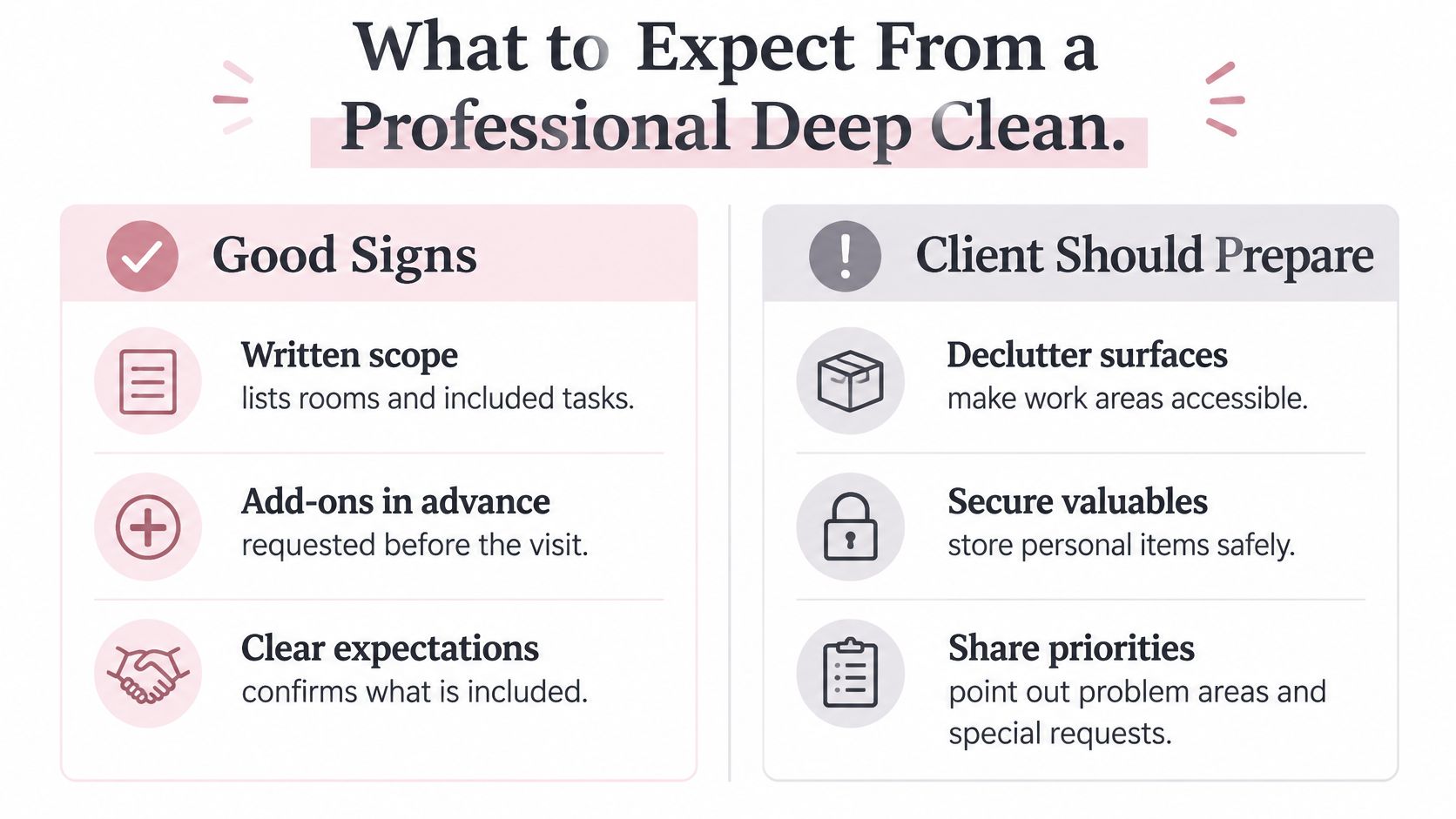
A fair visit is easy to recognize once the paperwork and the prep are both specific.
Good signs
- Written scope: Rooms and tasks are listed, and add-ons were requested before the day.
- Credentials you can check: The company is licensed, bonded, and insured, and cleaners are trained to a published checklist.
- Products you can ask about: Natural, low-odor solutions, with pet, child, or sensitivity questions answered before anyone arrives.
- Continuity: Supplies come with the cleaner. Where the schedule allows, one dedicated cleaner returns, and clients often learn that person's name.
- A time estimate before you book: You hear how long the home should take, not a shrug.
Red flags
- No written scope, or a quote given without anyone asking about size or condition.
- A sterility promise or a guaranteed germ kill with no product named.
- No proof of insurance or bonding, and a "deep clean" label that doesn't list tasks.
Rugs are a good test of that honesty. Rubber Ducky Rug Cleaning Birmingham's process treats fiber cleaning as its own process, which is the right instinct: upholstery vacuuming can be an add-on, but a full rug wash isn't a mop.
What you do before we arrive
Clear surfaces, secure valuables, flag problem areas, put pet bowls and toys where we won't have to guess, and tell us which rooms matter most. A written scope protects both sides, and it gives you something to walk afterward. Our Deluxe Top-to-Bottom cleaning page is one place that scope is spelled out in tasks rather than adjectives.
Ask three things before you book: Which rooms and tasks are on the written list? Which add-ons have to be requested now? How long should the visit take in this house?
Deep Cleaning Pricing and Time Estimates
| Pricing basis | Typical range | Note |
|---|---|---|
| Average professional residential deep clean | $200 to $400 | 2024 estimate reported by Homedit |
| Per square foot rate | $0.10 to $0.30 | Scales with home size and condition |
| Time on site | Longer than a routine visit | Square footage, clutter, condition, and add-ons set the hours; request the duration before you book |
In 2024, the estimated average price for professional residential deep cleaning was $200 to $400, with typical pricing of $0.10 to $0.30 per square foot, according to Homedit.
What the square-foot math looks like
Take a 2,000-square-foot house at that per-square-foot band. At $0.10 the figure is $200. At $0.30 it is $600. The spread is the point: size moves the price before anyone argues about "how deep" the label sounds. National averages are estimates. Rates around Kennesaw, Acworth, and Cobb County won't match a national midpoint on every house.
What else moves the number:
- Heavy grime or pet hair adds scrubbing time the square footage doesn't show.
- Post-construction dust means more than a damp mop. Fine dust has to be captured, not smeared.
- Move-out work with appliance detail, plus grout or upholstery, sits above a straightforward occupied reset.
- Add-ons such as inside the oven or fridge are separate tasks, so they belong on the quote as lines, not surprises.
There isn't a published fixed hour count for time on site. A wider clean takes longer than a standard visit, and the hours follow square footage, clutter, condition, and those add-ons. Ask for the expected duration before you book.
Compare two quotes only when both name the same rooms, the same tasks, and the same add-ons. A lower number that skips grout, sills, and cabinet fronts isn't the same job.
Book a Deep Clean With Maid in America
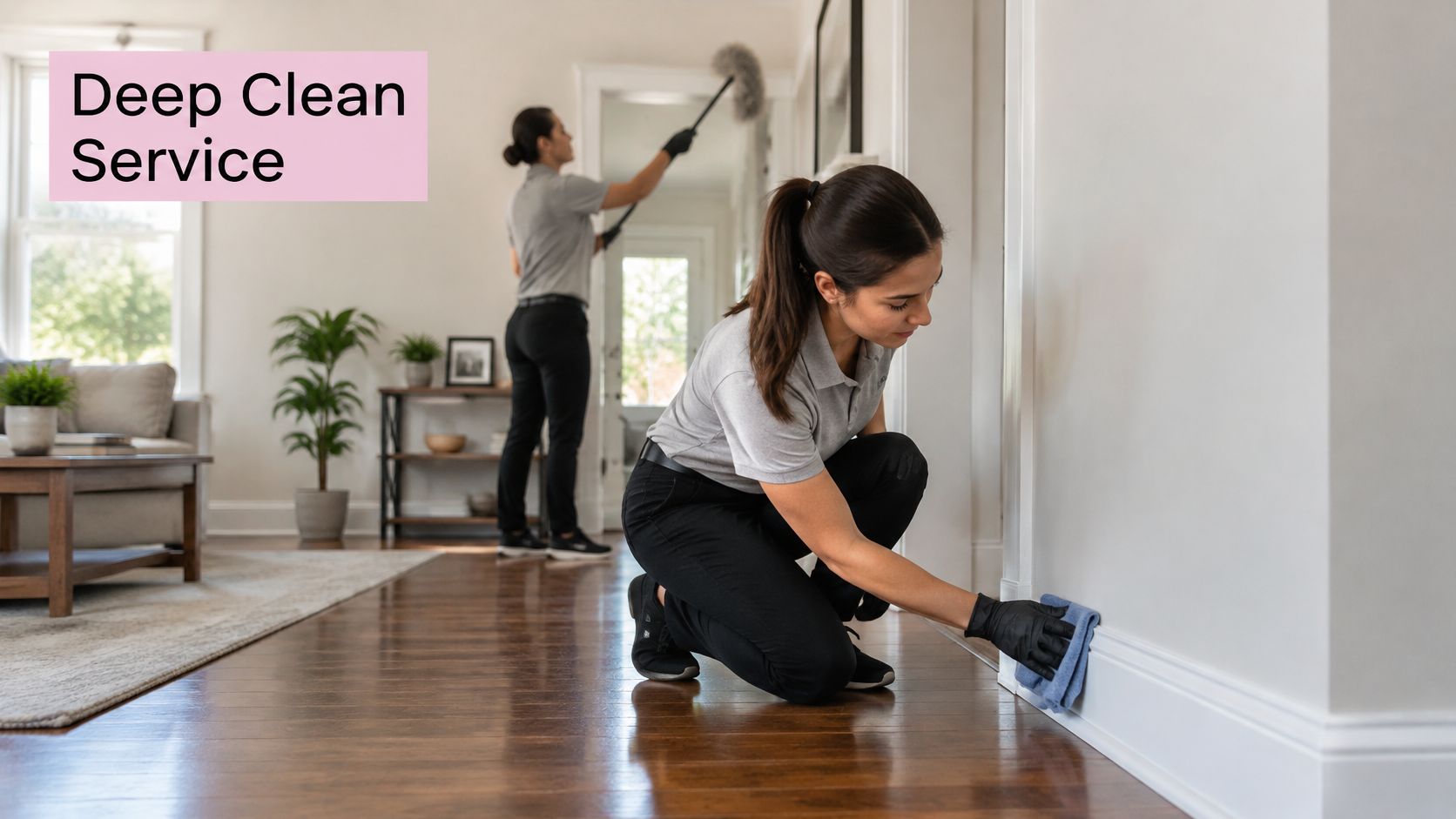
Maid in America is a locally owned cleaning company based in Kennesaw, Georgia, serving homes, offices, and community amenities across West Georgia. Service areas include Acworth, Kennesaw, Woodstock, Marietta, Dallas, Hiram, Powder Springs, Cartersville, and nearby communities in Cobb, Paulding, and Bartow counties. The team is licensed, bonded, and insured, and the business holds a 4.9-star average across 400+ public reviews.
Deluxe Top-to-Bottom Cleaning is the one-time detailed service for a first visit, a seasonal reset, a special occasion, or a home that needs more than routine maintenance. The visit follows 12 steps in three phases.
Prep, steps 1 to 4. The team plans and preps supplies, declutters surfaces, empties trash with fresh liners, and pretreats kitchen and bathroom surfaces. On your side, move valuables, mark the trouble spots, and mention pets.
Clean, steps 5 to 10. High and low dusting, hand dusting and wiping, washing and scrubbing, dry shine and polish, vacuuming, and mopping with the solution matched to the flooring. That is the room-by-room work: kitchens, baths, trim, fans, switches, and the edges a maintenance visit does not carry.
Finish, steps 11 and 12. Reachable windows, sills, mirrors, and a final wipe of high-touch points.
One-time Top-to-Bottom Deluxe Cleaning starts at $333 to $368. Home size and condition set the final price, along with any add-ons requested in advance. Inside the oven or fridge, cabinets, interior windows, grout, laundry, and dishes should be chosen before scheduling, and it helps to say which rooms matter most.
One useful habit before signing anything: ask which of those 12 steps appear on the written scope. A quote that names rooms but not tasks leaves the trim, the switches, and the edges open to interpretation. The same test works for add-ons. If inside the oven is not a line on the estimate, it is not in the visit.
The team brings the supplies, uses natural, low-odor products, and sends trained cleaners. When the schedule allows, the same cleaner returns so the routine stays personal.
Request a free estimate from Maid in America online and put the scope in writing, room by room.


Maid in America provides reliable, personalized cleaning with natural products for homes, offices, and communities across West Georgia. Licensed, bonded, and insured, we’re locally and privately owned.
Get in touch with us today!
info@maidinamericaga.com