Entire House Cleaning Checklist: 10 Room-by-Room Steps

A whole-house clean usually starts the same way. The kitchen still has yesterday's fingerprints on the refrigerator, the bathroom needs more than a quick wipe, the bedroom has dust on the fan and under the bed, and there's a deadline hanging over everything. Maybe guests are coming. Maybe you're moving. Maybe the renovation is done, but the dust is still settling on every flat surface.
The fastest way to lose time is to clean in the wrong order. Start high and work down. Clear access before anyone touches a cloth or vacuum. Then label each task by type: routine, deep-clean, or move-specific. That one step changes how you approach the job. A routine visit focuses on visible buildup and high-use surfaces. A deep clean goes after trim, vents, baseboards, and neglected corners. A move-in, move-out, or post-construction clean adds interior cabinets, appliance details, residue removal, and empty-room access.
That kind of sorting matters because most households already treat whole-home cleaning as more than quick touch-ups. In a 2023 spring-cleaning survey, common tasks included washing windows, cleaning behind furniture, cleaning appliances, washing bedclothes and linens, and scrubbing floors, with additional attention to fabrics, garages, curtains, and basements according to Frontdoor's summary of American Cleaning Institute survey findings.
If you want help with the heavier version of this process, Maid in America is one local option for West Georgia homes. The company handles one-time, recurring, deep, move-in/move-out, and post-construction cleaning, uses natural low-odor products, and brings supplies to appointments.
Table of Contents
1. Kitchen Deep Surface and Appliance Cleaning
The kitchen decides whether the house feels clean. If countertops are sticky, cabinet fronts have cooking film on them, and the range hood is collecting grease, everything else feels half-done even when the rest of the home is tidy.
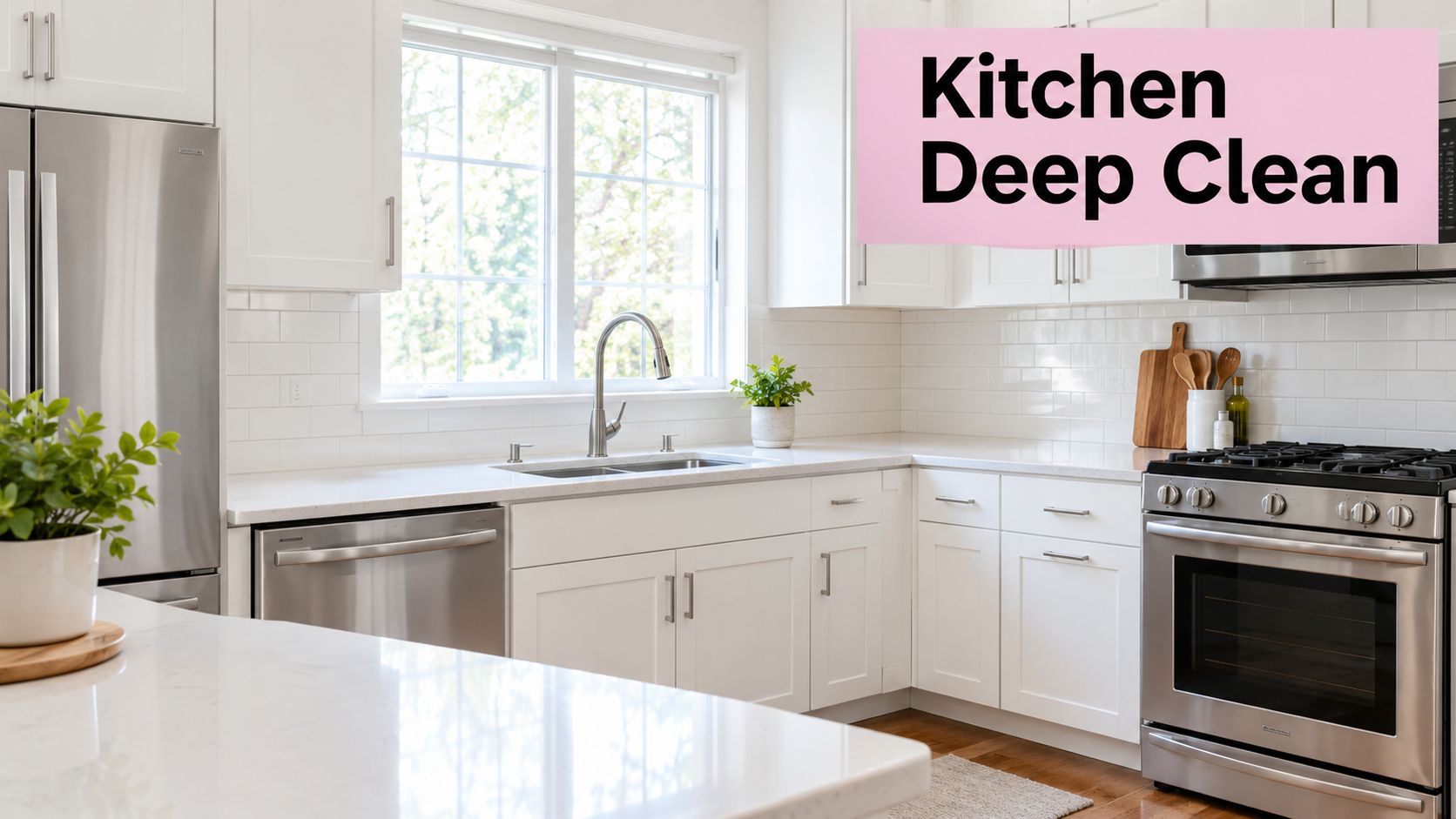
A strong kitchen reset starts with access. Remove small appliances you rarely use, clear the counters, and decide whether you need exterior-only work or full interior appliance cleaning. In a recurring service, the exterior matters most because it keeps buildup from turning into scrubbing later. In a move-out or vacant-home clean in Kennesaw, Marietta, or Acworth, interior cabinet wiping, appliance interiors, and the areas beside and under reachable appliances often matter more because that's where inspection-level dirt shows up.
What actually gets results
Degrease first, then detail. Trying to polish fingerprints on stainless steel before removing cooking residue just smears the film around. The order that works is sink and counters first, then stovetop, burner area, range hood, cabinet fronts, appliance exteriors, backsplash, and handles.
For maintenance between deeper visits, it helps to stick with methods that won't damage finishes. If you use vinegar around kitchen surfaces or appliances, tips for cleaning with vinegar and safe kitchen appliance use can help you avoid common mistakes on metal, seals, and stone-adjacent areas.
Practical rule: Clean food-contact surfaces after you finish grease work, not before.
A rental turn in Kennesaw is a good example. If the oven door glass, refrigerator shelves, and cabinet faces are still marked up, the kitchen won't read as move-ready no matter how clean the floor is.
For a quick visual walkthrough of kitchen cleaning basics, this short demo helps:
2. Bathroom Sanitization and Fixture Care
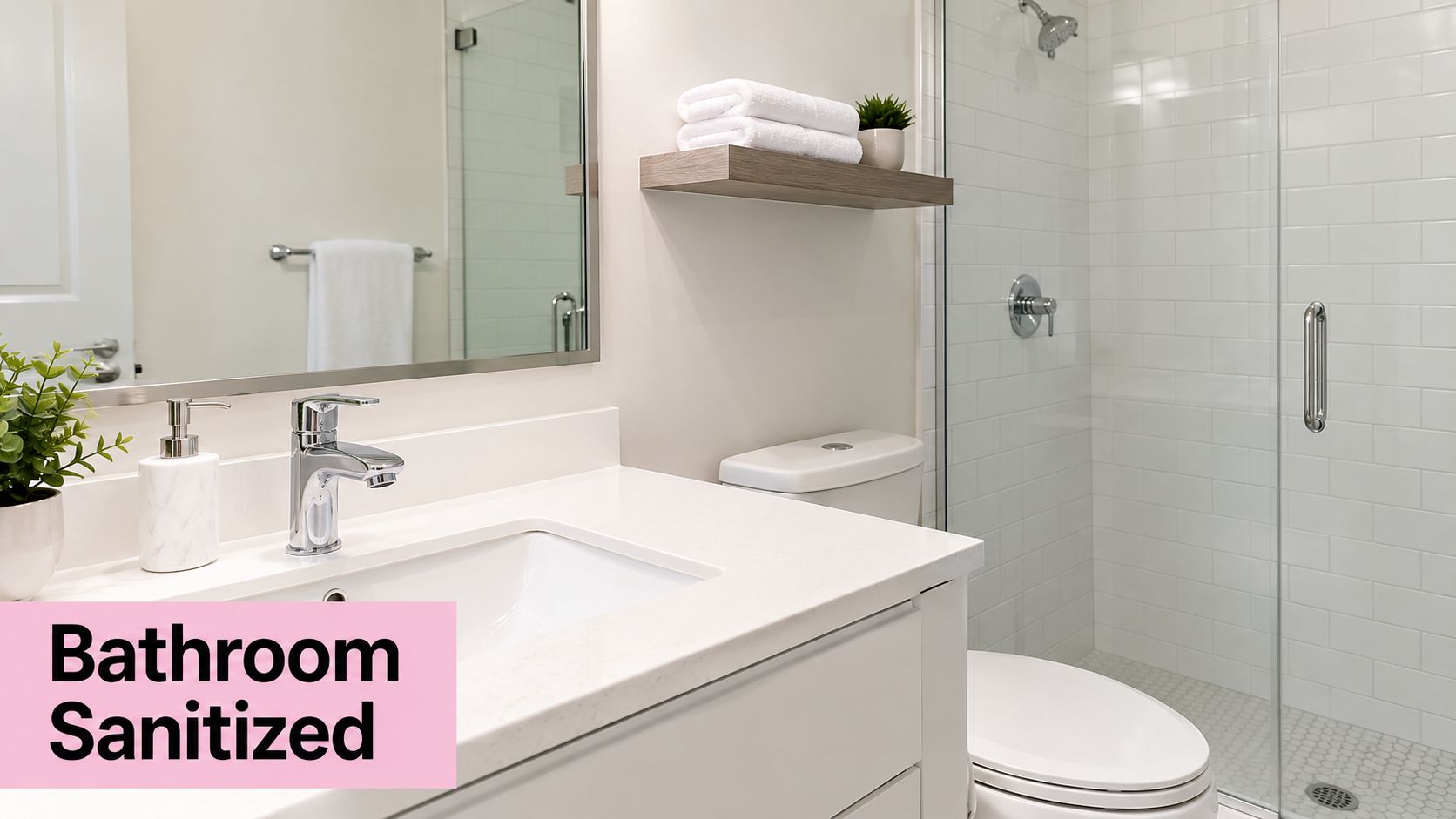
Bathrooms punish shortcuts. A sink can look fine at eye level while the faucet base, toilet pedestal, grout lines, and shower track still hold residue. That's why bathroom work has to be more methodical than a quick spray-and-wipe.
Start by removing rugs, open products, and anything blocking the vanity and tub edge. If you're doing a move-out clean, leave as little on the counters as possible so every edge, corner, and mirror line can be reached. One move-out cleaning source specifically emphasizes getting showers and tubs free of soap film and hair, which is a good reminder that turnover cleaning needs more detail than ordinary tidying, as noted in this move-out and residue-focused cleaning guidance.
The spots people miss
The visible surfaces are obvious. The missed areas are usually where the bathroom starts to smell or feel dingy again too quickly.
- Toilet base and hinges: Dust, hair, and splash residue collect where a fast wipe won't reach.
- Shower door tracks and hardware: These trap soap residue and water spots.
- Faucet bases and sink overflow areas: They hold film even when the basin looks bright.
- Cabinet fronts and drawer pulls: They're high-touch surfaces and show buildup fast.
If humidity is a problem in a Woodstock or Powder Springs bathroom, ventilation matters almost as much as the cleaning itself. A morning appointment often makes more sense because the room has time to dry fully after the work is done.
3. Bedroom Dusting, Vacuuming, and Surface Care
Bedrooms usually don't look dirty until the dust has been there for a while. That's why they get postponed. The trouble is that postponed bedroom cleaning tends to show up as gritty window sills, fuzzy baseboards, fan dust, and a layer under the bed that keeps circulating back into the room.
The priorities are simple. Strip visual clutter first, then dust high surfaces, then clean the lower surfaces and floors. Independent room-by-room cleaning guidance also recommends a top-to-bottom order and placing bedrooms and living areas before bathrooms, with floors finished later, according to this residential cleaning sequence guide. That order prevents rework and keeps you from knocking dust onto an already-clean floor.
A better bedroom order
If you're cleaning a primary bedroom in Cobb County after a small renovation, start with ceiling fan blades, vents, lamps, headboard tops, dressers, window trim, and closet shelves before vacuuming. If the room is occupied, ask for clear nightstands and closet floors first. If it's a move-in clean, take advantage of the empty space and get under every accessible edge.
A useful checkpoint is the bed itself. In the late 2010s, the American Cleaning Institute reported that Americans spend about six hours per week cleaning their homes, while light cleaning is more common than deep cleaning and many people worry about whether they're cleaning enough or correctly, according to ECOVACS' recap of American Cleaning Institute cleaning habits data. Bedrooms are where that difference shows up most. People make the bed and vacuum the center, but deeper dusting often slips.
If you want extra bedroom-specific ideas, these tips for a cleaner bedroom are a useful companion to a full-house checklist.
4. Living Room and Common Area Furniture Care
Living rooms collect a little bit of everything. Pet hair on upholstery, fingerprints on remotes and side tables, snack crumbs in the sofa seam, dust on electronics, and traffic soil around the furniture perimeter. You can vacuum the middle of the rug and still leave most of the mess behind.

The first decision is whether the room needs a reset or a detail clean. A reset means tidying surfaces, dusting accessible furniture, vacuuming upholstery, and cleaning floors. A detail clean means moving what can safely be moved, vacuuming under cushions, cleaning beneath furniture edges, and dusting cords, lamps, vents, and media consoles.
Upholstery and electronics need different handling
People often use one cloth on everything in the room. That's where streaks on screens and smeared dust on wood start. Electronics need a gentle, dry or lightly appropriate method. Upholstery needs vacuuming before spot treatment. Leather, microfiber, and woven fabric each respond differently, so if you're handing the room off to a cleaner, call out the material first.
Clean underneath the sofa before you finish the visible floor. That hidden strip is usually where the room's dust is coming from.
A real pre-listing example in Marietta is a living room that looks fine in normal use but photographs poorly because the trim is dusty, the rug edges are dark, and the TV console shows fingerprints. For upholstery care beyond basic vacuuming, these stain removal tips for your couch can help with material-specific cleanup.
5. Bathroom and Kitchen Floor Deep Cleaning
Floors in kitchens and bathrooms need their own step because they hold a different kind of dirt. This isn't bedroom dust or living room lint. It's tracked moisture, soap residue, cooking film, splashes near the sink, and grime settled into grout lines and edges.
The biggest mistake is mopping too early. If crumbs, hair, or dust are still loose, the mop just pushes debris into corners and along the baseboards. Floors should be last in the room, especially in moisture zones. That approach lines up with common high-to-low guidance used in post-build cleanup, where dust and residue are handled before final damp wiping or floor work.
What to focus on in wet zones
- Grout lines: They change the whole look of the floor when they're neglected.
- Perimeter edges: Dirt settles where mop heads don't fully reach.
- Toilet-side and vanity-side flooring: These spots usually need more than a pass-through mop.
- Appliance-front zones: The strip in front of the stove, dishwasher, and sink catches the heaviest use.
Material matters here. Some hard-surface floors can take more moisture than others. If you're dealing with wood-adjacent flooring or visible discoloration, hardwood floor water stains is worth reviewing before you over-wet a problem area or use the wrong cleaner.
This shows up a lot in move-in cleaning across West Georgia. The room can smell clean and the counters can shine, but if the bathroom grout is dark or the kitchen edge lines still look grimy, the home won't feel fully reset.
6. Window and Glass Surface Treatment
Late afternoon is when window work gets judged. Smears show up, dust on the sill catches the light, and a room that looked clean an hour earlier suddenly looks half-finished.

Glass should be cleaned near the end of each room, after dusting and before the final floor check. That sequence matters. If blinds, muntins, upper trim, or nearby shelves are still shedding dust, the glass will need another pass.
The scope changes with the type of appointment. For a routine whole-house reset, interior glass, sill tops, and fingerprints around reach height usually cover the biggest visual issues. Deep cleaning adds frames, corners, and track buildup. Move-in and move-out work often includes accessible exterior panes too, because empty rooms and stronger natural light make missed haze, paint flecks, and dirty channels much easier to spot.
Tracks and sills are where window cleaning usually slows down. Loose debris should come out first so it does not turn into muddy residue once moisture hits it. Older tracks, textured frames, and painted wood need a lighter hand than vinyl or newer aluminum, especially if the finish is already worn.
There is also a practical trade-off with time. Full window detailing across an entire house can take longer than homeowners expect, particularly in homes with divided panes, plantation shutters, or tall stairwell windows. If the goal is a one-time reset, prioritize the glass and the parts people touch and see at eye level. If the goal is a deep clean or move-related appointment, include the full window assembly so the room reads clean from corner to corner.
In pre-listing work, I treat windows as a finishing item with inspection value. Clean glass improves the light, but clean frames and sills are what keep the job from looking rushed.
7. Baseboards, Trim, and Door Frame Cleaning
If a room looks almost clean but not fully clean, check the trim. Baseboards, window casings, and door frames collect enough dust and scuffing to pull down the whole room even when the furniture and counters are fine.
Trim work matters most during deep cleans, move-ins, move-outs, and pre-listing appointments. In routine service, it may rotate in less often than kitchens, baths, and floors. That's a sensible trade-off. But if you skip it for too long, dust hardens into a visible line and every doorway starts to show hand marks.
Why this changes the feel of the home
These linear surfaces frame every room. Clean trim makes paint look brighter and floors look newer. Dirty trim makes a freshly vacuumed room still feel neglected.
For homes with recurring dust issues, baseboards are a good clue. If they load up quickly after cleaning, the problem may be airflow, pet hair, open windows, or inconsistent vacuuming around the perimeter. For maintenance ideas between deeper visits, prevent dust buildup on your baseboards with this laundry hack offers a practical way to slow the return.
Field note: Baseboards should usually be cleaned before the final floor pass, not after.
A move-out in an older rental often proves the point. Once the furniture is gone, every scuff on the trim line becomes obvious.
8. Ceiling, Ceiling Fan, and Light Fixture Care
Overhead surfaces are easy to ignore because they don't interrupt your path through the room. They still affect how clean the room feels. Dust on fan blades drops onto beds and tables. Cobwebs in corners catch the eye immediately. Light fixtures with dust on the rim can make the whole ceiling look dull.
This is also where sequence matters most. Several post-construction cleanup guides recommend working from high surfaces to low surfaces and leaving floors for the end. One guide outlines a three-stage dust workflow of removing loose dust first, then using a HEPA-filter vacuum, and finishing with a damp microfiber wipe on compatible surfaces in this construction dust cleaning sequence. Another renovation cleanup guide advises cleaning ceilings and light fixtures before walls, trim, and floors, while also sealing off completed zones and avoiding early HVAC use in this renovation dust control guide.
When overhead cleaning matters most
- Post-construction jobs: Fine dust settles on fan blades, fixture rims, and upper trim.
- Move-in appointments: Empty rooms make ceiling details easier to spot.
- Seasonal deep cleans: This is when neglected corners and vents finally get attention.
For occupied homes in Acworth or Dallas, clear the furniture below the fan or fixture as much as possible. Otherwise, cleaning overhead just drops dust onto a surface you'll have to reclean.
9. Closet Organization and Interior Cleaning
Closets don't need to be styled to be clean. They need access, dust removal, and a reset of the surfaces that hold the things you use. Bedroom closets, linen closets, and hallway storage all collect lint, shelf dust, crumbs from small items, and sometimes stale air if they stay shut for long stretches.
This area pays off most during move-ins and deep cleans. When a closet is mostly empty, it's easy to wipe shelves, vacuum corners, clean rods, and catch signs of moisture or neglect before they become a bigger issue. In an occupied home, even partial access helps. A cleared closet floor can be enough to vacuum properly and wipe the lower shelving.
Don't clean around stored items if you can avoid it
Closet cleaning goes wrong when people try to dust around packed belongings. You end up moving dirt from one side to the other. Pulling items out in small categories is slower at first but gives a better result and avoids putting clean items back into a dusty space.
Current trend coverage also points toward shorter resets and recurring maintenance instead of one massive all-day clean, which makes closet work a good candidate for a rotating deep-clean task rather than an every-visit expectation, as discussed in Martha Stewart's spring cleaning trends coverage.
A move-in example is simple. If you're about to hang fresh clothes in a Kennesaw apartment or a Marietta home, wiping shelves and vacuuming closet edges before unpacking is far easier than doing it after the space is full.
10. Entryway, Mudroom, and High-Traffic Area Maintenance
Entry areas set the tone for the rest of the house. If the first few feet inside the door are gritty, crowded, or damp-stained, the home feels less clean even if the bedrooms and bathrooms are in good shape.
These zones need more frequent attention than overhead fixtures or closet shelves. Shoes, bags, pet traffic, weather, and outdoor debris all meet here first. Hallways and mudrooms also tend to have narrow edges and corners where dirt piles up faster than people notice.
Prioritize function before appearance
An entryway clean starts with removing the obstacles. Shoes, baskets, sports gear, umbrellas, and pet items need to be moved so the floor and trim can be reached. Then clean the touch points. Door hardware, switch plates, bench surfaces, front-facing trim, and mat edges all show use quickly.
The easiest place to make a whole house feel cleaner in under an hour is often the entry, the kitchen, and the main bathroom.
In family homes, a storage bench can help keep the area easier to clean between visits. If you're reworking the layout, find a storage bench for hallway ideas can help reduce floor clutter and improve access.
A practical rhythm for West Georgia homes is to treat entry zones like kitchens. They aren't once-in-a-while tasks. They're recurring surfaces with recurring traffic.
Whole-Home Cleaning Checklist: 10-Point Comparison
| Service | Complexity (🔄) | Resource Requirements (⚡) | Expected Outcomes (⭐) | Ideal Use Cases (📊) | Key Tips (💡) |
|---|---|---|---|---|---|
| Kitchen Deep Surface and Appliance Cleaning | 🔄 High, multi-surface & appliance interiors | ⚡ High, degreasers, specialty tools, time | ⭐⭐⭐⭐ Improved hygiene, appliance longevity, visual appeal | 📊 Move-in/out, post-construction, busy family kitchens | 💡 Clear counters; note appliance care; schedule around meals |
| Bathroom Sanitization and Fixture Care | 🔄 High, grout, mold-prone areas, disinfection | ⚡ High, sanitizers, grout tools, ventilation time | ⭐⭐⭐⭐ Reduced mold/mildew, better air quality, sanitary fixtures | 📊 High-humidity homes, move-in/out, monthly maintenance | 💡 Clear surfaces; request grout sealing; ventilate after service |
| Bedroom Dusting, Vacuuming, and Surface Care | 🔄 Medium, thorough dust removal & delicate items | ⚡ Medium, HEPA/regular vacuums, microfiber dusters | ⭐⭐⭐ Improved sleep environment and allergen reduction | 📊 Allergy-prone households, post-construction, recurring cleanings | 💡 Clear nightstands/closets; communicate allergy/pet issues |
| Living Room and Common Area Furniture Care | 🔄 Medium, upholstery and electronics care | ⚡ Medium, upholstery tools, gentle cleaners, vacuums | ⭐⭐⭐ Cleaner fabrics, reduced pet hair, protected electronics | 📊 Homes with pets, pre-event staging, move-in/out | 💡 Remove pillows; identify fabric types; protect electronics |
| Bathroom and Kitchen Floor Deep Cleaning | 🔄 Medium–High, grout and moisture management | ⚡ High, grout cleaners, sealants, drying protocols | ⭐⭐⭐⭐ Prevents mold, extends flooring life, reduces slip risk | 📊 Moisture-prone homes, post-construction, move-in/out | 💡 Request grout sealing; clear floors; allow full drying time |
| Window and Glass Surface Treatment | 🔄 Medium, access & streak-free technique | ⚡ Medium–High, ladders, squeegees, mineral removers | ⭐⭐⭐⭐ Enhanced light, curb appeal, longer window life | 📊 Pre-listing, post-construction, exterior maintenance | 💡 Schedule on overcast days; clear sills; do interior+exterior |
| Baseboards, Trim, and Door Frame Cleaning | 🔄 Medium, careful finish protection required | ⚡ Low–Medium, soft cleaners, time-intensive handwork | ⭐⭐⭐ Noticeable perceived cleanliness and protected finishes | 📊 Pre-listing, deep clean cycles, post-construction | 💡 Clear floor edges; inform about special paints/finishes |
| Ceiling, Ceiling Fan, and Light Fixture Care | 🔄 Medium–High, overhead access & safety needs | ⚡ Medium, ladders, extension dusters, safety gear | ⭐⭐⭐ Better air quality, removed cobwebs, fresher rooms | 📊 Deep cleans, allergy control, post-construction | 💡 Clear furniture below; schedule before lower-surface cleaning |
| Closet Organization and Interior Cleaning | 🔄 Medium, requires homeowner prep & item removal | ⚡ Low–Medium, vacuums, shelf cleaners, organizers | ⭐⭐⭐ Protects stored items, reveals organization opportunities | 📊 Move-in, deep-clean bundles, humid climates | 💡 Remove items beforehand; request mold reporting; pair with bedroom clean |
| Entryway, Mudroom, and High-Traffic Area Maintenance | 🔄 Medium, frequent re-soiling, seasonal variance | ⚡ Medium, heavy-duty floor care, mat cleaning | ⭐⭐⭐ Protects flooring, reduces tracking, strong first impression | 📊 Rainy/wet seasons, move-in, pre-listing | 💡 Increase frequency seasonally; use protective mats; clear shoes |
Turn the Checklist Into a Repeatable Reset
A good entire house cleaning checklist works because it gives you order, not just tasks. Start with the rooms that affect daily life first. For most homes, that means the kitchen, main bathroom, entryway, and the most-used living spaces. Then move into bedrooms, trim, closets, and overhead details. If the house is dusty from recent work, keep the top-to-bottom rule strict and finish floors last.
It also helps to separate what needs clear access from what doesn't. Counters, closet floors, shower shelves, vanity tops, and entryway edges all clean better when they're opened up first. Appliance interiors, cabinet interiors, and move-related details should be identified before the appointment or before you begin, especially if you're trying to finish in one pass. That keeps you from using your time on lower-priority tasks while the harder access areas stay blocked.
The biggest mistake people make is treating every clean like the same kind of clean. It isn't. A routine visit handles visible buildup, high-touch surfaces, kitchens, bathrooms, furniture, and floors. A deep clean adds baseboards, trim, fan blades, vents, frames, neglected corners, and detail work behind or under accessible items. A move-in or move-out clean goes further because empty or nearly empty rooms expose cabinet interiors, closet shelves, appliance residue, shower film, and wall-line dust that occupied homes can hide. Post-construction cleaning is different again. Loose dust comes off first, then vacuuming, then damp microfiber on compatible surfaces, with attention to ventilation and dust migration.
Health-focused households may want one more layer of priority. Industry trend coverage points to more interest in health-conscious, low-odor, and practical product choices, especially when dust, vents, and high-touch surfaces matter more than a cosmetic shine, as discussed in this deep-cleaning checklist perspective on health and sensitivity concerns. That usually changes product selection and the order of work more than it changes the checklist itself.
If you live in Kennesaw, Acworth, Marietta, Woodstock, Dallas, Hiram, Powder Springs, Cartersville, or nearby West Georgia communities, compare your own home against this list by traffic level, moisture level, and access. That's the easiest way to decide what belongs on every visit, what belongs on a rotating deep-clean cycle, and what only needs attention during a move or after renovation. If you want a supplies-provided service built around a published checklist, one-time visits, recurring schedules, move-related cleaning, and post-construction cleanup, Maid in America is a relevant local option to consider.
Maid in America provides one-time, recurring, deep, move-in/move-out, and post-construction cleaning across West Georgia, with supplies brought to each appointment and natural low-odor products used for the work. If you want to match this entire house cleaning checklist to your home, your timeline, and your priority rooms, visit Maid in America.





Maid in America provides reliable, personalized cleaning with natural products for homes, offices, and communities across West Georgia. Licensed, bonded, and insured, we’re locally and privately owned.
Get in touch with us today!
info@maidinamericaga.com