Hardwood Floor Water Stains How to Fix and Prevent Them

A lot of hardwood floor water stains start the same way. A plant saucer sweats onto the oak. The dog bowl splashes a little every day. Someone leaves a damp bath mat down longer than they meant to, then notices a pale ring or a dark patch that wasn't there last week.
Most homeowners don't need a long lecture at that moment. They need to know whether the mark is fixable with a careful at-home approach, or whether the floor is telling them moisture got past the finish and into the wood.
Table of Contents
- Introduction to Hardwood Floor Water Stains and Why They Happen
- Signs it's trapped in the finish
- Signs it's in the wood
- Signs it's more than a stain
- The basic repair sequence
- The decision step that saves a lot of bad repairs
- The trade-off DIY guides gloss over
- When replacement makes more sense
Introduction to Hardwood Floor Water Stains and Why They Happen
A water stain usually looks small the day you notice it. The question is whether you are looking at moisture caught in the finish or moisture that has already worked into the wood.
Hardwood reacts in layers. The finish can turn cloudy when moisture gets trapped near the surface. The wood itself can darken when water slips past worn finish, open seams, or shallow scratches and settles into the grain. Those two problems may start from the same spill, but they do not respond to the same fix.
In West Georgia homes, I see far more trouble from slow, repeated moisture than from one dramatic event. Pet bowls, plant saucers, damp bath mats, mop water left too wet, and tiny appliance leaks all leave the same clue behind: a stain that keeps returning or spreading because the moisture source never got handled. Cleaning may lighten the mark for a while, but it will not solve a floor that is still getting wet.
That missed decision step matters more than the product in your hand.
If the stain is in the finish, a gentle surface-level repair may be enough. If it has penetrated the wood, aggressive rubbing, heat, or random spot treatments can make the finish patchy without removing the discoloration underneath. And if boards are starting to cup, gap, or lift, the stain is only part of the problem.
One reason Flacks Flooring floor restoration tips are useful is that they treat water marks as a moisture diagnosis first and a cosmetic issue second. That is the right order. Before you try to erase the stain, figure out where the water went and whether it is still coming back.
Realistic results depend on that call. Some marks come off cleanly. Some lighten but stay visible. Some need sanding, board replacement, or a leak fix before appearance work makes sense at all.
How to Tell What Kind of Water Stain You Have
Trying a fix before you classify the stain is where a lot of floors get damaged. Hardwood floor water stains usually fall into three categories: white haze in the finish, dark staining in the wood, and structural damage such as cupping or buckling that cleaning won't solve, as outlined in this wood floor stain classification guide.
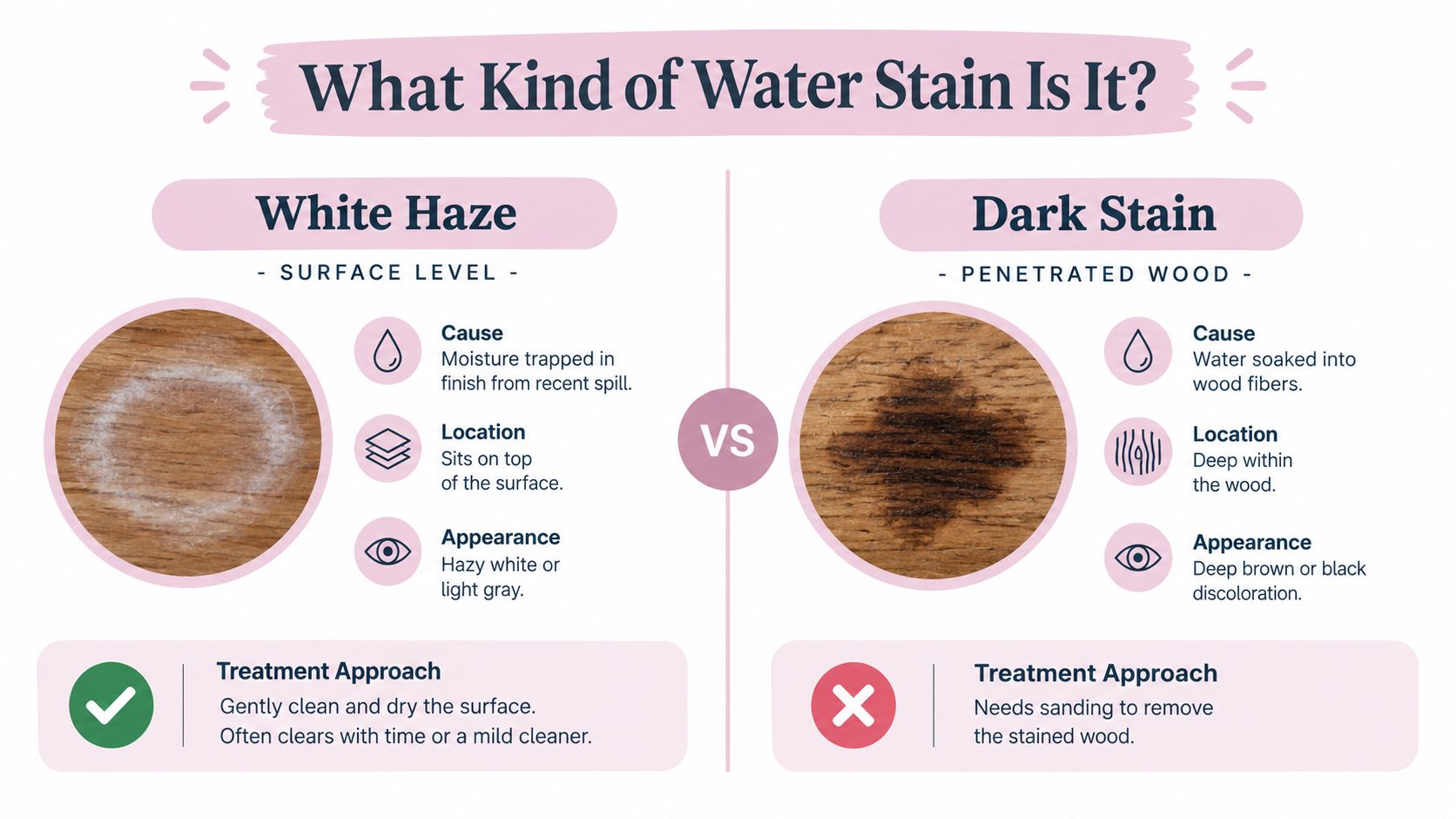
Signs it's trapped in the finish
White haze usually looks cloudy, pale, or lightly gray. It often shows up under a glass, planter, rug pad, or damp towel. One repair reference notes that these marks are commonly caused by recent surface exposure like a spill that sat for an hour or two, condensation, or a wet mat left in place, which is why the damage often stays in the finish rather than the wood, according to Touch Up's hardwood floor repair article.
A few simple checks help:
- Look at the color: Hazy white or light gray is the classic finish-level sign.
- Check the edges: Surface marks often have softer, less defined edges.
- Think about the timeline: If you know a spill happened recently, that supports a finish-level diagnosis.
Signs it's in the wood
Dark brown, charcoal, or black discoloration is the bigger warning. Current repair guidance consistently separates white surface moisture from dark stains that have penetrated the fibers. One repair source adds a practical threshold: discoloration deeper than about 1/16 inch is beyond sanding alone and may need chemical lightening before refinishing, based on this hardwood floor water damage decision guide.
Use this quick comparison:
| Clue | More likely finish-level | More likely wood-level |
|---|---|---|
| Color | White, milky, pale gray | Brown, dark gray, black |
| Likely cause | Recent surface moisture | Longer exposure or failed finish |
| Best first move | Gentle drying and low heat | Sanding and wood treatment |
| Cleaning alone | Sometimes helps | Usually won't help |
Signs it's more than a stain
If boards look raised at the edges, uneven, or warped, stop treating it like a spot problem. Moisture damage can also create biological issues around trim, subfloor areas, or hidden damp zones, and if you're unsure whether staining is tied to a bigger indoor moisture issue, this guide on how to tell if there's a mold or mildew problem is a useful next check.
If the floor shape changed, the moisture story changed too.
Gentle DIY Fixes for White Haze and Surface Marks
If the stain is white and the floor surface still feels stable, start gentle. That's the safest lane for DIY. The goal is to release moisture trapped in the finish without softening, dulling, or scorching that finish.
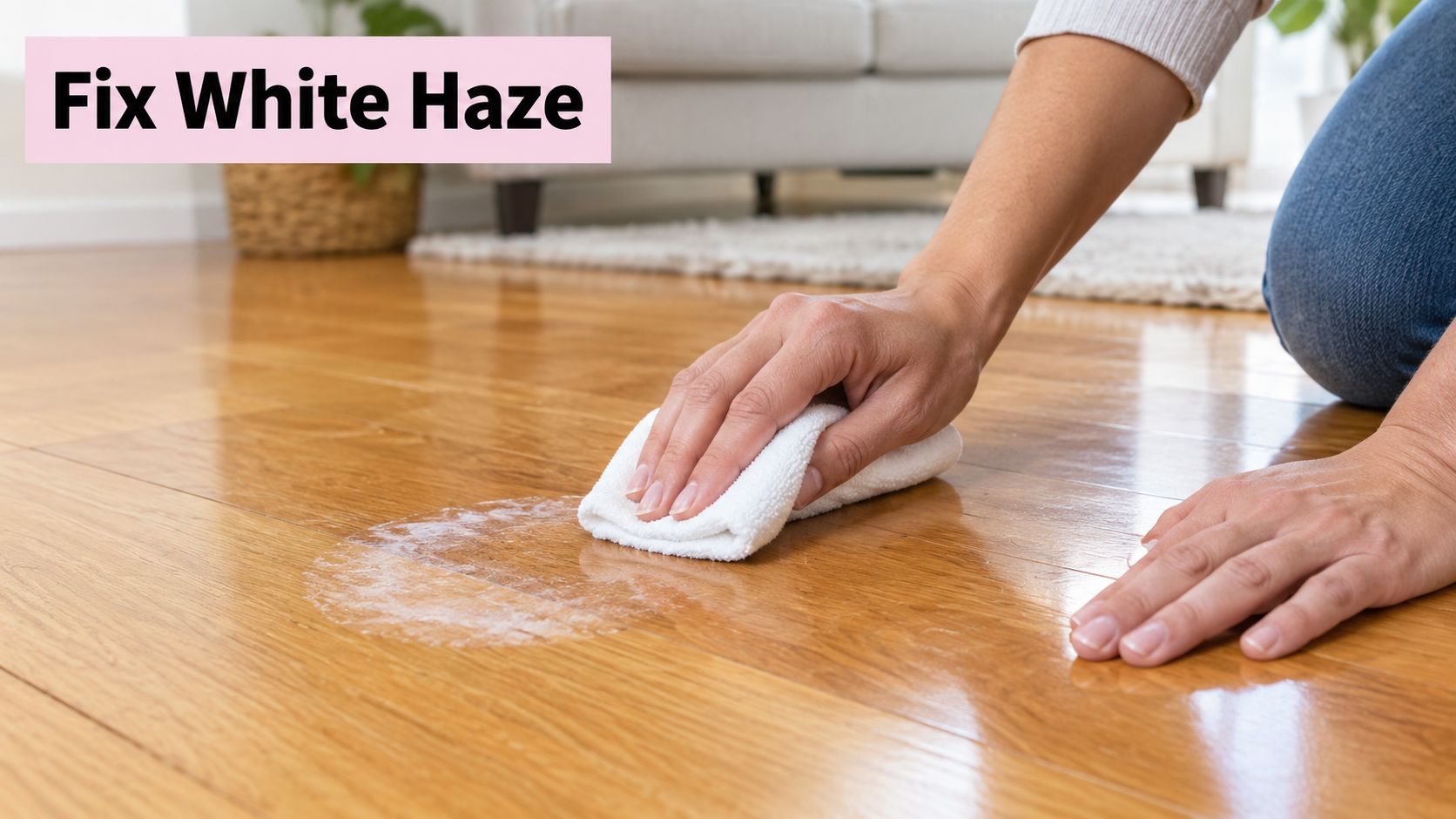
A practical workflow used across current repair guides is simple: blot dry, wipe with a slightly damp microfiber cloth, then use low heat in short bursts. One source gives a clear benchmark for heat application: an iron over a dry cloth for 10 to 15 seconds or a hair dryer kept moving, with immediate drying between passes, as described in this step-by-step guide for white water marks.
A safe order that works
Blot first
Use a dry white cloth. Don't scrub. Press and lift.Use a barely damp microfiber cloth
This sounds backward, but the point is controlled moisture and lift, not soaking. Wipe lightly, then dry the area right away.Apply low heat carefully
Put a dry cotton cloth over the mark. Use an iron on low or a hair dryer in motion. Keep each pass short.Pause and inspect
If the haze lightens, repeat. If the sheen starts looking dull, stop.
What homeowners often get wrong
The mistake isn't usually trying heat. It's too much heat or too long in one spot. Finishes can cloud further, flatten in sheen, or become visibly different from the surrounding boards.
Another common mistake is over-wetting the floor while trying to “clean harder.” That can spread the stain line or push more moisture into weak finish seams.
What works: Short, controlled passes.
What damages the finish: Heavy pressure, soaked cloths, and parked heat.
This video shows the kind of careful, minimal approach that makes sense for surface haze before you move to anything more aggressive.
When to stop the DIY attempt
Stop if the stain doesn't change after a few careful rounds, if the mark is darker than you first thought, or if the sheen around the spot starts looking uneven. That's also the point where general stain habits matter. A lot of families already use broader cleaning routines for upholstery and floors, and these stain removal tips for furniture and carpet reinforce the same principle: start with the least aggressive method and don't oversaturate the material.
If the mark stays white but faint, living with a slight ghosting is often better than forcing a bigger finish repair.
Repairing Dark Stains That Have Penetrated the Wood
You wipe the spot, let it dry, and it comes back just as dark. At that point, the job is no longer cleaning. The question is whether the discoloration is sitting in damaged finish or has moved into the wood itself.
That distinction gets missed all the time. A stain trapped in the finish may respond to a controlled spot repair. A stain that has penetrated the wood fibers usually needs sanding to bare wood, bleaching, full drying, and refinishing. If the same area has stained more than once, there may also be an active moisture source feeding the problem. Repairing the color without fixing the moisture is how homeowners end up doing the same patch twice.
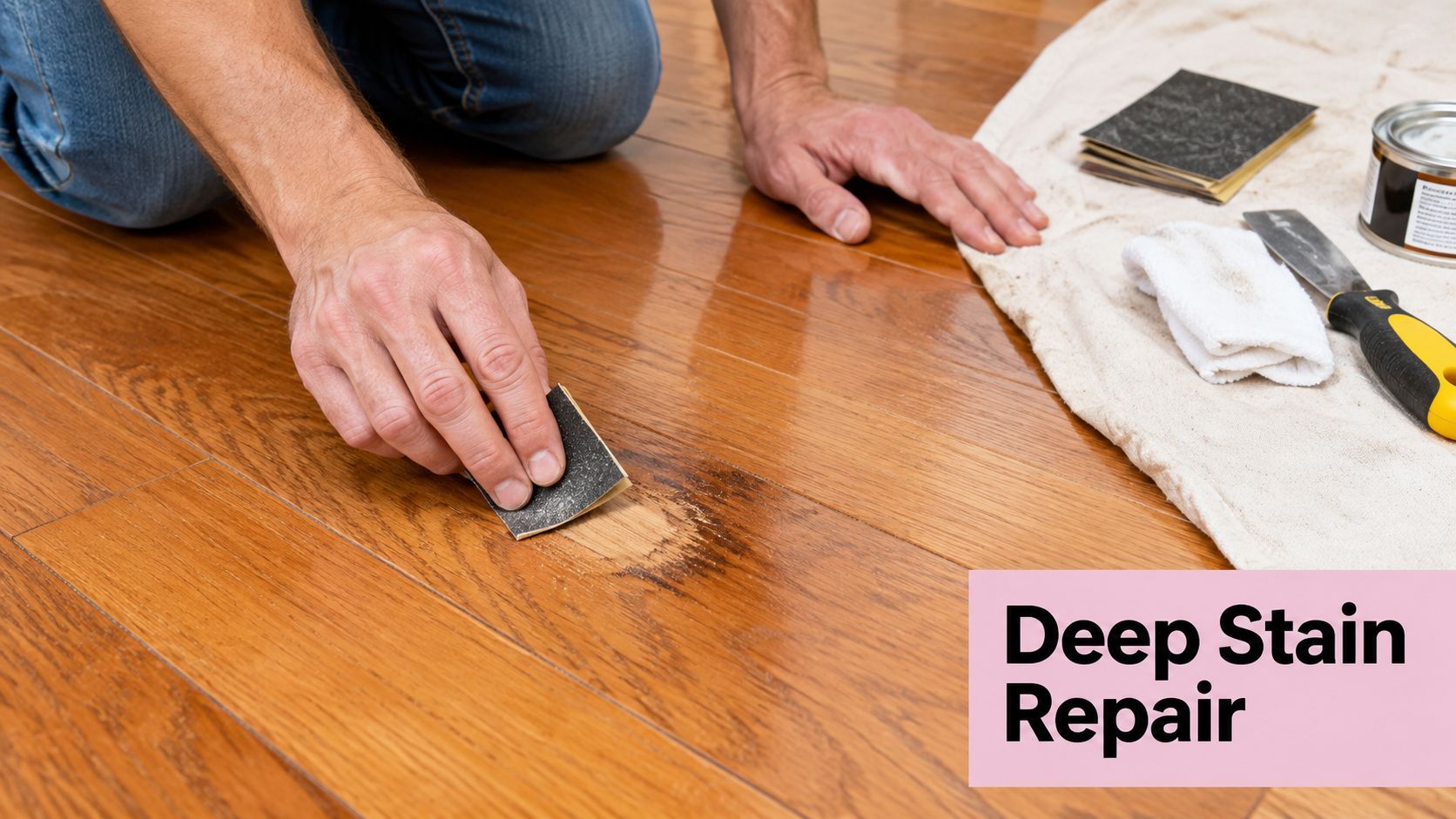
Current repair guidance lines up on the basic process. Dark or black marks usually point to moisture that got below the finish and reacted with the wood. A common repair path is to remove the finish over the spot, expose bare wood, apply a wood bleach such as oxalic acid, let it dwell for about 20 to 30 minutes, then neutralize and allow at least 24 hours of drying before refinishing, according to this hardwood stain repair method from DG Floors.
The basic repair sequence
For a localized dark stain, the repair usually follows this order:
- Sand through the finish in the affected area until bare wood is exposed.
- Apply oxalic acid or another wood bleach only to the stained section.
- Let the product sit for its stated dwell time so it can lighten the oxidation.
- Neutralize based on the product instructions and let the wood dry fully.
- Refinish to match the surrounding boards only after the area is completely dry.
A second repair reference points to that same sequence and the same drying caution. Dark stains need finish removal first, then bleach treatment, then full drying before finish goes back on, as explained in this wood surface repair article.
The decision step that saves a lot of bad repairs
Before sanding, look at the edges of the mark and the finish around it. If the stain has a sharp outline that follows a drip, cup ring, or worn finish break, there is a fair chance the problem started in the finish layer. If the discoloration looks diffuse, sits deep in the grain, or stays dark after the surface is dulled, it has usually gone into the wood.
I see another clue in older West Georgia floors around sinks, exterior doors, and pet bowls. The board seams darken first. Then the center of the board follows. That pattern usually means moisture got in through weak finish joints over time, not from one cleanable surface mark.
The trade-off DIY guides gloss over
Spot repair can remove the stain and still leave a visible patch. That patch shows up as a halo, a color shift, or a sheen difference once the new finish dries. Pre-finished floors are especially tricky because the factory sheen and stain color are hard to copy in one small area.
Larger stains across two or three boards often look better when the repair is widened to board edges or handled as a broader refinish area. It takes more work up front, but it usually avoids that obvious “fixed spot” look in the middle of the room.
Dark stains are often repairable. Matching the repaired area to the rest of the floor is usually the harder part.
When replacement makes more sense
Some stains are too deep to bleach out evenly. If the wood fibers feel soft, the boards have cupped, or the discoloration runs through multiple boards with black grain lines, replacement is often the cleaner solution.
Costs vary by floor type, access, and how well a new board can be blended into the surrounding finish. In practice, minor localized refinishing costs less than cutting out and replacing boards, but repeated spot attempts can waste time and still leave a mismatch. In those cases, a larger repair done once is usually the better call.
Preventing Recurring Stains With Moisture and Leak Checks
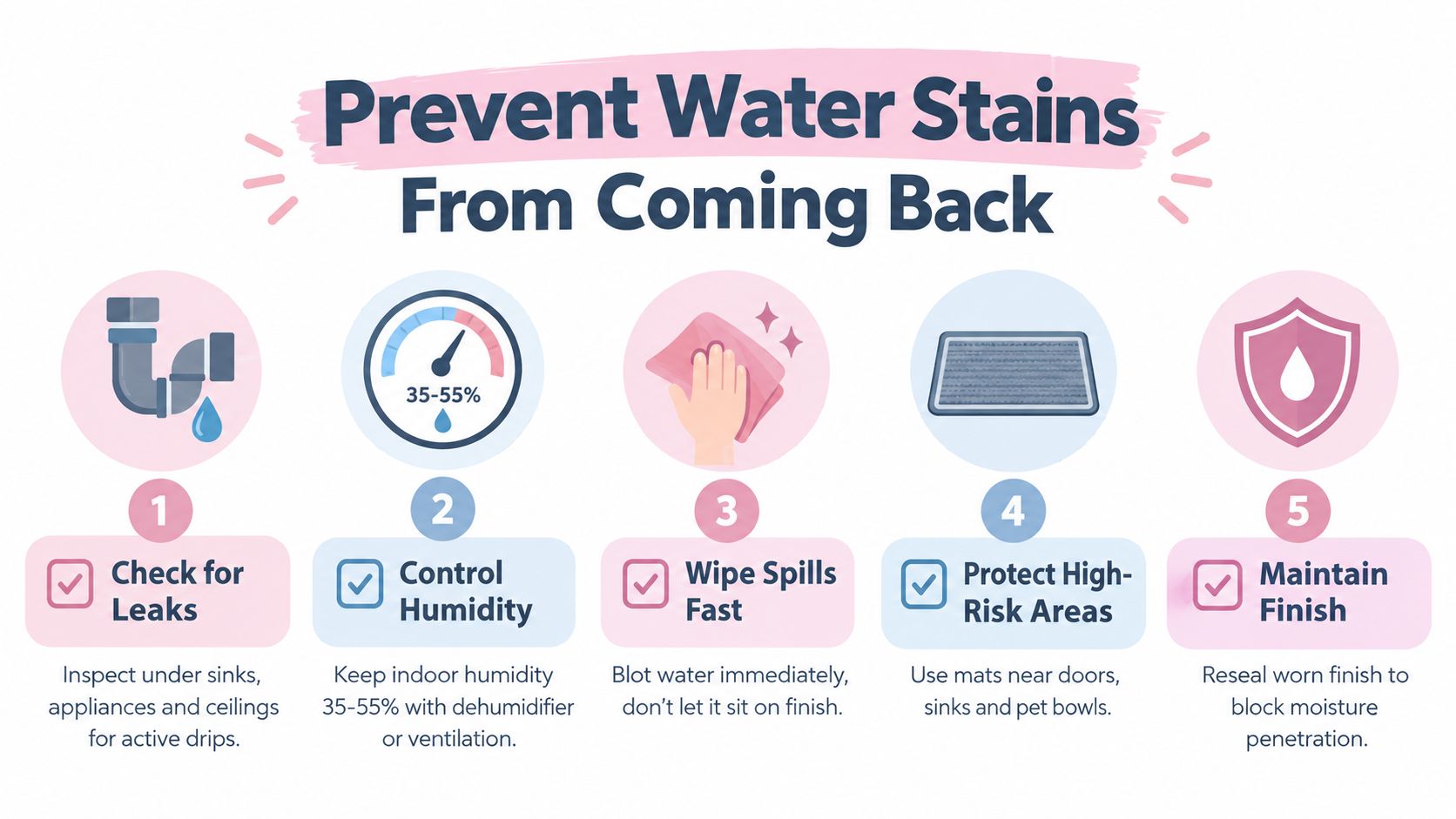
When the same area keeps staining, cleaning isn't the issue. Moisture is. The missed step in a lot of hardwood floor water stains advice is figuring out whether the mark came from one event or whether the house is feeding that spot moisture again and again.
The moisture benchmark matters here. The NIH's remediation guidance lists hardwood flooring at 7% to 10% moisture content for stable performance, which is one reason recurring stains deserve attention beyond cosmetics. The same reference also notes that about 22.6% of homeowners insurance claims from 2019 through 2023 involved water damage or freezing, with an average claim cost of about $15,400, which shows how often moisture events turn into expensive repairs, according to the NIH moisture and mold remediation guidance.
A simple check before you treat the spot again
Ask these questions in order:
- Does the stain return in the same location? That points toward a source, not a one-time spill.
- Is the area near a sink, dishwasher, fridge line, exterior door, or pet station? Those are repeat-offender zones.
- Do boards feel uneven or look raised? That suggests moisture imbalance, not just discoloration.
- Is the finish worn thin in that traffic path? A weak finish invites repeat penetration.
- Do you notice dampness nearby on trim, walls, or ceilings? The floor may be receiving moisture from somewhere else.
Why cupping changes the diagnosis
Cupping happens when one side of the board picks up more moisture than the other, causing the edges to rise relative to the center. It's commonly tied to moisture from below or changes in the air above the floor, which is why drying, humidity control, and leak correction come before refinishing, as explained in this hardwood floor cupping article.
If the moisture source may be below the slab or under the floor system, homeowners should also know the broader warning signs. A practical local resource on signs of a plumbing slab leak can help you rule out a hidden plumbing issue before you keep treating the surface.
Repeated stains in the same footprint usually mean the floor is reporting a moisture problem, not a cleaning problem.
For day-to-day prevention, wipe spills quickly, use mats where water lands often, and avoid soaking mops. If your floors still feel tacky or look off after routine care, these common causes of sticky or streaky floors after cleaning can help separate residue issues from true water damage.
When to Call a Professional and Keep Floors Looking Their Best
Call a pro when the stain is dark, spans several boards, returns after treatment, or comes with cupping, softness, or movement in the floor. Those are the situations where the repair decision matters more than the product choice. Sand too little and the stain stays. Sand too aggressively and you create a larger refinishing problem.
Professional help also makes sense when matching matters. Prefinished boards, older stain colors, and patched areas can be hard to blend without visible edges. For homes dealing with active moisture from above, quick source control comes first, and this guide on fast action for ceiling water damage is useful if the floor stain may be tied to a leak overhead.
What routine care should look like
For West Georgia homes, the best maintenance is steady and low drama:
- Use low-moisture cleaning methods so water isn't left sitting on seams.
- Watch high-risk zones like kitchen sinks, patio doors, pet bowls, and bathroom thresholds.
- Keep the finish in good shape because worn finish is what turns a surface event into a wood stain.
- Bring in cleaning help when needed for regular floor care that removes residue without over-wetting the boards.
A company like Maid in America fits into that maintenance side of the equation, not the refinishing side. Regular cleaning with natural, low-odor products can help reduce residue buildup and avoid sloppy floor care that leaves moisture behind, but recurring or deep stains still need the right moisture diagnosis and, sometimes, a flooring specialist.
The short version is simple. White haze gets the gentle approach. Dark stains get a wood-level repair plan. Repeating stains get a moisture investigation.
Maid in America helps West Georgia homeowners keep hard floors clean with recurring and deep cleaning that uses natural, low-odor products and avoids the over-wetting that can make hardwood problems worse. If you want practical help maintaining your floors between repairs or refinishing, visit Maid in America to learn more about service in Kennesaw, Acworth, Marietta, Woodstock, and nearby communities.





Maid in America provides reliable, personalized cleaning with natural products for homes, offices, and communities across West Georgia. Licensed, bonded, and insured, we’re locally and privately owned.
Get in touch with us today!
info@maidinamericaga.com