How Often Should You Deep Clean Your House Explained

Most homes need a full deep clean every 3 to 6 months, or 2 to 4 times per year, when weekly or biweekly light cleaning is maintained. Homes with pets, children, allergies, heavy foot traffic, or frequent hosting often need attention closer to the quarterly end of that range.
You may be keeping up with the counters, vacuuming the main floors, wiping the bathroom, and clearing the kitchen after dinner. Then sunlight lands across the baseboards and shows a dusty line. The bathroom grout looks dull, the air feels stale, and the area behind the sofa seems to belong to another household.
That situation is common in busy West Georgia homes. Standard cleaning keeps daily mess under control, but it doesn't reach every place where dust, grease, hair, and residue collect. Deep cleaning works as a periodic reset, not as a replacement for routine care.
The right schedule depends on how your household lives. A quiet home with two adults and no pets may manage well with the longer end of the range, while a home with kids, animals, frequent guests, or allergy concerns may benefit from more regular attention. You also need to decide whether a full seasonal reset fits your calendar better than smaller room-by-room tasks spread throughout the year.
Table of Contents
- A first visit or a new service routine
- Moving and home turnover
- Renovation and construction
- Seasonal changes and gatherings
Introduction How Often Deep Cleaning Really Matters
A busy Kennesaw or Acworth household can look well cared for and still need a deep clean. Maybe the kitchen counters are wiped every evening, bathrooms receive regular attention, and the floors are vacuumed on schedule. Yet the baseboards remain dusty, the grout has lost its original brightness, and crumbs have collected beneath furniture that rarely moves.
That happens because light cleaning manages visible dirt and routine hygiene, while deep cleaning addresses buildup in overlooked areas. Guidance reviewed by Tidy places the mainstream recommendation at every 3 to 6 months when weekly or biweekly maintenance already happens between full resets. The American Cleaning Institute's 2018 National Cleaning Survey found that Americans spent nearly six hours each week cleaning their homes, while 26% identified deep cleaning as the type they did most often and 74% identified light cleaning. That pattern supports treating deep cleaning as periodic work rather than an everyday task.
Why the calendar needs flexibility
The range is more useful than a single universal date. Pets carry soil into entryways and leave hair on upholstery. Children create spills and sticky areas that may not be obvious after a quick wipe. Frequent hosting increases the amount of contact with floors, seating, bathrooms, and kitchen surfaces.
Homes with allergy concerns need another kind of planning. The CDC-reviewed environmental cleaning evidence describes regular vacuuming and dusting, hot-water bedding washing at at least 130°F, and HEPA filtration as parts of a layered approach to reducing dust-mite and allergen exposure. Deep cleaning can support that routine by reaching hidden reservoirs rather than serving as a one-time answer.
Practical rule: Use three months as the starting point for a busy or sensitive household, and six months as a reasonable outer interval for a low-use home that already receives consistent maintenance.
By the end of this guide, you'll have more than a number. You'll have a practical scheduling model for choosing a seasonal whole-home reset, rolling room-by-room tasks, or an extra clean after a specific life event.
What Deep Cleaning Means and How It Differs From Standard Cleaning
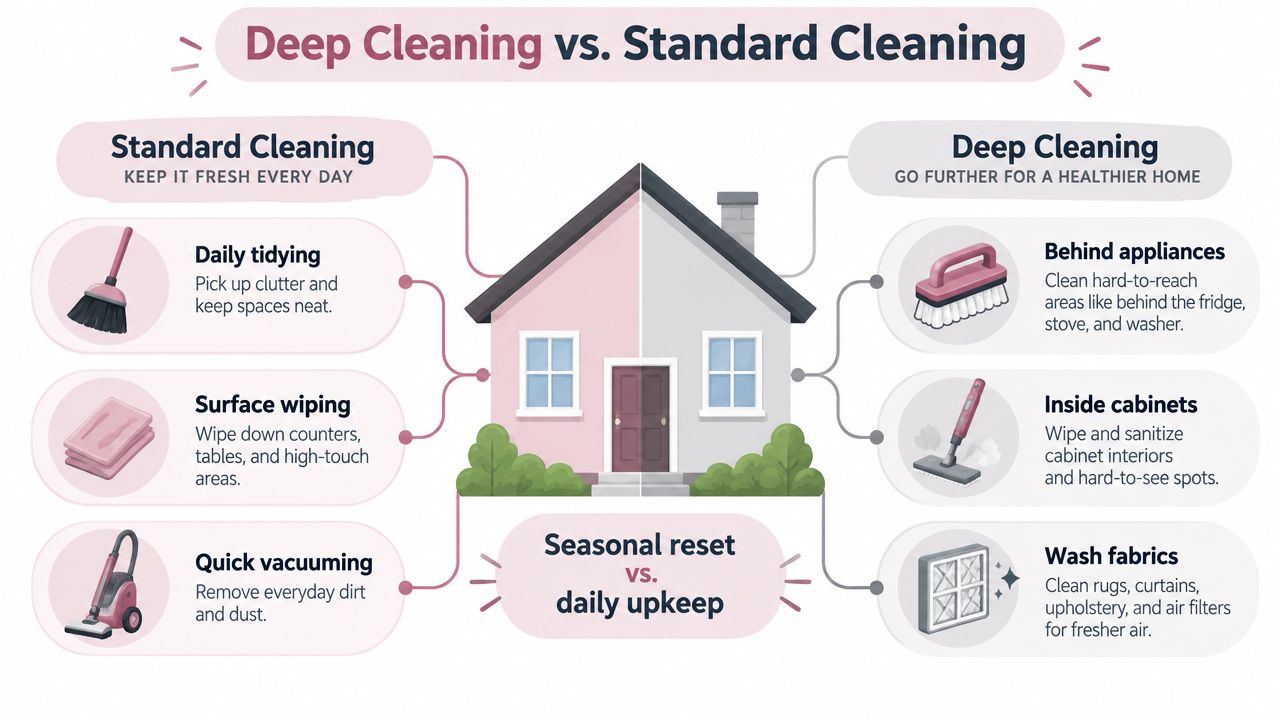
Think of your house as a system with two maintenance layers. Standard cleaning keeps the system operating day to day, much like clearing the kitchen after a meal or taking the trash out before it overflows. Deep cleaning resets the parts that routine work doesn't regularly reach, much like servicing the hidden components of that system.
Standard cleaning commonly includes accessible kitchen and bathroom surfaces, furniture, mirrors, floors, light dusting, vacuuming, and trash removal. It keeps visible soil from becoming a daily nuisance. A weekly or biweekly visit can maintain that baseline when the home is used normally.
Deep cleaning changes the scope. The cleaner works into areas where residue has time to settle or harden:
- Edges and boundaries: Baseboards, door frames, window sills, window tracks, and corners collect dust because regular tools often pass over them.
- Textured surfaces: Grout, caulking, faucets, shower tracks, and similar areas hold mineral residue and grime.
- Hidden sides: Behind furniture and appliances, beneath beds, and around fixtures can trap hair, crumbs, and fine dust.
- Interior zones: Appliance interiors, cabinet interiors, and selected storage areas need more time than an exterior wipe.
- Soft materials: Upholstery, curtains, carpets, and bedding can hold particles even when the room looks tidy.
Why one shouldn't replace the other
A deep clean doesn't protect a home from new dust, fingerprints, food residue, or bathroom moisture that appears the following week. Routine cleaning does that maintenance work, but it won't necessarily remove buildup from a refrigerator interior, ceiling fan blade, or grout line.
For hard floors, the order of work also matters. The CDC's environmental cleaning procedures identify a useful mechanics rule: clean floors after other surfaces so falling dust and debris can be removed at the end. At home, that means dusting high and low surfaces first, cleaning furniture and fixtures, then vacuuming or mopping the floor.
If hardwood floors need specialized care beyond ordinary cleaning, homeowners can also consult Savera Wood Floor Refinishing cleaning service for information about deep cleaning and contaminant removal. For a detailed local service scope, review Maid in America's deep cleaning service before deciding which rooms and surfaces belong in your reset.
How Often Different Households Should Schedule Deep Cleaning
Start with the general range, then adjust it according to the amount of soil your home collects and the sensitivity of the people living there. The Care.com household guidance recommends moving toward quarterly cleaning when pets, children, heavy foot traffic, or frequent hosting increase dust and soil accumulation.
| Household Profile | Recommended Deep Clean Frequency | Why This Cadence |
|---|---|---|
| Two adults, no pets, low traffic | Every 3 to 6 months | Fewer sources of tracked-in soil and particle buildup make the longer end more workable when maintenance stays consistent. |
| Home with children | Closer to every 3 months | Spills, crumbs, sticky surfaces, and high-touch areas need more frequent resetting. |
| Home with pets | Closer to every 3 months | Hair, dander, and tracked-in dirt collect on upholstery, carpets, vents, and edges. |
| Children and pets together | Quarterly planning is a practical starting point | Several sources of soil operate at once, so overlooked areas reach the “needs attention” stage sooner. |
| Allergy-sensitive household | Use a layered plan with regular particle control and periodic deep cleaning | Vacuuming, dusting, bedding care, HEPA filtration, and hidden-reservoir cleaning work together. |
| Frequent hosting or heavy foot traffic | Closer to every 3 months | Entryways, floors, seating, kitchens, and guest bathrooms receive more use. |
How to use the matrix
The table isn't a pass-or-fail test. A household may have no pets but host often, or have children who spend much of the day away from home. Look at the combined pattern rather than one label.
For allergy-sensitive homes, timing should follow both visible buildup and particle-control needs. The CDC source cited earlier supports regular vacuuming and dusting, weekly hot-water bedding washing at the specified temperature, and HEPA filtration. Deep cleaning adds attention to places such as upholstery, vents, behind furniture, and window tracks, which can act as overlooked particle reservoirs.
Choose the earlier appointment when symptoms, visible dust, or recurring odors tell you routine cleaning isn't keeping pace.
A low-traffic home can often use the longer interval if its weekly or biweekly maintenance is reliable. A family home may prefer quarterly appointments because the reset arrives before buildup becomes difficult to remove. The point isn't to clean every room intensely on an identical timetable. It's to match the schedule to the work your household creates.
Choosing Between Full Seasonal Resets and Rolling Deep Clean Tasks
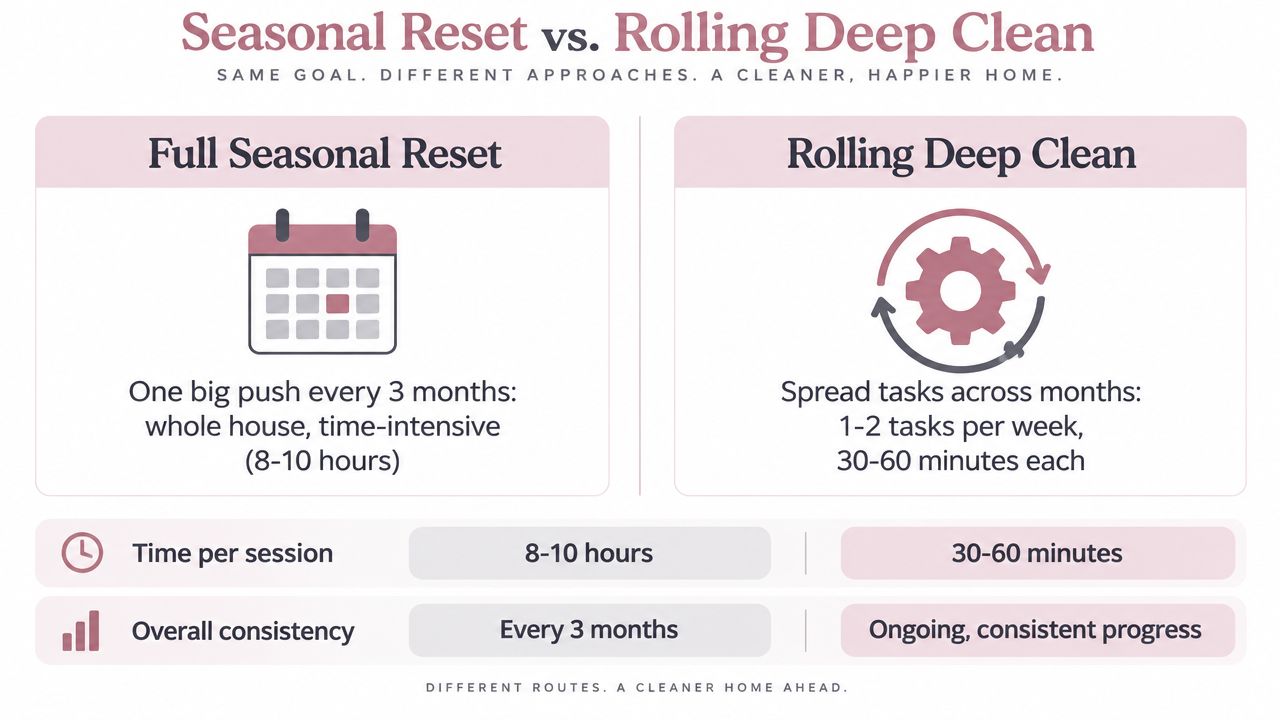
The more useful question isn't only “how often should you deep clean your house?” It's also how should the work fit into your available time? A full seasonal reset concentrates effort into one appointment or project. A rolling model divides deep tasks into smaller sessions, such as pairing refrigerator cleaning with one month's kitchen care and upholstery attention with another.
A typical 2,000-square-foot home with two adults and no pets may need about 5 to 7 hours of weekly upkeep, plus 4 to 8 additional hours for quarterly deep cleans, according to Angi's deep-cleaning guidance. Those figures show why scheduling design matters. Even a relatively calm household carries a regular maintenance load, and a seasonal project adds another concentrated block of work.
Full seasonal reset
This model works well when you want a clear finish line. You can book a spring or fall appointment, prepare a room list, and have the kitchen, bathrooms, living areas, bedrooms, and overlooked edges addressed together. The advantage is consistency. Once the reset is complete, you know the entire house has received attention.
The tradeoff is concentration. A whole-home project takes more coordination and can feel disruptive, especially for families with work, school, appointments, or guests. Low-use homes may find this model efficient, while high-traffic homes may need interim task work so grime doesn't wait for the calendar.
Rolling room-by-room care
Rolling care spreads the effort. One week might focus on baseboards and vents, another on a refrigerator interior, and another on upholstery or window tracks. This approach suits homeowners who prefer short, manageable tasks and want to prevent one large cleaning backlog.
It also works well when only certain areas need frequent attention. A kitchen and bathroom may need earlier intervention than a quiet guest room. For seasonal planning ideas, homeowners can find seasonal cleaning advice that complements a room-by-room approach. A related local resource is Maid in America's spring cleaning guidance, which can help organize a seasonal reset.
This video offers another visual way to think about dividing cleaning work across a home:
Which model fits your life
Choose the full reset if you want one coordinated appointment, are preparing for a season or event, or need a whole home restored after neglect, moving, or construction. Choose rolling tasks if your schedule has small openings, different rooms accumulate dirt at different speeds, or a large project tends to get postponed.
Many homeowners use a hybrid. Routine cleaning handles the visible baseline, rolling tasks address specific trouble spots, and a seasonal reset catches everything that slipped through.
Key Triggers That Call for an Extra Deep Clean
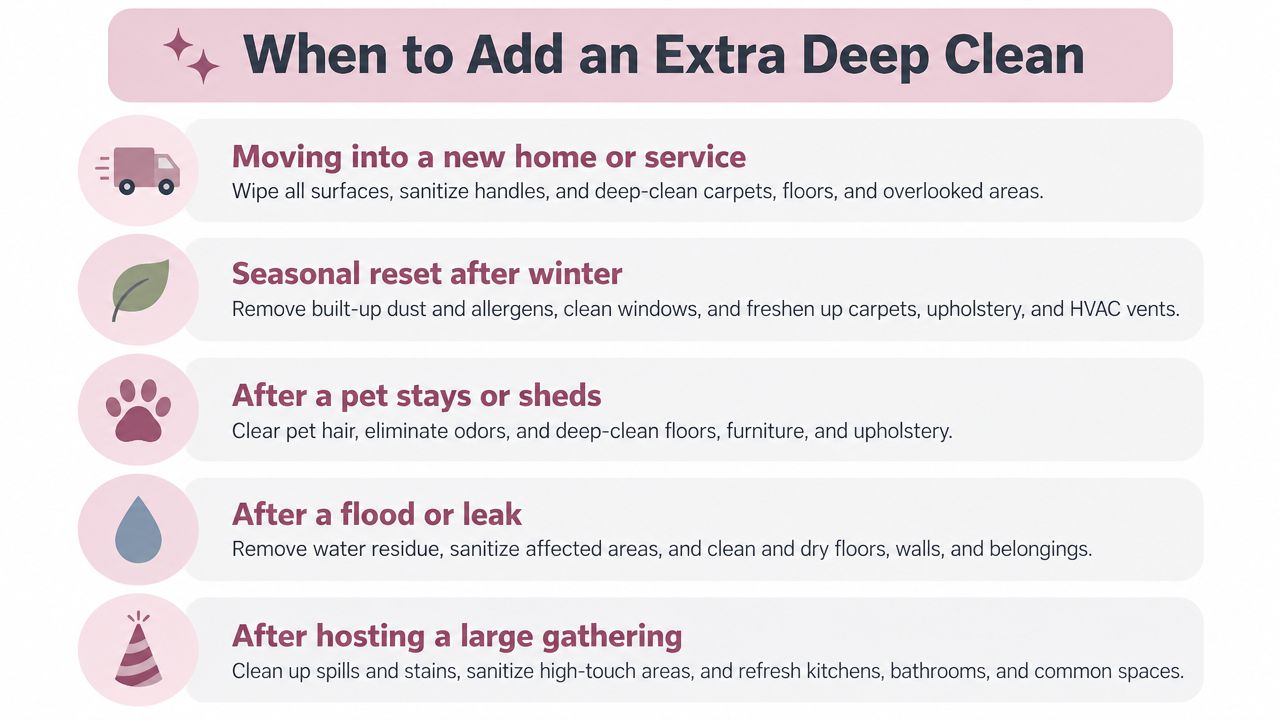
A recurring calendar is useful, but life can create a reason to clean outside the normal interval. These triggers don't mean your regular routine failed. They mean the home has experienced a change that adds soil, dust, contact, or disruption.
A first visit or a new service routine
A first deep clean can establish the baseline before recurring maintenance begins. It gives attention to neglected edges, appliance areas, bathroom buildup, and accessible surfaces so later visits can focus on preserving the result.
This is especially helpful when you're taking over a home after a busy season, a period of illness, or a change in work and family responsibilities. Starting with a reset makes the ongoing schedule more realistic.
Moving and home turnover
Move-in cleaning addresses the surfaces you want clean before furniture, boxes, and belongings fill the space. Move-out cleaning focuses on cabinets, closets, baseboards, appliances, and accessible areas that landlords, buyers, or the next occupants may inspect.
A regular cleaning visit isn't designed to handle every turnover detail. Empty rooms also reveal dust lines, residue, and marks hidden by furniture.
Renovation and construction
Post-construction dust is fine and persistent. It can settle on floors, fixtures, cabinet exteriors, mirrors, windows, kitchens, bathrooms, and other surfaces even after the visible work is complete.
Book this type of clean after the trade work has ended and the space is ready for final surface care. Don't treat construction residue like ordinary weekly dust. It often requires a deliberate top-to-bottom process so cleaned areas aren't contaminated again by work above them.
Seasonal changes and gatherings
Spring and fall are natural moments for a reset because they mark a change in how the home is used. A seasonal appointment can address windows, vents, closets, soft surfaces, and areas that were closed off during the previous season.
Hosting creates a separate trigger. Before a large gathering, focus on guest bathrooms, floors, kitchen surfaces, seating, and entryways. Afterward, look for spills, crumbs, tracked-in debris, and heavily used areas that need more than a quick touch-up.
Other signals are practical: visible dust on vents or baseboards, discolored grout, persistent stale odors, sticky kitchen surfaces, or a home that no longer feels fresh after routine cleaning. Those signs tell you to add a deep clean rather than wait for the next planned date.
Building a Simple Recurring Schedule That Prevents Buildup
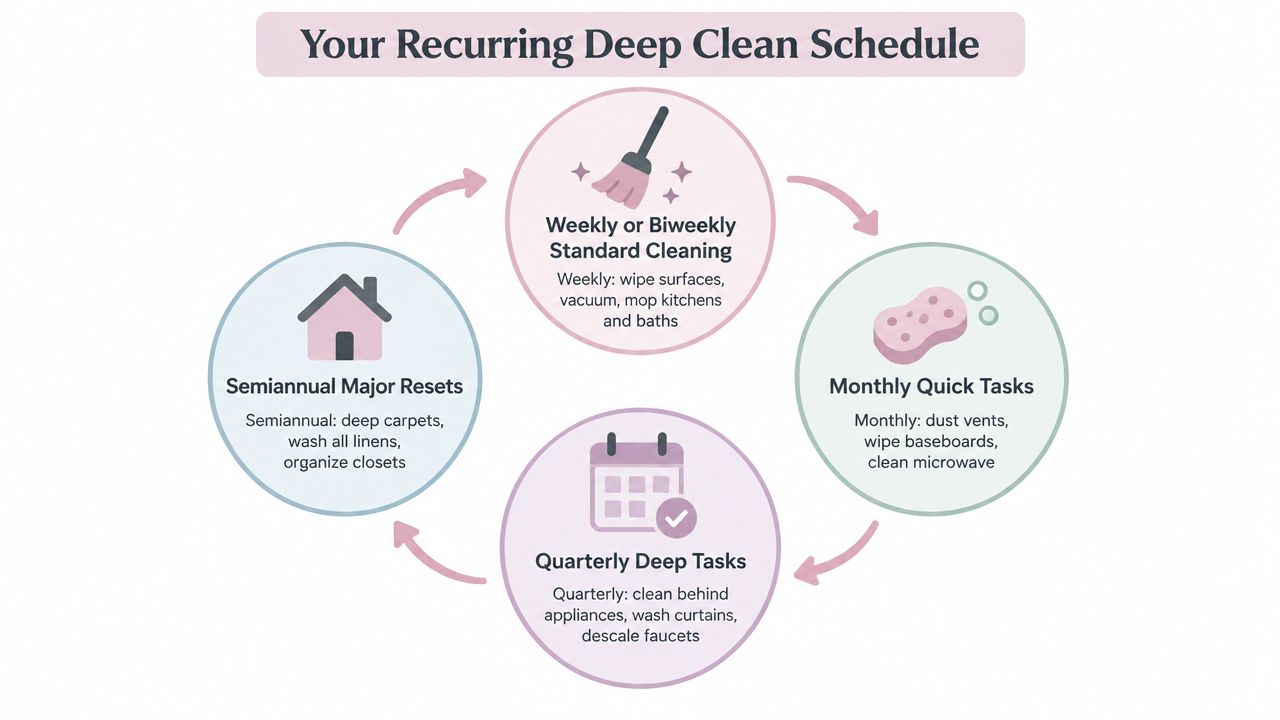
A sustainable schedule layers small maintenance with periodic resets. Start with weekly or biweekly standard cleaning, then assign deeper tasks to a monthly, quarterly, or semiannual rhythm. The OSF HealthCare room-by-room guide places refrigerator interiors, ceiling fan blades, and front-loading washing machine interiors on a quarterly deep-clean timeline. It also recommends monthly attention for upholstered furniture, with steam cleaning annually.
Weekly or biweekly maintenance
Keep visible surfaces from becoming reservoirs. Wipe kitchen counters and bathroom fixtures, vacuum high-use floors, mop appropriate hard surfaces, and remove trash. Dusting should include reachable furniture and surfaces, while floors should come after higher surfaces so dislodged debris doesn't undo the work.
The Helpling indoor-cleaning guidance also describes a layered pattern of weekly vacuuming and dusting, monthly attention to mattresses and vents, and periodic cleaning behind furniture, window tracks, and upholstery.
Monthly quick tasks
Choose a small group that fits your home:
- Kitchen focus: Wipe the microwave interior, cabinet fronts, and splash-prone edges.
- Air and fabric focus: Dust vents, inspect ceiling fan blades, and give mattresses or upholstery extra attention.
- Bathroom focus: Check faucet buildup, shower tracks, and areas around the toilet.
- Bedroom focus: Vacuum below beds where the tool can reach and review closet dust.
Quarterly and semiannual work
Every quarter, address hidden kitchen and bathroom areas, appliance interiors that need it, window tracks, grout, upholstery, and behind movable furniture. Use the semiannual reset for larger tasks such as deeper carpet care, broader linen washing, closets, utility areas, and storage spaces.
A written checklist prevents the same easy tasks from crowding out the less visible ones. You can also use recurring house cleaning services to set a repeatable maintenance cadence while reserving deep cleaning for seasonal or event-driven needs.
For West Georgia homes, low-odor products can make the process more comfortable for families and pets. Keep supplies together, work from high surfaces downward, and use the same sequence each time. Familiarity turns a vague chore into a routine that doesn't require constant planning.
Conclusion Your Next Step to a Consistently Clean Home
For most homes, deep cleaning every 3 to 6 months provides a sensible baseline when weekly or biweekly upkeep continues between visits. The shorter end makes more sense when pets, children, allergies, heavy traffic, or frequent hosting increase the amount of soil and dust your home collects. The longer end can work for a low-use household that maintains surfaces consistently.
The schedule doesn't have to look identical in every room. Kitchens, bathrooms, entryways, and living areas may need earlier attention, while guest rooms and storage areas can follow a slower rotation. A full seasonal reset gives you one coordinated finish line. Rolling tasks reduce the size of each individual project. A hybrid schedule often offers the most practical balance.
Add an extra deep clean when you move in, move out, finish construction, prepare for a major gathering, or reach a seasonal transition. Those events change the condition of the home, so waiting for the ordinary calendar may leave you working against avoidable buildup.
For homeowners in Kennesaw, Acworth, Marietta, Woodstock, Dallas, Hiram, Powder Springs, Cartersville, and nearby West Georgia communities, Maid in America provides one-time deep cleaning and recurring service on weekly, biweekly, every-three-weeks, or monthly schedules. The company supplies cleaning products, uses natural low-odor solutions, and assigns a consistent experienced cleaner whenever possible, with licensed, bonded, and insured professionals.
Choose your model today. If the home needs a full reset, schedule that first and place maintenance on the calendar immediately afterward. If the rooms are mostly under control, start with recurring upkeep and add quarterly or seasonal deep tasks before the dusty edges, grout, appliance interiors, and hidden corners become a bigger project.
Maid in America can provide a detailed deep clean for a first visit, seasonal reset, special occasion, move, or post-construction project, followed by recurring service that fits your household. Visit Maid in America to review service options and request a cleaning schedule for your West Georgia home.





Maid in America provides reliable, personalized cleaning with natural products for homes, offices, and communities across West Georgia. Licensed, bonded, and insured, we’re locally and privately owned.
Get in touch with us today!
info@maidinamericaga.com