How to Clean Bathroom Rugs: Washing, Drying and Odor Care
You step out of the shower, put your foot on the bath rug, and realize it's still damp from yesterday. It looks reasonably clean, but there's a sour smell when you lift the corner. Washing it again might help, but putting it straight back onto the bathroom floor won't solve the underlying problem.
For homeowners and renters in Kennesaw, Acworth, Marietta, and Woodstock, Georgia humidity makes drying just as important as washing. Knowing how to clean bathroom rugs means choosing a method that protects the backing, removes residue, and leaves the entire rug dry, not just the fluffy surface.
Table of Contents
- Give the backing its own airflow
- Cleaning doesn't automatically sanitize
- Know when another wash isn't worthwhile
Match the Cleaning Method to Your Rug Material
Washing every bath rug like a towel is a common mistake. A cotton surface can hide a latex backing that can't tolerate the same treatment as an ordinary cotton towel. The care label, fiber, and backing decide the method, with the most delicate component setting the limit.
The CDC's household cleaning guidance treats rugs as soft or porous materials and recommends removing visible soil, using an appropriate cleaner, laundering according to the manufacturer's instructions when possible, and drying completely. A product suitable for the tile underneath isn't automatically suitable for the rug.
Bathroom rug care by material and backing
| Rug type | Machine washable | Water and detergent | Drying method |
|---|---|---|---|
| Cotton bath mat | Usually yes, if label allows | Warmest water the label permits, mild detergent at label dose | Low-heat tumble if permitted, or air dry |
| Microfiber rug | Usually yes, if label allows | Warm water if permitted, mild detergent, no fabric softener | Low heat if permitted, or air dry |
| Rubber, latex or nonskid backing | Only if label allows | Cold water, mild detergent, no chlorine bleach unless approved | Air dry flat, no heated dryer |
| Memory foam rug | Hand wash only, if label allows | Cool or lukewarm water, gentle detergent | Press water out, never twist, air dry flat |
| Natural fiber such as jute, sisal or coir | Usually spot clean only | Damp cloth with a product approved for the material | Air dry fully in a ventilated space |
| Plush or tufted wool | Often spot clean only | Cool water, wool-safe detergent | Lay flat to air dry |
Inspect the underside before adding water
Flip the rug over and check for flaking, tackiness, curled edges, loose adhesive, or exposed foam. Wirecutter's bath-mat care guidance recommends treating deteriorating backing as a replacement issue rather than laundering it with other textiles. Heat and aggressive agitation can crack or separate backing even when the surface fibers still look good.
Practical rule: A washable pile doesn't make the whole rug washable.
For a valuable wool rug, avoid experimenting with soaking or household stain mixtures. Willis Furniture & Mattress explains when wool rugs need professional cleaning, a useful distinction when you're deciding between careful spot treatment and professional assessment.
Keep bathroom-surface products separate from textile products. If you're washing a rug in the bathtub, remove cleaner residue first; this guide to cleaning porcelain tubs addresses the tub itself, not the rug's fibers. Find the appropriate row above before choosing a wash cycle.
How to Wash a Bathroom Rug Step by Step
Start with a vacuum upholstery attachment, a soft cloth, compatible laundry detergent, and a drying rack. Clear the drying space before you start the washer. A clean, wet rug shouldn't sit in a laundry basket while you work out where to put it.
The sequence below keeps loose grit out of the wash and avoids the most common mistakes: excess detergent, a packed drum, and heat on vulnerable backing.
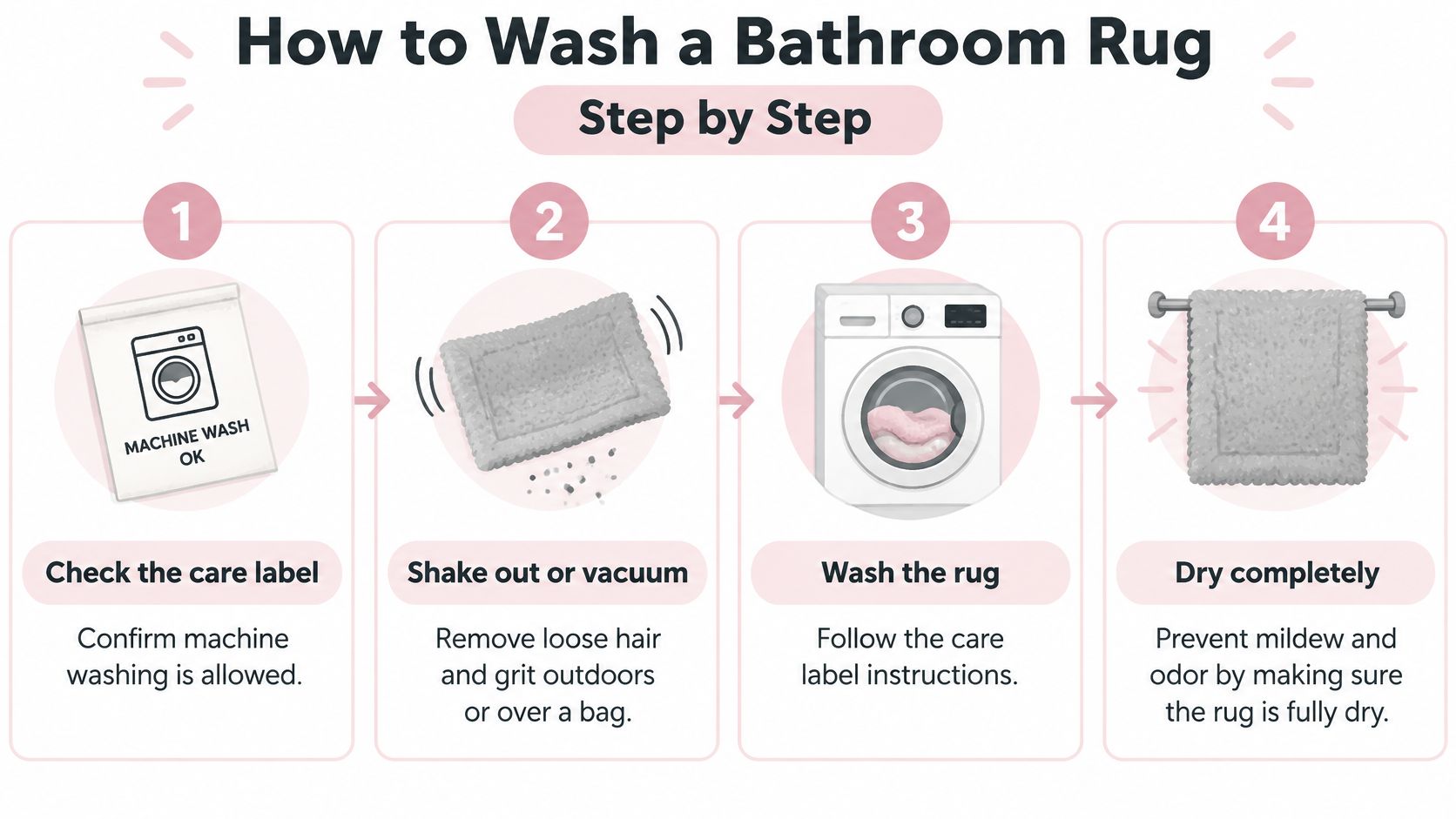
Prepare, wash, and check
Read the entire care label. Confirm that machine washing is allowed, then check the water, cycle, bleach, and dryer instructions separately. If the label is missing and the backing is glued or delicate, don't assume a gentle machine cycle makes immersion safe.
Remove loose hair and grit. Vacuum both sides with an upholstery attachment, or gently shake an ordinary dusty mat outdoors away from people and open doors. Collect debris over a bag when practical, and don't vigorously shake a rug with suspected mold indoors.
Pre-treat visible stains. Dab a small amount of fiber-compatible detergent onto the stain with a damp cloth, testing a hidden edge first. Blot rather than scrubbing hard, particularly around tufted loops and seams.
Give the rug room to move. Wash separately or with compatible towels, provided the machine and rug instructions allow that load. An expert cited in Martha Stewart's bath-mat cleaning guide recommends filling the machine to no more than approximately two-thirds capacity, rather than packing it tightly.
Measure detergent and select the permitted temperature. Use the warmest setting the rug's label allows, not the hottest setting available. Pour detergent into its dispenser at the product's appropriate load dose; extra soap can leave a stiff film instead of producing a cleaner rug.
Skip fabric softener on anti-slip mats. Don't add scent boosters or miscellaneous bathroom cleaners as substitutes for laundry detergent. If you're comparing specialty products, review EcoQuest Purifiers cleaning solutions for their stated applications, but use a product on a rug only when its directions and the rug's care requirements agree.
Remove promptly and dry appropriately. Use low tumble heat only where the label permits, and keep rubber-backed rugs out of heated drying. Before reinstalling, press a dry cloth against the underside, seams, and thickest areas to check for retained moisture.
For hand-washable foam, dissolve gentle detergent in cool or lukewarm water, press the rug through the solution, and rinse until the water is clear. Support it when lifting, then press out water without twisting.
A finished wash should leave soft pile, no slippery detergent film, and no sour smell once the rug is dry.
If the washer stops with an unbalanced load, follow its instructions rather than repeatedly restarting the spin. A heavy, waterlogged rug may exceed what the machine can handle even when it fits inside the drum.
Drying, Sanitizing and When to Replace
A rug can feel dry on top while its backing stays wet. In a humid Georgia bathroom, that trapped moisture can linger after the surface looks ready. The wash is only complete when the whole rug is dry.
The EPA's mold-control guidance advises drying water-damaged items within 24 to 48 hours to help prevent mold growth. Treat that as a limit for water-damaged materials, not a target for a freshly washed rug. Get the rug off the bathroom floor and give both sides airflow as soon as possible.
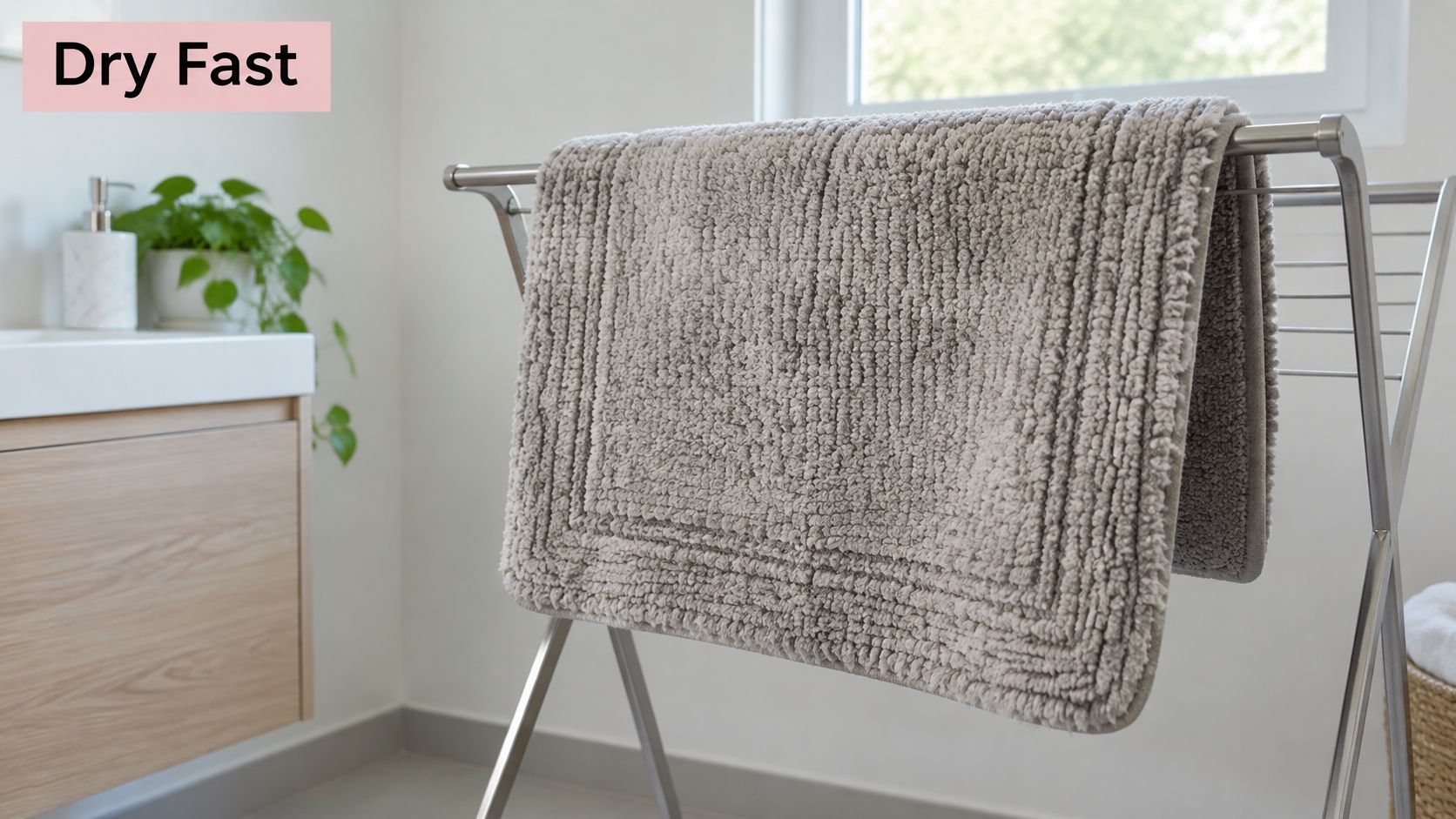
Give the backing its own airflow
Drape a flexible rug over a broad rack, leaving space between the sides. For foam or rugs that need to dry flat, use a supported mesh surface where possible and turn the rug so air reaches the underside. A heavy, saturated rug can stretch or tear if hung from a narrow hook.
Run the exhaust fan during and after showers. In humid Kennesaw, Acworth, and Woodstock summers, moving room air across the rack or running a dehumidifier can help when a closed bathroom stays steamy.
- Open up the drying space. Keep the rug clear of wet towels and other textiles that restrict airflow.
- Check hidden moisture. Feel the seams, corners, backing, and center padding, not only the pile.
- Dry the floor too. Wipe away trapped water before putting the rug back.
- Change the location if needed. A steamy bathroom slows drying; use a better-ventilated spot instead.
A portable humidity meter can help distinguish a damp room from a rug that is drying slowly. Don't compensate with higher dryer heat if it could damage the backing.
Cleaning doesn't automatically sanitize
Detergent and water remove ordinary soil. Sanitizing and disinfecting are separate claims: a hot wash or fresh fragrance doesn't prove either result. Read about the difference between cleaning, sanitizing, and disinfecting before choosing a product or treatment.
Use a sanitizing product only when its directions cover the intended textile use and the rug can tolerate it. Never mix bleach with acids, including vinegar, or with ammonia. Avoid chlorine bleach on rubber or foam unless the manufacturer expressly approves it.
Know when another wash isn't worthwhile
Replace a rug if it stays damp despite appropriate airflow, retains a musty odor after cleaning and thorough drying, or develops spreading mold. Failed backing, exposed foam, and a rug that slides or curls are also signs that washing won't restore safe use.
A gentle wash followed by thorough drying is a better choice than repeated hot washing that damages the backing.
For an expensive specialty rug, seek professional assessment before discarding it. For an ordinary bath mat with deteriorating backing or recurring mold, stronger chemicals are unlikely to make it a sound choice again. Shared business or community bathrooms may need a documented cleaning approach rather than an improvised household disinfectant mixture.
Odor, Mildew and Stiffness Problems and Fixes
A musty smell after drying often means the rug wasn't dry throughout when it went back down. Lift it and check the backing before adding fragrance or another cleaning product. The useful question is whether you're dealing with retained moisture, trapped detergent, or material that has already deteriorated.
Bathroom rug symptoms, causes and fixes
| Symptom | Likely cause | Fix |
|---|---|---|
| Musty smell after drying | Rug went back down while still damp | Re-wash if needed, dry with airflow, keep off floor until fully dry |
| Black or gray spots | Possible mildew in fibers or backing | Clean with detergent and water if material permits, dry completely, replace if spots spread |
| Stiff or scratchy pile | Detergent buildup in fibers | Add an extra rinse, reduce detergent dose next wash |
| Peeling or sticky backing | Heat or harsh chemicals on rubber or foam | Replace the rug, don't re-wash |
| Dingy color after months | Dust and body oils that hold moisture | Vacuum weekly, wash on schedule |
| Odor returns within days | Bathroom humidity stays high after showers | Run exhaust fan during and after showers, add a dehumidifier in summer |
Match the fix to the cause
Dark spots aren't proof of mold by color alone. Inspect whether they're embedded stains, loose dirt, or patches that spread, and avoid aggressive brushing that damages the fibers. Eagle Restoration's guide to how to remove mildew from carpet provides additional context for carpeted materials, but a small washable bath mat with recurring growth may be more practical to replace.
For stiffness, run a permitted rinse without adding more detergent. Don't try to soften residue-coated pile with fabric softener, especially when the rug has an anti-slip layer. Flakes or sticky patches underneath aren't a rinsing problem and won't be repaired by another cycle.
Address dust as well as water
Ohio State University's summary of indoor carpet research explains that dust attracts moisture and supplies nutrients for fungal growth, identifies weekly vacuuming as a realistic way to reduce dust exposure, and reports an EPA indoor humidity recommendation of 30% to 50%. That supports removing Georgia spring pollen and tracked-in grit before they accumulate, rather than waiting for visible staining.
Re-drying is something you can start immediately; a revised washing and ventilation routine takes repeated use to evaluate. Neither is a guaranteed overnight fix. Stop treating the rug when odor survives proper cleaning, spots spread, or the backing no longer holds together.
Choose a Washing Schedule for Your Household
A rug that stays damp between showers needs more frequent washing than one that dries fully after each use. Use weekly or biweekly washing as a starting point, then adjust for bathroom humidity, daily traffic, and the care label. Volero's bath-mat care guidance recommends washing weekly or every two weeks and hanging or draping the mat to dry.
Washing frequency by household situation
| Household situation | Wash frequency | Drying rule |
|---|---|---|
| Single user, dry bathroom | Every two weeks | Hang or drape after each use |
| Family with daily showers | Weekly | Hang or drape after each use |
| Humid bathroom or several daily users | Weekly, sooner if soaked | Dry fully before returning to the floor |
| Rubber or foam backed rug, any household | Every one to two weeks, per label | Air dry flat and turn to dry the underside |
| Household with pets using the rug | Weekly | Vacuum, then check underside before replacing |
Make the routine easy to repeat
Pair rug washing with towel laundry, or choose a fixed bathroom-reset day. Keep a spare washable mat available if the current one is still drying. Add rug care to an entire-house cleaning checklist so the schedule does not depend on noticing an odor.
Choose a rug that your bathroom can dry. A thicker mat can stay damp longer, especially in a humid room, so check that the underside is dry before putting it back on the floor.
Maid in America is a locally owned, licensed, bonded, and insured cleaning company serving homes, offices, and community amenities across Cobb, Paulding, and Bartow counties. It uses natural, low-odor products and offers recurring weekly, biweekly, every-three-weeks, or monthly service, with one experienced cleaner assigned whenever possible. Request an estimate through Maid in America.




Maid in America provides reliable, personalized cleaning with natural products for homes, offices, and communities across West Georgia. Licensed, bonded, and insured, we’re locally and privately owned.
Get in touch with us today!
info@maidinamericaga.com