Cleaning Porcelain Tubs Safely: A Step-by-Step Guide
The familiar advice to sprinkle scouring powder into a stained tub and scrub harder can leave you with a tub that's harder to clean next time. Porcelain enamel is a glass finish over metal, not a surface you can scour indefinitely without consequences.
More scrubbing isn't more cleaning. The practical approach to cleaning porcelain tubs is to identify the finish, match the cleaner to the residue, and recognize when a dirty-looking patch is damaged enamel.
Table of Contents
Identify Your Tub Surface Before You Clean
Treating every white bathtub alike is an expensive mistake. A cleaner that suits intact porcelain enamel may scratch acrylic, damage fiberglass gelcoat, or lift a refinished coating.
Start with these checks before opening a bottle:
- Look at existing chips: A chip exposing dark gray or black metal suggests porcelain enamel over steel or cast iron. Don't pick at the edge to investigate.
- Try a magnet: A magnet will attract the steel or cast iron beneath porcelain enamel, unlike acrylic or fiberglass. Wrap it in a soft cloth so you don't mark the surface.
A magnetic result doesn't tell you whether someone has refinished the tub. Check for peeling around the drain, coating overspray near fittings, or an uneven sheen, and look for the manufacturer's identification or old refinishing paperwork.
An older bathroom in Marietta or Cartersville might retain its original cast iron tub, while another bathroom in the same property has an acrylic replacement. Check each fixture separately rather than buying a cleaner for the whole house.
Tub Surface, Identification and Matching Cleaner
| Surface | How to Recognize It | Cleaner That Fits | Avoid |
|---|---|---|---|
| Porcelain enamel over steel or cast iron | Hard, glossy, magnetic; chips show dark metal | Mild detergent or cleaner labeled safe for porcelain enamel, soft cloth or sponge | Steel wool, abrasive powders, metal scrapers, prolonged acid exposure |
| Acrylic | Lightweight, slightly flexible when pressed, not magnetic | Non-abrasive, pH-neutral cleaner recommended for acrylic | Abrasive scrubs, strong solvents, pads that leave fine scratches |
| Fiberglass | Lightweight, not magnetic, gelcoat finish that shows fine scratches | Non-abrasive cleaner labeled for fiberglass | Abrasive pads, acetone, scouring powder |
| Refinished or coated tub | Newer coating, uneven sheen, may show peeling at edges | Only what the refinisher's care instructions list | Any product not named in the refinisher's instructions |
Gustavsberg's product-care instructions recommend soft cloths and mild detergent for glazed surfaces and warn against powerful detergents and abrasive cleaning tools.
Test any unfamiliar product on a hidden spot, such as beneath the overflow plate if it's safely accessible. Wait a few minutes, rinse, dry, and inspect for changes in color, sheen, or texture before treating the visible surface.
How to Clean a Porcelain Tub Step by Step
Allow about 15 to 20 minutes for a routine clean of a lightly soiled tub, with extra time for stubborn deposits. In Kennesaw and Acworth, humid summers make ventilation particularly important around damp caulk, while regular washing keeps soap film from becoming a heavier job.
Lowe's bathtub-cleaning guide supports a gentle porcelain-enamel routine using warm water, a compatible cleaner, soft wiping tools, thorough rinsing, and drying.
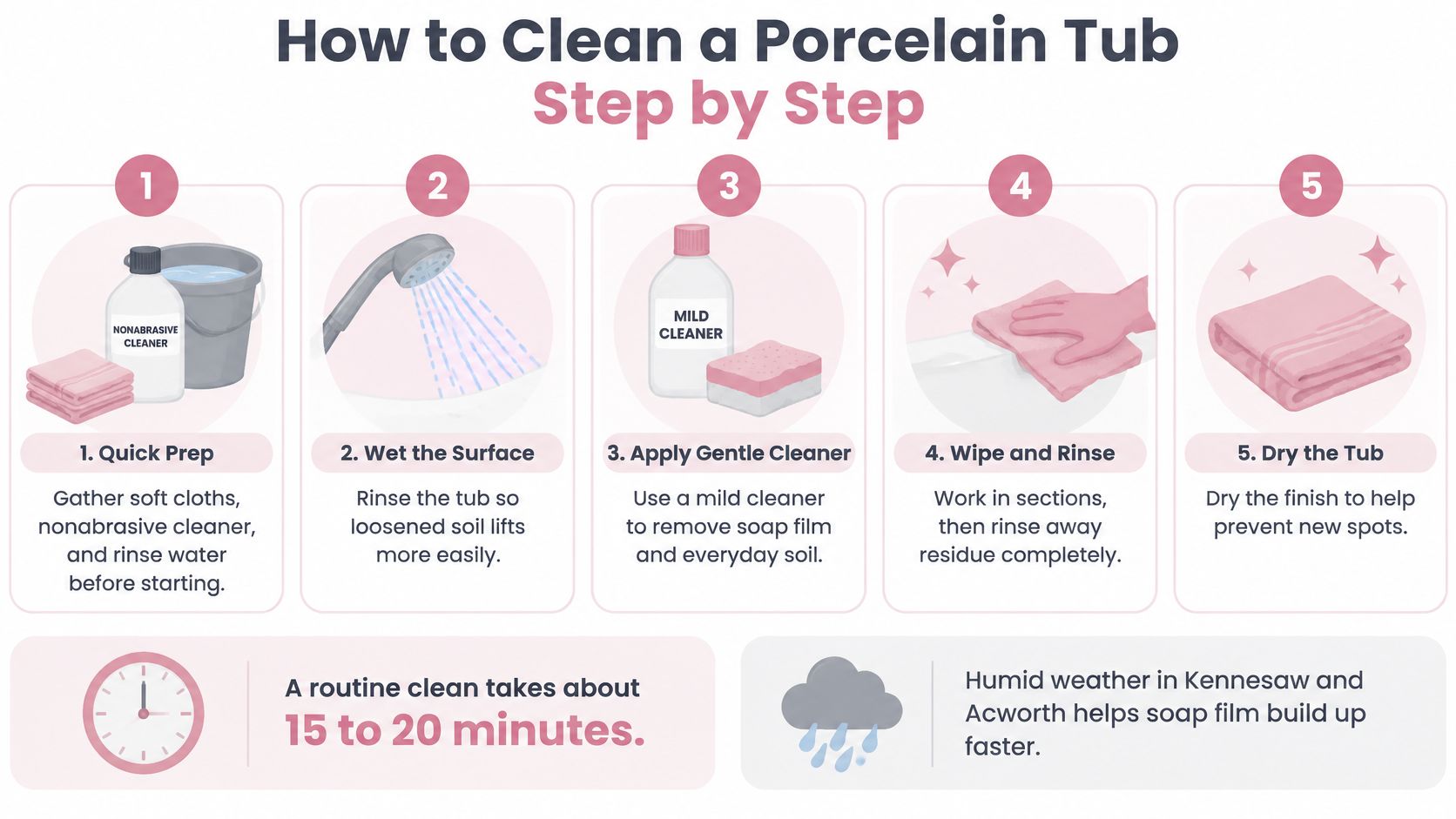
The Routine That Removes Film Without Scouring
Ventilate the bathroom. Run the exhaust fan or open a suitable window before applying cleaner. Don't work in a closed room just because a product has little fragrance.
Remove hair and loose debris. Lift hair with a dry cloth or paper towel and put it in the trash. Washing everything into the drain trades a cleaning task for a possible blockage.
Rinse with warm water. Wet the tub so dried residue starts to loosen. Don't begin rubbing a dry sponge across gritty soil.
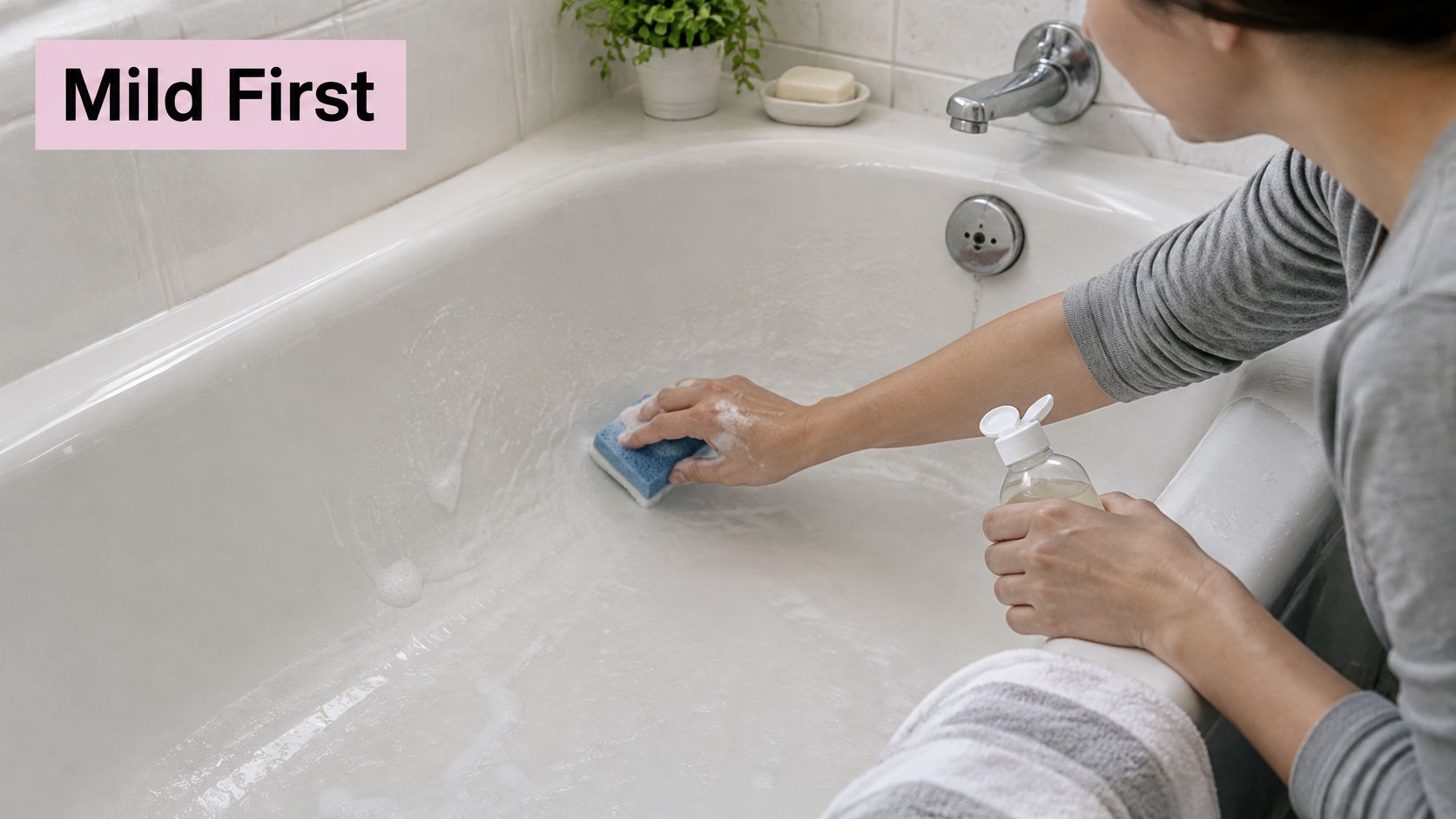
Apply a gentle cleaner. Use mild detergent or a product explicitly labeled safe for porcelain enamel, at its stated dilution. Give it the label's working time rather than adding extra concentrate.
Wipe in light, overlapping passes. Use a microfiber cloth or soft, non-abrasive sponge, starting at the back wall and working toward the drain. If the cloth picks up grit, rinse it instead of dragging that grit across the finish.
Detail the collection points. Pay attention to the faucet base, rim, and drain surround, where residue collects. Fold the cloth to reach edges rather than digging with a metal tool.
Rinse completely. Use fresh water to carry loosened soil and detergent toward the drain. Cleaner left behind can create streaks, a dull-looking film, or a slippery bathing surface.
Dry with clean microfiber. Wipe remaining droplets from the enamel and fittings. Don't use the same towel that collected the dirty cleaning water.
Choosing Natural Products Without Guesswork
For a mild mechanical option, use a diluted baking-soda paste sparingly on compatible enamel and rinse before it dries. It still relies on friction, so a thicker paste and heavier pressure aren't improvements. Keep vinegar for brief, localized limescale treatment only when the tub's care guidance permits it.
If you're comparing lower-odor options, Fillaree's guide to non-toxic bathroom cleaners offers a useful starting point; check the actual product label against your finish before buying. Households with animals can also use this guide to natural cleaning products and pet safety when planning storage and cleaning access.
An intact, clean tub should have an even gloss, no soap film, and no gritty feel. Don't keep polishing a dull patch because the surrounding enamel looks brighter.
Removing Common Tub Stains Without Damaging the Finish
Start with the mildest method that could remove the deposit. The useful question isn't how stubborn the stain looks, but whether you're dealing with soap, minerals, transferred material, or a damaged surface.
Common Tub Stains, Causes and Fixes
| Stain | Likely Cause | Gentlest Method First | Avoid |
|---|---|---|---|
| Soap scum film | Soap and body oil building up over days | Warm water and mild detergent, soft sponge, rinse well | Scouring powder, steel wool |
| Limescale | Hard water leaving chalky white deposits | Brief application of diluted white vinegar on a damp cloth on the localized spot, then rinse, if permitted by the manufacturer | Prolonged acid contact, leaving vinegar to dry on the finish |
| Rust ring | Dripping faucet or exposed metal beneath a chip | Cleaner labeled safe for porcelain enamel, tested in a hidden spot first | Steel wool, metal scrapers, bleach used as a rust remover |
| Dark friction marks | Rubber soles, metal from shoes or caddies | Mild detergent and soft sponge with light pressure | Abrasive pads, gritty powders |
| Red clay film | Georgia red clay tracked in on shoes or pets | Warm water and mild detergent, lift with a soft cloth | Scrubbing dry clay with an abrasive |
| Spring pollen film | Yellow pollen settling during spring | Rinse with warm water, then the routine wipe-down | Dry dusting with rough cloths |
| Mildew at caulk line | Humidity and poor ventilation | Product labeled for mildew on caulk, plus ventilation | Mixing products, skipping required rinsing |
Soap scum often smears or feels waxy when wet. Give detergent time to loosen that film before deciding you need another chemical.
Chalky limescale needs a different approach. Gustavsberg's bathroom-care guidance permits household vinegar sparingly on localized deposits using a damp cloth, followed by thorough rinsing. Where your tub's instructions permit it, use diluted white vinegar briefly on the spot, never as a whole-tub soak or something left to dry.
Practical rule: A mineral deposit calls for compatible chemistry, not a rougher sponge.
Rust below a dripping faucet warrants inspection of the fixture and nearby chips. Choose a rust remover specifically labeled for porcelain enamel and test it first; don't assume a toilet-bowl product is interchangeable. This explanation of toilet-bowl ring stains helps distinguish deposits, but tub compatibility still controls product selection.
Dark friction marks may be transferred material rather than scratches. Try light detergent cleaning before judging them. Soften Georgia red clay with water before lifting it, and rinse spring pollen away rather than grinding either into the enamel.
Mildew along the caulk line is a caulk-and-moisture problem, not automatically a tub stain. Use a caulk-compatible product and improve ventilation. After two gentle attempts without improvement, treat a persistent mark as a finish question rather than permission to scrub harder.
Disinfecting Safely and Never Mixing Products
Clean first, then disinfect when there's a reason. An ill household member or a turnover situation may justify disinfection, but an ordinary soap-film clean doesn't automatically need another chemical step.
The CDC's household cleaning guidance distinguishes removing dirt and many germs through cleaning from using an EPA-registered disinfectant when disinfection is needed. For the terminology, this guide explains the difference between cleaning, sanitizing, and disinfecting.
Use the Label as the Procedure
Clean and rinse the tub, then check that the disinfectant label permits use on porcelain enamel. Apply it as directed and keep the entire treated surface visibly wet for the specified contact time. Rinse if instructed, continue ventilation, and dry after the process is complete.
CDC facility-disinfection guidance specifies following label directions for application, concentration, and wet contact time. Wiping early or letting the product evaporate before that time is complete can reduce effectiveness.
Product Combinations to Avoid and What to Do Instead
| Mistake | What Happens | What to Do Instead |
|---|---|---|
| Bleach combined with ammonia | Toxic chloramine vapors form | Never combine; rinse and ventilate between products |
| Bleach combined with vinegar or another acid | Chlorine gas can form | Rinse thoroughly before any acidic product, and use products on separate days |
| Disinfectant over soap scum | Soil shields germs from the product | Clean and rinse first, then disinfect |
| Disinfectant wiped dry early | Contact time is cut short | Keep the surface wet for the full label contact time |
Separate days don't make residual chemicals harmless. If you don't know what someone previously used, don't add bleach or an acidic cleaner to the residue.
Natural doesn't mean safe to mix, and low odor doesn't prove low risk. Wear suitable gloves, ventilate, and keep products away from children and pets.
Chlorine bleach can dull glossy porcelain enamel. Use it only when its label permits enamel use and rinse fully as directed. An EPA-registered disinfectant specifically labeled for porcelain enamel, rather than an improvised bleach treatment, is the safer default.
Prevention Habits That Keep the Finish Glossy
Repeated scouring can create a frustrating cycle: you scratch the gloss, the roughened surface holds more soil, and the next cleaning takes more effort. The University of Nebraska–Lincoln extension publication describes how regular abrasion dulls porcelain surfaces and makes staining harder to remove.
Small Habits With Less Wear
- Rinse away soap: Wipe the tub after use instead of letting residue dry into a ring.
- Edit the cleaning caddy: Keep steel wool, scouring powders, and abrasive pads away from the fixture.
- Protect against impacts: Avoid dropping heavy shampoo bottles, tools, or shower hardware into the basin.
- Remove humid air: Run the exhaust fan during and after showers, especially during humid Georgia summers.
Tub Cleaning Frequency by Household
These are practical starting schedules, not disinfection standards. Adjust for visible residue, actual use, and the fixture's care instructions.
| Household | Wipe Down After Use | Full Routine Clean |
|---|---|---|
| Family of four with daily showers | Rinse and dry after each use | Weekly |
| Couple or single adult with few showers | Rinse after each use | Every two weeks |
| Home with frequent guests | Rinse after each use | Weekly during visits, then return to a regular rhythm |
| Rental or vacant unit | Wipe at each visit | Before every new occupant |
| Shared amenity or community bathroom | Per posted facility schedule | Per facility manager's schedule |
For homeowners, renters, and businesses in Woodstock, West Cobb, and surrounding communities, the right schedule is one someone can consistently maintain. HOA managers should also make responsibility for reporting chips, leaks, and damaged caulk clear.
Frequent light cleaning protects enamel better than occasional aggressive scrubbing.
Maid in America offers weekly, biweekly, every 3 weeks, and monthly recurring service. Usually, one dedicated cleaner visits each home, learns the household's preferences, and becomes someone clients know by name. That continuity helps keep care consistent rather than changing products and methods at every visit.
Signs a Tub Needs a Pro Instead of More Scrubbing
Cleaning removes soil; it can't replace missing enamel or restore a worn glass finish. A surface that remains rough after gentle washing needs assessment, not another round with a stronger cleaner.
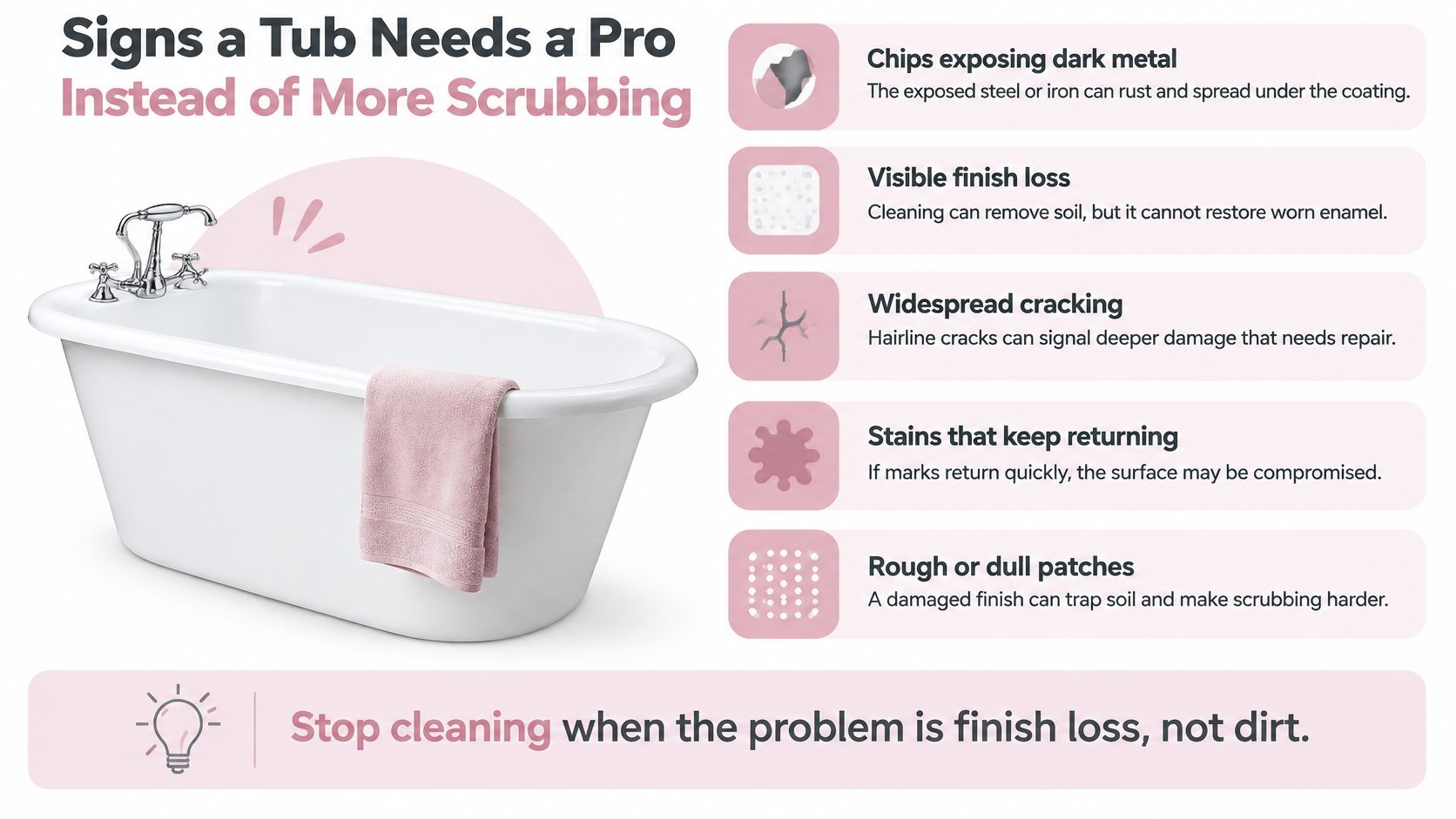
Stop and Inspect These Warning Signs
- Chips exposing dark metal: Exposed steel or iron can rust, with deterioration extending beneath the coating.
- Persistent dull or rough patches: If gentle cleaning removes residue but not the texture change, the gloss may be permanently damaged.
- Cracks or spreading rust: These need a repair assessment, particularly when marks reappear quickly.
- Caulk that stays black: Discoloration within deteriorated caulk may require removal and replacement rather than surface treatment.
- Leaks at the drain or faucet: Cleaning won't correct a failing seal or plumbing connection.
A refinishing specialist can assess chipped or worn enamel and explain whether localized repair, refinishing, or replacement makes sense. Once the original gloss is materially gone, refinishing may be the only practical way to regain an even surface without replacing the fixture.
Match the Professional to the Problem
Ask a refinisher what coating they use, how long they expect it to last under your household's use, and what written care instructions they provide. Clarify curing requirements and which products would damage the new coating before agreeing to the work.
A licensed plumber handles drain and faucet leaks. Caulk replacement is a separate maintenance job, while widespread mildew or water damage beyond the tub edge warrants a qualified contractor's assessment. For renters, photograph the condition and notify the property manager before authorizing repairs.
Get a Free Estimate From Maid in America
If tub maintenance keeps slipping behind work, commuting, or family responsibilities, a recurring cleaning plan can take it off your weekly list. Maid in America is a locally and privately owned house cleaning and maid service in Kennesaw and Acworth, GA, owned by Vicky Bates.
The company is licensed, bonded, and insured, with carefully selected and trained cleaners using carefully selected natural, low-odor products. Basic maintenance cleaning, Top-to-Bottom Deluxe/deep cleaning, and recurring visits provide options for consistent, personalized care.
Add sparkle and shine with your health in mind.
Service extends to Woodstock, Cartersville, West Cobb, Marietta, Dallas, Hiram, and Powder Springs, plus nearby communities in Cobb, Cherokee, Paulding, Douglas, and Bartow counties. Homeowners, renters, and businesses can discuss their fixture finishes, priorities, and household sensitivities when arranging service.
Maid in America offers maintenance and deep cleaning for homes, plus office cleaning and HOA clubhouse and community amenity cleaning, with attention to surface-compatible care. To put porcelain-tub upkeep on a manageable schedule, request a free estimate online from Maid in America or call 770-427-4448.





Maid in America provides reliable, personalized cleaning with natural products for homes, offices, and communities across West Georgia. Licensed, bonded, and insured, we’re locally and privately owned.
Get in touch with us today!
info@maidinamericaga.com