How to Remove Toilet Bowl Ring Stains Safely

You scrub the bowl on Sunday, flush, step back, and think it's handled. Then by the next weekend there it is again, that ring at the waterline that makes an otherwise clean bathroom in Kennesaw or Acworth look neglected. In a lot of West Georgia homes, especially with busy families, commuters, retirees aging in place, and bathrooms that stay damp through humid summers, that ring isn't a sign that you're doing something wrong. It's usually a sign that you're treating the wrong kind of buildup.
The safest way to remove a toilet bowl ring isn't to pour in stronger and stronger products. It's to figure out what the ring is, prep the bowl so the cleaner can work, and use the least aggressive effective method first. That matters in homes across Kennesaw, Acworth, Woodstock, and Marietta, where people want results without harsh fumes, scratched porcelain, or risky product mixing.
Table of Contents
- Match the ring to the right method
- Small checks prevent big repeat problems
- A routine that fits real life in West Georgia
Why That Ring Keeps Coming Back in Your Kennesaw or Acworth Bathroom
A lot of homeowners in Kennesaw and Acworth have the same complaint. They clean the toilet, the ring lightens, and then it creeps back fast enough to feel like the bowl was never really clean. In my experience, that's usually not a cleaning failure. It's a hard-water deposit rebuilding at the same line every time the bowl refills.
A widely cited hard-water compilation based on USGS findings reports that about 60% of groundwater samples from drinking-water aquifers collected during 1991–2010 were classified as hard or very hard, while roughly 20% were naturally soft. In a separate USGS domestic-well sample of 2,160 private wells from 1991–2004, the median hardness was 162 milligrams per liter as calcium carbonate, which falls in the hard range, and 80% of wells measured between 30.3 and 370 mg/L. That helps explain why toilet rings are a routine maintenance issue in many homes, rather than some rare plumbing oddity, as summarized in this hard water statistics guide.

The ring usually forms at the same spot for a reason
When dissolved calcium and magnesium stay behind at the waterline, repeated wetting and drying leaves mineral deposits. Pale white, gray, or tan crust is more consistent with scale than ordinary dirt, which is why repeated bleaching often disappoints. If the deposit stays rough, it keeps grabbing onto fresh residue.
That's also why recurring staining can overlap with plumbing issues. If the waterline is consistently high, or the toilet is running slowly, the same part of the bowl stays exposed to fresh minerals over and over. For homeowners trying to sort out whether the problem is staining or moisture where it shouldn't be, this guide for Florida homeowners is a useful reminder that toilet problems aren't always just cosmetic.
Practical rule: If the ring comes back quickly in an otherwise clean bathroom, assume it has a cause, not just a surface stain.
For homeowners and renters who'd rather prevent that cycle than keep fighting it, local help like this Kennesaw cleaning service page reflects the same calmer approach. Diagnose first, use the right method, and protect the surface while you clean.
Diagnose the Ring Before You Reach for a Cleaner
Most bad advice on how to remove toilet bowl ring stains starts with a product. That's backwards. The right cleaner depends on what's bonded to the porcelain, and in Acworth, Woodstock, and Marietta homes, the bowl ring is often one of several different things that only look similar from a distance.
Start by looking at color, texture, and pattern. A chalky white, gray, or tan ring that feels rough usually points to mineral scale. An orange or rusty brown mark often suggests iron-related staining. A slimy dark ring at or just below the waterline leans more toward organic buildup. A ring that returns unusually fast, even after proper cleaning, can point to hard water, a slow leak, or a toilet that keeps running, as explained in this practical overview of hard-water toilet stains and diagnosis.
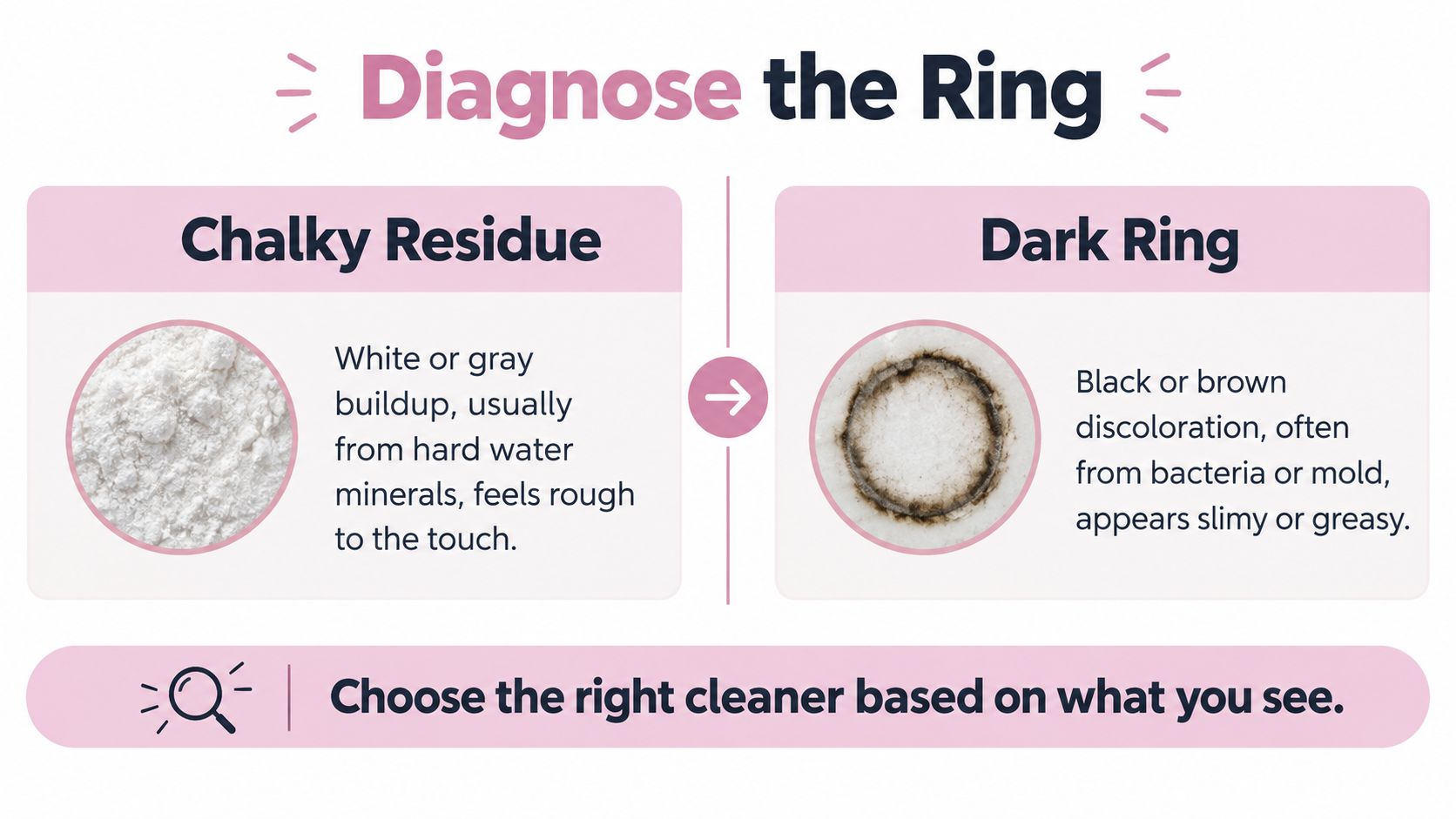
What the bowl is telling you
You don't need lab testing to make a useful call. You need a clear read on what you're seeing.
- Rough and chalky: Usually a mineral problem. A descaler is more relevant than a disinfectant.
- Orange or rust-toned: Often needs a rust-focused cleaner, used by itself.
- Dark and slick: More likely to respond to physical cleaning and a cleaner meant for organic residue.
- Back in a few days: Often means there's an underlying condition feeding the stain.
Why bleach often seems like it should work, but doesn't
Bleach is familiar, and a lot of people keep it in the hall closet or laundry area. But if the ring is mineral-based, bleach can whiten surrounding discoloration without dissolving the deposit. The rough layer stays in place, and grime sticks right back to it.
That's why diagnosis matters more than force. Renters in Marietta apartments, homeowners on wells near Cartersville, and families in Woodstock HOA communities all save time when they match the cleaner to the stain instead of cycling through random products.
If the deposit feels bonded to the bowl, the answer usually isn't harder scrubbing. It's choosing the chemistry that fits the residue.
Prep the Bowl So the Cleaner Can Actually Work
The prep work is where a lot of home cleaning attempts often fail. If cleaner hits a bowl full of water, it gets diluted immediately. If the room is closed up, fumes build. If there's residue from a different product already in the bowl, you've created a safety problem before you even start.
In a bathroom in Powder Springs, Dallas, or Kennesaw, the setup should be simple and deliberate. Open the door, turn on the exhaust fan if you have one, and put on gloves and eye protection. If there's any chance the bowl has leftover bleach, tablet residue, or another cleaner in it, flush first and rinse the brush before bringing in anything new.

Lower the water so the product reaches the ring
For a mineral-based ring, a more controlled workflow works better than a rushed one. Shut off the toilet supply, flush to lower the water level, and sponge-dry the exposed porcelain so the cleaner isn't watered down. Guidance on safe pumice use and scale-removal technique also stresses that acid cleaners work best when they contact the deposit directly, and that abrasive tools should be approached carefully to avoid damaging the finish, as outlined in this porcelain-safe pumice and scale removal guide.
One chemistry at a time is not optional
EPA materials warn that some toilet cleaners may contain hydrochloric acid and that toilet cleaner must never be mixed with other household cleaning products because dangerous gases can result. EPA label guidance also warns that acid toilet-bowl cleaners containing lactic acid must not be mixed with chlorine bleach, and the CDC gives the same core rule for bleach, which is to never mix household bleach or any disinfectant with another cleaner or disinfectant because dangerous vapors can form, as stated in this EPA safety handout on toilet cleaners.
A towel at the base catches drips. A dry bowl gives the product a fair chance. Ventilation keeps the room usable. None of that is glamorous, but it's what makes the actual cleaning step work.
Apply the Right Cleaner and Let It Do the Job
Once the bowl is prepped, the work gets easier. For a confirmed mineral ring, use a cleaner specifically labeled for toilet-bowl scale or mineral deposits, apply it according to the label, give it the full dwell time, then agitate gently with a non-scratch nylon brush before flushing thoroughly. That's the controlled acid-dissolution method in plain English. Let the product loosen the deposit so you don't have to muscle it off.
EPA-registered toilet-bowl products show why labels matter. One label directs users to wet all interior bowl surfaces, including under the rim, with at least 4 fluid ounces and let it soak for at least 10 minutes before brushing and flushing. Another gives an 8-fluid-ounce application for disinfecting the interior bowl and also requires a 10-minute wet contact period. Those figures are label-specific, not universal, which is why the bottle in your hand controls the amount and dwell time, as shown in this EPA toilet-bowl product label reference.

What works better than brute force
For scale, patience beats pressure. Acidic products dissolve carbonate buildup, which means the quality benchmark is simple. You want the ring gone after treatment without visible dulling, scratching, or residue. If the deposit persists, that may point to damaged glaze, ongoing hard-water inflow, or a leak, not a need to scrub harder, according to this practical stain guide from Alderstone Water Company.
For rust-colored rings, choose a product intended for that kind of stain and keep the same discipline. One product per treatment. Full rinse before anything else. That's especially important in homes around Acworth and West Cobb where people often try one cleaner, get impatient, and layer something stronger on top.
Where bleach fits, and where it doesn't
Bleach has a role as a disinfectant and whitening agent. It is not a reliable solvent for calcium scale. When the problem is mineral buildup, an acid-labeled descaler is usually the more relevant category, assuming the toilet manufacturer and product label allow it.
For homeowners who prefer a low-odor, health-conscious approach, that least-aggressive-first mindset matters. A mild, label-approved descaler and a nylon brush often solve more than people expect. In regular bathroom care, services like Maid in America handle toilets as part of broader maintenance cleaning, which is useful when the goal is not just ring removal but keeping the whole bathroom from reaching that point.
The cleaner should do the dissolving. Your brush should only be helping it along.
When the Ring Will Not Budge Without Extra Help
Some rings have been building for a long time. Older homes in Dallas, Hiram, or Cartersville can have deposits that don't fully release after one standard treatment, especially if the glaze is worn or the bowl has seen years of hard-water exposure. That's when people get tempted to grab steel wool, a scraper, or whatever abrasive tool is closest. That's usually the wrong turn.
A pumice stone made for porcelain can help with stubborn mineral residue, but only if it's used wet, with very light pressure, and only after testing in an inconspicuous area. Dry pumice, steel wool, and metal scrapers can scratch the vitreous surface. Once that finish is scratched, fresh deposits cling more easily and the next ring can show up even faster.
Separate stain removal from disinfection
There's another common mix-up here. Removing a ring and disinfecting a toilet are not the same job. An EPA-registered toilet-bowl disinfectant label directs users to pre-clean heavily soiled areas, apply the solution across the bowl including beneath the rim, and keep the treated surface visibly wet for 10 minutes before flushing and rinsing the applicator. The EPA also explains that if the surface dries before the contact time ends, the product must be reapplied, as shown in this EPA disinfectant label guidance for toilet bowls.
That matters in West Cobb and Marietta homes where people scrub the visible stain away and assume the bowl is disinfected. It may look clean, but disinfecting only happens when the label's wet contact time is met.
If your bowl needs more than routine care, that's the point where a detailed reset helps more than more force. A proper deep cleaning service is the better fit when the issue extends beyond one ring and into under-rim buildup, surrounding grime, baseboards, and the rest of the bathroom.
Mixing Products Is the Real Safety Trap
The biggest bathroom-cleaning mistake usually isn't under-cleaning. It's layering chemicals because the first attempt didn't work fast enough. That happens in Kennesaw and Acworth all the time before guests come over, during holiday hosting, or in the middle of a humid Georgia summer when odors feel stronger and patience gets shorter.
The rule is simple. Never combine bleach with vinegar, acidic toilet-bowl cleaners, ammonia, or ammonia-based products. A Virginia Poison Center household-cleaning fact sheet warns that chlorine bleach mixed with ammonia or acidic products, including toilet-bowl cleaners and vinegar, can produce toxic fumes and may be dangerous or deadly. Poison Control also identifies bleach-and-vinegar mixing as a source of highly irritating chlorine gas affecting the eyes and airways, as explained in this Virginia Poison Center household cleaning safety sheet.
The habit that keeps bathroom cleaning safer
Use one product at a time. Flush or rinse the bowl and tools according to directions. Ventilate the room. If you decide later that a different chemistry is needed, treat that as a later session, not an add-on.
For households trying to reduce harsh odors, this also lines up with safer, calmer routines. Articles about natural cleaning products safe for pets often focus on ingredients, but the bigger safety win is behavior. Don't mix products, don't chase fumes, and don't let frustration decide what goes into the bowl next.
If fumes start developing, stop. Leave the bathroom and ventilate from a safe location.
Keep the Ring From Coming Back in a Hard-Water Home
Removing the stain is only half the job. In hard-water homes around Marietta, Acworth, Kennesaw, and Powder Springs, each flush gives minerals another chance to settle at the same waterline. Prevention doesn't have to be elaborate, but it does need to be consistent.
A practical maintenance rhythm is a quick weekly brush at the waterline with a non-scratch brush and a mild, label-approved descaler. That's a lower-odor approach, and it's often enough to stop a rough ring from hardening into something that needs stronger chemistry later. The CDC and EPA both emphasize that household cleaners and disinfectants should not be mixed, and Poison Control specifically warns against combining acid toilet-bowl products with bleach because toxic chlorine fumes can result, which is why early, separate, mild treatments are safer than waiting and escalating, as summarized in this Poison Control article on toilet bowl cleaners and automatic products.
Match the ring to the right method
| What the Ring Looks Like | Most Likely Cause | Best First Response |
|---|---|---|
| Chalky white, gray, or tan and rough | Mineral scale | Lower the water, use a label-approved mineral descaler, then brush gently |
| Orange or rusty brown | Iron-related staining | Use a rust-targeted cleaner by itself and rinse thoroughly afterward |
| Dark and slimy | Organic buildup | Clean physically with a brush and use the appropriate cleaner without layering products |
| Returns unusually fast | Leak, high waterline, or persistent mineral supply | Check toilet operation and consider a plumbing or water-quality review |
Small checks prevent big repeat problems
A toilet that runs can keep feeding the same stain line. A worn flapper, a slow leak under the rim, or a persistently high waterline can all keep the bowl wet where minerals collect. In humid Acworth summers, running the bathroom fan after use helps the room dry out more predictably, which supports a cleaner overall environment even though the main ring issue is still about deposits.
For related hard-water buildup elsewhere in the bathroom, this hard water sink fix from Water Filter Advisor is a useful companion read because sinks, faucets, and bowls often show the same mineral story in different ways.
A routine that fits real life in West Georgia
Homeowners in Woodstock, West Cobb, and Cartersville don't want to spend their weekends diagnosing ring color, checking flappers, and timing dwell periods. They want the bathroom handled in a way that respects their home and doesn't leave behind a strong chemical smell. That's where recurring service makes sense.
Maid in America is a locally and privately owned cleaning company serving homeowners, renters, and businesses across Kennesaw, Acworth, Woodstock, Cartersville, West Cobb, Marietta, Dallas, Hiram, and Powder Springs, plus nearby communities in Cobb, Cherokee, Paulding, Douglas, and Bartow counties. The company is licensed, bonded, and insured, uses carefully selected and trained cleaners, and focuses on natural, low-odor products with the philosophy, “Add sparkle and shine with your health in mind.” Clients can schedule basic maintenance cleaning, Top-to-Bottom Deluxe deep cleaning, move-in/move-out cleaning, post-construction cleaning, and recurring visits weekly, biweekly, every 3 weeks, or monthly, along with office cleaning and HOA clubhouse and community amenity cleaning. Add-ons include inside oven or fridge, baseboards, cabinets, interior windows, grout, laundry, dishes, and upholstery vacuuming.
A lot of clients also appreciate the consistency. One dedicated cleaner is usually sent to each home instead of a large rotating team, so people often get to know their cleaner by name. That matters when you want personalized care for the details that tend to get missed, especially in homes dealing with Georgia pollen, red clay tracked indoors, and bathrooms that need steady upkeep rather than occasional rescue cleaning.
If you'd rather stop dealing with toilet bowl rings the hard way, Maid in America can help with recurring bathroom cleaning, deep cleaning, and whole-home upkeep using low-odor products and a consistent, personalized approach. They serve Kennesaw, Acworth, and surrounding West Georgia communities, and you can request a free estimate online or call 770-427-4448 to set up a schedule that keeps the ring, and the rest of the bathroom, from becoming your weekend project again.



Maid in America provides reliable, personalized cleaning with natural products for homes, offices, and communities across West Georgia. Licensed, bonded, and insured, we’re locally and privately owned.
Get in touch with us today!
info@maidinamericaga.com