Natural Cleaning Products Safe for Pets Guide
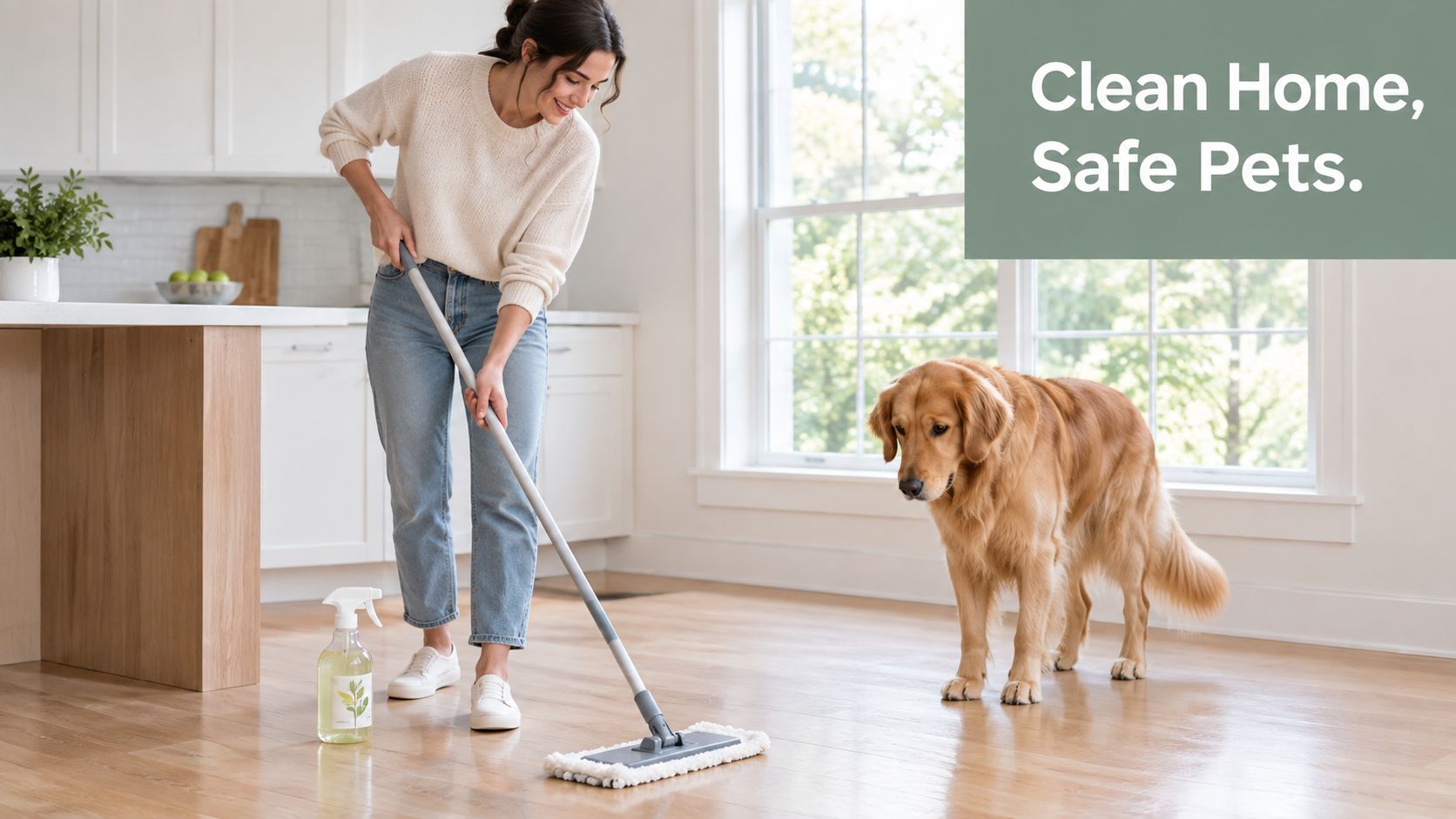
You're mopping the kitchen floor, and your dog is following the mop head like it's a new toy. Your cat may take a different route, stepping across the damp surface, then grooming each paw. To you, the floor looks clean. To an animal, it can also be a source of moisture, scent, and invisible residue.
That exposure route matters because pets walk, sniff, lick, and groom close to the surfaces you clean. In one peer-reviewed review of dog and cat exposure calls, household products represented 15.5% of all reports, while oral exposure accounted for 95.5% of cases, as summarized by PetMD's guidance on cleaning products that harm pets. Natural cleaning products safe for pets therefore depend on more than a green label. Ingredient choice, dilution, ventilation, and drying all matter.
Table of Contents
Introduction to Pet Safe Cleaning at Home
After muddy paws, a tipped water bowl, or a floor accident, a fresh-smelling room can feel reassuring. Fragrance, however, does not show whether a formula is gentle. A cleaner labeled natural may still irritate a pet's mouth, paws, nose, or lungs while the solution is wet.
The ASPCA Animal Poison Control Center reported that household cleaning products were involved in 8.3% of pet poison calls. A separate ASPCA-related summary recorded more than 13,500 cases involving household items during one reporting period. Paints and cleaning products were among the common items in that category, according to the ASPCA cleaning-product safety overview from PetMD.
Why floors create a special exposure path
People often cross a cleaned floor in shoes or slippers. Dogs and cats contact it with bare paws, fur, noses, and mouths. A dog may lick its paw after stepping through a damp patch. A cat may carry residue from its feet to its mouth during grooming.
Safe when dry and safe while pets are present describe different situations. A diluted vinegar solution may be suitable after rinsing and drying, while the same wet solution can cause stomach upset or irritation if an animal licks it. Enzyme cleaners also require complete drying before pets return, as explained by the ASPCA's household-product safety guidance.
Drying time depends on the surface and the amount applied. A lightly wiped sealed floor may dry sooner than a damp rug, porous wood, or fabric upholstery. Keep pets elsewhere during application, provide ventilation, and check the surface with a clean hand before reopening the area. If it still feels damp or smells strongly, wait longer.
The practical rule: Remove pets while cleaning, then let them return only after the surface is dry and the cleaning odor has faded.
The safest routine combines ingredient awareness with careful timing. Choose products that leave less residue, follow dilution directions, and treat even mild ingredients responsibly.
What Natural Really Means for Pet Safety
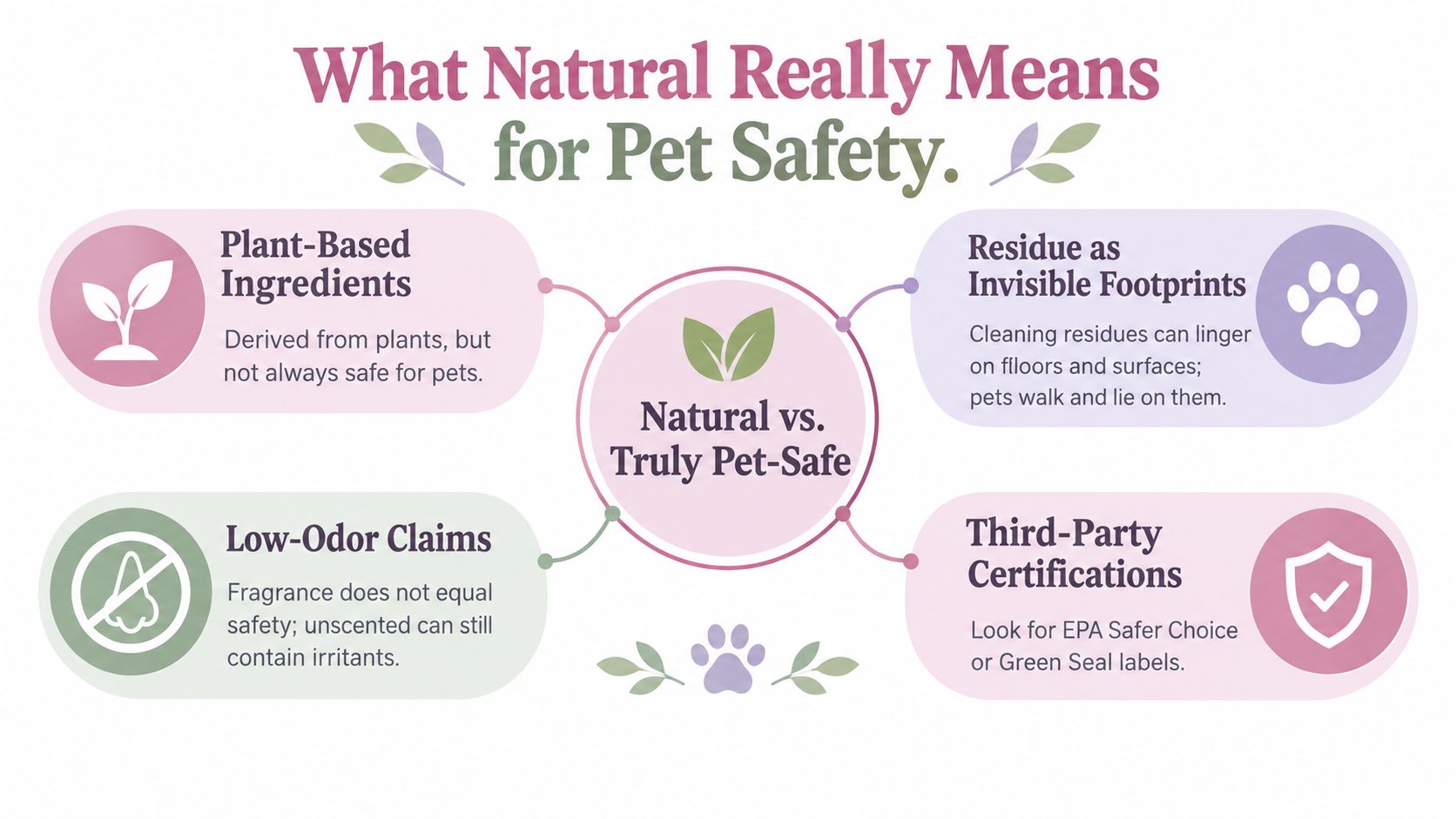
A cat walks across a freshly wiped counter before breakfast. A dog steps onto a damp floor, then licks its paws. These ordinary moments show why natural, plant-based, and low-odor are descriptions of a product, not proof that it is safe for every animal or every stage of use. A plant-derived ingredient may still irritate a cat, dog, bird, or small animal. An unscented formula may also contain irritating ingredients.
Residue works like invisible footprints. A wet cleaner can leave part of its formula behind until wiping, rinsing, evaporation, or drying reduces it. People may not notice those traces, but pets put paws on them, lie on them, sniff them, and sometimes lick them.
Dry surfaces and occupied rooms are different situations
A product may be lower risk after proper use yet unsuitable while a pet is nearby. Vapors can affect the air as ingredients evaporate, and wet solution can transfer straight to paws. A cat or bird that climbs onto a damp counter may contact the cleaner before the surface is ready.
Use five checks:
- Read the ingredients. Look for specific information rather than relying on “green” or “pet-friendly” wording.
- Consider the surface. Floors, feeding areas, litter zones, and bedding allow more direct contact than a high shelf.
- Control exposure. Keep animals out while spraying, wiping, mopping, or scrubbing.
- Rinse where contact is likely. Wipe food bowls, feeding mats, and pet-accessible counters with plain water when appropriate.
- Dry completely. Let pets return only when the surface is dry and the odor has cleared.
Drying varies by material and application. A lightly wiped sealed floor may dry sooner than a damp rug, porous wood, or fabric upholstery. Ventilate during use, and check the surface with a clean hand before reopening the area. If it feels damp or smells strong, wait longer.
Vinegar makes the distinction clear. Diluted vinegar can help with cleaning, but it is not a dependable disinfectant after illness or contamination. Ask whether it is diluted, suitable for the surface, rinsed where needed, and fully dry before an animal returns.
The EPA Safer Choice label information offers a useful purchasing filter. Certification does not replace label directions, ingredient review, or exposure control, but it gives shoppers a stronger starting point than an unsupported natural claim.
Ingredients to Avoid Around Dogs and Cats
A cat walks across a freshly mopped floor, then grooms its paws. A dog noses a damp feeding mat. These ordinary moments show why a product can be acceptable once dry yet unsafe while pets are present or residue remains. Read the label for chemical names, active ingredients, fragrance, and proprietary blends. Concentration, dilution, ventilation, surface type, and drying time all affect exposure.
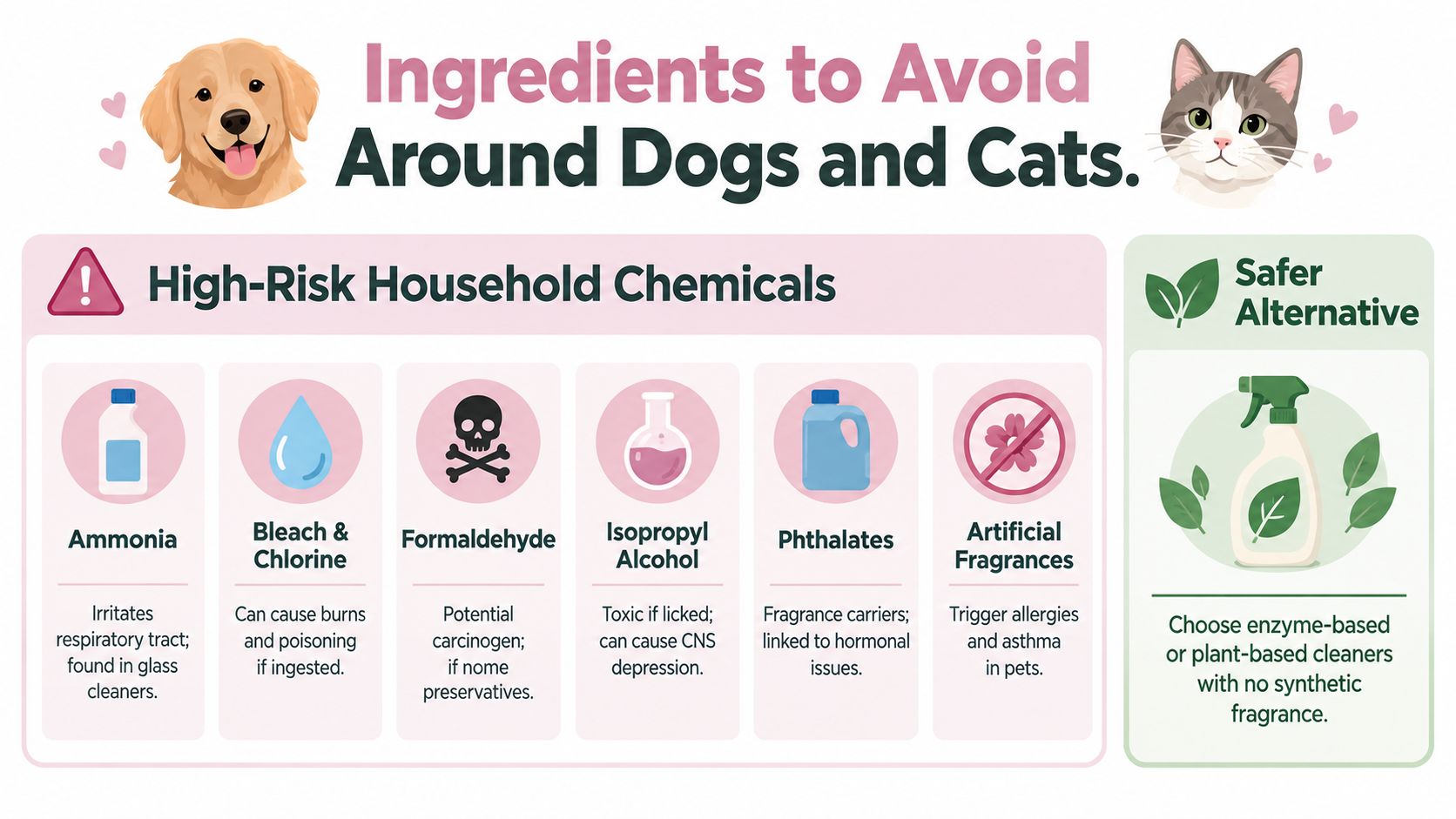
Common red flags
- Ammonia: Common in glass cleaners, it can irritate the respiratory tract. Swallowing it may irritate or burn tissues in the mouth and digestive system.
- Bleach and chlorine: Sodium hypochlorite can irritate mucous membranes if swallowed. Typical household bleach is usually 3% to 5% hypochlorite, according to ASPCApro's cleaning-product toxicity resource.
- Formaldehyde: Some preservatives contain formaldehyde or release it over time. Veterinary guidance identifies it as a higher-risk household exposure.
- Isopropyl alcohol: Licking it can make pets ill, with reported effects including central nervous system depression.
- Phenols: These compounds can irritate tissues and are a particular concern in homes with cats.
- Cationic detergents: Fabric softeners and related products may contain them. Reported effects include drooling, vomiting, oral and esophageal ulcers, fever, respiratory irritation, and central nervous system depression, as described in the ASPCA's household cleaning-agent warning.
- Some essential oils: Plant-derived does not mean pet-safe. Concentrated oils or wet residue can harm pets that inhale, lick, or touch them.
The infographic also flags phthalates and artificial fragrances. Vague fragrance wording limits your ability to identify the compounds or judge how your pet may respond. Scent can linger after a surface appears dry, so ventilate rooms during use and keep pets elsewhere until the odor has cleared.
Cats groom frequently, making paw and fur residue an important route of exposure. Dogs may lick floors, bedding, or paws. Birds and small animals can also react to airborne irritants. Keep them out while spraying, wiping, mopping, or scrubbing, then follow the product's drying instructions. Sealed floors may dry sooner than rugs, porous wood, or upholstery. If a surface still feels damp or smells strong, wait longer.
Oral exposure is easy to underestimate. A pet does not need to drink from a bottle. Paw contact followed by grooming can carry cleaner into the mouth.
If a pet walks through wet product, licks residue, or develops drooling, vomiting, weakness, breathing difficulty, or unusual behavior, contact a veterinarian or animal poison-control service promptly. Keep the container or ingredient list available.
For a closer examination of scented-air exposure, read this guide to the shocking truth about toxic air fresheners.
Safer Natural Ingredients and How They Compare
A cleaner can be low-risk after drying yet unsuitable while a pet is nearby. White vinegar, baking soda, castile soap, and enzyme cleaners address different messes, so compare the ingredient, surface, residue, and drying time rather than treating “natural” as a safety guarantee.
Diluted white vinegar helps remove mineral film, light soil, and everyday grime from compatible hard surfaces. Its acidity can damage or dull natural stone and acid-sensitive finishes. Apply it with pets outside the room, ventilate until the odor clears, rinse food-contact areas, and wait for the surface to dry.
Baking soda absorbs odors and provides mild scrubbing. Use it dry or mix it with water into a paste, then remove every trace. Loose powder can be inhaled or eaten, so do not leave it on floors, bedding, or other places pets investigate.
Castile soap lifts grease and soil through surfactant action. A small amount diluted in water is usually enough. Excess soap may leave a slippery film, especially on floors, so wipe or rinse pet-contact surfaces and allow them to dry before animals return.
Enzyme cleaners break down organic messes such as urine and food residue. They work on the residue itself rather than acting as instant disinfectants. Keep pets away during application, follow the label, and allow treated fabric, rugs, or porous surfaces extra drying time.
| Ingredient | Best Use | Pet Caution | Rinse and Dry Rule |
|---|---|---|---|
| Diluted white vinegar | Mineral film, light soil, compatible hard surfaces | Wet acidity can irritate if licked | Rinse contact areas and dry completely |
| Baking soda | Odor absorption, gentle scrubbing | Prevent loose powder from being inhaled or eaten | Remove all powder or paste residue |
| Castile soap | Light grease and general soil | Excess soap can leave a slippery film | Use sparingly, wipe or rinse, then dry |
| Enzyme cleaner | Organic stains and odors | Wet residue may upset the stomach or irritate | Follow the label and allow full drying |
Material compatibility matters as much as pet safety. A cleaner suitable for a sealed floor may harm jewelry, stone, wood finish, or upholstery. The guidance on silver ring shine restoration illustrates the same rule: match the method to the material before applying it.
DIY Pet Safe Cleaning Recipes You Can Make Today
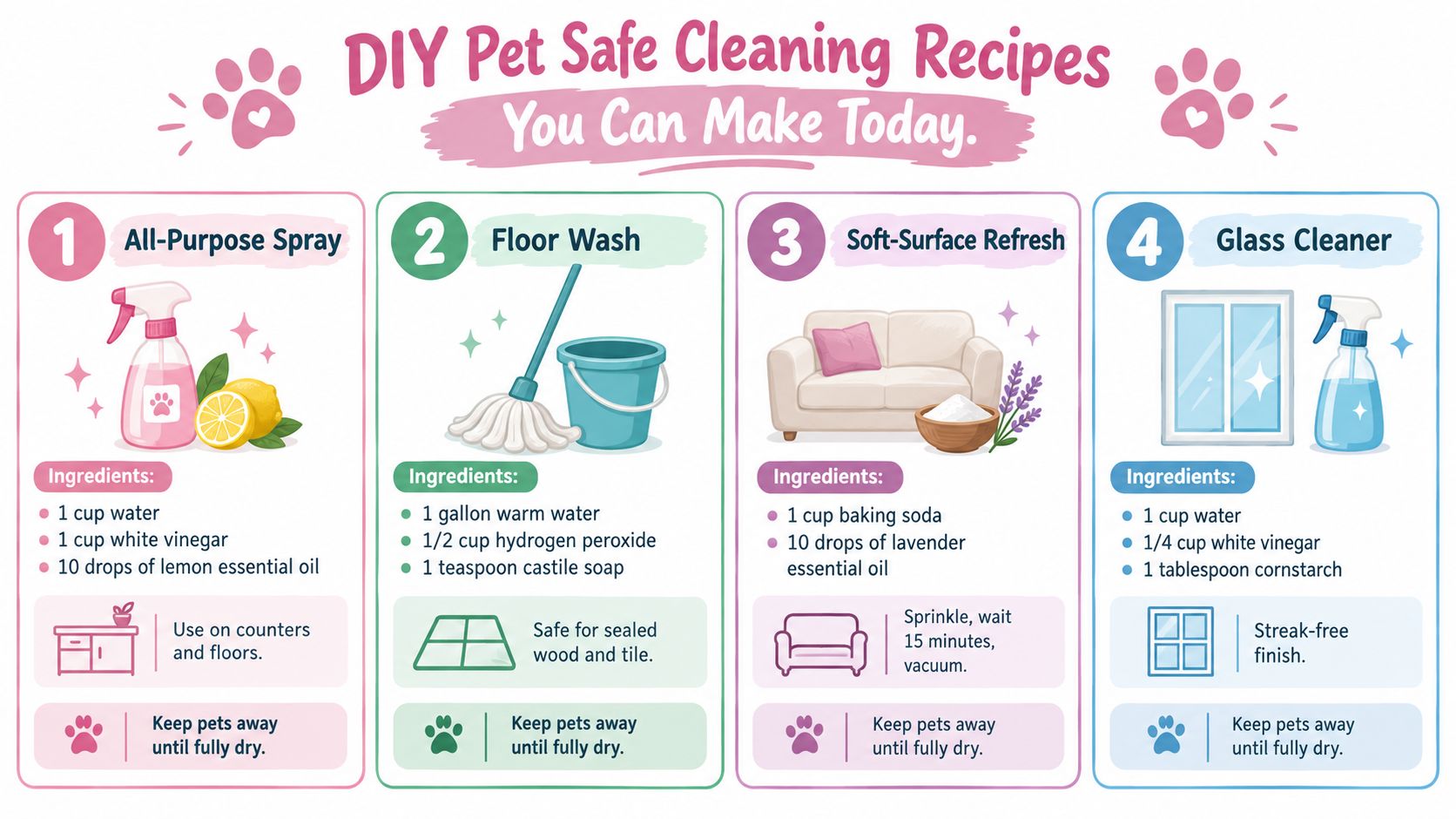
DIY formulas can simplify everyday cleaning, but exact ratios don't make a mixture automatically safe. Label each bottle, never combine incompatible products, test an unseen area, and keep animals away until the treated surface or fabric is completely dry.
All-purpose spray
Combine 1 cup of water with 1 cup of white vinegar in a labeled spray bottle. The infographic also lists 10 drops of lemon essential oil, but households with cats, birds, or sensitive animals should skip essential oils unless a veterinarian has confirmed that the specific oil and use are appropriate.
Spray a cloth rather than saturating the surface. Wipe counters, sealed tile, or compatible hard surfaces, then use a plain-water cloth on food-contact areas. Keep pets out during application and return them only after the surface is dry and the odor has dissipated.
For additional vinegar-use context, see these safe and effective vinegar cleaning tips for kitchen appliances.
Floor wash
Add 1 gallon of warm water, 1/2 cup of hydrogen peroxide, and 1 teaspoon of castile soap to a bucket. Use a well-wrung mop, not a soaking wet one, and confirm that the floor manufacturer permits these ingredients.
Work in manageable areas so you can keep the pet separated from the wet path. Wipe away excess solution if it pools, ventilate the room, and wait until the floor is entirely dry before reopening the space.
Soft-surface refresh
Sprinkle 1 cup of baking soda over a dry, compatible couch cushion, rug, or pet-bed surface. The infographic includes 10 drops of lavender essential oil, but skip that addition for cats and for animals with respiratory sensitivity unless your veterinarian approves it.
Allow the powder to sit for 15 minutes, then vacuum it thoroughly. Keep pets away during application, while the powder is present, and until you've removed all loose material.
Glass cleaner
Mix 1 cup of water, 1/4 cup of white vinegar, and 1 tablespoon of cornstarch in a labeled bottle. Apply lightly to glass, wipe with a microfiber cloth, and inspect the edges for drips.
Don't allow a pet to lick the lower frame, sill, or any wet runoff. Plain water and complete drying remain the final steps.
How to Clean Safely When Pets Live With You
Cleaning safely is mostly a matter of controlling access. Before you spray or mop, move dogs and cats to another room, close bird cages away from the work area, and relocate small animals from spaces where fumes or splashes could reach them.
Open suitable windows or doors when weather and security allow. Ventilation helps clear odors and airborne irritants, but it doesn't replace rinsing or drying. A room is ready when treated surfaces are dry, the odor has faded, and no visible film remains.
Room-by-room habits
Kitchens need a separate routine. Clean counters and floors with pets outside the room, then wipe food-preparation and feeding surfaces with plain water. Wash bowls separately and let them dry before refilling them.
Bathrooms deserve strict storage. Keep toilet cleaners, sprays, powders, and fabric softeners in closed cabinets. Don't let pets drink from a recently cleaned toilet or lick wet bathroom floors.
Floors should be divided into sections. Start at the farthest point from the exit and work toward the doorway. This prevents an animal from crossing a wet area while you're still cleaning, and it gives the first section more time to dry.
Pet zones need low-residue care. Wash bedding according to its care label, vacuum loose debris before applying a cleaner, and use enzyme products only as directed for organic stains. Don't cover odors with fragrance when removing the underlying soil is the better solution.
For shoppers who prefer a clearly described option without added scent, this information about a trusted unscented household cleaner may help with product comparison.
Daily tidying versus deeper cleaning
Daily work can stay simple: remove visible crumbs, wipe small spills, empty litter debris, and vacuum high-traffic paths. Deep cleaning requires more planning because it may involve damp floors, upholstery, baseboards, or construction dust.
If insects or other household pests are part of the problem, pair cleaning with non-toxic solutions for getting rid of creepy crawlers, while keeping pets separated from any treatment area.
Keeping a Naturally Clean Home Your Pets Will Love
A pet-conscious routine depends on three habits: choose lower-risk ingredients, use the correct dilution, and control access until surfaces are dry. A cleaner may be safe after drying yet irritating while wet, so keep pets away during use and drying. Ventilate well, particularly around birds, small animals, or pets with respiratory sensitivity.
Store products in labeled containers that animals cannot reach. Use separate cloths for bathrooms, kitchens, and feeding areas. Check the ingredient list instead of relying on “natural,” “green,” or “pet-safe” wording.
For everyday soil and light odors, DIY cleaning can suit compatible surfaces. Professional help may be useful for a detailed first clean, seasonal reset, move-in or move-out preparation, or post-construction dust. Maid in America provides residential, recurring, office, community-amenity, move-related, and post-construction cleaning in West Georgia, with supplies and natural, low-odor products. The company is locally owned, licensed, bonded, and insured.
Try one controlled change today. Place pets elsewhere, clean a small floor section with a suitable diluted product, rinse contact areas when appropriate, ventilate, and wait until everything is fully dry before reopening the space.
For help maintaining a low-odor home, Maid in America offers recurring, deep, move-in, move-out, and post-construction services across West Georgia. Visit Maid in America to review options and request an estimate.


Maid in America provides reliable, personalized cleaning with natural products for homes, offices, and communities across West Georgia. Licensed, bonded, and insured, we’re locally and privately owned.
Get in touch with us today!
info@maidinamericaga.com