Post Construction Cleaning Cost: A 2026 Guide
A residential post-construction cleaning project commonly costs about $274 to $708, with roughly $0.25 per square foot as a useful average benchmark. Labor accounts for about 90% of the bill, so the amount of time and detail involved matters more than the room count alone.
You've finally finished the renovation, but your Kennesaw or Acworth home doesn't feel finished at all. Fine dust sits on the window sills, cabinets, trim, and floors, while red clay from the worksite gets tracked through the rooms and every new surface seems to collect another layer by the next morning.
That's why a post-construction cleaning cost estimate can look very different from the price of a regular house cleaning. The work involves construction residue, fine particulate, adhesive marks, paint flecks, grout haze, and dust that has settled in places a routine visit never needs to reach. A clean, empty room after a build requires a different process from a lived-in home receiving maintenance cleaning.
Table of Contents
What to Expect After a Build or Renovation
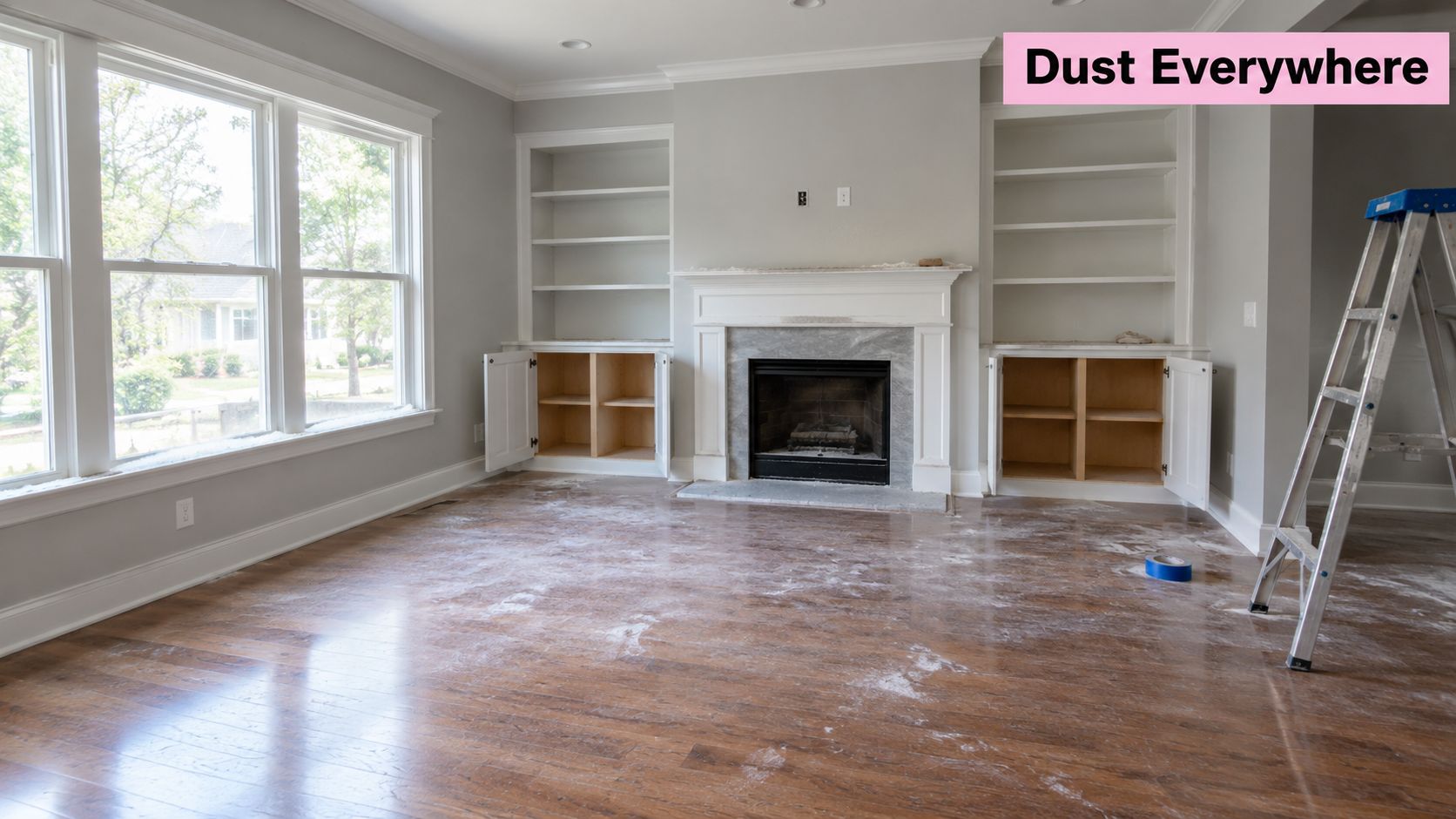
A homeowner in Acworth might walk into a newly remodeled kitchen expecting a quick sweep and wipe-down. Instead, the sunlight reveals a pale film across the flooring, dust inside the cabinet frames, residue around the backsplash, and fingerprints left by the final trades. In Kennesaw, the same problem can appear after a bathroom renovation, basement finish, or whole-home update. The work may be complete, but the space still needs to be made comfortable for daily life.
Construction dust behaves differently from ordinary household dust. Drywall sanding, cutting, drilling, flooring installation, and trim work can leave fine particles on horizontal surfaces, in corners, along baseboards, around fixtures, and inside window tracks. A standard maintenance appointment is designed to preserve a generally clean home. It isn't designed to remove the residue left behind by several trades.
Why ordinary dusting falls short
The first mistake homeowners make is treating post-construction cleanup like a larger version of basic cleaning. A regular cleaner may dust furniture, vacuum accessible flooring, wipe counters, and clean bathrooms. Post-construction work requires a more deliberate order, careful surface selection, and equipment suited to fine particulate.
Practical rule: Construction debris should be removed before cleaners begin detailed surface work. Cleaning crews need access to the finished surfaces, not piles of offcuts, packaging, or leftover materials.
You'll also want to distinguish between post-construction cleaning and a move-in or move-out cleaning. A move-in service prepares an empty home for occupancy, while post-construction cleaning addresses the residue created by the project itself. They can complement each other, but they aren't automatically the same service.
For a plain-language explanation of the process, review this guide to what post-construction cleaning includes. If your renovation involved a kitchen or bath contractor, SouthRay remodel cleanup advice can also help you understand what should be completed before the cleaning crew arrives.
The goal isn't only to make the room look presentable for a few hours. It's to remove the film and particles that keep reappearing, protect the appearance of new finishes, and leave the home ready for furniture, family routines, guests, or a final walkthrough.
Breaking Down Post Construction Cleaning Cost
A useful residential baseline is $274 to $708 per project, with a national average near $477, according to the post-construction cleaning cost calculator from Pebio. The same calculator places interior work at about $0.15 to $0.60 per square foot. Rough cleaning generally falls toward the lower end, while final and touch-up work costs more because it requires finer inspection and repeated detail work.
That range is wide because the condition of the property matters as much as its size. A home with light renovation dust takes less labor than one with drywall residue, window film, cabinet dust, paint splatter, and flooring that needs repeated vacuuming and damp cleaning.
Homes in Cobb, Paulding, and Bartow counties can also produce different quotes based on travel distance, access, layout, and how much work remains after the contractor leaves. A local company such as Maid in America can assess those conditions directly and recommend cleaning methods that reduce airborne dust and leftover residue, rather than treating every project as a standard house cleaning.
The quote usually follows one of two models
Some companies charge by cleanable square footage. That format makes estimates easy to compare, but only when each provider defines the scope similarly. One per-square-foot quote may include a rough pass, final detailing, and interior windows. Another may cover only accessible surfaces.
Other providers estimate labor directly. Hourly labor is often quoted at $25 to $75 per hour, with an average near $40 per hour, according to the same Pebio calculator. This model can make more sense for homes with an unusual layout, multiple floors, uneven dust levels, or detailed finish work.
| Quote model | What can change the price | Confirm before booking |
|---|---|---|
| Per square foot | Which rooms, surfaces, and cleaning phases are included | The exact cleanable area and scope |
| Hourly labor | Crew size, access, dust severity, and time needed for detail work | Whether supplies, equipment, and repeat passes are included |
| Residential project total | The combined effect of size, condition, phase, and requested add-ons | What the written estimate excludes |
| Specialty or post-drywall work | Fine residue on walls, trim, cabinets, fixtures, or ventilation areas | Whether specialty surfaces receive separate treatment |
Labor is where the bill moves
One pricing guide estimates that post-construction cleaning is often about 90% labor, since crews spend the appointment vacuuming, wiping, scrubbing, inspecting, and repeating detail work rather than using large quantities of cleaning products. The ZTERS construction cleanup guide also identifies labor as the dominant cost component.
A low quote can leave important work unfinished. Ask whether the estimate includes cabinet edges, window tracks, baseboards, fixtures, fine-dust removal, interior windows, and a second pass over dusty flooring. Confirm whether any touch-up visit is included or billed separately.
The Three Phases of Cleaning
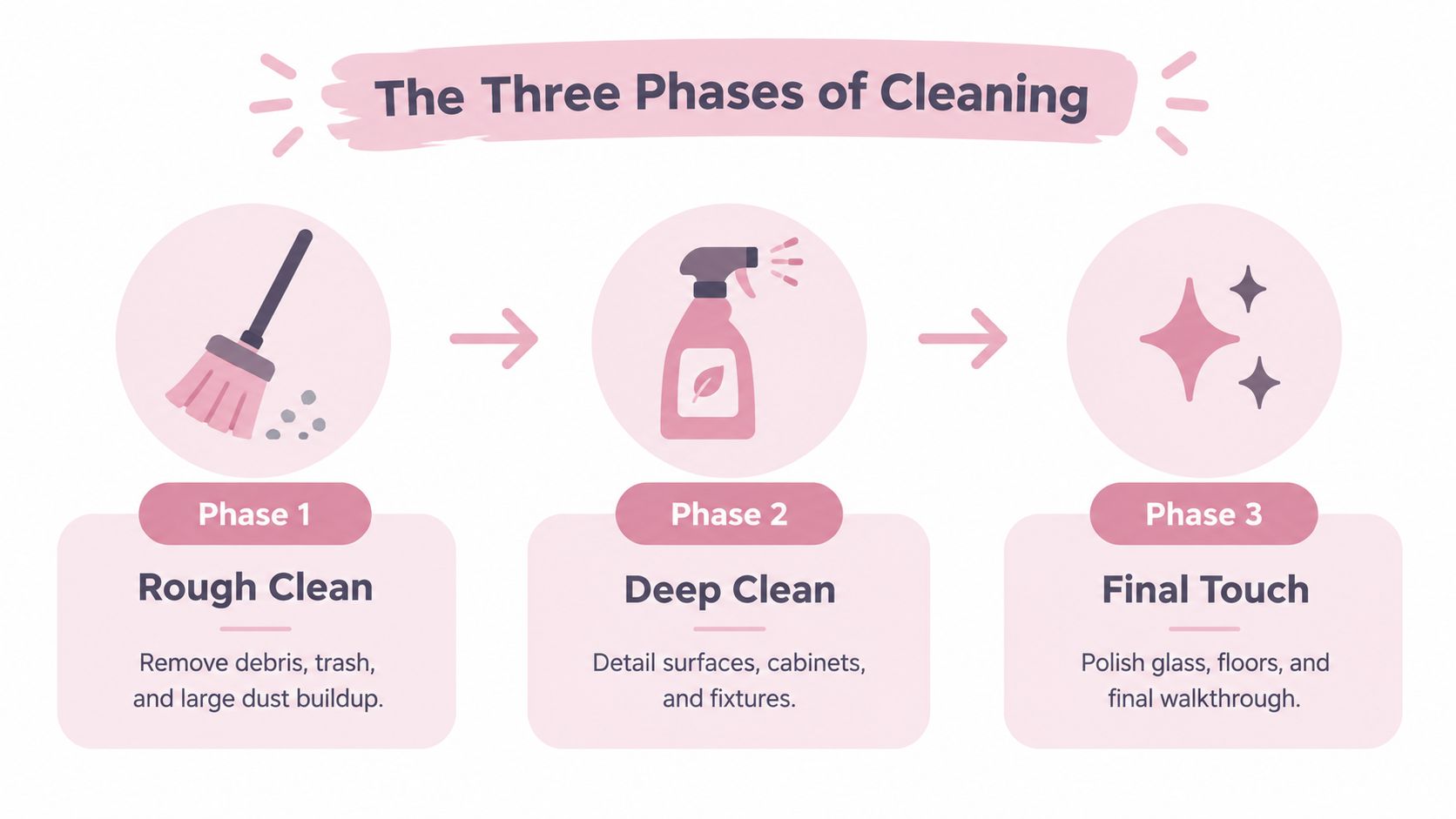
A renovated room can look finished while fine dust still coats trim, settles in cabinets, and collects around fixtures. Post-construction cleaning works best in rough clean, final clean, and touch-up clean phases. Combining them into one visit only makes sense for a small, settled project with no trades returning.
Rough clean
Schedule the rough clean after contractors remove large materials and obvious debris. The crew then tackles heavy dust, loose particles, packaging remnants, and the buildup that makes finish work difficult. This phase gets the property workable without spending final-cleaning time on areas that may still be disturbed.
Rough cleaning generally costs $0.10 to $0.30 per square foot, according to ZTERS' phase-based construction cleanup guidance. The lower range reflects lighter detail work, although a heavily affected site can still demand substantial labor.
Use this phase before a final inspection or while several trades have left residue behind. It also limits grit tracked into newly finished rooms.
Final clean
Final cleaning prepares the property for presentation and daily use. Crews work across surfaces, fixtures, floors, cabinet exteriors, bathrooms, mirrors, and interior glass. They remove paint marks, adhesive residue, dust around hardware, and the fine film that becomes visible in natural light.
Per the same ZTERS guide, final cleaning commonly runs $0.30 to $0.75 per square foot, with specialist settings reaching about $1.00 per square foot. The higher cost reflects slower, more precise work and the condition of each surface.
Before booking, set these checkpoints:
- Tools and construction materials are out of the rooms.
- The contractor has finished sanding, installation, and punch-list work.
- Cabinets, windows, fixtures, floors, and bathrooms are included in the written scope.
- The homeowner and contractor agree on access and the final cleaning date.
For practical context on what homeowners should expect during remodeling, review how job-site cleanliness affects the timing of the final visit.
Touch-up clean
Book a touch-up clean after inspections or final installation work creates new dust and smudges. It handles settled particles and small affected areas that remain after the main cleaning. The same ZTERS pricing overview places this work around $0.10 to $0.20 per square foot.
In Cobb, Paulding, and Bartow counties, scheduling should follow the actual project phase, not a generic calendar. Rough clean comes after debris removal, final clean follows the closed punch list, and touch-up clean belongs at the end when the space needs an inspection-ready finish.
Key Factors That Influence Your Final Bill
Square footage matters, but it's not the best way to predict the post construction cleaning cost by itself. A small remodel can demand more close-detail work than a larger, lightly affected space. The condition of the property, the type of dust, and the order of the work often determine how many labor hours the crew needs.
Start with the type of work
Drywall sanding creates a fine powder that settles broadly and can keep reappearing when disturbed. Woodworking leaves sawdust and shavings, while flooring and tile work may leave adhesive, grout residue, or small pieces of installation material. A new build can contain broad construction residue throughout the property, while a remodel may spread dust from one work zone into nearby rooms.
Ask these questions before accepting an estimate:
- What created the dust? Tell the cleaner whether the project involved drywall, concrete, tile, wood, cabinets, flooring, or paint.
- Where did the work happen? Identify both the renovation zone and any connected rooms where dust traveled.
- Has the debris already been removed? Cleaning crews can work more efficiently when they aren't handling leftover building materials.
- Are the trades finished? A final clean before another sanding or installation visit usually means paying for affected areas again.
- Which surfaces need detail work? Clarify cabinets, baseboards, interior windows, grout, fixtures, and floor type.
Treat specialty residue seriously
Fine particulate isn't the only concern. Construction projects can leave adhesive, paint, grout, caulk, protective film, labels, and residue around hardware. Those materials may need different tools and products, and careless scraping can damage a new finish.
The quote should clearly separate ordinary cleaning from work that needs special handling. If the project involved silica-producing materials or other specialty contamination, ask who is responsible for cleanup and whether the cleaning company is equipped and authorized to address it. Don't assume that every post-construction cleaner handles every type of residue.
Make the scope easy to compare
Send each provider the same information, including the approximate square footage, photos of the affected areas, the renovation type, debris status, desired date, and list of surfaces. Request a written scope that states what is included and what is excluded.
For West Georgia homes in Cobb, Paulding, or Bartow counties, also mention practical access details. A narrow entry, occupied rooms, stairs, furniture, or an HOA move-in deadline can change how the crew works even when the floor area stays the same.
When to Schedule Your Cleaning
A Kennesaw homeowner can finish a renovation, move in furniture, and still find drywall dust inside cabinet edges the next morning. Schedule the cleanup after the last tool leaves and the final dusty work is complete. HomeAdvisor's post-construction cleanup guidance recommends waiting one to two days after the last tool leaves the site so airborne dust can settle before detailed cleaning. The same guidance estimates about one hour of cleaning per 100 to 200 square feet, meaning a two-to-four-person crew may need eight to 12 hours for a full-size home, depending on the condition and agreed scope.
Booking before the trades finish creates repeat work. A contractor may return to adjust a cabinet, replace a switch plate, sand trim, or seal a seam. Each task can put dust back on surfaces you just paid to clean. Wait until the punch list is complete whenever the project schedule allows.
Build the schedule around the project, not the move-in date
For a remodeled home in Cobb, Paulding, or Bartow County, work backward from furniture delivery and occupancy. Give the trades time to finish, allow settled dust to collect, and leave the cleaning crew enough time to complete every item in the written scope. A rushed appointment often leaves dust in tracks, corners, cabinet edges, and other areas that are easy to miss during a fast visit.
Book the rough pass after debris removal. Reserve the final detail for after the punch list closes.
One visit can cover a small, controlled project with light residue and no returning trades. A new build, major drywall work, extensive cabinetry, or large amounts of glass usually deserves phased scheduling. That choice may add another calendar step, but it can keep you from paying to clean the same surfaces twice. For West Georgia homeowners, timing also helps Maid in America address settled construction dust properly instead of treating a renovation cleanup like an ordinary house cleaning.
Why Choose a Local West Georgia Pro
DIY cleanup can make sense when the project is small and the residue is light. It becomes a poor bargain when you're trying to remove fine dust from a whole home while also managing contractors, work, family schedules, and a move-in deadline. The right equipment and cleaning order matter because dry sweeping can redistribute fine particles instead of capturing them.
For post-construction dust, HEPA filtration is a cleaning requirement, not a decorative feature. Guidance on construction dust removal and HEPA vacuuming states that proper cleanup uses HEPA-filtered commercial vacuums rated for construction-grade dust, and that a HEPA vacuum is required to safely trap fine particulates.
What a professional scope should include
A serious estimate should address more than floors. Depending on the property, the work may include:
- Surface dust removal: Cabinets, trim, ledges, fixtures, counters, and accessible surfaces.
- Floor treatment: Repeated vacuuming and appropriate damp cleaning for the installed flooring.
- Glass and tracks: Interior windows, sills, and tracks where construction dust collects.
- Kitchen and bathroom detail: Cabinet exteriors, fixtures, mirrors, counters, and residue around finished installations.
- Final inspection: A room-by-room review for visible dust, marks, and missed edges.
Maid in America is a locally and privately owned cleaning service in Kennesaw and Acworth, serving Woodstock, Marietta, Dallas, Hiram, Powder Springs, Cartersville, West Cobb, and nearby communities across Cobb, Cherokee, Paulding, Douglas, and Bartow counties. The company is licensed, bonded, and insured, uses carefully selected natural, low-odor products, and provides personalized cleaning for homes, offices, and HOA clubhouses or community amenities.
Local service should feel personal
West Georgia homes have their own practical cleaning challenges. Georgia spring pollen can settle on freshly cleaned surfaces, humid summers can make residue feel more noticeable, and red clay can move quickly from a worksite to finished flooring. Busy families and commuters may need a dependable schedule, while retirees aging in place may prefer a cleaner who already understands the home and routine.
Maid in America usually sends one dedicated cleaner rather than a large team, so clients often get to know their cleaner by name. The company also provides basic maintenance cleaning, top-to-bottom deluxe or deep cleaning, move-in and move-out cleaning, recurring weekly, biweekly, every-three-weeks, or monthly service, office cleaning, and selected add-ons such as interior ovens or fridges, baseboards, cabinets, interior windows, grout, laundry, dishes, and upholstery vacuuming.
For more detail about evaluating a provider, see this guide to choosing a post-construction cleaning company. The right cleaner should explain the scope clearly, use appropriate equipment, and respect the finishes you've just paid to install.
Get Your Space Ready for Living
The homeowner's experience changes when the cleanup is done in the right order. The boxes can come inside without being coated in dust, the new kitchen can be used without wiping every surface first, and the family can settle into the finished rooms instead of continuing to live around the renovation.
That matters in Acworth and Kennesaw, where a renovation may need to fit around school schedules, commuting, holiday hosting, or an HOA's expectations for a shared property. A business in Marietta or Cartersville may have a similar concern, especially when an office, clubhouse, or amenity area needs to look finished before people return.
Make the final walkthrough practical
Walk through the property in daylight and check the places that reveal residue first. Look along baseboards, on top of doors, inside window tracks, around light fixtures, at cabinet edges, and near transitions between flooring types. Open cabinets and inspect bathroom fixtures if those areas were exposed to the work.
If you're planning a renovation, this home improvement preparation guide offers useful reminders about preparing the space before construction begins. Good preparation won't eliminate cleanup, but it can reduce confusion about access, protected areas, and the handoff between the contractor and cleaning crew.
The final service may also pair naturally with a move-in cleaning list, especially when the home is empty and the cleaning needs to cover both construction residue and ordinary move-in details. Just make sure the provider understands that post-construction dust requires its own scope and equipment.
A healthier home starts with removing the residue you can see and the fine particles that keep settling after the work is done. Choose a cleaning plan that matches the phase, condition, and size of the project, and don't let a low initial quote hide a missing final detail.
Maid in America provides health-conscious post-construction cleaning for renovated homes, new builds, offices, and community spaces throughout West Georgia, using natural, low-odor products and careful surface-by-surface service. Request a free estimate from Maid in America online or call 770-427-4448 to discuss your project, timing, and cleaning scope.


Maid in America provides reliable, personalized cleaning with natural products for homes, offices, and communities across West Georgia. Licensed, bonded, and insured, we’re locally and privately owned.
Get in touch with us today!
info@maidinamericaga.com