Post Construction Cleaning Before and After: 6 Real Homes

You walk into your newly finished home with the family, ready to admire the floors and start unpacking. Then sunlight catches a faint white film on the window ledges. The faucets look cloudy, the door frames feel chalky, and there's sawdust tucked beneath the kitchen cabinets.
That's the difference between construction finished and cleaning finished. A useful post construction cleaning before and after comparison shows more than a shiny floor. It reveals where residue hid, how it was removed, and what still needs attention before people settle in.
The home scenarios below cover Kennesaw, Acworth, Marietta, Woodstock, Powder Springs, and Hiram, alongside an office buildout in West Cobb. They're practical examples, not claims about documented customer projects. Each has a different dust map: drawer interiors, ventilation grilles, window tracks, grout haze, or stair corners.
Whether you're a homeowner, renter, business owner, or property manager, the best starting point is the same: finish the dusty work, have the contractor remove construction debris, and leave accessible surfaces clear for the final clean.
Table of Contents
- 1. New Construction Home Final Sweep in Kennesaw
- 2. Kitchen Remodel Cleanup in Acworth
- 3. Bathroom Renovation Refresh in Marietta
- 4. Whole-Home Renovation Prep for Listing in Woodstock
- 5. Basement Finishing Cleanup in Powder Springs
- 6. Commercial Office Buildout Cleanup in West Cobb
- 7. Home Addition and Window Replacement Cleanup in Hiram
- How each post-construction scenario differs in surfaces, residue, and best use
- Plan Your Final Clean Before the Move-In Day Rush
1. New Construction Home Final Sweep in Kennesaw
A new Kennesaw home can look spotless from the front door while carrying chalky drywall dust along every baseboard. Check the tops of door frames, closet shelving, light fixtures, and cabinet toe-kicks. Those sheltered edges reveal what a quick floor cleanup misses.
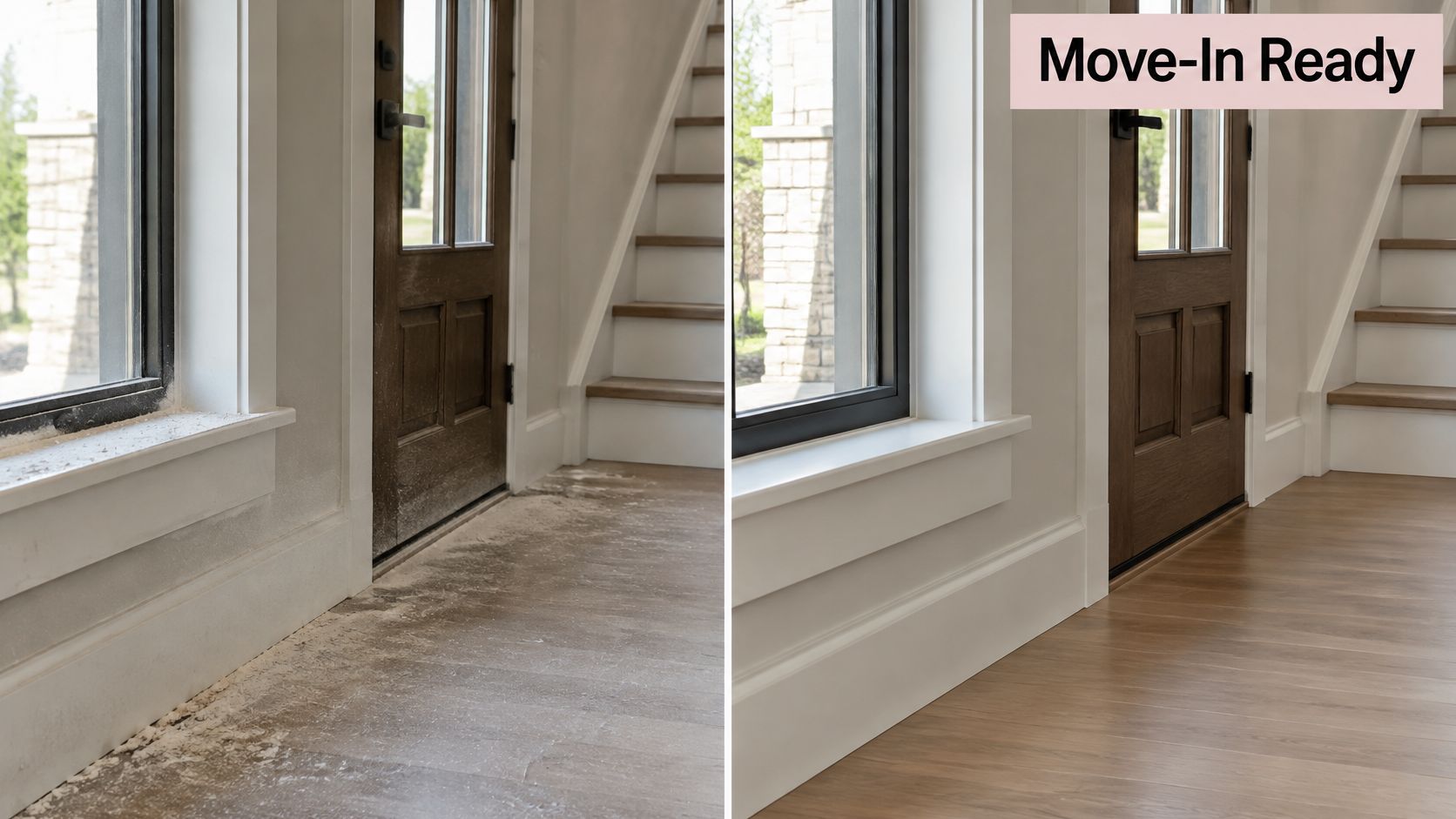
Before: A family's walkthrough leaves white powder on their fingertips and grit beneath their shoes. After: Accessible high surfaces and trim are cleaned before floors, mirrors are clear, and the kitchen no longer carries a dusty film.
The EPA's guidance on indoor particulate matter recommends sealing supply and return registers during dusty construction and leaving heating and cooling systems off until dust has been cleaned up. Cleaning accessible grilles isn't the same as cleaning contaminated ductwork.
Coordinate the builder's last visit
- Finish the punch list: Complete sanding, paint touch-ups, and caulk work before cleaning.
- Keep access open: Leave closets empty and schedule furniture delivery afterward.
- Check the HVAC handoff: Have the builder or HVAC professional inspect the appropriate filter and address suspected contamination.
Our guide to planning a post-construction cleaning appointment explains the handoff between contractor work and final cleaning.
Practical rule: A clean vent cover doesn't prove the system behind it is clean. Keep surface cleaning and HVAC assessment separate.
The finished room should look clear in daylight, with no loose grit along floor edges or powder on reachable ledges.
2. Kitchen Remodel Cleanup in Acworth
Open the drawers before you judge an Acworth kitchen remodel finished. New cabinet fronts can gleam while sawdust sits around drawer slides, beneath removable organizers, and along the back of shelves.
Before: Countertops carry installation film, appliance handles show fingerprints, and adhesive spots collect dust. After: Agreed cabinet interiors are emptied and wiped, cabinet exteriors are clean, and counters and backsplashes feel smooth rather than gritty.

Empty storage before stocking it
Say you're preparing the kitchen for family meals or handing a renovated rental to its next tenant. Keep dishes, groceries, and drawer liners out until the interior cleaning is complete. We record requested tasks and special-care instructions in advance, so cabinet interiors shouldn't be left as an assumption.
Have the installer remove protective tape and film, especially where removal could affect a finish or warranty. Don't attack stubborn adhesive with an abrasive pad or an untested solvent.
- Identify the surface: Share care information for stone, coated cabinet fronts, and appliance finishes.
- Protect appliances: Keep installation protection in place while trades are still working, then coordinate its removal.
- Separate cleaning from ventilation: Low-odor cleaning doesn't remove emissions from fresh paint or flooring adhesives.
The EPA's renovation guidance recommends maximum ventilation during and for at least 72 hours after activities likely to release pollutants, such as painting, finishing, or installing flooring. Follow the finish manufacturer's curing directions too, rather than treating a fresh smell or clean counter as proof of readiness.
3. Bathroom Renovation Refresh in Marietta
Grout haze isn't ordinary dust. In a freshly renovated Marietta bathroom, it can appear as a pale veil across tile, especially when light hits at an angle. Mortar smears, caulk residue, and construction dust on the vanity need different treatment.
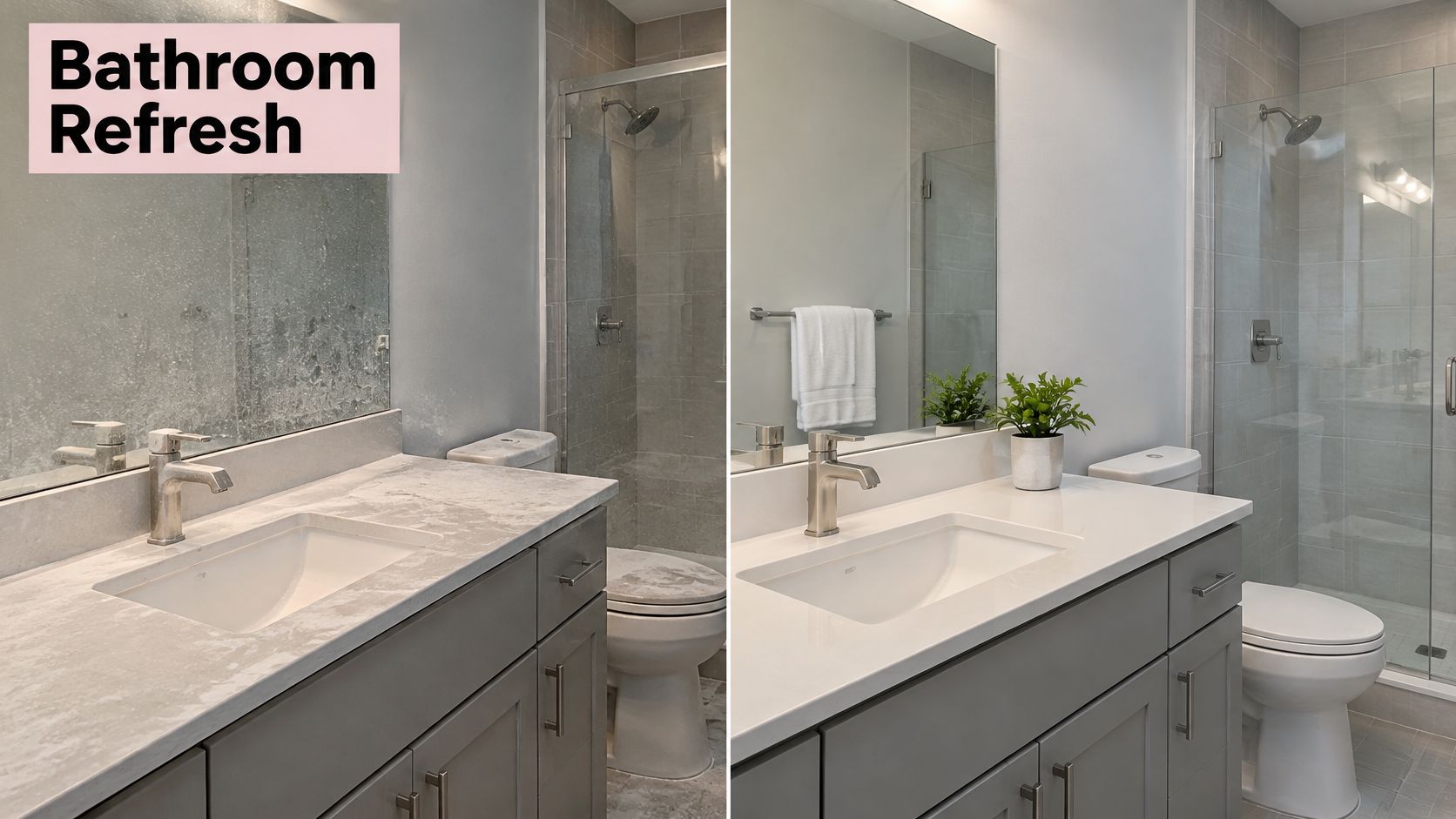
For a homeowner preparing a guest bathroom, before might mean cloudy shower glass, powder behind the faucet, and dull-looking new tile. After should mean clear glass, clean fixtures, and surfaces free of removable construction film, without scratching or stripping the new finish.
Let the installer identify the residue
Ask the tile installer to confirm the tile material, grout type, sealing status, and curing requirements. Cement-based haze, epoxy residue, and dust don't call for the same product. Leave substantial mortar deposits or failed caulk work with the installer rather than expecting routine cleaning to correct installation defects.
Don't reach for vinegar just because the tile looks cloudy. Acid can damage some stone and cement-based materials, while abrasive pads can mark delicate finishes.
For dusty cleanup, the OSHA silica-construction guidance prohibits routine dry sweeping or dry brushing when it could expose workers to respirable crystalline silica, unless exposure-minimizing alternatives aren't feasible. That's a reason to identify the residue before choosing a cleanup method.
Keep the shower unused until grout, sealant, and caulk have cured as directed. After cleaning, allow surfaces to dry and flag any lingering haze for the installer rather than repeatedly scrubbing it.
4. Whole-Home Renovation Prep for Listing in Woodstock
In a renovated Woodstock home, listing photos can reveal dust that a quick walkthrough misses. Window light shows streaks on glass, while low camera angles expose grit along floor edges and dust tucked into closet corners.
Before: Drywall powder sits in closets, installation film clouds the glass, switch plates carry dust, and traffic routes show marks. After: Reachable fixtures, trim, and cabinet exteriors are clean; glass is clear, and floors are free of loose grit and removable residue.

Put photography after the final handoff
If painters, flooring installers, a realtor, and movers are working toward the listing, schedule the final clean after the trades finish. Coordinate staging deliveries so boxes and furniture do not block closets, window tracks, or the surfaces that need cleaning.
Construction debris and dust should be cleared regularly during renovation. Final cleaning is not a substitute for the contractor's ongoing housekeeping. Before cleaners arrive, ask the contractor to remove scraps and bulk debris, and point out any grout haze, adhesive, or paint marks that may need a trade's attention rather than routine cleaning.
- Clear the rooms: Remove spare materials, personal items, and loose staging supplies so cleaners can reach floors, shelves, and window tracks.
- Identify marks: Distinguish removable scuffs from paint damage or residue that needs the responsible trade.
- Protect the result: Use clean entry mats and coordinate exterior work to limit red clay tracked indoors.
For help organizing priorities around the property's condition, see this Woodstock house-cleaning planning guide.
A listing-ready room should look finished up close, with clean edges, clear glass, and no visible loose dust.
5. Basement Finishing Cleanup in Powder Springs
Stairs deserve as much attention as the new basement floor. They're the route workers use to carry tools and materials, and dust collects against risers, beneath railing brackets, and in the corners of landings.
For a Powder Springs family finishing a playroom, before includes powder on built-in shelves, sawdust along walls, and dusty light fixtures. After means reachable upper surfaces are cleaned first, railings and stair treads are wiped, and floors are vacuumed and cleaned before toys and furniture arrive.
Keep the cleanup route clear
A homeowner finishing a basement office in nearby Dallas faces the same sequencing problem. Bringing in desks and upholstered chairs too early gives dust more places to settle and makes floor edges harder to reach.
- Remove construction materials: The contractor should clear tools, scraps, fasteners, and bulk debris before the appointment.
- Check connected rooms: Include the stair landing and nearby accessible grilles in the walkthrough.
- Delay furniture: Leave shelving empty and arrange delivery after the final clean.
- Coordinate filters: Have the appropriate filter inspected after the dusty work and cleanup are complete.
The EPA's remodeling guidance recommends temporary barriers, protection of shared HVAC openings, and exhaust ventilation that pulls polluted air outdoors. Those controls matter when the family continues living upstairs during construction.
Handoff check: If sanding is still happening downstairs, an upstairs dusting appointment won't stay finished.
Our construction-dust cleanup guide explains the practical sequence. For the final inspection, look beneath shelf lips and along stair edges, not just across the open floor.
6. Commercial Office Buildout Cleanup in West Cobb
The reception desk may be clean while the conference-room window frames still carry powder. In a West Cobb office buildout, the dust map extends through shared spaces: shelving, break-room counters, restroom fixtures, glass partitions, and floor edges.
Before: Adhesive spots, loose carpet fibers, fingerprints, and construction film remain after installation. After: Accessible desks and common surfaces are wiped, glass is clear, break-room surfaces are cleaned, restrooms receive the agreed sanitizing treatment, and floors are prepared for staff.
Assign the handoff to a person
Say a property manager is coordinating a suite renovation before employees return. Someone needs to confirm that trades are finished, debris is removed, access is available, and the cleaning scope matches the actual condition.
The Lewisville Safety Center case study documents a sequence of bulk debris removal, fine-dust capture, and touch-up work before occupancy. The useful lesson for a small office is the order of work, not the scale of that facility.
- Coordinate timing: Request an appointment around staff access and confirm availability rather than assuming weekend access is arranged.
- Clear workstations: Remove papers, personal items, and sensitive equipment from the cleaning path.
- Share sensitivities: Record product concerns and special surface requirements beforehand.
- Inspect shared areas: Check reception glass, restroom ledges, and the break-room backsplash before accepting the handoff.
Cleaning isn't a substitute for building approval, air-quality testing, or specialist remediation. The same boundary applies to an HOA clubhouse renovation: clean presentation matters, but it doesn't establish that every construction-related hazard has been resolved.
7. Home Addition and Window Replacement Cleanup in Hiram
Run a visual check along the bottom window track before admiring the view. A Hiram window replacement or sunroom addition can leave fine powder packed into corners, sealant specks on frames, and installation film across the glass.
Before: New trim looks dusty, sills hold gritty particles, and glass appears cloudy in afternoon light. After: Reachable interior glass is clear, accessible tracks and sills are cleaned, trim is dust-free, and the new floor is ready for furniture.
Separate interior cleaning from installer corrections
For a family waiting to furnish a sunroom, the installer should remove protective film and identify any remaining paint, sealant, or adhesive. Don't use a razor blade on unfamiliar glass or coatings. A scratch is harder to resolve than a removable speck.
- Share window specifications: Provide care directions for coated glass and specialty frames.
- Keep access open: Move furniture and staging away from tracks and sills.
- Define exterior work: Coordinate exterior window or pressure-washing needs separately; don't assume they're included.
- Finish trim first: Schedule any remaining cutting, sanding, and caulking before the final pass.
The EPA's indoor-environment guidance for remodeling distinguishes source control, ventilation, and air cleaning as complementary strategies. A clean window addresses surface residue, not every pollutant introduced during construction.
A touch-up after additional trim work can be sensible. It's better to plan for renewed dust than to promise that an early clean will survive unfinished construction.
During Georgia spring pollen season, coordinate ventilation thoughtfully so open windows don't introduce another layer of residue onto newly cleaned sills.
How each post-construction scenario differs in surfaces, residue, and best use
| Item | Main Areas Cleaned | Common Residue Left Behind | Best For |
|---|---|---|---|
| New Construction Home Final Sweep in Kennesaw | Baseboards, window sills, fixtures, closets, cabinets, floors | Drywall dust, sawdust, construction dust in vents | Preparing a new home for move-in |
| Kitchen Remodel Cleanup in Acworth | Cabinets, countertops, backsplash, appliance exteriors, floors | Dust, adhesive film, paint or caulk specks | Making a remodeled kitchen ready to use |
| Bathroom Renovation Refresh in Marietta | Tile, grout, shower glass, fixtures, vanity, toilet, tub, sink | Grout haze, mortar smears, caulk residue, dust | Finishing a renovated bathroom for immediate use |
| Whole-Home Renovation Prep for Listing in Woodstock | Rooms, closets, baseboards, windows, fixtures, floors | Drywall dust, window film, scuffs, fixture residue | Preparing a renovated home for photos and showings |
| Basement Finishing Cleanup in Powder Springs | Basement surfaces, stairs, railings, shelving, cabinetry, floors | Fine construction dust, sawdust, concrete dust, paint residue | Preparing a finished basement for family or work use |
| Commercial Office Buildout Cleanup in West Cobb | Desks, shelving, windows, break room, restrooms, floors | Construction dust, adhesive residue, carpet fibers, glass smudges | Getting a renovated office ready for staff and visitors |
| Home Addition and Window Replacement Cleanup in Hiram | Windows, frames, sills, tracks, trim, door frames, floors | Dust, sealant residue, paint specks, construction film | Finishing a home addition or window replacement |
Plan Your Final Clean Before the Move-In Day Rush
A renovation may look finished while fine dust still clings to window tracks, cabinet edges, and ventilation grilles. Before scheduling a final clean, confirm the contractor has completed sanding, drilling, caulking, and paint touch-ups, and removed tools, scraps, packaging, and other construction debris.
Check less visible spots, too. Look above door frames, inside empty drawers, beneath cabinet overhangs, and around accessible grilles. Note delicate finishes, and identify any residue that may be an installation defect rather than something routine cleaning can remove.
Put the details in the handoff
- Access: Coordinate safe entry instructions with the office before the appointment. You do not necessarily need to be home.
- Special care: Share surface-care instructions and household priorities in advance.
- Scope: Confirm the selected service and request any add-ons before cleaning day.
- Timing: Cleaning time depends on the space's size and condition, the service, and the requested tasks.
The cleaning professional reviews completed work before leaving. A clean surface is not an air-quality test. Ventilation, proper curing, and specialist assessment may still be needed if silica, asbestos, mold, or contaminated ductwork is suspected.
Maid in America is a locally owned cleaning company based in Kennesaw, Georgia, with licensed, bonded, and insured cleaners. The company uses natural, low-odor products and provides residential, office, and community amenity cleaning. One experienced cleaner is assigned whenever possible, supporting continuity from visit to visit.
Service areas include Acworth, Kennesaw, Woodstock, Marietta, Dallas, Hiram, Powder Springs, Cartersville, and nearby communities across Cobb, Paulding, and Bartow counties. A clear handoff helps homeowners, renters, offices, and community property managers coordinate access, scope, and timing.
Add sparkle and shine with your health in mind. A finished space should have clean accessible surfaces, clear glass, and floors free of grit. Agree in advance on anything outside the cleaning scope.
Maid in America offers post-construction cleaning after contractors finish their work and remove construction debris. The service focuses on fine dust, floors, accessible surfaces, fixtures, cabinet exteriors, kitchens, bathrooms, mirrors, glass, reachable windows, and finishing details. Visit Maid in America to request an estimate and discuss your renovation, access details, and move-in or opening schedule.




Maid in America provides reliable, personalized cleaning with natural products for homes, offices, and communities across West Georgia. Licensed, bonded, and insured, we’re locally and privately owned.
Get in touch with us today!
info@maidinamericaga.com