8-Point Apartment Deep Cleaning Checklist for 2026
It's Saturday morning in your Acworth apartment. Your lease ends soon, spring pollen coats the window sills, and the kitchen still has cooking grease left from holiday hosting. You start wiping counters, notice the dusty range hood, and end up cleaning the same countertop again.
A room-by-room plan keeps that from happening. Clear access first, remove dust and buildup from high surfaces, then finish the floors. Keep a separate list for maintenance problems, because a leaking sink or broken bathroom fan needs more than a cleaning cloth.
There's a reason to look beyond visible mess. The U.S. Environmental Protection Agency reports that Americans spend approximately 90% of their time indoors, where concentrations of some pollutants are often 2 to 5 times higher than typical outdoor concentrations. Cleaning won't eliminate every indoor pollutant, but neglected vents, upholstery, ledges, and under-furniture spaces deserve attention.
Before starting, gather your supplies and check access:
- Cleaning tools: Microfiber cloths, a soft detail brush, a vacuum with attachments, and a flooring-safe mop.
- Product choices: Surface-compatible, low-odor cleaners, plus a separate disinfectant only when warranted.
- Apartment limits: Lease requirements, HOA rules, appliance instructions, and landlord approval for maintenance work.
Use this apartment deep cleaning checklist for an occupied home, a seasonal reset, or a lease-end walkthrough. The same priorities help homeowners, renters, and property managers across West Georgia avoid rushed, incomplete work.
Table of Contents
- 1. Kitchen Cabinets, Appliances, and Surfaces
- 2. Bathrooms Grout, Fixtures, and Ventilation
- 3. Bedrooms and Closets Dust, Baseboards, and Storage
- 4. Living Areas Upholstery, Electronics, and Hard-to-Reach Surfaces
- 5. Entryway and Floors Managing Red Clay and Seasonal Debris
- 6. Windows, Sliding Doors, Walls, Ceilings, and Light Fixtures
- 7. Laundry, Utility, and Storage Areas Filters, Vents, and Shelves
- 8. Apartment Deep Cleaning Checklist Making It a Routine, Not a Chore
- How each rooms deep clean compares by focus, benefits, and trade-offs
- Turn This Checklist Into a Routine You Can Keep
1. Kitchen Cabinets, Appliances, and Surfaces
Remove grease before polishing anything. A clean-looking cabinet can still feel sticky around the handle, and wiping stainless steel before removing cooking film usually leaves streaks.
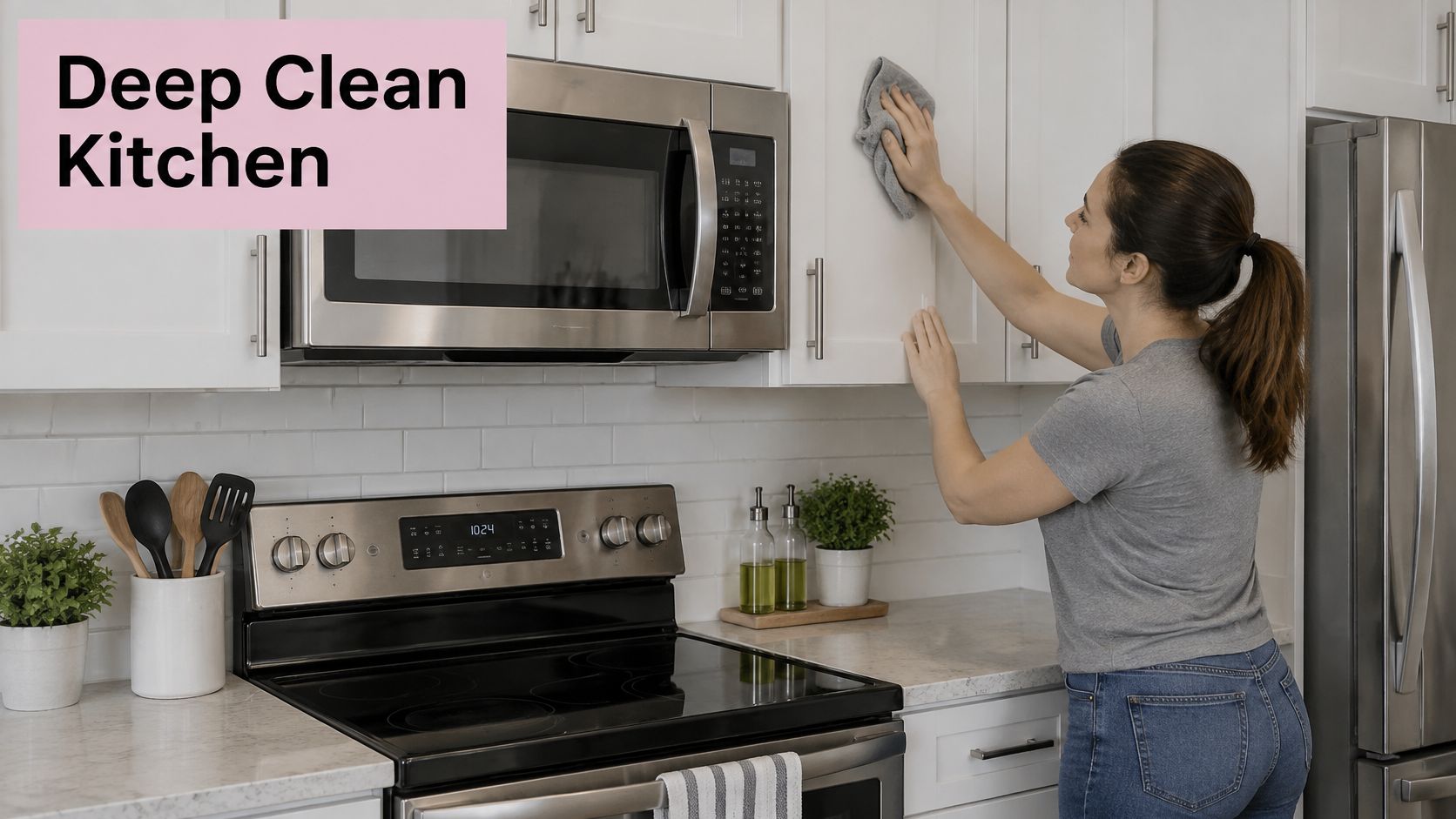
Remove the range hood filter first, following the appliance instructions. Clean a washable filter separately and let it dry while you tackle the cabinet tops and fronts. Don't soak a filter that the manufacturer identifies as disposable.
Work through the packed surfaces in a deliberate order:
- Upper surfaces: Dust cabinet tops, reachable fixtures, and upper trim before applying cleaner.
- Cabinets and backsplash: Wipe handles, door edges, and cooking film. Agitate grout gently with a soft brush, then remove the residue.
- Appliance interiors: Clean the microwave, oven, refrigerator shelves, and door gaskets using methods approved for each appliance.
- Finishing surfaces: Clean counters, appliance exteriors, the sink, and finally the floor.
For stubborn stovetop buildup, use our guide to removing grease from a stovetop rather than reaching straight for an abrasive pad. A deep cleaning guide for restaurant managers offers a useful comparison for task planning, but apartment appliances and finishes need their own care instructions.
Make the lease-end details visible
Say you're preparing a Kennesaw rental for inspection. Empty the refrigerator and cabinets before cleaning their interiors, and check the lease for appliance requirements. Don't pull out a connected range or heavy refrigerator without permission and safe handling arrangements.
Cleaning and disinfecting are separate jobs. The CDC's home cleaning guidance says to clean first and, when disinfection is warranted, keep the surface wet for the product's labeled contact time. A quick spray followed by an immediate wipe isn't a substitute.
2. Bathrooms Grout, Fixtures, and Ventilation
In a humid Georgia bathroom, a bright faucet doesn't tell you whether the room is finished. Check the shower tracks, toilet base, tub edges, and exhaust fan cover before putting the towels back.
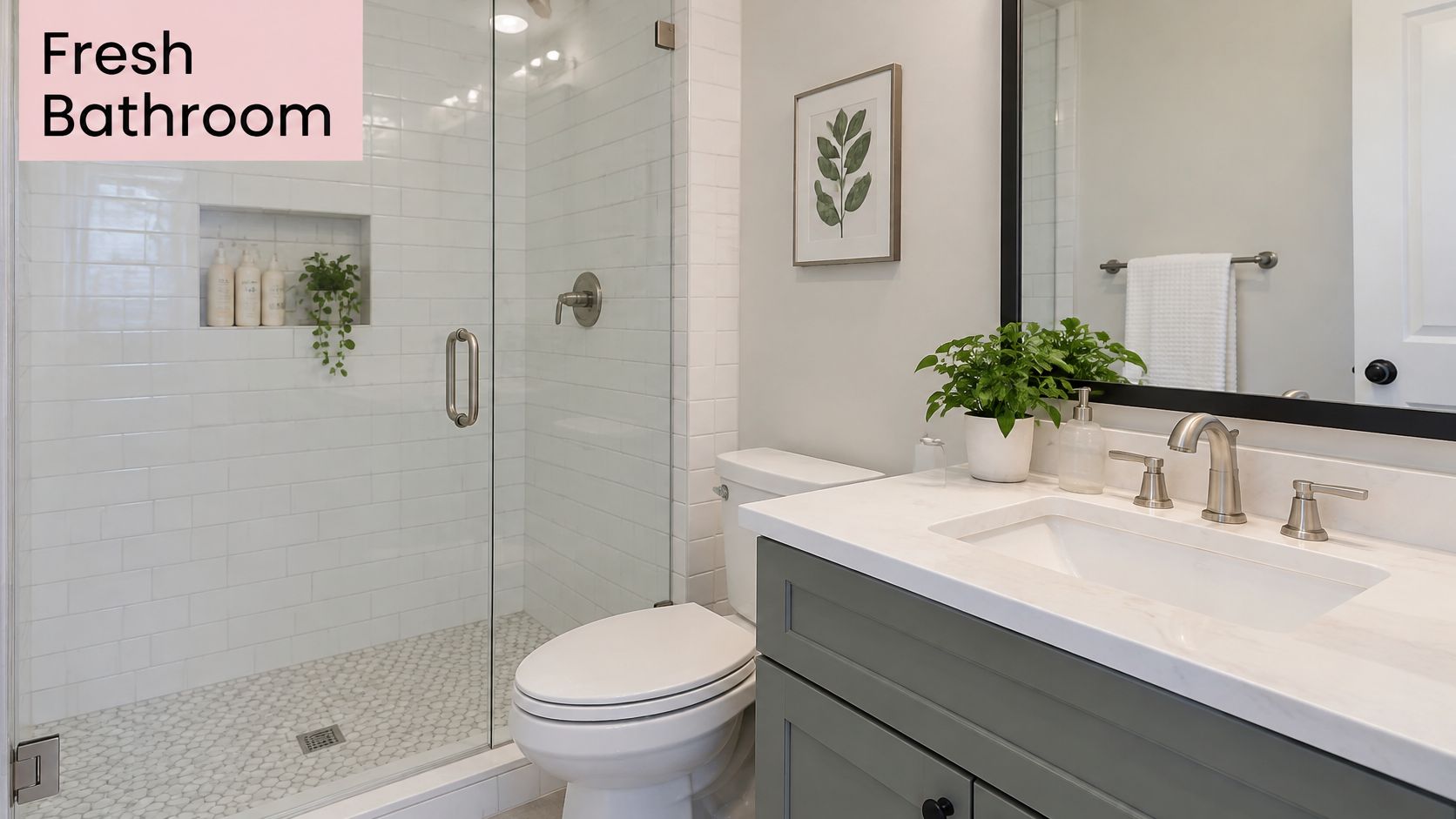
Remove hair and loose dust before wet cleaning. With the fan switched off, vacuum its accessible grille, then wipe the cover without wetting electrical components. Use separate cloths for the vanity and toilet.
Remove residue without damaging finishes
Apply a surface-compatible cleaner to soap film and give it the working time specified on the label. Brush grout gently, wipe glass-door tracks, and clean behind accessible toilet surfaces. Test products on a hidden spot, especially on natural stone and painted vanity fronts.
Our guide to removing mold and mildew from a shower can help distinguish ordinary surface care from a problem that needs more attention. Don't keep scrubbing damaged caulk or recurring growth as though stronger pressure will fix the cause.
- Inspect moisture zones: Look beneath the vanity, around supply lines, behind the toilet, and along shower seals.
- Support drying: Run the exhaust fan during and after showers, and remove standing water.
- Report failures: Tell management about a fan that doesn't exhaust properly, leaks, or recurring dampness.
The EPA's mold prevention guidance recommends keeping indoor relative humidity below 60%, ideally between 30% and 50%, when possible. Cleaning can remove residue, but it can't repair failed ventilation.
For a Woodstock hall bathroom shared by a busy family, prioritize shower tracks and the fan cover during the deeper pass. For a Powder Springs rental turnover, photograph moisture damage before cleaning so the property manager can arrange repairs.
3. Bedrooms and Closets Dust, Baseboards, and Storage
A bedroom can look tidy while dust remains on fan blades, behind the headboard, and beneath storage bins. Making the bed doesn't reach any of those places.
Start by clearing nightstands and the closet floor. Remove bedding before overhead dusting, and keep clean linens outside the work area until the dusty tasks are finished.
The EPA's indoor-environment guidance recommends decluttering, damp dusting, and vacuuming to reduce indoor contaminants, while noting that cleaning won't eliminate them. It also advises allergic occupants to leave while vacuuming because the process can temporarily increase airborne allergens.
Practical rule: Capture bedroom dust with a lightly damp cloth. Don't brush it off a shelf and call the shelf clean.
Open up the hidden surfaces
Work from ceiling fans and door-frame tops to furniture, closet shelves, and baseboards. A microfiber cloth folded into clean sections lets you change wiping faces instead of spreading the same dust.
- Closet shelves and rods: Empty manageable sections, wipe them, and let them dry before replacing belongings.
- Furniture edges: Vacuum behind lightweight pieces that you can move safely. Leave heavy dressers and anchored furniture in place.
- Under-bed spaces: Remove loose belongings, use the crevice attachment around edges, and vacuum the accessible floor.
- Touch points: Wipe light switches and door handles without spraying liquid into electrical fittings.
For a Cartersville renter preparing to move, an empty closet makes shelf edges and floor corners easier to inspect. Check them before packing away the vacuum.
For a Kennesaw household preparing a guest room, tackle the fan and under-bed dust before putting on fresh bedding. Don't shake dusty rugs from a balcony or into a shared corridor. Use an approved outdoor area, or vacuum them indoors with the surrounding space clear.
4. Living Areas Upholstery, Electronics, and Hard-to-Reach Surfaces
Start with the sofa cushions, not the center of the rug. Crumbs, pet hair, and dust hide beneath cushions and along upholstery seams, where an ordinary floor-vacuuming pass won't reach.
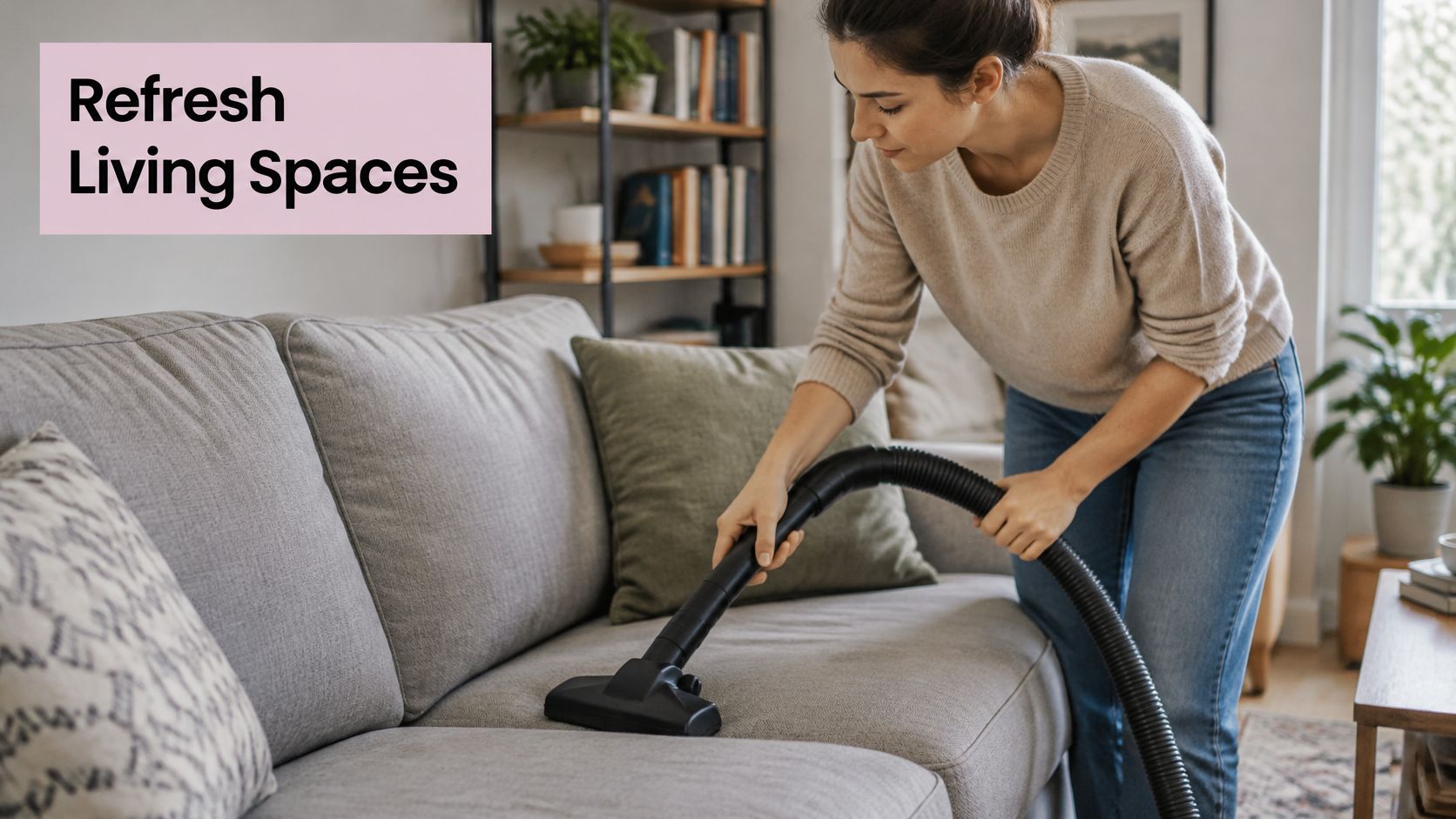
Remove cushions if the furniture allows it. Use an upholstery attachment on fabric and a crevice tool along seams, keeping suction gentle around loose trim. Check the care tag before applying any liquid, because some fabrics need specialized treatment.
A Dallas household with dogs might prioritize cushion seams, the sofa's lower edge, and the strip of floor beneath the front rail. A Marietta renter with tightly arranged furniture should move only pieces that can be handled without scraping floors or straining connected cables.
Keep electronics dry and dust under control
Switch electronics off before cleaning. Use a dry microfiber cloth on screens unless the manufacturer allows another method, and never spray cleaner directly onto a television, speaker, remote, or power connection.
- Shelves and decor: Remove objects in small groups and dust the shelf beneath them.
- Room-side vents: Vacuum accessible grille surfaces without opening shared building equipment.
- Furniture perimeter: Clean behind safely movable pieces before finishing the floor.
- Cords and sockets: Dust carefully without pulling connections or introducing moisture.
Skip the scented finishing spray. Purdue University researchers reported that emissions from fragranced household products can react with indoor ozone to generate nanoscale airborne particles; the health effects remain under study.
A strong scent isn't proof of cleanliness. Low-odor or fragrance-free products are a practical choice for sensitive households, but product compatibility and ventilation still matter. Open windows only when outdoor air and weather conditions make that sensible.
5. Entryway and Floors Managing Red Clay and Seasonal Debris
Wet-mopping tracked-in clay before removing the loose material creates more cleanup. Start dry, then use moisture carefully.
In Acworth and nearby communities, shoes can carry red clay, pollen, and grit through the apartment. Clear shoes, bags, and pet supplies so you can reach the floor perimeter rather than mopping around obstacles.
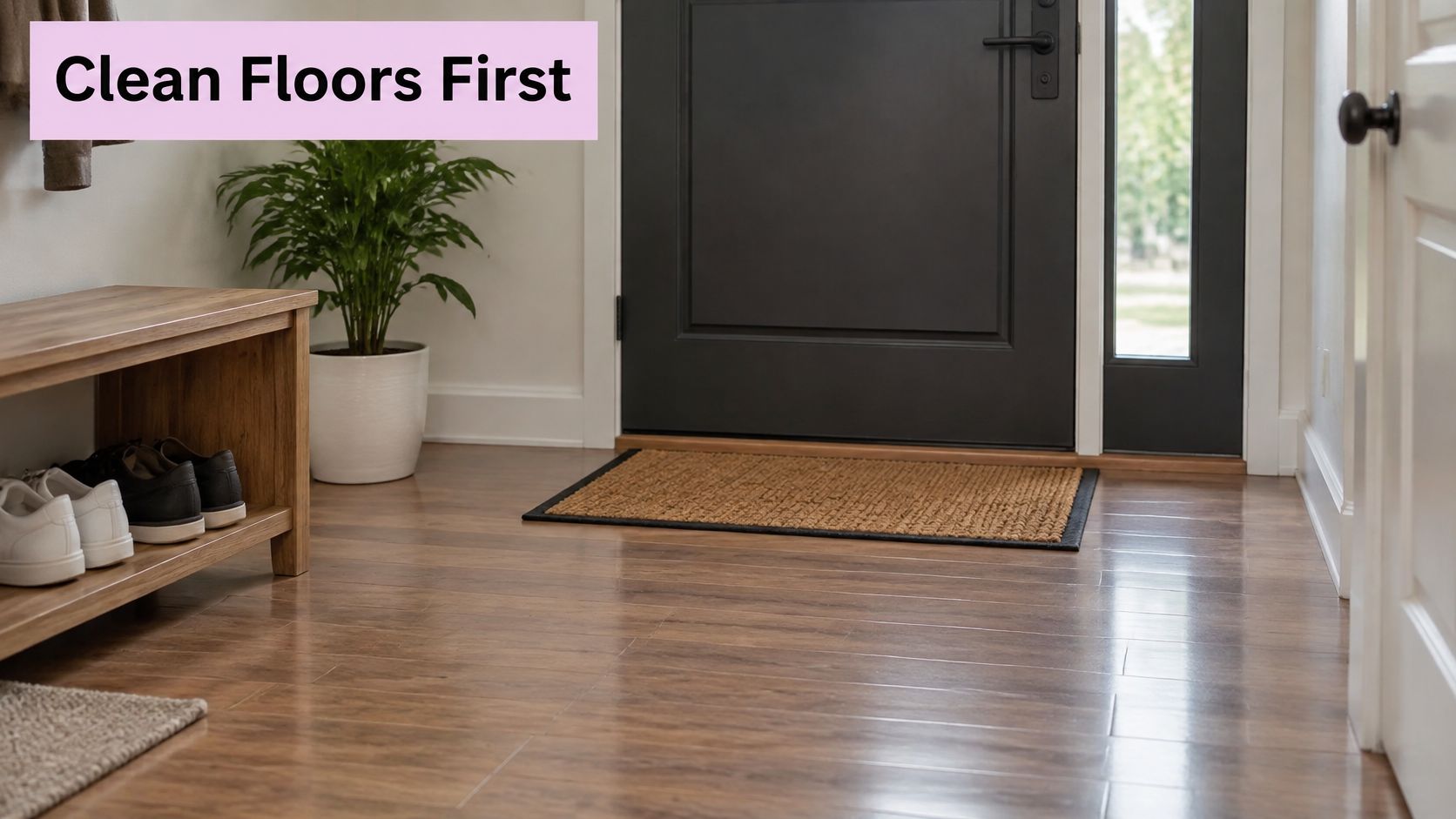
Lift loose, dried clay gently with a plastic scraper if the flooring permits it, then vacuum. Don't grind embedded grit into the finish with a stiff brush. Clean the mat according to its care instructions, using an approved outdoor area rather than a shared hallway.
Match the mop to the floor
A low-odor cleaner is useful only if it suits the surface. Choose a wood-safe product for sealed hardwood, a compatible cleaner for vinyl or laminate, and a stone-safe cleaner where needed.
- Dry removal: Vacuum corners, mat edges, and accessible areas beneath furniture.
- Entry details: Wipe lower door frames, handles, and washable marks near the entrance.
- Controlled damp cleaning: Use a well-wrung mop and change dirty solution rather than spreading it.
- Grout attention: Apply a compatible cleaner, allow its labeled working time, brush gently, and remove residue.
More water doesn't mean a deeper clean. Around laminate seams and wood edges, it can create a different problem.
For broader seasonal planning, use our spring deep cleaning checklist. The hardwood cleaning checklist for Denver homes also offers a flooring-care comparison, but your floor manufacturer's instructions take priority.
A Woodstock renter can make this easier with a shoe-off routine and a washable indoor mat. Keep shared corridors clear, and confirm HOA or property rules before placing anything outside the apartment door.
6. Windows, Sliding Doors, Walls, Ceilings, and Light Fixtures
Spring pollen on a sill is easy to spot. The dust behind blinds and the grit packed into a sliding-door track usually need a closer look.
Dust blinds and upper trim before cleaning glass. Vacuum dry track debris with a crevice tool, loosen corners with a soft brush, and wipe with a lightly damp cloth. Don't flood tracks or block drainage openings with cleaning residue.
The explanation of what apartment window washing includes is a useful scope reminder: glass, frames, sills, and tracks are different tasks. Keep exterior access and building-managed windows separate from reachable interior cleaning.
Protect paint and electrical fixtures
Turn lights off and let bulbs and fixtures cool. Dust reachable fixtures from a stable platform, and remove globes only when you can do so safely. Never balance on a chair or stretch over furniture.
- Ceilings and corners: Remove cobwebs with a clean extension tool rather than dragging a dirty cloth across paint.
- Walls: Test a hidden area, then spot-clean with a gentle, damp cloth.
- Switch and outlet covers: Wipe carefully without spraying liquid into openings.
- Glass: Apply cleaner to the cloth where overspray could reach wood or electronics, then buff dry.
The CDC's cleaning guidance prioritizes regularly cleaning high-touch surfaces while cleaning other surfaces when visibly dirty or needed. That means switches and door handles deserve steadier attention than an untouched ceiling corner.
For a Marietta move-out, photograph scuffs before attempting removal. Aggressive scrubbing can strip flat paint and won't guarantee avoiding a lease charge.
A Cartersville landlord preparing a unit should check blinds and tracks before the final glass polish. In an occupied apartment, leave inaccessible exterior glass to whoever is authorized to handle it.
7. Laundry, Utility, and Storage Areas Filters, Vents, and Shelves
Accessible doesn't always mean renter-serviceable. You can usually clean a return grille's room-facing surface, but shared HVAC equipment and filter responsibilities belong under the lease or building's maintenance policy.
Clear laundry shelves before wiping them. Clean washer and dryer exteriors, detergent residue, washer seals, and the lint-screen housing where the appliance instructions allow access. Don't reach into machinery or disconnect ductwork as part of an ordinary surface clean.
Separate housekeeping from maintenance
A Dallas renter should confirm filter responsibilities with the property manager before removing anything. A Hiram homeowner can clean accessible laundry-area dust while keeping a separate maintenance task for restricted dryer ducts or equipment that needs moving.
- Dryer lint screen: Remove lint after use and follow the manufacturer's instructions for washing accumulated product film.
- Washer seals: Wipe accessible folds and remove trapped debris. Allow drying only in a way that's safe around children and pets.
- Shelves and storage: Remove containers, clean beneath them, and check for spills or damp packaging.
- Machine surrounds: Vacuum accessible gaps without pulling hoses, electrical cables, or gas connections.
Know when to stop: A wet wall, persistent leak, or recurring mold patch belongs on the maintenance list, not beneath a storage bin.
The EPA's guide to mold and moisture advises drying wet or water-damaged areas and belongings within 24–48 hours; moldy porous materials may need replacement rather than surface cleaning.
Photograph dampness beneath machines or around plumbing and notify the responsible owner or manager promptly. Suitable hard surfaces may be cleaned with detergent and water and dried completely, but don't disturb extensive or recurring growth while the moisture source remains unresolved.
8. Apartment Deep Cleaning Checklist Making It a Routine, Not a Chore
Saturday in a Kennesaw apartment starts with red clay on the mat and spring pollen on the sill. The spare room can wait. The kitchen and a humid bathroom cannot.
A useful schedule follows the friction you live with. An Acworth family gets more from kitchens and baths than from a guest closet. A renter facing a walkthrough should start with the written lease list, then the surfaces a manager will notice.
Give each task a clear status
Print the list or keep it on your phone. Mark each task finished, blocked by belongings, or waiting on maintenance. An inaccessible shelf is not a completed job.
- Before cleaning: Clear counters, closet floors, shower shelves, and safe walking routes.
- During cleaning: Work high to low, separate bathroom cloths, and keep product labels available.
- After cleaning: Check residue, let surfaces dry, remove waste, and review missed edges.
- Before moving: Photograph the empty apartment and distinguish cleaning issues from damage or repairs.
Clay and pollen change the order. Wipe the entry and hard floors before you mop the rest of the home, or grit rides damp mop water back through the rooms. In a shared building, check the lease or HOA rules before you change a filter or use a strong product in a common hall.
At Maid in America, every visit follows a detailed cleaning plan, and the cleaning professional reviews completed work before leaving. Included tasks depend on the service you select. Add-ons are discussed and requested in advance.
Basic maintenance cleaning covers routine needs. Top-to-Bottom Deluxe cleaning is the fuller reset for a first visit, a seasonal clean, a special occasion, or a home that needs more than routine upkeep. Move-in and move-out cleaning prepares an empty or mostly empty home. Appliance interiors and exteriors, plus the insides of cabinets, drawers, and closets, are included when arranged beforehand.
Maid in America is locally and privately owned, and licensed, bonded, and insured. The team uses natural, low-odor products. One dedicated cleaner is usually assigned to each home, which keeps priorities steady for pet hair, household sensitivities, or a tight move-out date.
How each rooms deep clean compares by focus, benefits, and trade-offs
| Item | Best For | Typical Benefit | Main Limitation |
|---|---|---|---|
| Kitchen: Cabinets, Appliances, and Surfaces | Removing grease and residue from cabinets and appliances | Makes the kitchen easier to maintain | Oven and hood cleaning can take extra time |
| Bathrooms: Grout, Fixtures, and Ventilation | Cleaning grout, fixtures, and moisture-prone areas | Reduces soap scum and mildew-prone residue | Specialty surfaces may need gentler products |
| Bedrooms and Closets: Dust, Baseboards, and Storage | Dusting overlooked bedroom and closet areas | Helps keep dust off bedding | Cluttered closets take longer to clean |
| Living Areas: Upholstery, Electronics, and Hard-to-Reach Surfaces | Refreshing upholstery and hard-to-reach living room areas | Removes pet hair and loose debris | Some fabrics need specialized care |
| Entryway and Floors: Managing Red Clay and Seasonal Debris | Managing tracked-in clay, pollen, and grit | Limits debris spreading through the home | Heavy traffic means floors need frequent attention |
| Windows, Sliding Doors, Walls, Ceilings, and Light Fixtures | Cleaning glass, tracks, walls, and overhead surfaces | Improves natural light and refreshes rooms | Blinds can be time-consuming to clean |
| Laundry, Utility, and Storage Areas: Filters, Vents, and Shelves | Cleaning laundry spaces, vents, and storage areas | Reduces lint and dust around appliances | Moving appliances may require help |
| Apartment Deep Cleaning Checklist: Making It a Routine, Not a Chore | Planning manageable, room-by-room deep cleaning | Helps spread tasks across sessions | Completing every task yourself can take a weekend or longer |
Turn This Checklist Into a Routine You Can Keep
Pick a room this weekend and work through it from top to bottom. Leave enough time to finish the floor, dry wet surfaces, and return belongings without rushing. A completed bathroom is more useful than partially cleaned surfaces scattered throughout the apartment.
Keep the kitchen, bathrooms, and entryway on a steady rhythm. Rotate less frequent work, such as window tracks, closet shelves, and light fixtures, into seasonal sessions. Adjust when pollen, holiday hosting, pets, or moving plans change what needs attention.
Keep the plan realistic
Don't judge success by fragrance or by whether every surface looks new. Look for removed dust, clean edges, residue-free handles, dry wet areas, and clear access to the places you use daily.
- For busy families and commuters: Keep supplies together and clear the next work area before starting.
- For retirees aging in place: Prioritize safe access and leave heavy furniture and overhead work to someone equipped to handle them.
- For renters and landlords: Compare completed tasks with the lease, and document repair concerns separately.
- For offices and HOA amenities: Assign responsibility for shared kitchens, restrooms, entrances, and building-managed equipment.
Those shared-space limits matter. Don't prop open secured doors for ventilation, shake debris into common areas, or alter filters and fixtures without authorization. Homeowners, businesses, and HOA managers can use the same cleaning order while keeping responsibilities clear.
Leave maintenance problems visible
A repeated stain deserves investigation, not repeated concealment. The EPA's mold guidance explains that controlling mold requires both cleaning affected areas and correcting the moisture source. Keep photos and written maintenance requests when a rental needs repairs.
Maid in America serves Kennesaw, Acworth, Woodstock, Cartersville, West Cobb, Marietta, Dallas, Hiram, and Powder Springs, plus nearby communities in Cobb, Cherokee, Paulding, Douglas, and Bartow counties. Our consistent, personalized approach starts with understanding the space, its condition, and the priorities that matter to the people using it.
For an apartment, that might mean less cooking film, carefully handled painted surfaces, or clearer expectations before a lease-end inspection. For a workplace or community amenity, it means identifying shared-use areas and access requirements before cleaning begins.
Add sparkle and shine with your health in mind. Keep that practical: choose compatible products, avoid unnecessary fragrance, capture dust rather than scatter it, and report moisture problems instead of treating them as ordinary dirt.
Maid in America offers detailed apartment cleaning with natural, low-odor products and a plan shaped around your priorities, including seasonal resets and move-out preparation. Visit Maid in America to request a free estimate online, or call 770-427-4448 to discuss your apartment and the details you'd like handled.





Maid in America provides reliable, personalized cleaning with natural products for homes, offices, and communities across West Georgia. Licensed, bonded, and insured, we’re locally and privately owned.
Get in touch with us today!
info@maidinamericaga.com