What Is Post Construction Cleaning and Why It Matters
Post-construction cleaning is a specialized, multi-phase dust-control and safety process for removing fine particulates such as silica and drywall dust, and about 2 million construction workers are exposed to silica dust on the job. In one cited study, 8 out of every 10 workers exposed above the NIOSH recommended limit worked in construction.
The popular advice is to “just vacuum and wipe everything down” after the contractors leave. That sounds reasonable until fine dust has settled inside cabinet joints, on light fixtures, around window tracks, and inside HVAC registers. A newly remodeled home can look finished while still holding the residue of cutting, sanding, drilling, drywall installation, flooring work, and painting.
For homeowners, renters, and businesses in Kennesaw, Acworth, Woodstock, Marietta, and nearby West Georgia communities, the practical question isn't just whether the space looks clean. It's whether the remaining dust, residue, and debris have been handled in a way that supports a comfortable, healthier indoor environment and a proper handoff from construction to occupancy.
Table of Contents
- Phase one removes the job-site burden
- Phase two addresses settled residue
- Phase three catches what the first passes reveal
Understanding What Post-Construction Cleaning Actually Means
Post-construction cleaning is not a heavier version of basic maintenance cleaning. Basic cleaning keeps an occupied home orderly by addressing routine dust, floors, bathrooms, kitchens, and accessible surfaces. Post-construction work starts with a space that may contain drywall dust, wood particles, insulation fragments, paint splatters, adhesive residue, packaging, sharp debris, and construction film.
That difference changes the tools, sequence, and amount of inspection required. A regular cleaner may dust a shelf and move on. A post-construction cleaner checks the shelf, the underside of its edge, the cabinet hardware beside it, the floor seam below it, and the nearby trim where fine particles collect. The work is closer to a controlled reset than a standard housekeeping visit.
The bridge between construction and occupancy
Contractors generally focus on building, installing, and finishing. Cleaning professionals prepare the completed space for people to use. That bridge matters in a renovated kitchen, a new office, an HOA clubhouse, or a home being prepared for a buyer because visible completion doesn't prove that construction residue has been removed.
The EPA's remodeling guidance says work areas should be cleaned before occupants return, with the area thoroughly cleaned at the end of the job. In applicable lead-related renovation situations, clearance requirements can be especially strict. Floor dust must be below 5 micrograms per square foot, and window sill dust below 40 micrograms per square foot, before reoccupancy. Those thresholds don't apply to every remodeling project, but they illustrate why “it looks fine” isn't a reliable quality standard.
A proper post-construction clean can include:
- Job residue removal: Paint, caulk, adhesive, labels, protective film, and other residue are addressed according to the surface.
- Fine-particle control: Floors, ledges, cabinetry, fixtures, and accessible vents are treated with methods designed to avoid putting dust back into the air.
- Detail restoration: Glass, window tracks, baseboards, switches, doors, trim, kitchens, and bathrooms receive focused attention.
- Occupancy preparation: The space is checked for remaining dust, smudges, debris, and construction marks before people move in or return.
Practical rule: If the project involved cutting, sanding, drilling, drywall, tile, concrete, masonry, or insulation, plan for specialized post-construction cleaning rather than treating the job as ordinary dusting.
That distinction is especially useful in Georgia homes. Spring pollen can quickly make a newly cleaned space feel dusty again, red clay can track across new flooring, and humid summers can make residue cling to surfaces. Post-construction cleaning removes the construction load first. Basic cleaning or recurring service then maintains the result.
Recognizing the Hidden Health Risks of Construction Dust
A room can look finished and still hold a respiratory hazard. Construction dust is a mixed particulate load, not one harmless substance. It may contain drywall compound, wood dust, insulation fragments, and respirable crystalline silica produced when workers cut concrete, tile, mortar, or stone. The CDC links silica exposure with silicosis, lung cancer, COPD, and kidney disease, and estimates that about 2 million construction workers face silica exposure on the job in the United States. The CDC explanation of silica exposure in construction provides the occupational context.
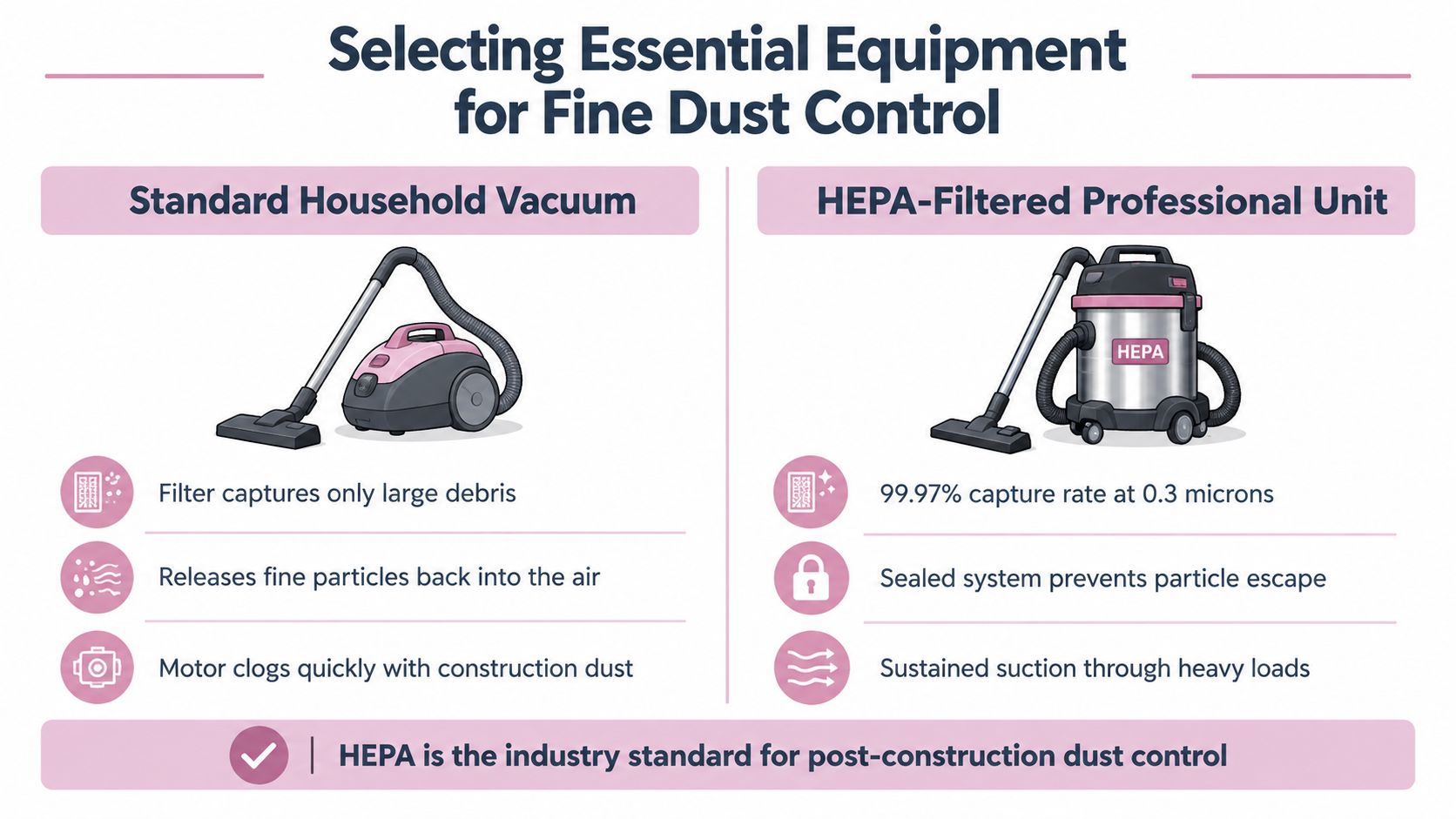
Homeowners do not need to diagnose a hazard before changing the cleaning plan. Fine particles can remain on ledges, floors, cabinets, and other horizontal surfaces after visible scraps have been removed. Ordinary sweeping can put that residue back into the air, while a household vacuum may release particles if its filtration and seals are not designed for fine construction dust.
Why visible cleanliness is not enough
Drywall sanding dust spreads easily because it is light and fine. Silica dust presents a greater concern because respirable particles can travel deeper into the lungs. Cutting tile or concrete during a bathroom, basement, patio, or flooring project makes dust control more important than masking residue with a fragranced cleaner.
OSHA's silica standard prohibits dry sweeping or dry brushing when those methods could expose people to respirable crystalline silica. It favors wet methods, HEPA-filtered vacuuming, or another method that limits exposure. It also restricts compressed air for surface cleaning when it would create a dust cloud. The OSHA silica standard provides the specific requirements.
That makes “Can I just vacuum and wipe?” a question that needs a qualified answer. Isolated, low-dust cleanup may be manageable with suitable equipment and protective practices. A standard vacuum and dry feather duster, however, do not provide the same control as equipment designed for construction particles. Work from higher surfaces toward lower ones, use appropriate filtration, and finish with damp wiping so the same dust is not repeatedly redistributed.
Seasonal pollen and pet residue can add another layer of particles after a remodel. Homeowners may find useful household practices in this guide to reducing allergens from your home. Those practices do not replace construction dust control, but they support the same principle: capture particles instead of sending them back into the breathing zone.
Compliance changes the standard of “done”
Federal renovation guidance has shaped the expectation that a work area should be cleaned and checked before occupants return. In regulated work, final cleaning is part of the handoff process, not a cosmetic courtesy.
A homeowner in Acworth or Kennesaw should ask which materials were cut or sanded, whether the HVAC system operated during the project, and whether lead-safe or another clearance process applies. For an office, rental property, or community amenity in Woodstock or Marietta, the timing also matters because people may use the space soon after completion. A clean-looking room is a starting point. A controlled, inspected room is a safer finish.
Navigating the Three Phases of a Professional Cleanup
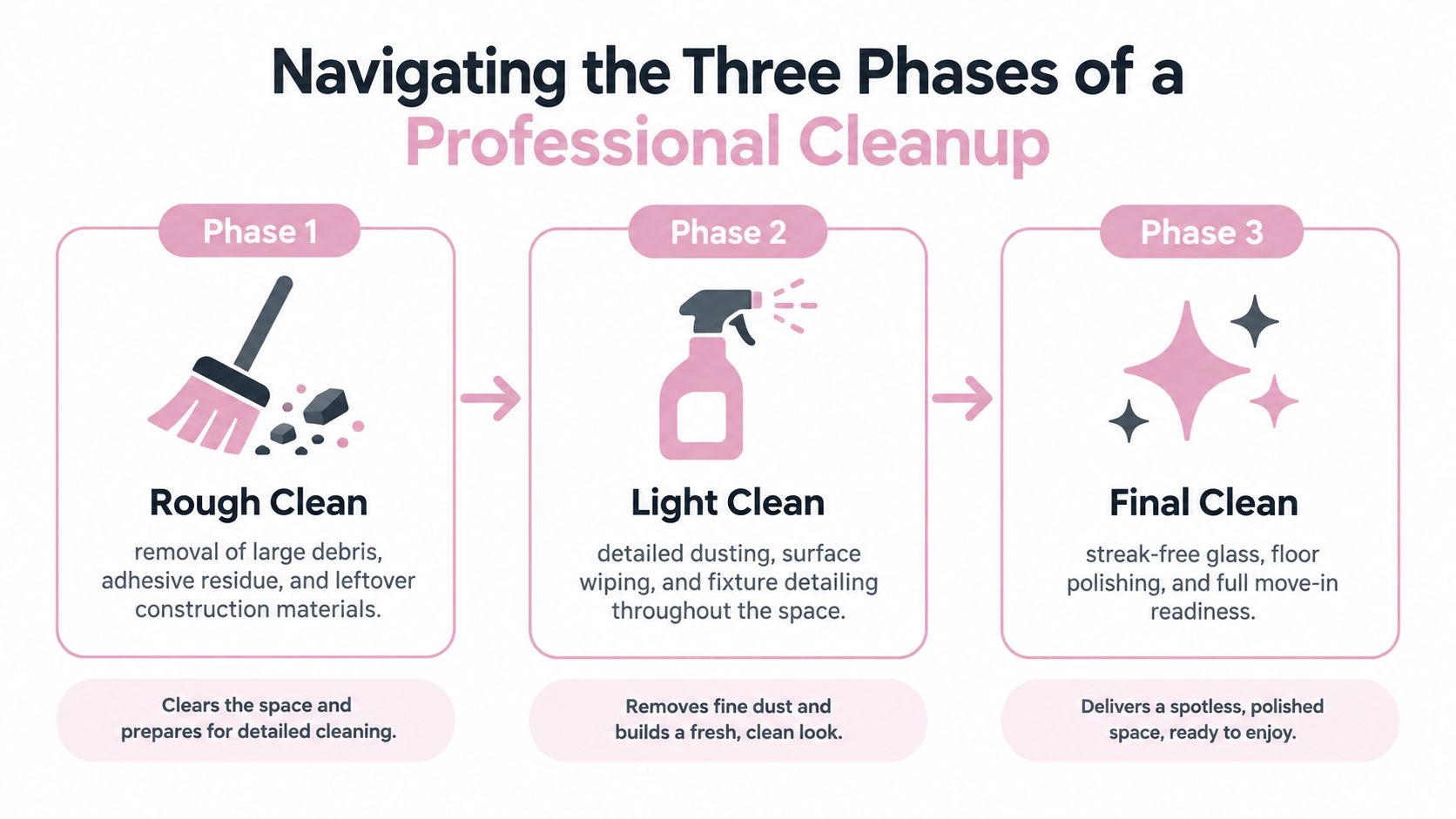
A post-construction clean works best as a sequence, not a single rushed visit. Each phase removes a different layer of the mess, and skipping the early work can make the final detail pass less effective.
Phase one removes the job-site burden
The rough clean handles large debris and materials that don't belong in the finished space. Depending on the project and the agreed scope, that can include packaging, loose construction waste, protective film, stickers, scraps, and accessible debris left after the trades finish.
This stage creates safe working paths and exposes surfaces that need detailed treatment. It also prevents smaller particles from being ground into flooring while people continue walking through the room. Large debris may need separate handling, so homeowners should confirm what the cleaning appointment includes and what must be removed by the contractor or waste provider. For projects with significant recoverable material, a resource such as recycling construction materials can help owners think through disposal before the cleaning begins.
Phase two addresses settled residue
The light clean is the detailed removal stage. Crews work through walls, trim, cabinets, baseboards, fixtures, floors, glass, window tracks, and other accessible surfaces. The sequence generally moves from top to bottom, with vacuuming and wiping chosen according to the material and type of residue.
At this stage, a construction zone begins to feel like a home or workplace. Dust on cabinet exteriors, fingerprints on doors, residue around new fixtures, and particles in corners become visible once the larger debris is gone. Interior windows, grout, cabinets, baseboards, and other add-ons may require separate attention depending on the project.
Phase three catches what the first passes reveal
The final clean happens after the heavier work is complete and remaining dust has had an opportunity to settle. It focuses on smudges, fine residue, glass streaks, floor finish, overlooked edges, and the small details that matter during a walkthrough, move-in, listing presentation, or opening.
A final inspection should include more than the center of the room. Check window sills, door tops, switch plates, light fixtures, cabinet corners, stair edges, bathroom hardware, and the area around registers. The three-phase structure is documented in this professional post-construction cleaning checklist, which describes rough, light, and final cleaning as distinct stages.
The schedule may vary for a home, office, or HOA clubhouse, but the logic stays consistent. Remove bulky material first, control fine dust next, and polish only after the space has stopped producing new construction residue.
Selecting Essential Equipment for Fine Dust Control
The equipment gap explains why post-construction cleaning often produces a different result from DIY dusting. A household vacuum may be suitable for ordinary crumbs and routine debris, but construction dust can load filters quickly and escape through weak seals or inadequate filtration. Repeated passes can give the impression of effort without capturing the finest material.
A true HEPA filter is designed to capture at least 99.97% of particles at 0.3 microns, according to this post-construction HEPA filtration guide. That specification doesn't mean every machine labeled “HEPA” performs identically in every setting. The vacuum's seals, hose, collection system, maintenance, and operator technique also matter.
Vacuum first, damp wipe second
The most reliable sequence is to capture loose fine dust before wet wiping. If a cleaner damp-wipes first, the cloth can drag powder into a paste along trim, grout, cabinet edges, or textured surfaces. If the cleaner dry-dusts aggressively, the dust may become airborne again.
A controlled approach pairs HEPA vacuuming with microfiber cloths, damp wiping, suitable surface cleaners, and clean mop heads. The cleaner should change cloths or rinse them appropriately rather than carrying construction residue from a bathroom to a kitchen or from a windowsill to a cabinet face.
Match the tool to the surface
Fine dust control also depends on access. Window tracks need narrow tools and careful wiping. Light fixtures need a method that removes residue without damaging the finish. HVAC registers and returns need inspection because dust can collect around openings. Cabinets may need exterior cleaning, while interior cabinet cleaning is often a separately requested detail.
Useful equipment decisions include:
| Area | Better approach | What often fails |
|---|---|---|
| Floors and carpet | HEPA vacuuming followed by the appropriate damp or flooring-safe method | Dry sweeping that pushes powder into edges |
| Cabinetry and trim | Soft microfiber, controlled moisture, and detail work around hardware | Abrasive pads or excess water on new finishes |
| Glass and tracks | Fine-particle removal before streak-free glass cleaning | Cleaning glass while gritty residue remains |
| Registers and returns | Inspection and careful cleaning of accessible areas | Ignoring airflow openings entirely |
| Grout and textured surfaces | Narrow brushes and compatible cleaners | Smearing dust across the surface |
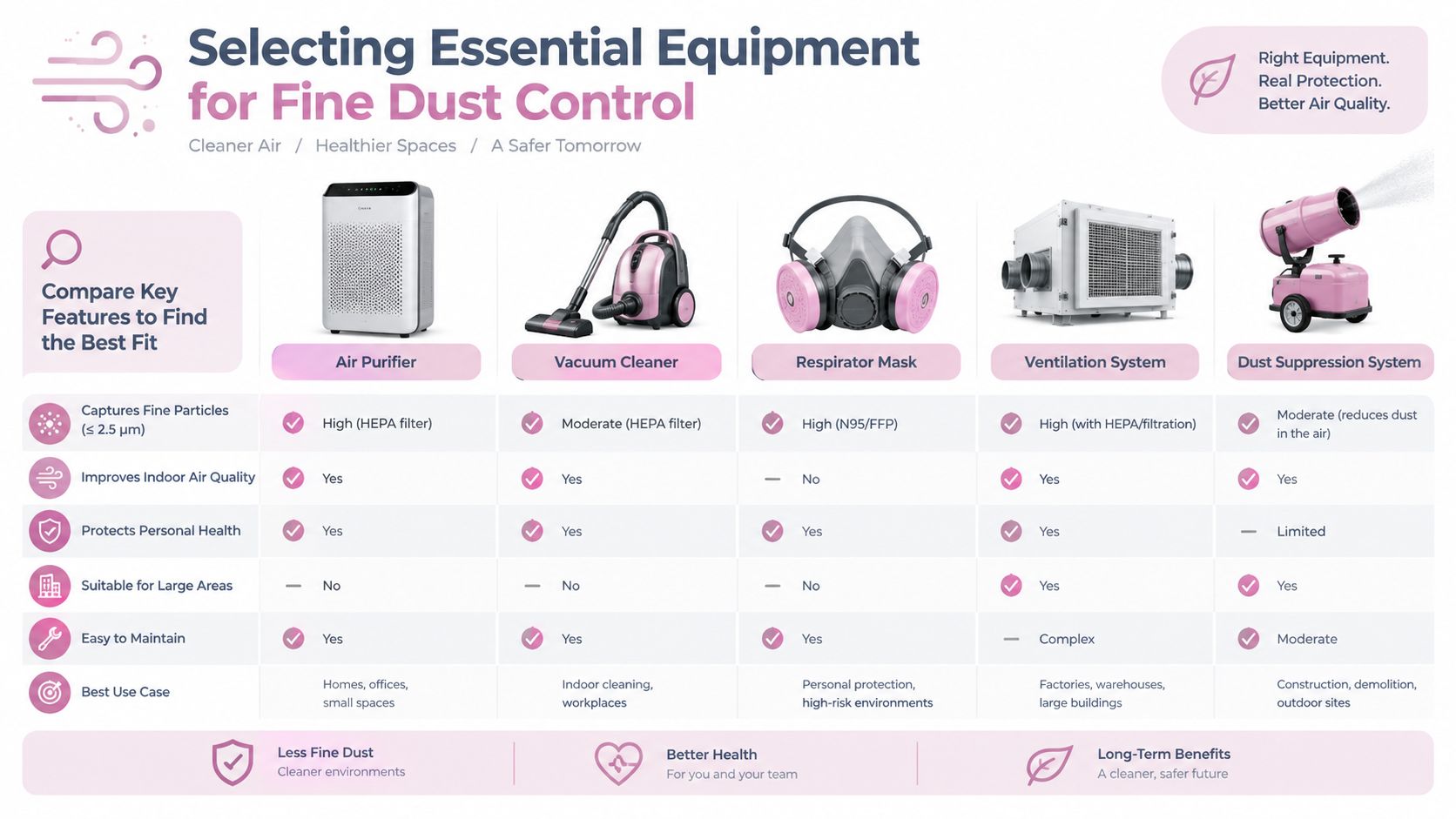
Air filtration and ventilation can support cleanup, but they don't replace source removal. A purifier may capture airborne particles, while a cleaner still needs to remove settled residue from surfaces. Respiratory protection and other controls may also be appropriate for workers depending on the material and exposure conditions. This is one reason a homeowner should tell the cleaning provider whether concrete, tile, masonry, drywall, or insulation work took place.
Timing Your Final Cleanup for Maximum Effect
Starting the final clean the moment the last contractor walks out can be counterproductive. Fine construction dust may remain airborne for 24 to 48 hours after dust-producing work stops, according to this post-construction cleaning guide. Cleaning during that period can remove some residue, but it may also mean that more particles settle after the crew finishes.
A better schedule separates rough removal from the final detail work. The space is cleared, heavy dust is controlled, and the area is allowed to settle before the final pass. The NCCER guidance on cleaning a site after construction also recommends allowing dust to settle before deep cleaning.
HVAC can undo a good cleaning
HVAC systems deserve special attention because airflow can move dust from one room to another. If the system ran while contractors were cutting, sanding, or installing materials, dust may have reached registers, returns, and accessible duct openings. Turning the system on immediately after cleaning can redistribute what the final pass just removed.
The practical response is to inspect registers and returns, clean accessible openings as appropriate, check filters with the contractor or HVAC professional, and coordinate system operation with the cleaning schedule. Guidance on overlooked post-construction areas and HVAC dust recommends treating airflow systems as potential contamination pathways.
Schedule the cleaning around the actual project, not an assumed calendar date. Ask whether painters, flooring installers, cabinet installers, electricians, or HVAC workers still need access. A final clean performed before the last dusty trade returns won't remain final for long.
Evaluating DIY Cleanup Versus Hiring a Professional Service
DIY cleanup can work for a small, low-dust project when you understand the materials and have suitable equipment. It becomes a poor trade-off after concrete, tile, masonry, extensive drywall sanding, insulation, adhesive removal, or work across many rooms. Fine construction dust can remain airborne, settle inside gaps, and spread through the home long after surfaces appear clean.
The physical labor is only one part of the decision. You must control dust as you move through the space, protect new finishes, handle sharp debris, keep contaminated cloths and filters from spreading residue, and determine how construction waste should be separated and removed. A rushed homeowner can spend days repeating the same work after using a dry broom or an ordinary vacuum.
Where professional support earns its place
A licensed, bonded, and insured service brings a defined process to a job with competing deadlines. Cleaners can follow a room-by-room checklist, coordinate with the homeowner or contractor, and inspect areas that routine cleaning often misses. For a busy family in Kennesaw, a commuter household in Acworth, or a retiree preparing a home for aging in place, that saved time and reduced physical strain may matter as much as the finished appearance.
Professional support also changes the health and safety calculation. The goal is not just to make dust less visible. It is to reduce residue that can affect indoor air quality, damage finishes, or expose workers and occupants to unknown construction contaminants.
Health-conscious product selection matters, too. Maid in America, owned by Vicky Bates, is a locally and privately owned cleaning service serving Kennesaw, Acworth, Woodstock, Cartersville, West Cobb, Marietta, Dallas, Hiram, Powder Springs, and nearby communities in Cobb, Cherokee, Paulding, Douglas, and Bartow counties. Its service model uses natural, low-odor products, carefully selected and trained cleaners, and, when possible, one dedicated cleaner rather than a large team.
That model can suit homeowners who want consistent, personalized service and the familiarity of getting to know a cleaner by name. The company is licensed, bonded, and insured. It also provides basic maintenance cleaning, Top-to-Bottom Deluxe cleaning, move-in/move-out cleaning, office cleaning, HOA clubhouse and community amenity cleaning, and recurring service on weekly, biweekly, every three weeks, or monthly schedules.
A sensible boundary: If you don't know what the dust contains, don't treat it as ordinary household dirt.
OSHA's silica rules prohibit dry sweeping or dry brushing when those methods could expose individuals to respirable crystalline silica. They favor wet methods and HEPA vacuuming over dry cleanup, as explained in OSHA's silica requirements for respirable crystalline silica. If the project involved concrete or masonry work, a separate contractor may also be needed for the construction activity itself. Homeowners planning that type of work can review concrete services Atlanta when evaluating the building side of the project.
Cleaning scope and the home's condition affect labor, so a walkthrough or detailed estimate is more useful than a generic price list. For context on how detailed cleaning work is commonly assessed, review what affects deep cleaning cost, while remembering that post-construction work involves different dust, residue, and staging requirements.
Preparing Your Newly Renovated Home for Move-In
The last contractor leaves, the floors look new, and the temptation is to carry in the furniture immediately. A better move is to give the cleaned space a quiet inspection before filling it with boxes, rugs, toys, and furniture that make missed residue harder to reach.
Start with the practical handoff. Confirm that construction debris has been removed, paint and adhesive work is complete, HVAC activity is coordinated, and the cleaning team knows which surfaces are new or delicate. Walk through the kitchen, bathrooms, bedrooms, hallways, stairs, and utility areas in daylight. Check the tops of doors, window tracks, cabinet edges, baseboards, switches, and vents.
A comfortable first week
New finishes need sensible care after the post-construction clean. Don't drag heavy furniture across flooring, place protective pads under furniture legs, or use aggressive products on surfaces before checking the manufacturer's guidance. If an odor remains from paint, flooring, cabinetry, or adhesives, follow the contractor's ventilation and occupancy advice rather than trying to mask it with a strong fragrance.
For a family in Marietta or Woodstock, the first week may also bring the usual Georgia realities. Open doors can bring in pollen, children and pets can track red clay indoors, and a humid summer can make fine residue feel more noticeable on smooth surfaces. A light maintenance visit may be appropriate after the home is furnished, followed by a recurring schedule that matches the household.
A good maintenance plan might include:
- Weekly service: Useful for busy families, frequent hosts, or homes receiving heavy daily traffic.
- Biweekly or every-three-weeks service: A practical rhythm for many households that want consistent upkeep without weekly visits.
- Monthly service: Suitable for lighter-use homes or as a scheduled reset between deeper appointments.
- Targeted add-ons: Inside the oven or fridge, baseboards, cabinets, interior windows, grout, laundry, dishes, or upholstery vacuuming can address details that aren't part of every maintenance visit.
For renters, landlords, realtors, and property managers, the final clean may be tied to a move-in or move-out date. A dedicated move-in and move-out cleaning service can address the empty-space details that become difficult once belongings arrive. Businesses may need office cleaning after renovation, while HOA boards may need community amenity cleaning before residents return.
The goal isn't to make a construction site smell like cleaning product. It's to remove the fine residue, protect the character of new finishes, and create a space that feels ready for normal life. Maid in America's health-conscious approach is summed up in its tagline, “Add sparkle and shine with your health in mind.”
Request a free estimate from Maid in America for post-construction cleaning in Kennesaw, Acworth, and nearby communities, with natural, low-odor products and personalized service for homes, offices, and community spaces. Call 770-427-4448 to discuss your remodel, cleaning phases, and move-in timeline.


Maid in America provides reliable, personalized cleaning with natural products for homes, offices, and communities across West Georgia. Licensed, bonded, and insured, we’re locally and privately owned.
Get in touch with us today!
info@maidinamericaga.com