Move in Cleaning List: The Ultimate 2026 Guide
You've got the keys, the rooms are empty, and the moving truck is on its way. That empty window is the easiest time to clean, because cabinets, baseboards, floors, and closets are still fully accessible. But not every task has the same urgency. A kitchen shelf, bathroom fixture, or dusty ceiling fan deserves attention before boxes arrive, while the entryway and final floor pass are better left until the end.
This move in cleaning list follows the order that works best in real homes and small commercial spaces. It starts with the rooms that affect occupancy readiness, moves from overhead dust down to floors, then finishes with entry points and a room-by-room verification. That sequence is especially useful in Kennesaw, Acworth, Marietta, and Dallas, where Georgia pollen, humid summers, red clay tracked indoors, busy schedules, and compressed move dates can quickly undo a rushed clean.
Maid in America is a locally and privately owned Kennesaw-area cleaning service using natural, low-odor products. The company is licensed, bonded, and insured, and one dedicated cleaner is usually assigned whenever possible, so clients often get to know their cleaner by name. For additional planning before listing or selling a home, these home staging tips for sellers can help you coordinate cleaning with presentation.
Use this priority key: complete kitchens and bathrooms first, clean high surfaces before floors, and leave entryways and final checks until the end.
Table of Contents
1. Deep Clean Kitchen Cabinets, Appliances, and Countertops
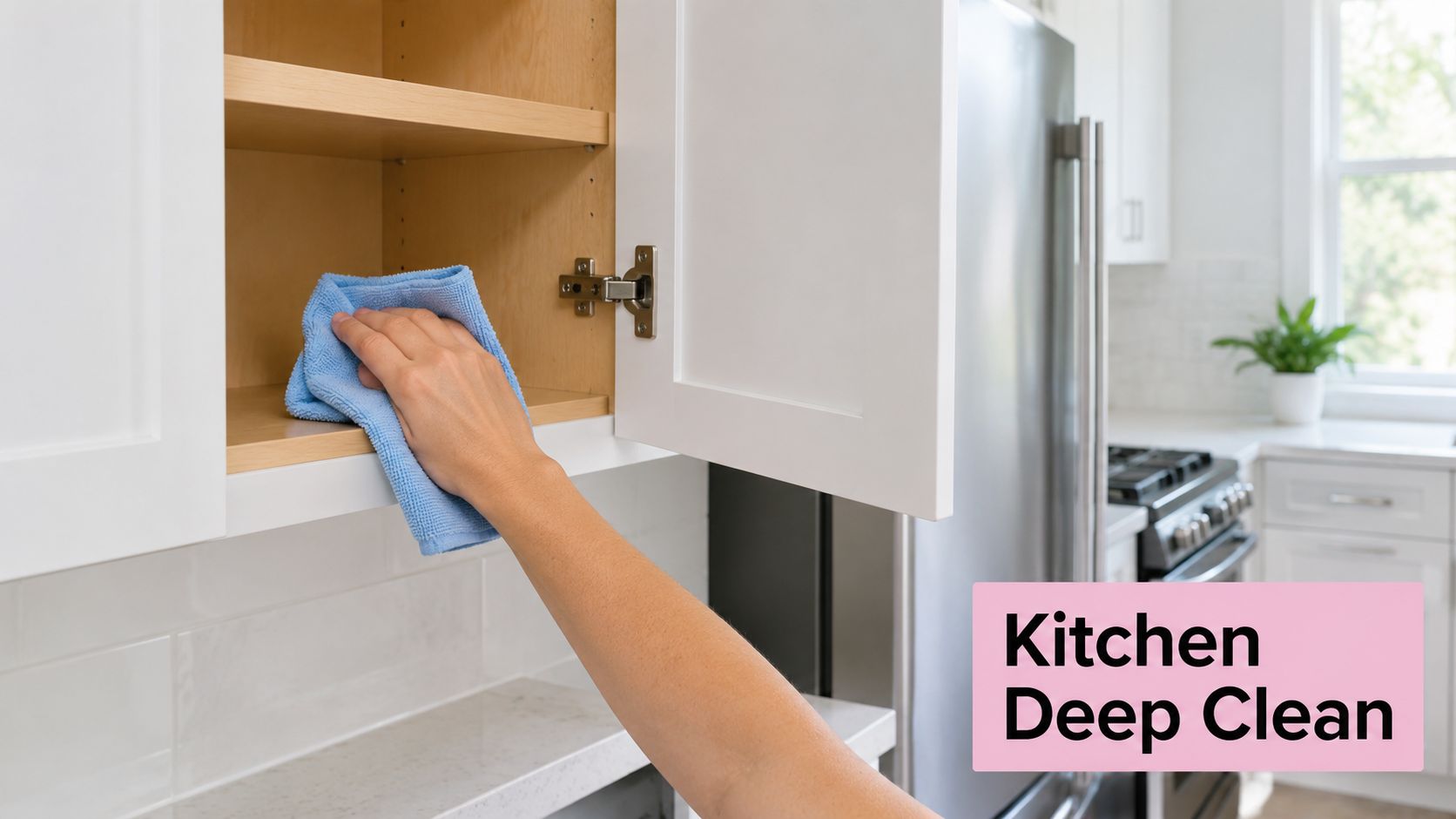
An empty kitchen gives you access to the places that are hardest to reach after unpacking. Start with cabinet interiors, drawers, pantry shelves, handles, and the tops of lower cabinets. Previous occupants may have left crumbs, grease film, dust, or residue in storage areas that look clean from across the room.
The Canadian Association of Movers specifically recommends cleaning drawers and cabinets, appliances, counters, and backsplashes as part of a proper move-in reset. Lowe's new-home cleaning checklist also calls out kitchen cabinets and drawers, pantry shelves, the refrigerator, dishwasher, oven, microwave, counters, handles, and baseboards. Those details matter because your dishes, food, and cookware will soon make these surfaces less accessible.
Start with food-contact and storage areas
If time or budget limits the scope, prioritize the cabinets where you'll store plates, glasses, pantry goods, and cooking equipment. Then move to countertops, the backsplash, sink, faucet, stovetop, refrigerator exterior, dishwasher front, and microwave exterior. A cleaner can work outward from the areas your household will use most often instead of spending the first part of the appointment on low-priority decorative surfaces.
Inside the oven or refrigerator may need more focused work than a standard move-in appointment includes. Ask about those as add-ons, along with cabinet interiors if the initial scope is limited. This is also a practical moment to measure shelves and drawers before loading them with organizers or food containers.
Practical rule: Clean the places where food will be stored and prepared before polishing the surfaces that simply look clean.
Use products suited to the material. Natural stone, finished wood, stainless steel, and painted cabinet surfaces don't all respond well to the same cleaner. Maid in America's health-conscious approach uses carefully selected, low-odor products, while trained cleaners can adjust the method to the surface and the requested level of detail.
2. Bathroom Sanitization and Deep Cleaning
Bathrooms deserve early attention because they combine frequent touchpoints, moisture, and residue from daily use. Clean the toilet inside and outside, sink basin, faucet, vanity top, shower walls, tub, mirrors, fixtures, and accessible cabinet interiors. Soap film, hard-water residue, dust, and discoloration are much easier to address before towels, toiletries, and bath mats fill the room.
Work from higher surfaces down. Wipe mirrors and upper fixtures first, then shower walls and tile, vanity surfaces, sink, toilet, and floor. That order keeps loosened dust and product residue from settling on areas you've already finished.
For a useful explanation of the difference between cleaning, sanitizing, and disinfecting, use the correct term for the task rather than treating every product or method as interchangeable. The right approach depends on the surface, the soil being removed, and the product directions.
Give ventilation and grout their own attention
Exhaust fan covers, vents, corners, and the area behind the toilet are easy to miss. Dust on a fan cover can remain visible after the rest of the room has been cleaned, and poor ventilation can leave the room feeling damp. Ask the cleaner to inspect those areas rather than focusing only on the most visible fixtures.
If grout lines show discoloration, grout cleaning is a useful focused add-on. It may require a different tool and more dwell time than a routine bathroom clean, so identifying it before the appointment helps the service match your expectations.
For a smaller scope, start with the primary bathroom and the main guest bathroom. Renters preparing for a handover should also compare the clean with the lease or property manager's expectations, especially around cabinets, medicine-cabinet shelves, shower glass, and floors.
3. Floor Cleaning, Vacuuming, and Baseboards
Floors collect what the rest of the home releases. Dust falls from shelves and ceiling fans, red clay enters through doors, and moving activity leaves grit in transition areas. Vacuum carpets, sweep hard floors, mop according to the flooring material, and wipe baseboards throughout the home.
Baseboards often show the difference between maintenance cleaning and a true move-in reset. They collect dust, pet hair, pollen, and small particles along their upper edge, especially behind doors and near furniture locations. Starting baseboards before the final mop captures that debris instead of spreading it across a freshly cleaned floor.
Match the method to the flooring
Carpet needs thorough vacuuming along edges, corners, closets, and transition strips. Hard floors need a sweep or vacuum pass before damp cleaning. Hardwood and other moisture-sensitive materials shouldn't be saturated, while tile may need extra attention in grout lines and around thresholds.
A practical whole-home reference is this entire house cleaning checklist, but move-in work should still be adjusted to the empty space and its flooring. Ask for special attention where flooring changes, under appliance edges that are safely accessible, and along walls where dust gathers.
Clean floors late, not early. A clean floor becomes a work surface for dust, drips, shoes, and moving equipment if you finish it before the overhead work.
Baseboards can also become a recurring add-on after the move. Weekly, biweekly, every three weeks, or monthly service can keep them from developing a heavy dust line, particularly in homes with pets, children, busy commuters, or open doors during Georgia's pollen season.
4. Closet and Storage Space Organization and Cleaning
Closets are easy to postpone because they don't usually look dirty from the doorway. In an empty home, however, shelves, rods, corners, closet floors, linen storage, pantry edges, and built-in cabinets are fully exposed. Wipe shelves and rods, remove cobwebs, vacuum or sweep the floor, and clean the inside faces of doors before clothing and storage bins arrive.
The cleaning stage is also a useful inspection stage. Look for musty odors, damp surfaces, water staining, damaged shelving, or poor airflow. Don't treat an unusual moisture concern as something a cleaner can repair. Document it and raise it with the homeowner, landlord, property manager, or appropriate professional before placing belongings inside.
Prepare storage for a humid climate
Georgia's humid summers make closet airflow worth considering. Leave doors open while the space dries, and use a simple odor-absorbing option such as an open container of baking soda if appropriate for the household. Keep the space empty until surfaces are dry, and avoid packing clothing against a wall that feels damp.
For a limited appointment, prioritize bedroom closets, the linen closet, pantry storage, and bathroom vanities. The Canadian Association of Movers cleaning guidance supports cleaning drawers, cabinets, shelves, baseboards, and appliance areas before belongings go in.
Don't confuse cleaning with organization. A cleaner can prepare the storage surface, but the homeowner still decides what belongs there and how it should be arranged. Measuring shelves before buying containers prevents wasted purchases and gives you a chance to plan around the actual space.
5. Windows, Mirrors, and Glass Surface Cleaning
Clean glass changes the feel of an empty room quickly. Interior windows, mirrors, sliding glass doors, sidelights, and cabinet glass can carry dust film and pollen that dulls incoming light. In Kennesaw, Acworth, and other nearby communities, window sills and tracks can collect outdoor residue even when the glass itself appears clear.
Start with interior glass if the scope is limited. Clean the pane, frame, sill, and accessible track, then move to mirrors and interior glass doors. The sill deserves as much attention as the pane because it often holds the dust and pollen that become visible once sunlight hits the room.
Avoid a streaky finish
Use a lint-free microfiber cloth and a product that suits the glass and surrounding frame. Natural, low-odor products can be a good fit when a household wants fewer harsh smells, but the cleaner still needs to control moisture and wipe in a consistent pattern. Too much product often creates more residue, not more shine.
Schedule interior window cleaning early enough for the surfaces to dry before boxes and furniture arrive. If a construction crew recently finished work, post-construction cleaning may be more appropriate than a standard move-in clean because fine dust can settle on fixtures, cabinets, floors, and glass after the visible debris is gone.
For ongoing upkeep, these window care tips offer useful maintenance context. Exterior windows may require separate access, equipment, or a different service scope, so clarify whether the estimate covers interior glass only or additional window work.
6. Appliance Exteriors, Light Fixtures, and Ceiling Cleaning
The cleanest floor in a room can't compensate for a dusty ceiling fan or a greasy refrigerator handle. High surfaces collect pollen, cobwebs, cooking residue, and settled dust, while appliance fronts show fingerprints and splatter at eye level. Handle these areas before furniture arrives and before the final floor pass.
Dust ceiling fans, light fixtures, vent covers, upper ledges, cornices, and ceiling corners. Wipe refrigerator and dishwasher exteriors, microwave surfaces, range-hood areas, washer and dryer fronts, and accessible appliance handles. Check the tops of cabinets and tall furniture niches if they're reachable without moving unsafely.
Work from the ceiling down
A top-to-bottom sequence prevents falling dust from undoing lower work. A cleaner should use stable equipment and safe methods for high areas, rather than stretching from a counter or balancing on furniture. If a fixture is fragile, hot, difficult to reach, or connected to electrical components, identify it before the appointment.
The move-in clean doesn't automatically include every appliance interior. Inside the oven or fridge, along with cabinets, baseboards, interior windows, grout, laundry, dishes, or upholstery vacuuming, may need to be selected as add-ons. Listing those priorities early gives Maid in America a clearer picture of the home and the finish you want.
Safety comes before shine: A ceiling fan can be cleaned, but a cleaner shouldn't take an unsafe position to reach it.
Businesses in Kennesaw, Marietta, Dallas, or nearby areas can use the same principle in an office or shared space. Light fixtures, appliance fronts, break-room cabinets, and ceiling edges are often noticed during a move or reopening, even when the floor has already been cleaned.
7. Entry Areas, Doorways, and Entryway Surfaces Preparation
Entryways are the last major cleaning zone because they keep receiving traffic. Front doors, back doors, garage entries, thresholds, door frames, locks, handles, switch plates, and nearby floors collect outdoor dust and debris. Red clay tracked indoors can leave a stubborn film at transitions, especially when movers and helpers are going in and out.
Clean the interior and accessible exterior portions of doors according to the agreed scope. Wipe handles and frames, vacuum corners, sweep or mop the entry floor, and pay close attention to thresholds where carpet meets hard flooring. A durable mat system can protect the clean surface once the move begins, but it shouldn't replace cleaning underneath the mat.
Keep the final path controlled
If possible, complete entryways after the rooms are finished. Ask movers to use a defined path, protect vulnerable flooring, and avoid setting boxes on damp surfaces. For a business, the same idea applies to office entrances and shared facilities. Finish the traffic zones after other dust-producing work, then keep them clear until dry.
A homeowner in Acworth may need to account for an attached garage entry, while a renter in Marietta may need to focus on the apartment door, hallway threshold, and interior entry floor. The specific access pattern matters more than treating every home as if it has the same layout.
Door handles and locks deserve careful attention because many people touch them during the move. Don't use a product that could damage the finish, and don't leave excess moisture around electronic locks, hinges, or flooring seams. The final entry pass should look clean, feel dry, and be ready for the first box.
8. Final Walkthrough Inspection and Quality Verification
A move-in clean isn't complete when the last cloth is folded. Walk through the home with the lights on and inspect each room from the doorway, then check the places you'll use first. Look inside cabinets, across countertops, along baseboards, around toilets, beneath sinks, in closets, and at floor transitions.
A useful sequence is to verify the kitchen, bathrooms, sleeping areas, living spaces, storage, windows, and entryways. Confirm that floors are dry, glass is clear, appliances and fixtures are free of visible residue, and no cleaning cloths, packaging, or supplies remain behind. If the home has been recently renovated, check for fine dust on horizontal surfaces that may have settled after the initial pass.
Add a safety and utility check
Before unpacking, open windows where appropriate, locate the breaker box, water shutoff, and gas shutoff, and test smoke and carbon monoxide detectors. These checks aren't substitutes for professional inspection or repair, but they help you understand the home's basic readiness before furniture blocks access.
The safety-first order is simple: inspect, ventilate, test detectors, confirm utilities, then clean high-touch and food-contact areas before unpacking. This is particularly useful when the move happens on a compressed schedule and several people are entering the home at once.
If you hire a professional, ask for a completed checklist and be present during or immediately after the final walkthrough when possible. Photograph key areas such as the kitchen, bathrooms, and floors for your records. Maid in America's move-in and move-out cleaning service can be scheduled around the home's condition, access, and priority areas.
Ask in advance how missed areas or touch-ups are handled. A clear scope is more useful than assuming every detail is included, especially for inside appliances, grout, interior windows, laundry, dishes, and upholstery vacuuming.
Move-In Cleaning: 8-Point Comparison
| Service | Implementation Complexity (🔄) | Resource Requirements (⚡) | Expected Outcomes (📊) | Ideal Use Cases (💡) | Key Advantages (⭐) |
|---|---|---|---|---|---|
| Deep Clean Kitchen Cabinets, Appliances, and Countertops | 🔄🔄🔄 | ⚡⚡⚡ | Grease-free, food-safe surfaces; visible appliance condition | Move-in kitchens; families cooking immediately | ⭐ Removes hidden residue; ⭐ Creates hygienic prep area; ⭐ Identifies appliance issues |
| Bathroom Sanitization and Deep Cleaning | 🔄🔄 | ⚡⚡ | Sanitized, mold-reduced bathrooms; streak-free fixtures | Master/guest baths; health-focused moves | ⭐ Eliminates germs; ⭐ Targets mold/hard-water; ⭐ Low-odor product options |
| Floor Cleaning, Vacuuming, and Baseboards | 🔄🔄 | ⚡⚡ | Clean floors and baseboards; allergen reduction | Homes with kids/pets; high-traffic areas | ⭐ Improves appearance; ⭐ Removes dust/allergens; ⭐ Protects furniture |
| Closet and Storage Space Organization and Cleaning | 🔄🔄 | ⚡ | Dust-free storage; moisture/pest issues identified | Older homes; move-in wardrobe/storage prep | ⭐ Protects belongings; ⭐ Reveals moisture or pest concerns |
| Windows, Mirrors, and Glass Surface Cleaning | 🔄🔄 | ⚡⚡ | Brighter rooms; streak-free glass; pollen/film removed | Open houses; rooms needing more light | ⭐ Enhances natural light; ⭐ Improves curb/room appeal |
| Appliance Exteriors, Light Fixtures, and Ceiling Cleaning | 🔄🔄🔄 | ⚡⚡ | Dust-free high surfaces; improved air circulation | Homes with ceiling fans/older fixtures | ⭐ Top-to-bottom cleanliness; ⭐ Improves air quality |
| Entry Areas, Doorways, and Entryway Surfaces Preparation | 🔄🔄 | ⚡ | Hygienic thresholds; reduced tracked-in dirt | Homes near busy streets; commuter households | ⭐ Prevents contaminant spread; ⭐ Improves first impressions |
| Final Walkthrough Inspection and Quality Verification | 🔄 | ⚡ | Verified completion; documented touch-up opportunities | Clients wanting assurance; rentals/sales closings | ⭐ Confirms standards; ⭐ Provides client sign-off and remedial plan |
Hand Over the Keys to a Cleaner Start
The most useful move-in cleaning list is a priority plan, not just a long collection of chores. Start while the home is empty. Clean ceilings, fans, fixtures, upper ledges, and other high surfaces before lower ones. Give the kitchen and bathrooms early attention because food storage, food preparation, personal care, and moisture make those rooms central to occupancy readiness.
Then prepare cabinets, drawers, closets, pantry shelves, and appliance exteriors before your belongings arrive. Clean windows, mirrors, and glass while access is easy. Finish with baseboards, vacuuming, sweeping, and mopping so falling dust and moving traffic don't undo the floor work.
Leave entryways until the end. They are the home's working path during the move, and Georgia red clay, pollen, and outdoor debris can return quickly when doors stay open. Use mats and a controlled route during unloading, then complete the final entry pass when the larger activity is over.
Before you accept the finished clean, complete a room-by-room walkthrough. Check that the kitchen storage areas are ready, bathroom fixtures are free of residue, closets are dry and usable, glass is clear, floors are dry, and high surfaces aren't shedding dust. Confirm the basic safety and utility points before furniture blocks access, then take photos of the areas that matter most to you.
When requesting an estimate, identify optional priorities instead of assuming they're included. You might want the inside oven or fridge, baseboards, cabinets, interior windows, grout, laundry, dishes, or upholstery vacuuming. A clear list helps the cleaner allocate time and gives homeowners, renters, landlords, real estate agents, and property managers a more useful scope.
Maid in America is a locally and privately owned service based in the Kennesaw area and owned by Vicky Bates. The company provides basic maintenance cleaning, top-to-bottom deluxe or deep cleaning, move-in and move-out cleaning, post-construction cleaning, office cleaning, and HOA clubhouse and community amenity cleaning. Recurring service is available weekly, biweekly, every three weeks, or monthly for households that want to maintain the fresh start after moving day.
The company serves Kennesaw, Acworth, Woodstock, Cartersville, West Cobb, Marietta, Dallas, Hiram, and Powder Springs, plus nearby communities in Cobb, Cherokee, Paulding, Douglas, and Bartow counties. Maid in America is licensed, bonded, and insured, uses carefully selected natural, low-odor products, and usually sends one dedicated cleaner to each home whenever possible. That consistent, personalized approach can be useful when a busy family, retiree aging in place, renter, office, or HOA community needs a familiar cleaning routine rather than a different large team at every visit.
For homeowners preparing to sell, renters preparing for inspection, or buyers trying to unpack without cleaning around boxes, professional help can protect the most valuable part of the schedule, the empty-home window. You can also use this dorm room moving checklist when coordinating smaller moves or helping a student prepare a new space.
Request a free estimate from Maid in America online at maidinamericaga.com or by calling 770-427-4448. Add sparkle and shine with your health in mind.
Maid in America offers move-in and move-out cleaning for empty or mostly empty homes, with natural, low-odor products and licensed, bonded, and insured cleaners. Request a free estimate from Maid in America online for your kitchen, bathrooms, floors, cabinets, closets, and priority add-ons, or call 770-427-4448 to discuss your move.




Maid in America provides reliable, personalized cleaning with natural products for homes, offices, and communities across West Georgia. Licensed, bonded, and insured, we’re locally and privately owned.
Get in touch with us today!
info@maidinamericaga.com