Post Construction Cleaning Checklist: 8 Steps
The remodel is finished, the tools are gone, and your Kennesaw or Acworth home should feel brand new. Then you run a hand across a counter and pick up a pale film of fine construction dust that settles again an hour later. That dust gets into window tracks, cabinets, vents, grout, and baseboards, and wiping in the wrong order just moves it from one clean surface to the next.
A good post construction cleaning checklist solves that problem by working in a strict top-to-bottom order. You clear bulk debris first, capture high dust before it falls, detail glass and storage, lift film gently, then clean floors and wet rooms last. Along the way you'll need a HEPA-filter vacuum, fresh microfiber cloths, low-lint tools, and a clear safety line between ordinary residue and dust that needs qualified assessment.
This checklist is built for Georgia homes, where spring pollen, humid air, and red clay tracked through garages can mix with drywall dust fast. It covers tools, sequence, and timing, plus when a licensed, bonded, and insured pro like Maid in America makes more sense than spending another weekend re-wiping the same rooms. Owner Vicky Bates built the company around natural, low-odor products and consistent, personalized care, summed up in the tagline, "Add sparkle and shine with your health in mind."
Table of Contents
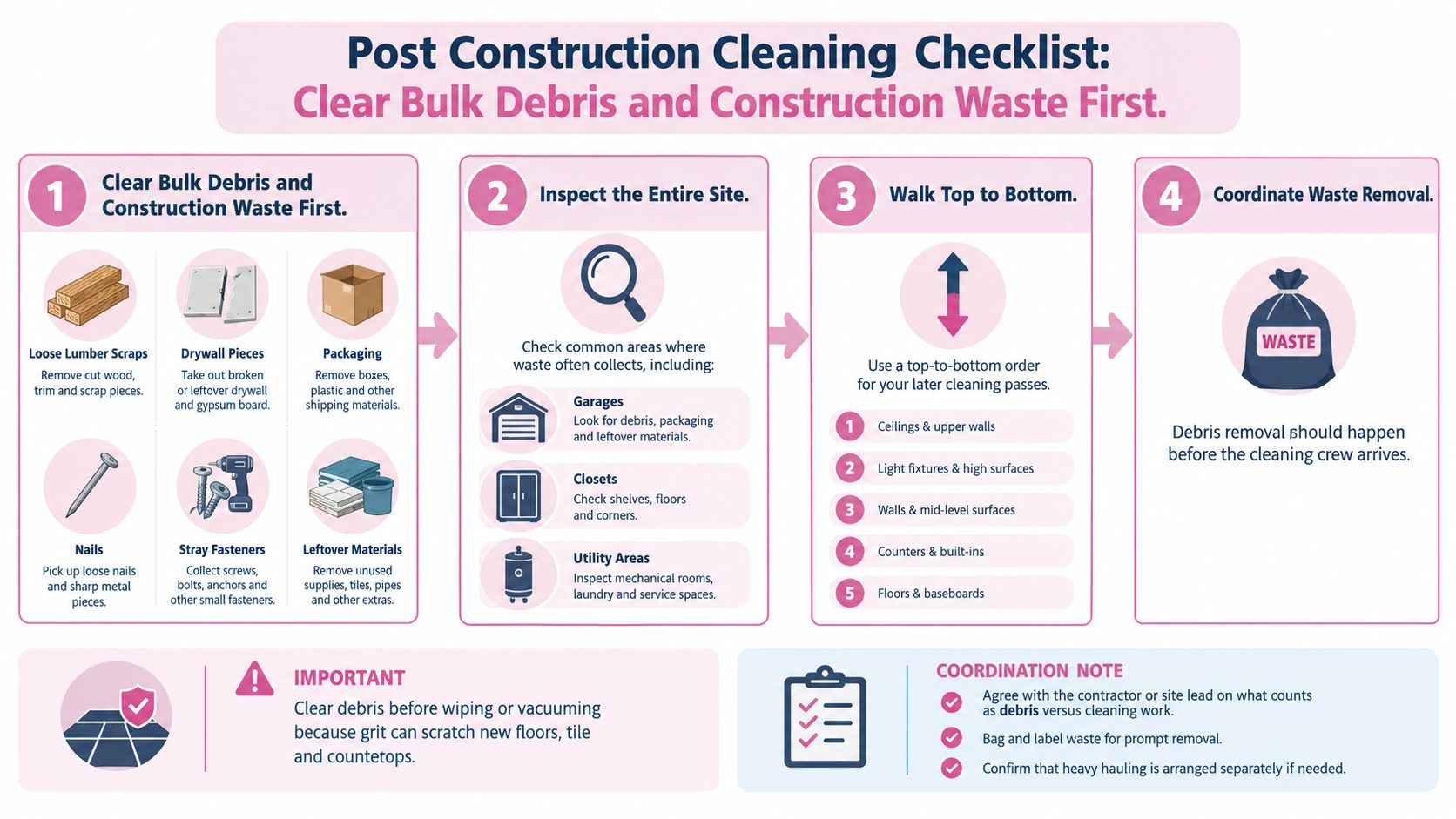
1. Clear Bulk Debris and Construction Waste First
Don't touch a cloth until the big stuff is out. Lumber scraps, drywall pieces, packaging, nails, and stray fasteners spread grit under shoes and can scratch new floors in one pass. Cleaning over debris also hides sharp edges in corners and under cabinets, where sawdust and plaster bits love to settle in older West Cobb homes.
In an Acworth kitchen remodel, for example, the contractor bagged trim scraps and cut tile pieces before cleaning started, so the first vacuum pass could focus on dust, not chunks. A Marietta basement finish went the same way once carpet padding and packaging were cleared and hauled out.
What to Agree on Before You Start
- Debris versus cleaning work: Walk the site with your contractor and decide who removes leftover materials, who bags waste, and what stays for the cleaner.
- Bag and label waste: Use heavy-duty bags, remove them promptly, and keep non-workers, kids, and pets out of the work zone until it's cleared.
- Heavy hauling: Confirm separately if a dump run or hauler is needed, because that isn't the same job as fine-dust removal.
This is also the moment to plan your budget and scope with help from Maid in America's guide to what post-construction cleaning costs in Georgia homes. If suspected lead, asbestos, or silica contamination is present, stop and get qualified assessment instead of treating it as ordinary trash. Maid in America recommends clearing debris before the cleaner arrives so the visit can focus on residue, not hauling.
2. Dust Ceilings, Vents, Fans, and High Surfaces First
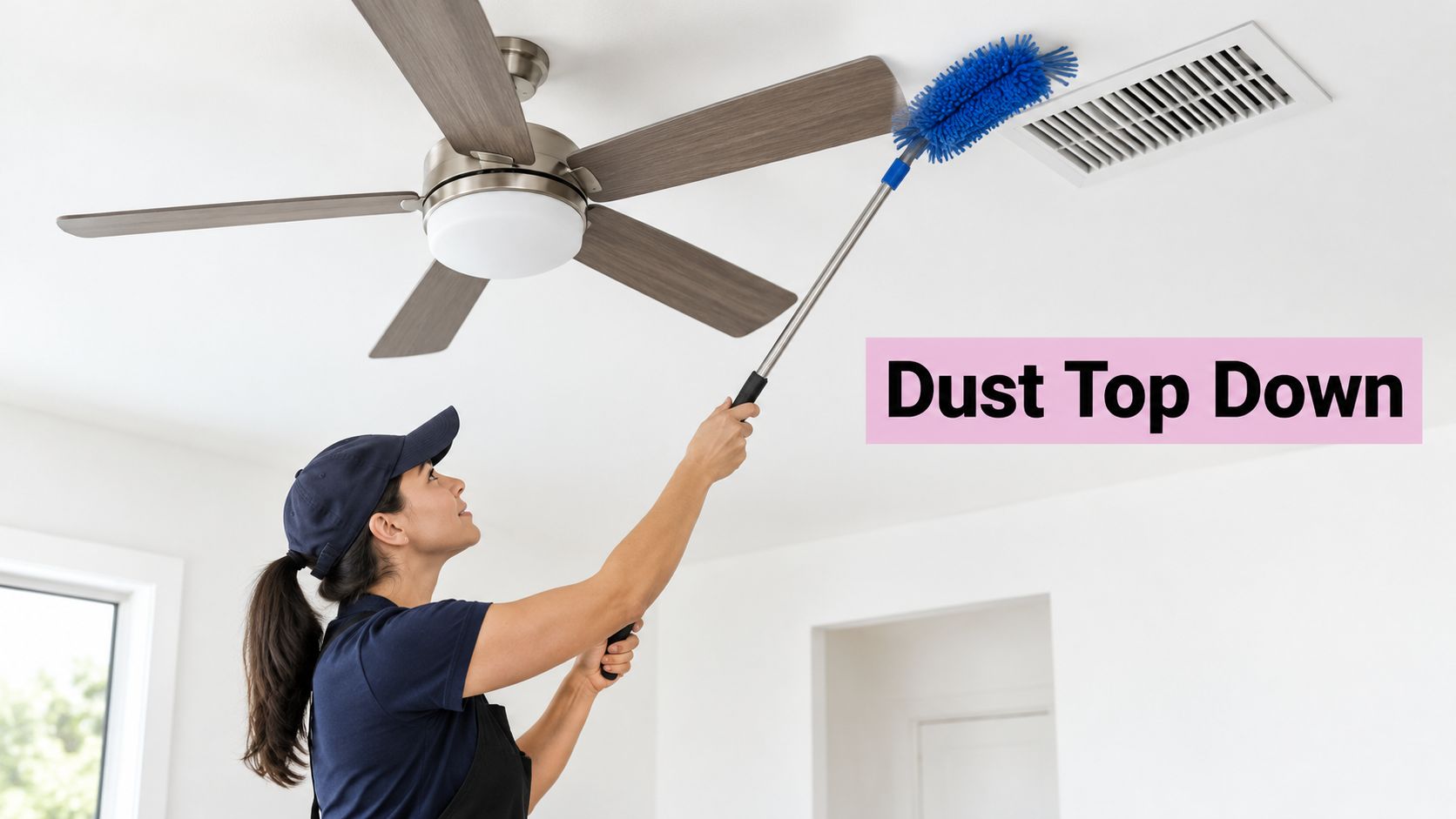
Fine dust is light, and it travels downward every time you disturb it. If you clean floors before ceiling fans, crown molding, recessed lights, and vent covers, you'll clean those floors again. Pros work from the highest and farthest point toward the door, then downward, so each pass catches what fell from the one before.
That order matters for health, not just looks. OSHA estimates approximately 2.3 million U.S. workers are exposed to respirable crystalline silica on the job from materials such as concrete, brick, mortar, and stone, according to OSHA background information on crystalline silica exposure. Ordinary finish dust isn't the same as active silica exposure, but the lesson holds. Capture particles instead of pushing them back into the air.
The High-to-Low Pass
- Ceilings and fixtures first: Dust fan blades, light housings, and molding, as in a Woodstock family room where high surfaces were finished before walls.
- Vents and grilles next: Use a HEPA vacuum with a brush attachment, and note whether return-air covers were protected during work.
- HVAC off while dusting: Limit spread through ducts until loose dust is controlled, then check filters later in the final step.
For a fuller picture of scope and sequence, see Maid in America's explainer on what post-construction cleaning actually includes. In a Cartersville home after drywall work, cleaning recessed lighting top-down kept dust from resettling on finished walls. Maid in America follows this order on post-construction jobs so the result holds up after the first walkthrough.
3. Clean Windows, Sills, Tracks, and Glass Surfaces
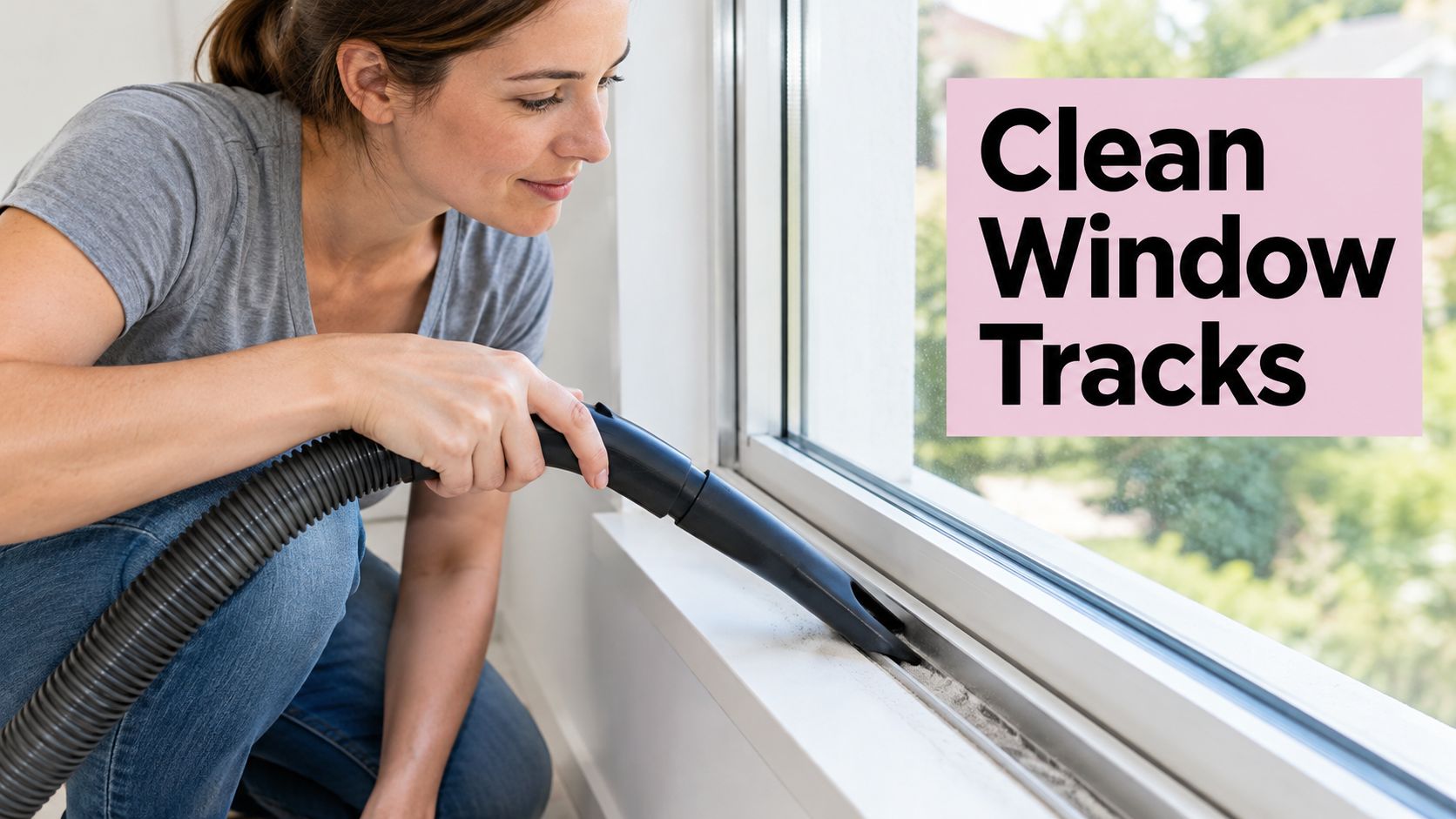
Windows tell the truth about a renovation. Paint overspray, adhesive film, and gritty tracks show up the minute sunlight hits the glass, and wiping dusty tracks with a wet cloth first turns that dust into mud. Vacuum first, then wipe. That sequence saves time and protects the finish.
Start with sills, frames, and tracks using a narrow vacuum nozzle, then clean the glass with a fresh cloth. Sliding door tracks in an Acworth townhouse, for instance, were cleared of drywall dust before the home was listed, which kept rollers moving smoothly. In a Marietta renovation, paint specks along sash edges needed gentle, targeted lifting rather than hard scrubbing that could damage new paint.
Practical rule: If the cloth turns gray in one swipe, change it. A dirty cloth smears film across glass you just cleaned.
Georgia adds its own complications here. Spring pollen sticks to slightly damp glass, and fine red clay dust near entry doors can scratch if you rub it dry. Plan on a second light pass after floors are done, because airborne dust often resettles on horizontal sills.
Maid in America cleans interior windows as part of post-construction service, and interior windows are also available as an add-on for larger projects or recurring clients. For high exterior glass, a local pressure washing or window specialist is the safer call. Don't lean ladders against new siding or gutters just to reach one pane.
4. Clean Cabinet Exteriors, Interiors, and Built-In Storage
Open a new cabinet after drywall sanding and you'll often find dust inside, even if the doors looked closed. Dust drifts through gaps during installation and settles on shelves, drawer bottoms, hinges, and hardware. If you load dishes or linens before wiping interiors, that grit transfers to everything you store.
Work in this order: vacuum loose dust, wipe exteriors and door edges, then empty and wipe interiors before anything goes back. Kitchen cabinets in a Kennesaw remodel were cleaned inside and out before move-in, so the homeowners could unpack once instead of washing every plate twice. Built-in bookshelves in a Dallas, Georgia home got the same vacuum-then-wipe treatment after drywall finishing, including the top edges people rarely see.
Details Homeowners Miss Most
- Drawer interiors: Remove contents, vacuum corners, and damp-wipe only if the finish allows it, then dry before reloading.
- Hinges and pulls: Grit around hardware can scratch finishes over time, so check each hinge with a soft brush.
- Closet rods and shelves: Wipe rods before hanging clothes, or dust lines will transfer to hangers and shoulders.
Maid in America cleans cabinet exteriors as part of post-construction work and offers cabinets as an add-on when you want interiors included for a deeper reset. Tell your cleaner about specialty finishes in advance. Fresh paint, unfinished wood, and some veneers don't tolerate excess moisture, and a trained cleaner will adjust tools rather than soak every surface the same way.
5. Remove Construction Film, Paint Specks, and Adhesive Residue
That hazy layer on tile, glass, and stainless steel isn't always dirt. It's often construction film, plus tiny paint specks, caulk smears, and adhesive residue left from installation. Scrubbing harder is usually the wrong answer. Gentle dwell time and the right cloth protect new finishes better than abrasive pads.
Test any product on a hidden spot first, especially on natural stone, painted surfaces, and brushed metals. Let a low-odor cleaner sit briefly to loosen residue, wipe with microfiber, then buff dry. In an Acworth bathroom renovation, caulk film lifted from shower glass and tile without strong fumes filling a small room. Stainless appliances in a Woodstock kitchen were cleaned of contractor film before first use, with strokes following the grain to avoid streaks.
Harsh odor isn't proof a surface is cleaner. For families, pets, and anyone sensitive to smells, low-odor products and good ventilation make the handover far more comfortable.
Maid in America uses natural, low-odor products with carefully selected and trained cleaners, which matters in bedrooms and baths you'll use the same night. Keep a short list of anything that needs a specialist, such as a stone sealer check or stubborn grout haze on newly installed tile. Note it, don't force it. Damaging a brand new finish during cleanup costs far more than a targeted follow-up visit.
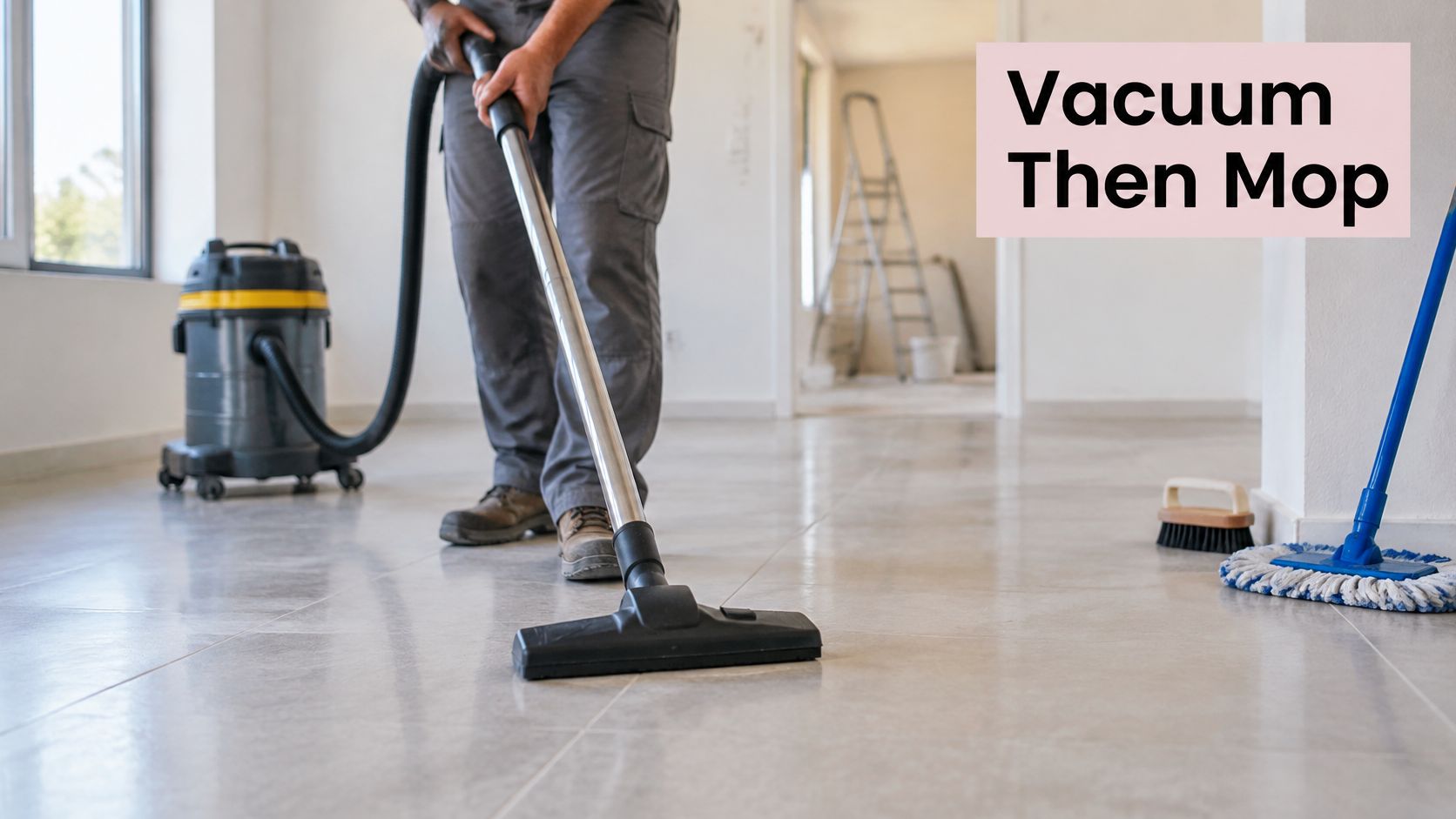
6. Vacuum and Mop Floors in Two Passes, Including Grout
Floors carry the heaviest dust load, so they come late in the sequence and they need two passes. First, HEPA vacuuming lifts fine particles that a broom would redistribute. OSHA guidance identifies vacuuming as the most reliable method for dusty surfaces and requires HEPA filtration when vacuum equipment is used, as explained in OSHA technical guidance on construction dust controls. Dry sweeping is the opposite of what you want here.
Second, damp-mop with a neutral cleaner, changing water often so you aren't spreading gray film room to room. Use minimal moisture on wood and laminate, and give grout lines and tile edges a separate detail pass with a soft brush. Luxury vinyl plank in a Kennesaw townhome needed exactly that vacuum-then-damp-mop order after renovation, while porcelain tile in a Marietta entryway needed grout attention after flooring installation.
Where Dust Hides on Floors
- Corners and transitions: Dust collects where flooring changes, at thresholds, and along baseboards.
- Entry and garage doors: Red clay tracked in by crews mixes with drywall dust and needs extra passes.
- Under fixtures: Check behind toilets, under vanities, and beneath appliance edges before you call a room done.
Maid in America cleans hard floors in post-construction visits and offers grout and baseboards as add-ons for tile-heavy homes in Hiram, Powder Springs, and beyond. If carpet was exposed, a complementary local carpet cleaner may be the right next step after HEPA vacuuming.
7. Sanitize and Detail Kitchens and Bathrooms
Kitchens and baths are usually the first rooms you'll use, and they're where new fixtures meet the most dust. Sinks, faucets, tubs, showers, toilets, countertops, backsplashes, and appliance exteriors all need a careful clean, rinse, and dry so they look finished and feel ready. Keep these rooms late in the overall sequence so they stay clean through the final walkthrough.
Clean fixtures top to bottom, then dry them for a streak-free finish. Check drains and aerators for grit left after installation, and wipe drawers where dust settles unnoticed. A Cartersville primary bath, for example, was detailed for drywall dust and caulk residue before the family moved in. In Powder Springs, a kitchen got appliance interiors wiped after a cabinet replacement, which made sense to add inside oven or fridge service at the same visit.
The EPA lead-safe sequence offers a useful model for ordering this work: mop uncarpeted floors, clean walls with a HEPA vacuum or damp cloth, vacuum remaining surfaces including fixtures, then wipe with wet disposable cloths until they come away clean, as described in EPA lead-safe renovation guidance for final cleaning steps. That isn't a claim that every home has lead. It's a reminder that sequence matters.
Maid in America treats kitchens and bathrooms as core post-construction areas and works from a published checklist for consistency. Natural, low-odor products fit these rooms well, since you're preparing food and bathing kids there, not airing out chemical smells for days.
8. Complete a Final Walkthrough and Filter Check
A room can look clean and still not be ready. The final walkthrough is your pass or fail check for dust, chips, film, and missed edges under strong light, including angled or raking light on floors and counters. If residue remains, clean it again before anyone moves in. EPA guidance states that after final cleaning there should be no dust, paint chips, or debris in the work area, a standard summarized in EPA Renovate Right guidance on post-work cleaning verification.
Check high and low surfaces separately, then check the system that moves air through the house. Replace or inspect HVAC filters after loose dust is removed, wipe accessible grilles, and confirm vents weren't left full of grit. In a Woodstock renovation, a joint walkthrough caught dust on a high vent cover the first pass missed. A Kennesaw rental was inspected the same way before move-in, which gave the landlord and tenant a clear, documented handover.
Your Sign-Off List
- Room-by-room record: Mark each room verified, note re-cleaning, damage, or defects, and get homeowner or manager sign-off.
- Filter and register check: Confirm filters were changed after dust removal, not before.
- Timing: Schedule before movers or the contractor fully leave, while follow-ups are still easy.
For choosing help, Maid in America's advice on selecting a post-construction cleaning company pairs well with broader essential checklists for construction compliance used during handover. With Maid in America, one dedicated cleaner usually serves each home instead of a large rotating team, so follow-up questions go to someone who knows the house by name.
8-Point Post-Construction Cleaning Checklist Comparison
| Post-Construction Cleaning Step | Implementation Complexity | Resource Requirements | Expected Outcome | Ideal Use Case & Key Advantage |
|---|---|---|---|---|
| Clear bulk debris and construction waste | 🔄 Low–moderate; coordinate with contractor | Bags, gloves, and separate hauling for heavy waste | 📊 Removes loose material and reduces scratch risk | 💡 First step before detailed cleaning; speeds later passes |
| Dust ceilings, vents, fans, and high surfaces | 🔄 Moderate; work top to bottom and use safe ladder practices | Microfiber tools, HEPA vacuum, ladder, safety equipment | 📊 Captures high-level dust before it settles on cleaned areas | ⭐ Best for rooms with drywall or ceiling work; helps limit dust recirculation |
| Clean windows, sills, tracks, and glass | 🔄 Moderate; tracks may need extra attention | Vacuum, microfiber cloths, glass-safe cleaner | 📊 Reduces dust, paint specks, and film; improves clarity | 💡 Useful before move-in or listing; vacuum tracks before wiping |
| Clean cabinet exteriors, interiors, and built-in storage | 🔄 Moderate–high; empty and clean storage section by section | Microfiber cloths, vacuum, finish-appropriate cleaner | 📊 Removes dust from shelves, drawers, hardware, and surfaces | ⭐ Ideal before storing food, clothing, or household items |
| Remove construction film, paint specks, and adhesive residue | 🔄 Moderate–high; test products and treat surfaces selectively | Low-odor cleaner, microfiber cloths, surface-specific tools | 📊 Restores the appearance of fixtures and finished surfaces | 💡 Best for visible residue; use surface-safe products, especially on stone |
| Vacuum and mop floors in two passes, including grout | 🔄 Moderate; vacuum first, then damp mop and detail grout | HEPA vacuum, mop, neutral cleaner, soft grout brush | 📊 Lifts fine dust and reduces grit left on floors | ⚡ Effective for post-construction floors; use minimal moisture on wood and laminate |
| Sanitize and detail kitchens and bathrooms | 🔄 Moderate–high; detail fixtures and surfaces carefully | Surface-appropriate cleaners, microfiber cloths, brushes | 📊 Leaves high-use areas clean and ready for daily use | ⭐ Prioritize before occupancy; select products suitable for specialty finishes |
| Complete a final walkthrough and filter check | 🔄 Low–moderate; verify each room against a checklist | Written checklist; replacement HVAC filter if needed | 📊 Identifies missed areas and checks for dust-related filter needs | 💡 Best before move-in or handover; supports a consistent final review |
Get a Dust-Free Home Without the Extra Work
A solid post construction cleaning checklist isn't one long wipe-down. It's a sequence you can verify: clear debris, capture high dust with HEPA tools, detail windows and cabinets, lift film gently, clean floors in two passes, finish kitchens and baths, then inspect and check filters. Skip the order and you'll repeat work. Skip the inspection and fine dust will announce itself on the first sunny morning.
Safety belongs in that sequence from the start. OSHA prohibits dry sweeping or dry brushing when it could expose workers to respirable silica unless a minimizing method is infeasible, a restriction detailed in OSHA construction silica housekeeping requirements. That means an ordinary homeowner clean has limits. If concrete, mortar, tile, or stone cutting happened on site, or you suspect older hazardous materials, disclose it before scheduling and let qualified professionals assess controls. A cleaner shouldn't be the first line of defense for active hazardous dust.
Visual readiness also isn't the same as air readiness. LEED v4 guidance describes a pre-occupancy flush-out of 14,000 cubic feet of outdoor air per square foot after construction ends and the building has been completely cleaned, while maintaining 60°F to 80°F and relative humidity no higher than 60%, per LEED v4 indoor air quality flush-out criteria. Most homes won't run a formal flush-out, but the principle is practical. Clean first, replace filters, ventilate, and give new paint and adhesives time before sensitive family members settle in.
Tools make the difference between moving dust and removing it. EPA guidance stresses that a HEPA filter must be correctly seated so all air passes through it, with PPE and sealed disposal for filter changes, as noted in EPA guidance on HEPA vacuuming and filter handling. Pair that with fresh microfiber, damp methods matched to each material, and sealed waste bags, and you'll see the film stop coming back.
Homeowners in Kennesaw, Acworth, Woodstock, Cartersville, Marietta, and across Cobb, Cherokee, Paulding, Douglas, and Bartow counties have two good paths. Work this checklist room by room over a few focused sessions, or hand it to Maid in America for post-construction cleaning done with natural, low-odor products by a licensed, bonded, and insured team. Many clients then roll into Basic maintenance cleaning, a Top-to-Bottom Deluxe deep cleaning, move-in or move-out cleaning, office cleaning, or HOA clubhouse and community amenity cleaning on weekly, biweekly, every 3 weeks, or monthly schedules. If you're comparing paperwork for a business or rental turnover, GetBill's cleaning invoice comparison can help you keep estimates and invoices organized. Request a free estimate from Maid in America online or by calling 770-427-4448, and ask about add-ons like baseboards, interior windows, grout, laundry, dishes, or upholstery vacuuming.
Your newly finished space in Kennesaw, Acworth, or nearby deserves to start clean, not dusty, and Maid in America's post-construction cleaning is built to capture fine residue with natural, low-odor products and one dedicated, trained cleaner you can get to know by name. Visit Maid in America to request your free estimate, or call 770-427-4448, and enjoy the renovation you paid for without spending your first weekends chasing dust.




Maid in America provides reliable, personalized cleaning with natural products for homes, offices, and communities across West Georgia. Licensed, bonded, and insured, we’re locally and privately owned.
Get in touch with us today!
info@maidinamericaga.com