House Cleaning Cartersville GA Services You Can Trust
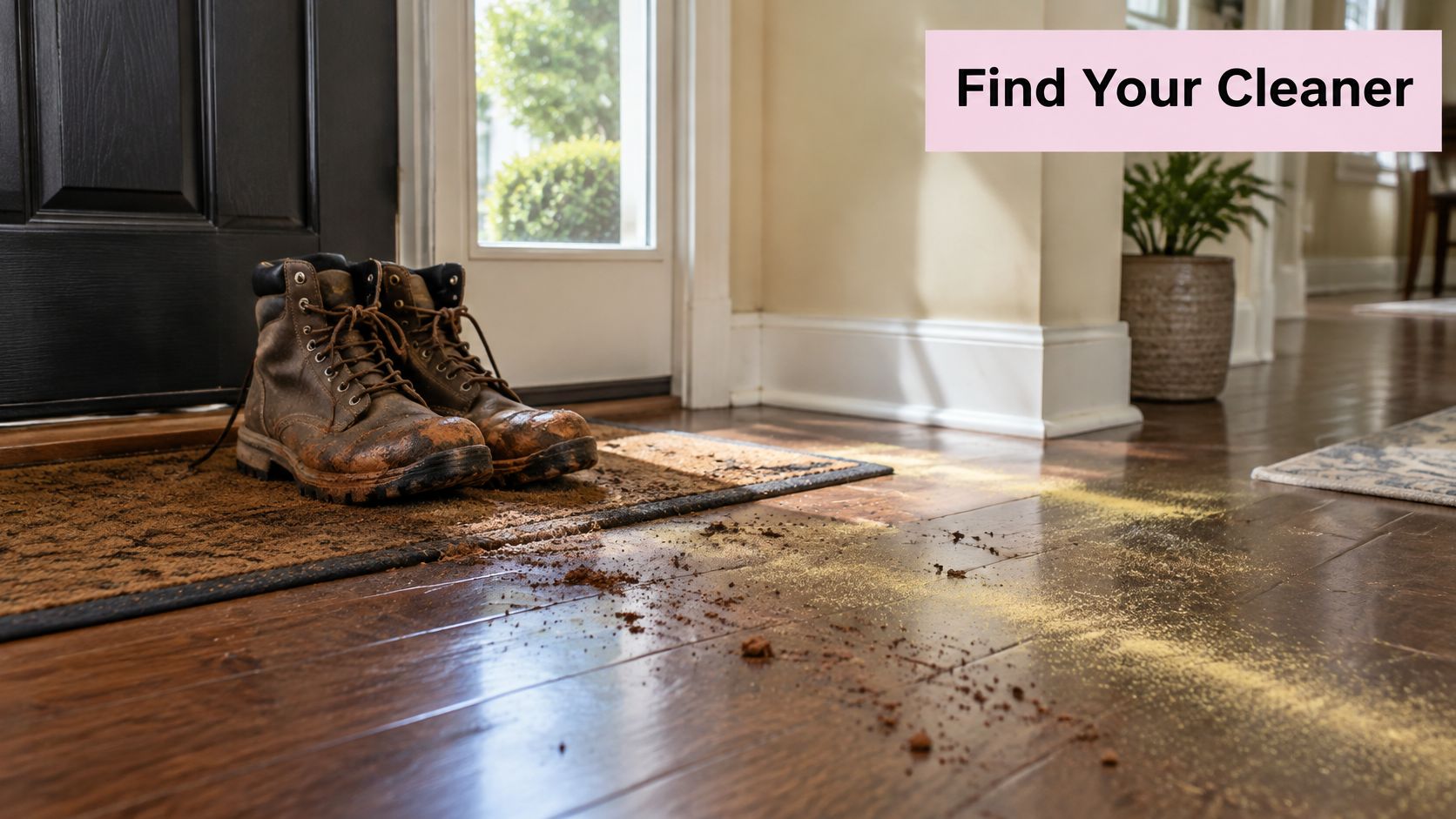
The weekend's over, but the entry floor still has muddy footprints, the kitchen needs attention, and you've got another full week ahead. If you're looking for house cleaning in Cartersville, GA, start with what you need help maintaining, not just which rooms appear on a cleaning checklist.
Table of Contents
Finding the Right Cleaner in Cartersville
A household that needs help keeping bathrooms and floors clean has a different problem from a renter facing a move-out deadline. Treating those jobs as interchangeable is how important details get missed. Choose the service around the condition of the property and the result you need.
Cartersville isn't a single type of household. The city's 2019–2023 owner-occupancy rate was 61.2%, reflecting a community where homeowners and renters both need practical service choices, according to U.S. Census Bureau housing data for Cartersville.
Start with the problem you want solved
Before contacting a cleaner, identify what keeps slipping behind. Is it routine kitchen cleanup, bathroom buildup, dusty furniture, or a property handover that needs a clearly documented finish?
- Describe the condition: Explain whether the home needs maintenance or a more detailed reset.
- Name your priorities: Mention sensitive finishes, pets, strong-odor concerns, and rooms that need extra attention.
- Explain the deadline: Distinguish a preferred appointment from a move, inspection, or hosting date.
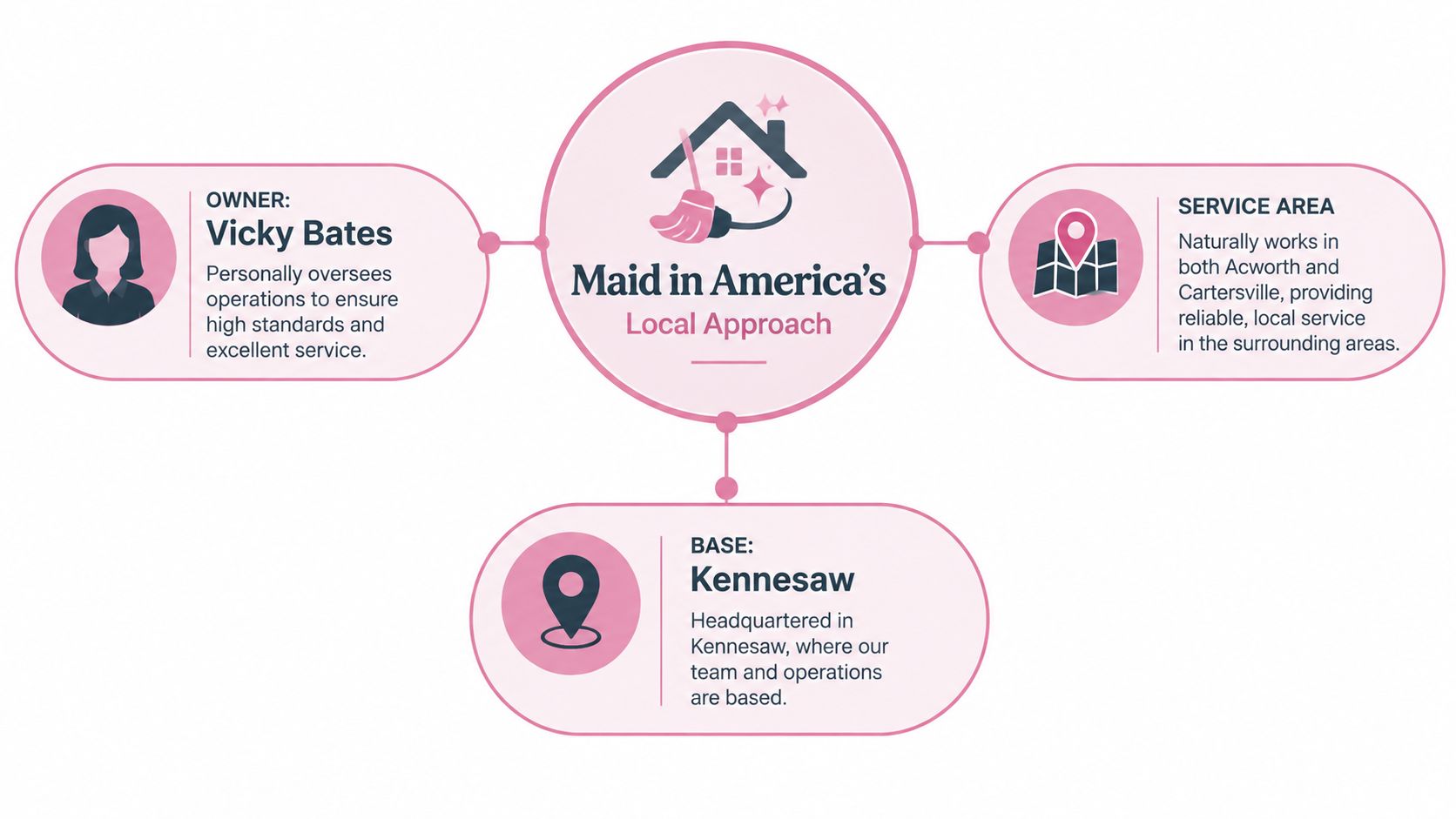
Maid in America is a locally and privately owned option based in Kennesaw that serves Cartersville and nearby communities. A useful estimate conversation should connect your priorities with an appropriate service, realistic scheduling, and a clear scope.
For local business owners arranging office cleaning while managing customer inquiries, Expressify AI's resource on AI lead capture for local businesses is a separate operational consideration. Keep that decision distinct from cleaning: the cleaning estimate still needs property details, access instructions, and an agreed checklist.
Practical rule: Don't book on the strength of a room list alone. Ask what the cleaner will do in those rooms and what requires separate approval.
Understanding Maid in America's Local Approach
Vicky Bates owns Maid in America, a locally and privately owned house cleaning and maid service based in Kennesaw, with natural service connections to Acworth and Cartersville. For clients, the important question is how that local operation translates into the appointment itself.
The company is licensed, bonded, and insured, and uses carefully selected, trained cleaners. Those credentials belong in your evaluation, alongside straightforward answers about supplies, communication, access, and the work you're booking.
Product preferences deserve a conversation
The company's health-conscious approach uses natural, low-odor products, reflected in its tagline, “Add sparkle and shine with your health in mind.” That's a product and service philosophy, not a medical promise.
If anyone in your household reacts to scents, explain the concern before service. Ask which products are planned, whether they contain fragrance, and how the cleaner will handle ventilation. Don't assume that “natural” means fragrance-free.
The EPA's guidance on biological contaminants and indoor air quality identifies pollen, pet allergens, dust mites, and mold among common indoor concerns. Its recommendations include damp dusting, damp mopping, washing linens, and vacuuming textile surfaces. That supports a practical emphasis on removing accumulated material rather than judging cleanliness by scent.
A familiar cleaner can make communication easier
One dedicated cleaner is usually assigned to a home whenever possible, rather than a large team. Clients often get to know their cleaner by name, making it easier to explain preferences and discuss changes.
For a commuter, that might mean having a familiar person who understands access arrangements. For a retiree aging in place, it may mean less repetition when explaining which rooms matter most.
Before booking, clarify:
- Continuity: Ask how regular assignments and substitute coverage are handled.
- Communication: Decide how to report a changed priority or product concern.
- Property details: Explain unusual layouts, restricted areas, and access limitations.
Personalized service starts with that information. Estimates and appointment availability still depend on the property, requested work, and scheduling needs.
Choosing the Right Cleaning Service
A Cartersville ranch with red clay at the back door and a rental near downtown between tenants can both be “clean,” yet they need different first visits. Book by condition, access, and what has to be reset before the next resident, guest, or workday.
Use package names after that. Basic maintenance cleaning fits a home already under control: kitchens, bathrooms, floors, mirrors, accessible surfaces, furniture, and trash. Top-to-Bottom Deluxe/deep cleaning makes sense when pollen film, humid-bathroom mildew, grease, or baseboard buildup has passed routine upkeep. Tell the estimator where that buildup is concentrated instead of asking for the largest package.
| Cartersville situation | Start with | Say this during the estimate |
|---|---|---|
| Family home that stays mostly manageable | Basic maintenance cleaning | Priority rooms, red-clay entry paths, current condition |
| Visible buildup, hosting, or seasonal reset | Top-to-Bottom Deluxe/deep cleaning | Detailed areas, finishes, expectations for kitchens and baths |
| Lease turnover or closing handover | Move-in/move-out cleaning | Vacancy, cabinets, closets, appliances, inspection timing |
| Renovation dust or residue | Post-construction cleaning | Completed work, affected surfaces, contractor access |
| Office, clubhouse, or amenity space | Office or HOA amenity cleaning | Use the actual checklist, access limits, busy hours |
Add-ons should be named while booking: inside oven or fridge, baseboards, cabinets, interior windows, grout, laundry, dishes, or upholstery vacuuming. If a furnished home blocks closets, a vacant unit has every cabinet open, or a familiar cleaner will recognize recurring trouble spots, say so. Access changes the job as much as square footage.
Before you agree, use these questions to ask before hiring a cleaning professional. The decisive one is plain: what is included on this visit, and what is priced or handled separately?
Scheduling Recurring Service Around Real Life
A Cartersville couple both commuting into Atlanta gets home after six most weekdays. By Friday the floors show red clay from the entry and the bathrooms need a real scrub. That household needs a different interval than a retired homeowner who tidies daily but wants dusting and bathrooms handled. Match the cadence to the pace of the house.
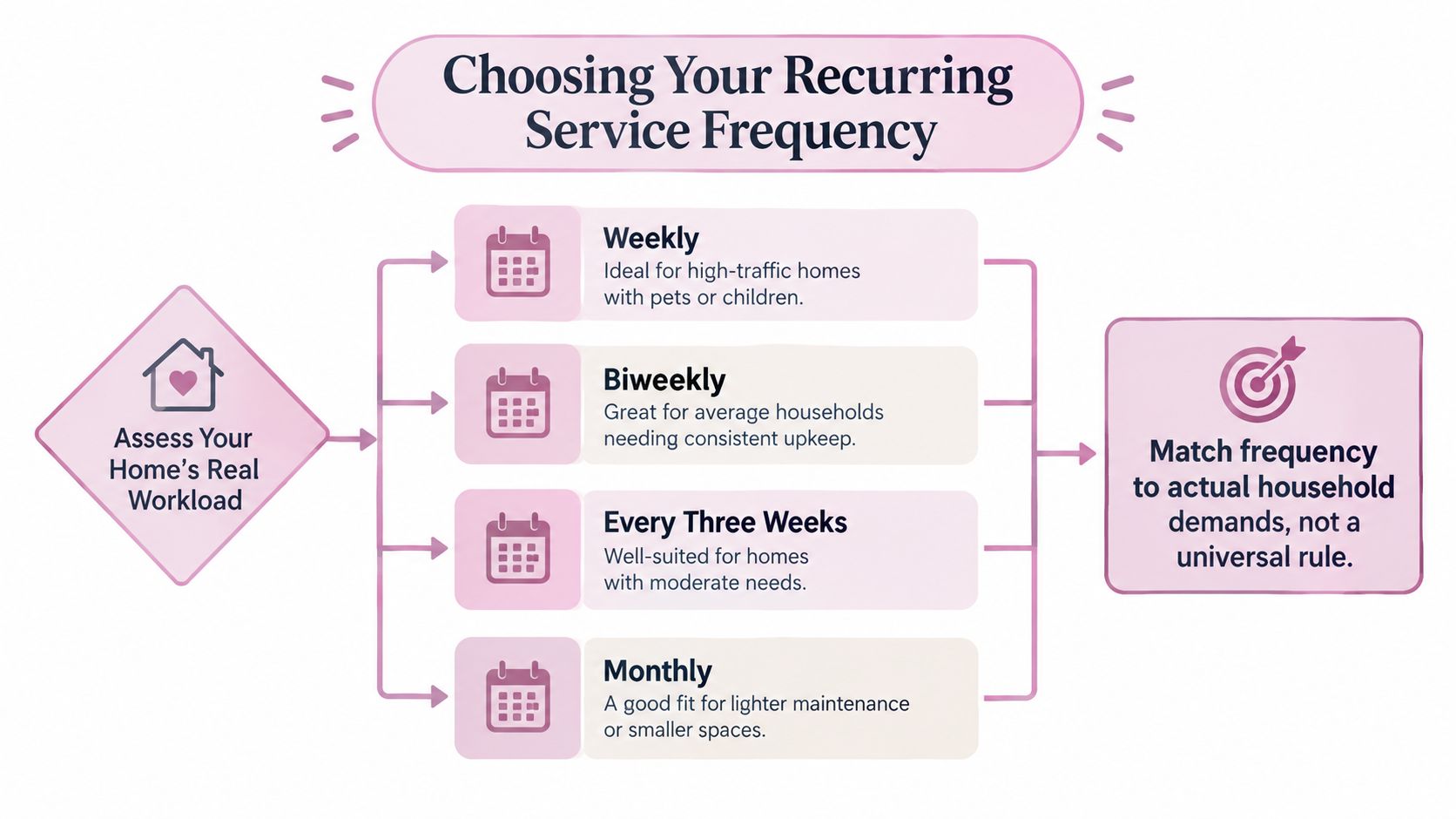
Maid in America schedules weekly, biweekly, every three weeks, and monthly visits. None of these is a default for a given household size. Weekly fits homes where daily life generates steady buildup: kids, dogs, constant foot traffic. Biweekly works when you keep up light tasks between appointments. Every three weeks suits a household that stays tidy longer, and monthly covers light maintenance, provided the condition between visits still matches what was booked.
Two things change the right answer faster than square footage.
First, the season. Spring pollen coats surfaces quickly enough that a biweekly plan that worked in winter can feel thin once windows and porches come into play. Humid months put extra pressure on bathrooms, and red clay keeps arriving through every entry regardless of what your calendar says.
Second, the household itself. A rental sitting between tenants, a school-year routine shifting into summer, a new puppy: each one rewrites the workload. Reassess the interval whenever property use changes and tell the office when it does. A consistent cleaner assignment helps here, because the person arriving already knows your priorities and adjusts to a changed interval more easily.
Supplies come with each appointment. If a surface needs a specific product or you want something avoided, say so at booking, not on the counter on cleaning day.
Honest advice: pick the interval that keeps the agreed scope manageable. Stretching the gap to save money while the house keeps filling up means every visit starts behind. The company's page on recurring house cleaning services lays out how the options compare, so bring your real routine to that conversation, including what you plan to handle yourself.
Understanding Pricing and Estimate Factors
A landlord calls about a vacated rental where the last tenants left months of grease on the oven. That same week, a family wants standing upkeep on a house they already keep tidy. Same town, similar square footage, two very different numbers, and both of them correct.
Price follows the work, and the work follows the property. Square footage sets a floor. Layout, current condition, the service requested, add-ons, visit frequency, and your priorities decide where the number lands after that.
Condition does most of the work in any estimate. Two homes with identical floor plans can sit hours apart in labor if one has maintained bathrooms and clear counters while the other has buildup on every surface. An empty property cuts both ways: the cleaner can reach cabinet interiors, closets, and floor areas that furniture usually hides, but those extras only count when they appear in the agreed scope.
Renovation residue is a separate conversation entirely. Drywall dust and construction debris behave differently than household dirt, so describe the project and the affected materials before booking and let the company decide whether post-construction service fits. The company's breakdown of deep cleaning cost factors shows what intensive work involves. Read it to sharpen your questions, not to replace the property description.
| What to tell the estimator | Why it changes the number |
|---|---|
| Property type: home, rental, office, or amenity space | Each carries a different checklist |
| Rooms, baths, occupied areas, access limits | Defines how much ground a visit covers |
| Current condition: buildup, move-out, renovation dust | Separates routine upkeep from specialty work |
| Extras you want priced | Keeps add-ons out of the surprise category |
| One-time or recurring | Frequency changes the per-visit workload |
| Product, finish, or surface preferences | Flags anything needing special care |
Withhold the hard parts and the low number you get back is fiction. A kitchen that needs degreasing or a shower with months of scale will surface on the first visit anyway, and renegotiating mid-job serves nobody.
Estimate advice: Ask what assumptions the estimate is built on and what happens if the property's condition differs from what you described.
Treat a free estimate as the opening of the conversation. The number holds when the scope does.
Matching Cleaning to Cartersville Households
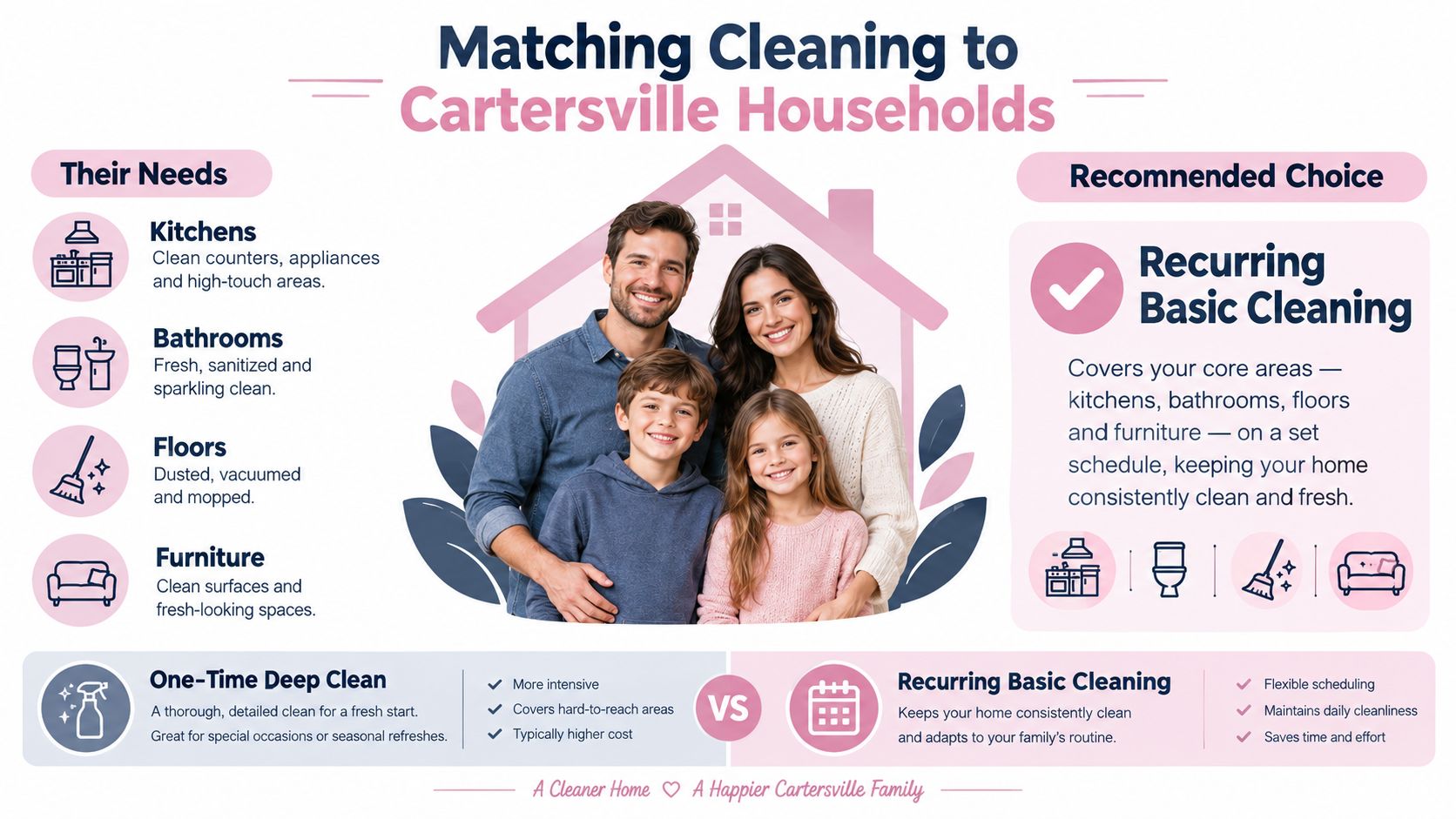
A family that hosts Friday dinners in Cartersville needs a different appointment rhythm than a renter facing a final walk-through or an office manager protecting weekday traffic. Choose service by household pressure: recurring upkeep, turnover deadlines, pollen, humidity, red clay, and whether the same cleaner returns all change the right fit.
Treat the examples below as decision patterns. A busy household that wants living areas kept manageable usually fits recurring Basic cleaning; when buildup is already heavy, I recommend pricing an initial detailed visit first so maintenance stays maintenance. Ask who will be assigned each visit, because continuity of the cleaner or team is what lets notes about pets, finishes, gate codes, and room priorities carry forward.
Pollen gives north Georgia homes a calendar. The Georgia Forestry Commission's explanation of pollen season places loblolly pine pollen in central and northern Georgia around late February or early March, with the northern season usually winding down by late May. Use that window to tighten entryways and settled dust, and ask for method instead of perfume: the EPA's guidance on indoor particulate matter recommends HEPA-filter vacuuming and damp dusting, and says allergy-sensitive occupants should stay out of rooms while vacuuming is underway.
Summer humidity argues for steadier bathroom and kitchen attention, but let the house set the interval. Georgia's official climate observations track humidity and rainfall; they do not prescribe your schedule. Red clay deserves the same practical treatment. Tell the cleaner which entry floors and nearby surfaces take the hit, and treat Atlanta-area gardening guidance on local clay soil as regional context rather than a Cartersville soil reading.
For turnovers, sequence matters. A renter should book move-out cleaning after belongings are removed and before the final inspection, then photograph conditions, save the agreed checklist, and keep the receipt. Different properties need different asks: Woodstock holiday hosting calls for a deep clean dated around guest rooms and finish deadlines; retirees aging in place should prioritize regularly used spaces and access concerns; small offices need a checklist built from actual use and entry that does not disrupt staff; HOA amenities should be tied to the manager's reservation calendar and named shared areas. Reassess when the season or event changes the scope, and say so before the appointment instead of expecting routine service to absorb specialty work.
Clarifying Common Cleaning Service Misconceptions
Natural products aren't medical treatment, and low odor doesn't mean no ingredients require consideration. Product selection should reflect household preferences and label directions, not promises to cure allergies or prevent illness.
Cleaning and disinfecting also aren't interchangeable. The CDC's household cleaning guidance explains that routine soap or detergent cleaning removes most germs, while disinfection generally belongs to defined circumstances such as illness or medical vulnerability.
Ask for a result the service can actually deliver
When disinfection is appropriate, the CDC advises cleaning first and following the disinfectant label, including wet contact time. It also warns against mixing bleach with other cleaners.
A deep clean has limits, too. It describes a more detailed cleaning scope, not a promise that every stain, damaged finish, or hidden problem will disappear.
- Move-out cleaning: It can address cleanable deficiencies, but it can't repair damage or guarantee a security-deposit return.
- Recurring service: It isn't automatically the cheapest answer for every property. Maintenance and specialty work solve different problems.
- Commercial cleaning: Offices and HOA facilities need explicit instructions about access, presentation, surfaces, and communication.
A clear limitation is more useful than a vague promise. You should know what the cleaner can address before the appointment begins.
For rental turnovers, agree on whether the property will be vacant, which interiors are included, and how the completed work will be reviewed. For workplaces and shared facilities, identify who can authorize changes instead of leaving the cleaner to interpret competing requests.
Good service depends on clear terms. Ask direct questions, provide an honest description, and expect an answer that distinguishes cleaning from repairs, restoration, or medical outcomes.
Request a Cartersville Cleaning Estimate
Before reaching out, make a short note of what you want the appointment to accomplish. You don't need a perfect checklist, but you should be able to explain your main concern.
- Choose the goal: Routine upkeep, detailed cleaning, turnover, post-construction work, or facility maintenance.
- Describe the property: Include current condition and relevant access details.
- List extras: Identify any add-ons you want considered.
- State your timing: Share preferred dates and whether recurring service interests you.
Maid in America serves Kennesaw, Acworth, Woodstock, Cartersville, West Cobb, Marietta, Dallas, Hiram, and Powder Springs, plus nearby communities in Cobb, Cherokee, Paulding, Douglas, and Bartow counties. Confirm service availability for your address and discuss the property's needs before settling on an appointment.
Maid in America offers one-time and recurring cleaning for Cartersville homes, offices, and community amenities, with service selected around the property's condition and your priorities. Visit Maid in America to request a free estimate online, or call 770-427-4448 to talk through the right cleaning plan for your space.




Maid in America provides reliable, personalized cleaning with natural products for homes, offices, and communities across West Georgia. Licensed, bonded, and insured, we’re locally and privately owned.
Get in touch with us today!
info@maidinamericaga.com