What Is Move Out Cleaning? Tasks, Checklist and Deposits
Move-out cleaning is the focused cleaning done when a household leaves a property, so it's ready for the landlord, buyer, new tenant or property manager.
The truck is booked, your cabinets are nearly empty, and you've just noticed the grease beside the stove and dust behind the bedroom furniture. Whether you're leaving a rental in Kennesaw or preparing a home in Acworth for its buyer, the important question isn't whether everything looks tidy. It's whether the property meets the agreed handover standard, and whether you can document that condition before returning the keys.
Table of Contents
What Move-Out Cleaning Covers and How It Differs
Move-out cleaning prepares a departing household's property for handover, rather than maintaining a home while people live there. Think of it as a hotel-style reset for a lived-in home, with an important limitation: cleaning restores a presentable baseline, but it doesn't reverse worn finishes or repair damaged materials.
This is a recurring need in rental housing. In 2016, 22.9% of people living in renter-occupied homes had moved during the prior year, compared with 5.0% of people in owner-occupied homes, according to U.S. Census Bureau historical mobility tables. Each departure creates another occasion to clear storage, remove residue and establish the property's condition.
Compare the purpose before the workload
A deep clean and a move-out clean can both involve detailed scrubbing. Their purpose and access, however, aren't the same.
Move-out cleaning compared with related services
| Service | When it happens | Main focus | Furniture or belongings |
|---|---|---|---|
| Basic maintenance cleaning | Between routine visits in an occupied home | Kitchens, bathrooms, floors, accessible surfaces, trash | Present |
| Top-to-Bottom Deluxe cleaning | First visit, seasonal reset or special occasion | Detailed care throughout the home | Usually present |
| Move-out cleaning | When a household leaves a property | Cabinets, closets, baseboards, appliance interiors when arranged in advance | Usually removed |
| Move-in cleaning | Before a new household moves in | Same level of detail as move-out, setting the baseline | Usually removed |
| Post-construction cleaning | After contractors finish and remove debris | Fine dust on trim, fixtures, cabinets, floors and windows | Usually absent |
Occupied-home cleaning works around furniture, stocked cupboards and personal belongings. Empty-home cleaning exposes closet floors, cabinet interiors and trim that a routine visit can't readily reach. That access changes the job more than the label on the appointment.
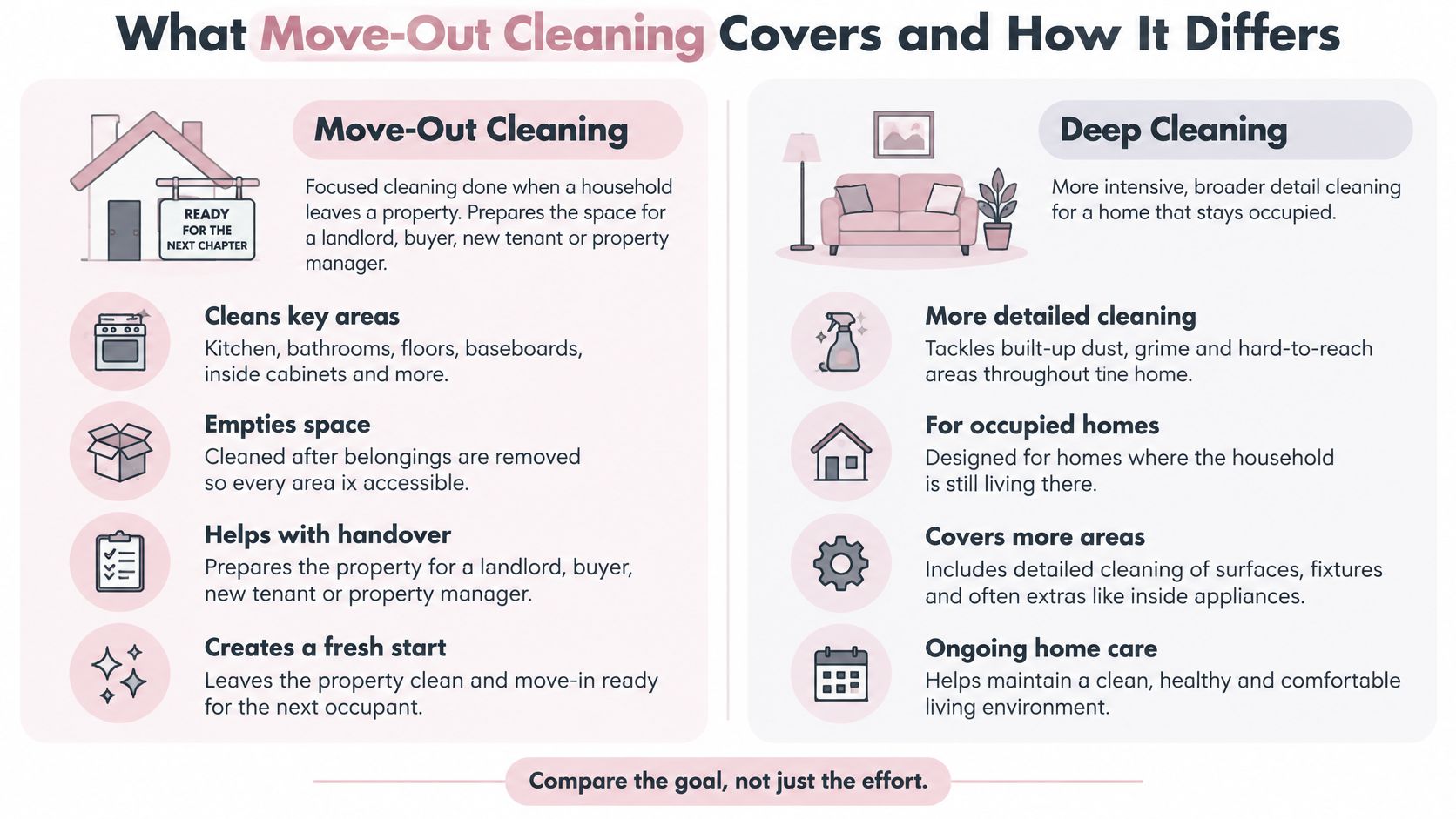
For incoming residents, a move-in cleaning service establishes a baseline before boxes and furniture block those surfaces again. For departing residents, the priority is leaving accessible spaces ready for inspection.
Practical rule: If the home is empty and the purpose is handover, book move-out cleaning rather than a routine maintenance visit.
So, what is move out cleaning in practical terms? It's a defined turnover job, with the checklist matched to the property and the handover requirements. A heavily used kitchen may need more attention than an already-clean guest bedroom, but neither should be judged by fragrance or effort alone.
Room-by-Room Tasks and What Stays Out of Scope
Walk the property with the room list before anyone picks up a cloth, and write down which tasks the appointment covers. An inspection-ready surface and a repaired surface are different outcomes, and the written scope should keep them separate. That distinction protects the handover: a walkthrough checks whether grease, dust and grime were removed, while scuffed paint or a loose hinge belongs to a repair conversation.
Move-out tasks by area and what stays out of scope
| Area | Move-out task | Often skipped | Outside the clean |
|---|---|---|---|
| Kitchen cabinets and drawers | Empty, wipe interiors, detail exteriors | Drawer tracks and under-sink area | Repairing loose hinges |
| Appliances | Clean interiors and exteriors when arranged in advance | Oven racks, refrigerator shelves, door seals | Appliance repair or removal |
| Bathrooms | Toilets, tubs, showers, fixtures, mirrors | Behind the toilet, exhaust fan covers | Re-caulking or regrouting |
| Floors | Vacuum, then mop with a flooring-suited product | Corners and wall edges | Carpet shampooing or stain removal |
| Baseboards, doors and trim | Wipe and detail | Door frames and light switch plates | Paint touch-ups |
| Closets and interior storage | Empty, vacuum and wipe shelves and rods | Top shelves and door tracks | Rehanging shelving |
| Windows and glass | Reachable interior glass, sills and tracks | Tracks and sill corners | Exterior or pressure washing |
Check the small surfaces, not just the room
In the kitchen, open every drawer and look along its tracks. Wipe cabinet doors around handles, where hand oils collect, and inspect the under-sink floor after removing stored supplies. Appliance interiors need explicit agreement, including oven racks, refrigerator shelves and door seals, so confirm that scope before the appointment rather than after it.
Bathrooms need attention around the toilet base, faucet fittings and accessible exhaust fan covers. Grout cleaning is an add-on, not a promise that stained grout or failing caulk will look new. Avoid aggressive scrubbing that damages a finish while trying to improve its appearance.
For floors, use a crevice attachment along edges before mopping hard surfaces. If furniture remains and upholstery vacuuming is arranged, include cushion crevices rather than just the visible seat. Check every room, garage and storage area for loose trash, while keeping bulky disposal separate.
The Endless Storage move-out cleaning checklist is a useful cross-check when packing and cleaning overlap. Use it alongside the agreed property checklist, not as an automatic expansion of the cleaning appointment.
Fine dust needs suitable equipment
Filtration matters when vacuum exhaust returns indoors. Vacuums with HEPA filtration, or machines that exhaust particles outside the home, help keep collected fine dust from being blown back into the room. That protection matters on any pass through a vacated space, but no vacuum makes a property particle-free. It keeps the work from spreading what it removed.
At Maid in America, add-ons are discussed in advance. Specify cabinet detailing, interior window glass, appliance interiors, baseboards or upholstery vacuuming rather than assuming every detailed task is included.
Structural repairs, wall patching, paint touch-ups, carpet shampooing or stain removal, exterior pressure washing and hauling large items stay outside the clean. Arrange the appropriate repair professional, carpet cleaner, pressure washer or mover separately, preferably before the final cleaning.
Sequence a Low-Scent Move-Out Clean from Top to Bottom
Start upstairs and work downward, then work from high surfaces to low surfaces within each room. Otherwise, falling dust and dirty drips undo finished work. Low-scent cleaning starts with removing odor sources, not covering them with perfume.
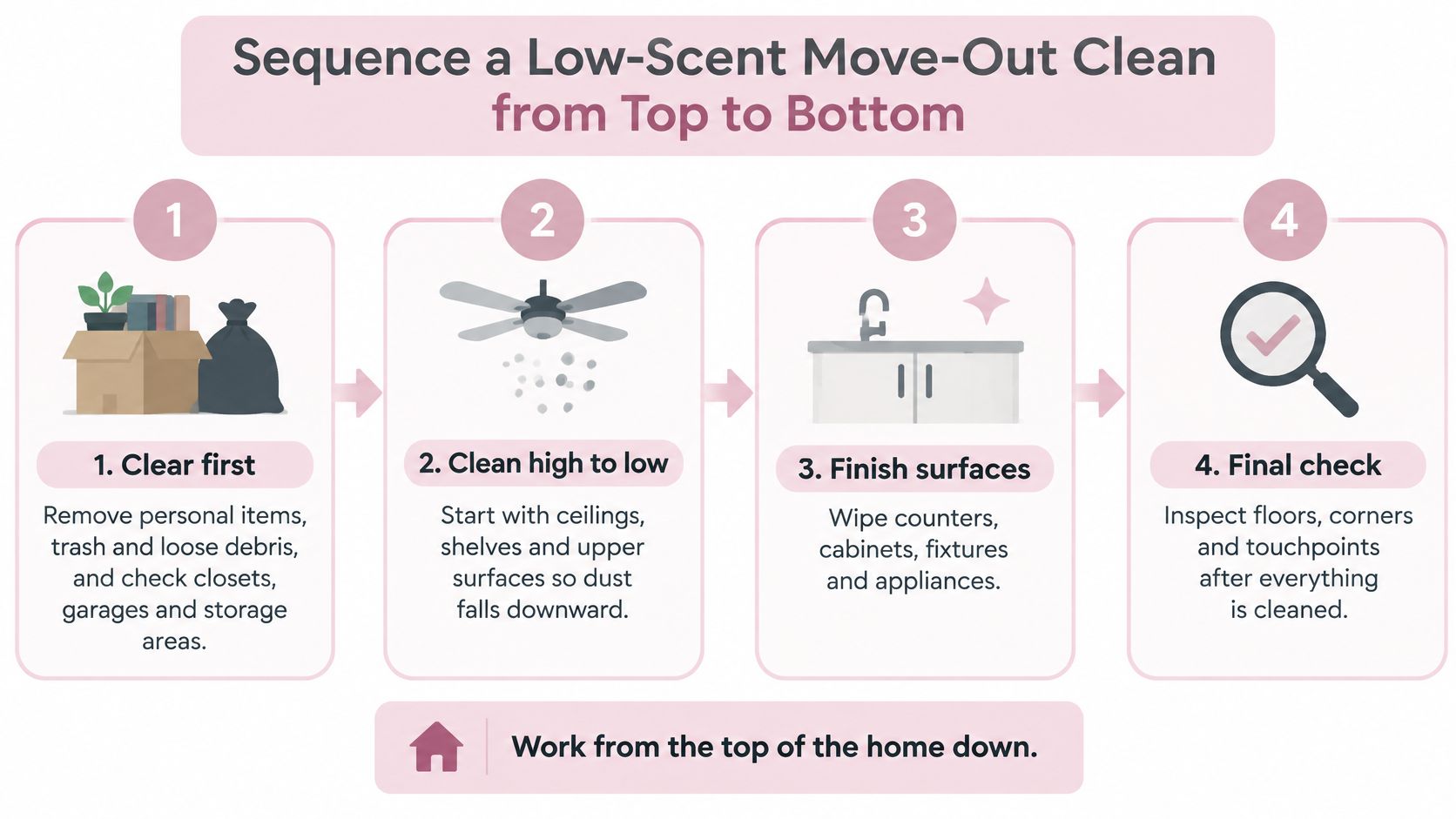
Follow the soil from removal to final inspection
Clear first. Remove personal items, food, trash and loose debris. Open closets and check garages and storage spaces before declaring the house empty. Don't use a closet as a temporary holding area if its shelves and floor need cleaning.
Dust or vacuum high to low. Start with reachable ceiling corners, light fixtures and vent covers, then move to shelves, door frames and baseboards. Use a microfiber duster or vacuum attachment instead of scattering dry dust with a broom. Don't soak electrical fittings or spray cleaner into switches.
Wash cabinets, appliances and fixtures. Remove crumbs before wet-wiping drawers, and lift grease or soap film before polishing the surface. Allow the appropriate cleaner to loosen buildup instead of immediately scrubbing harder. The CDC's cleaning guidance identifies cleaning as the necessary first step before disinfection because dirt and residue can interfere with the process.
Clean high-touch points with fresh cloths. Wash doorknobs, switch plates, faucets, stair rails and countertops. Fold microfiber cloths to expose a clean face as you work, and keep bathroom cloths separate from kitchen cloths. Wiping every handle with the same dirty rag transfers residue.
Wet-clean floors after the dusty work. Vacuum first, then mop with a solution suited to the flooring. Use a well-wrung mop on moisture-sensitive surfaces and avoid leaving standing water at seams or beneath cabinets. Work toward the exit so shoes don't mark the finished floor.
Disinfect selected surfaces when warranted. Routine turnover doesn't require indiscriminate disinfectant use. The CDC's home cleaning and disinfecting guidance recommends additional disinfection in circumstances such as illness or heightened vulnerability, with product-label contact time, ventilation and safe handling observed. Never mix cleaning chemicals, and plan any floor disinfection as part of the floor pass rather than walking back across wet rooms.
Inspect before photographing. Open doors and drawers, look along floor edges, and check glass from an angle for streaks. Correct missed residue before putting supplies away. At Maid in America, the cleaning professional reviews completed work before leaving the home.
Our cleaning process includes high and low dusting, hand dusting and wiping, washing and scrubbing, dry shining and polishing, vacuuming, and mopping with a solution suited to the flooring. The sequence matters because a polished faucet doesn't compensate for debris left in the vanity below it.
Keep fragrance out of the handover standard
A strong scent isn't evidence that a home is clean. The EPA's indoor particulate matter guidance explains that air fresheners and scented cleaning products can react with indoor ozone to form particulate matter and formaldehyde. Skip fragrance masking and concentrate on food residue, trash areas, accessible drain components and greasy surfaces.
A clean handover should smell neutral enough that the next occupant isn't trying to identify what the fragrance is covering.
Natural, low-odor products are a comfort choice, not proof that every ingredient is harmless or every surface is disinfected. Correct dilution, material compatibility and ventilation still matter.
During humid Georgia summers, dry under-sink areas and closet shelves before closing doors. Ventilate when outdoor conditions allow, use appropriate exhaust fans, and report persistent mustiness or signs of a leak rather than trying stronger fragrance. Tell us about scent sensitivities before booking so product preferences can be discussed before the appointment.
Deposits, Walkthroughs and Who Pays for What
More cleaning doesn't automatically mean fewer deductions. Paying to scrub an already-clean room won't resolve unpaid rent or a broken fixture, and a cleaning receipt alone doesn't establish the property's condition.
The Georgia Landlord-Tenant Handbook permits reasonable cleaning deductions but excludes normal wear and tear; it also describes chargeable damage caused intentionally, accidentally or carelessly by tenants, household members, pets or guests. For tenants otherwise entitled to their deposit, Georgia guidance requires its return, minus lawful deductions, within one month.
Who usually pays for what at move-out
| Item | Usually counts as | Record to keep |
|---|---|---|
| Grease, soap film and dust in kitchens and bathrooms | Cleaning, if left after move-out | Dated photos after cleaning |
| Trash or belongings left in the unit | Cleaning or removal | Photo of the cleared space |
| Faded paint or light scuffs from ordinary use | Normal wear and tear | Move-in photos for comparison |
| Holes in walls or damaged fixtures | Repair, if caused by the tenant | Dated photos and inspection notes |
| Pet stains in carpet | Cleaning if removable, repair if the carpet is damaged | Move-in condition and walkthrough photos |
Build a condition record
Ideally, the landlord and tenant inspect together at move-in and move-out. The HUD move-in/move-out inspection form illustrates that shared documentation process, rather than prescribing a universal cleaning checklist.
- Compare the starting condition. Match the empty home against move-in photographs and inspection notes.
- Clarify requirements. Request a pre-move-out walkthrough and ask whether the lease requires appliance interiors or interior windows.
- Record the finish. Take dated room photographs, including storage and appliance interiors, and retain the checklist or receipt.
For belongings that still need sorting, Clear It Services' clear-out advice for moving tenants can help separate removal from cleaning.
These categories guide the conversation; they aren't automatic rulings on liability. A clean property still doesn't guarantee zero deductions when repairs, unpaid charges or other lawful lease obligations remain.
Timing, Pricing Factors and Choosing a Cleaner
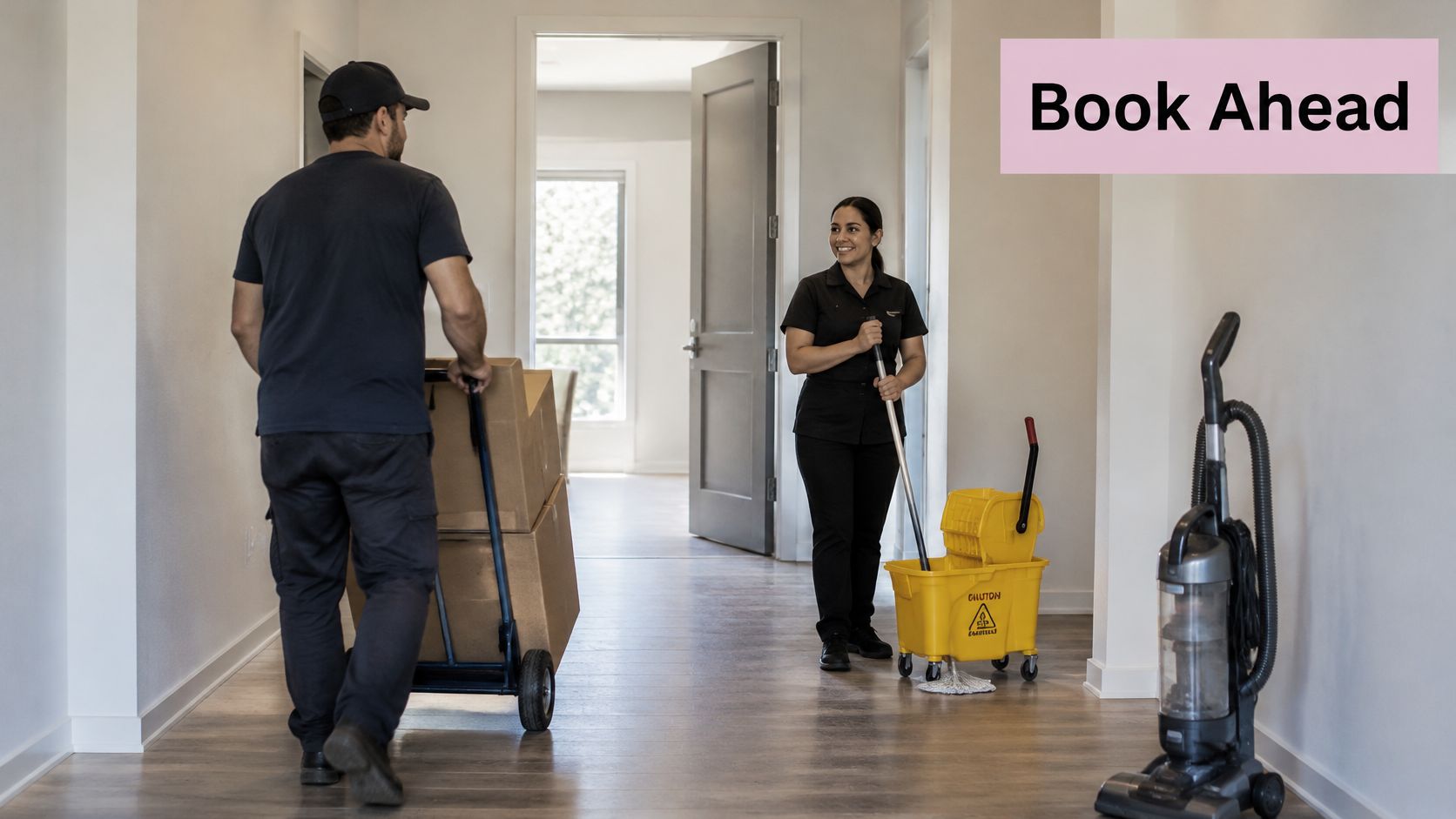
The safest slot is after the last large items leave and before the final walkthrough. Movers and cleaners in the same narrow window create handover risk: boxes block access, open doors track in dirt, and furniture removal exposes walls, baseboards and floor edges that were not reachable earlier.
Build the appointment around access
Treat the estimate request as a starting point, then confirm an available appointment once the move date is firm. Leave a buffer for delayed movers, small repairs and your own last look at storage interiors, appliances and bathroom corners. Keep water, electricity and lighting on through the visit, because an empty home still needs working utilities for a verifiable finish. Send accurate room and bathroom counts with photographs of grease, soap film, floor surfaces and any items that will remain.
Our pricing reflects home size and current condition, the service selected, frequency and add-ons requested in advance. A vacant property is not automatically a light job: baked-on grease, shower film and marked baseboards can take more labor than a larger home that has been maintained. Ask for a written scope naming rooms, surfaces and agreed extras, and disclose anything staying behind if the quote assumes an empty home.
Choose accountability, not just an opening on the calendar
Check credentials before you hand over access. Knowing what licensed, bonded and insured cleaning covers helps you compare providers on risk as well as calendar availability.
- Verify credentials. Maid in America is licensed, bonded and insured.
- Review the checklist against the handover requirements, then resolve omissions before booking.
- Ask about continuity. We aim to keep one experienced cleaner assigned whenever possible.
- Explain sensitivities. We use natural, low-odor products and note household preferences before work starts.
- Read recent reviews for communication, consistency and whether agreed details were completed.
Maid in America is a locally and privately owned business serving Kennesaw, Acworth and nearby West Georgia communities. For a Marietta home, flag red clay tracked through the garage entry so floor care is priced correctly. For a Woodstock spring handover, include pollen on interior windowsills in the photographs. Describing these conditions before the visit keeps the scope stable and prevents unplanned work at the door.
Booking advice: Choose DIY when you have time, equipment and patience for detail. Choose professional help when the move schedule leaves too little time to complete the work and inspect the finish.
Book Your Move-Out Clean Before Keys Are Due
Gather the move-out date, room and bathroom counts, move-in photographs, desired add-ons and any landlord, property manager or HOA checklist before requesting an estimate. Include access instructions and explain whether the property will be completely empty.
Our Move-In and Move-Out Cleaning service provides a final clean for move-in, move-out, listing or turnover. It prepares empty or mostly empty homes, with attention to kitchens, bathrooms, floors, cabinets, closets, baseboards and appliances as specified, and can be customized for homeowners, renters, real estate professionals and property managers across West Georgia.
Send the details that shape the quote
- Confirm the scope. Identify requested cabinet interiors, appliance interiors and other add-ons in advance.
- Confirm the budget. One-time move-in/move-out cleaning starts at $437 to $483; the final quote reflects home size, condition and agreed add-ons.
- Confirm the location. We serve Kennesaw, Acworth, Woodstock, Cartersville, West Cobb, Marietta, Dallas, Hiram and Powder Springs, plus nearby communities in Cobb, Cherokee, Paulding, Douglas and Bartow counties.
If you're coordinating the wider move, Admiral's Yard Self Storage's UK moving home planning guide offers an additional organizational reference. Its planning ideas can be useful, but Georgia lease and deposit requirements govern a local rental handover.
Leave enough time to review the finished property and save your records before keys are due.
Maid in America offers personalized move-in and move-out cleaning to help you hand over a clean, ready-to-inspect home without relying on heavy fragrance. Request a free estimate online from Maid in America or call 770-427-4448, and share your move date, property details and handover checklist so we can confirm the scope and an available appointment.




Maid in America provides reliable, personalized cleaning with natural products for homes, offices, and communities across West Georgia. Licensed, bonded, and insured, we’re locally and privately owned.
Get in touch with us today!
info@maidinamericaga.com