How to Build a House Cleaning Schedule That Sticks

You've cleared the dinner dishes, but there's dog hair along the hallway, red clay by the back door, and a bathroom you meant to clean last weekend. By Friday, you're deciding whether to catch up or leave it until Sunday. A workable house cleaning schedule gives those jobs a place without turning every spare evening into cleaning time.
For homeowners and renters in Kennesaw, Acworth, and nearby communities, the best plan separates quick daily care from heavier work. Businesses and HOA managers need that same distinction, adjusted for shared spaces and traffic. Start with a realistic baseline, then change it to match the people who use the space.
Table of Contents
- Daily, Weekly and Monthly Tasks at a Glance
- Match the Frequency to Your Household
- Turn the Table into a Routine You Can Keep
- Seasonal Deep Cleaning for Georgia Homes
- When a Recurring Professional Visit Makes Sense
- Request a Free Estimate from Maid in America
Daily, Weekly and Monthly Tasks at a Glance
| Task | How often | Why it matters |
|---|---|---|
| Wipe kitchen counters and stovetop | Daily | Food residue and grease build up quickly |
| Spot-clean spills and pet messes | Daily | Keeps stains from setting |
| Vacuum carpets, rugs and upholstery | Weekly | EPA recommends weekly or more often to reduce indoor dust |
| Mop hard floors | Weekly | Removes tracked-in dirt and red clay |
| Clean bathrooms | Weekly, or twice weekly for shared bathrooms | Highest-use, highest-moisture rooms |
| Wipe high-touch points | Weekly, daily after visitors or during illness | Doorknobs, switches, faucets and handles are shared contact points |
| Dust baseboards, doors and vents | Monthly | Dust settles on low and high surfaces |
| Clean interior windows and light fixtures | Monthly | Reduces buildup and glare |
| Wash walls, scrub grout and deep-clean corners | Seasonal | Heavy soil that routine cleaning misses |
Treat this as a default rhythm, not a list to finish in one sitting. Daily work keeps the kitchen usable and addresses messes before they become scrubbing projects. Clear dishes, let the stovetop cool before wiping it, and blot spills rather than rubbing them into carpet.
The U.S. Environmental Protection Agency recommends vacuuming carpets and furniture every week, or more often, to reduce indoor dust and allergens. Include rugs, upholstery cushions, and accessible edges, especially during Georgia spring pollen season or when pets bring debris indoors.
Use the right sequence
Dust before vacuuming, then mop hard floors with a solution suited to their finish. Dry red clay should be removed before wet mopping so you don't spread muddy residue. Empty trash during the weekly circuit and sooner when food waste or odors make it necessary.
Bathrooms need separate cloths from kitchens. Clean visible soil first, and reserve disinfectant for appropriate surfaces and situations. The CDC's home-cleaning guidance emphasizes cleaning before disinfecting, ventilation, and keeping surfaces wet for the product's specified contact time. Never mix cleaning chemicals.
Rotate cabinet fronts, baseboards, and other monthly tasks instead of doing them all together. Use an extension duster for reachable fixtures, switch lights off, and avoid spraying cleaner into electrical fittings.
Practical rule: If your weekly tasks take under two hours and dust stops piling up between monthly jobs, that's a useful sign your balance is right, not a deadline every home must meet.
If you're consistently exceeding that personal target, separate clutter pickup from cleaning or divide the work across more days.
Match the Frequency to Your Household
In 2025, U.S. people age 15 and older averaged approximately 20 minutes a day on interior cleaning, while those who performed that activity averaged roughly 83 minutes on participating days, according to the Bureau of Labor Statistics' American Time Use Survey. Those measures exclude laundry and food preparation. They're a useful reminder that an average daily figure doesn't describe the longer cleaning session you're trying to fit around work.
Use these starting points as recommendations, not rules about how a household should live.
| Household | Starting frequency | Why it fits |
|---|---|---|
| Single adult, full-time job, low traffic | Monthly reset plus weekly tidying | Routine care stays light between resets |
| Busy family or pets | Weekly | Pet hair, spills and tracked-in debris build up fast |
| Two adults sharing a home | Biweekly | Shared daily tasks cover the gaps between visits |
| Larger household or shared bathrooms | Weekly, with bathrooms cleaned twice a week | Bathrooms get the heaviest use |
| Retirees aging in place | Biweekly or every 3 weeks | Eases the physical load of heavier tasks |
| Home with occasional occupancy | Monthly | Routine cleaning matches low use |
A weekly starting point makes sense for busy families, pet-friendly homes, larger households, and high-traffic spaces. A quieter home may stay comfortable with a less frequent reset, provided someone handles ordinary upkeep between visits.
Shared bathrooms deserve their own schedule rather than automatically following the rest of the house. A study of restroom cleaning frequency supports approximately twice-weekly care as a starting benchmark in its specific setting, not a universal guarantee for household bathrooms.
Check capacity as well as traffic
Retirees aging in place may prefer biweekly or every-three-weeks help because bending, carrying equipment, and reaching low surfaces are the difficult parts. In Kennesaw and Acworth homes, tracked-in clay or summer bathroom moisture may also justify extra attention without increasing every task.
Residential appointments can be weekly, biweekly, every three weeks, monthly, occasional, or one-time. Choose maintenance frequency separately from how often to deep clean your house, since detailed buildup needs a different scope.
Assign responsibility before deciding the plan is affordable in time. Include restocking supplies and booking appointments, not just visible chores, and account for work hours and caregiving demands. The frequency fits when the home stays consistently clean without an exhausting weekend catch-up.
Turn the Table into a Routine You Can Keep
A calendar works better when it reflects actual effort rather than optimistic guesses. Use this process to turn recurring jobs into appointments you can keep.
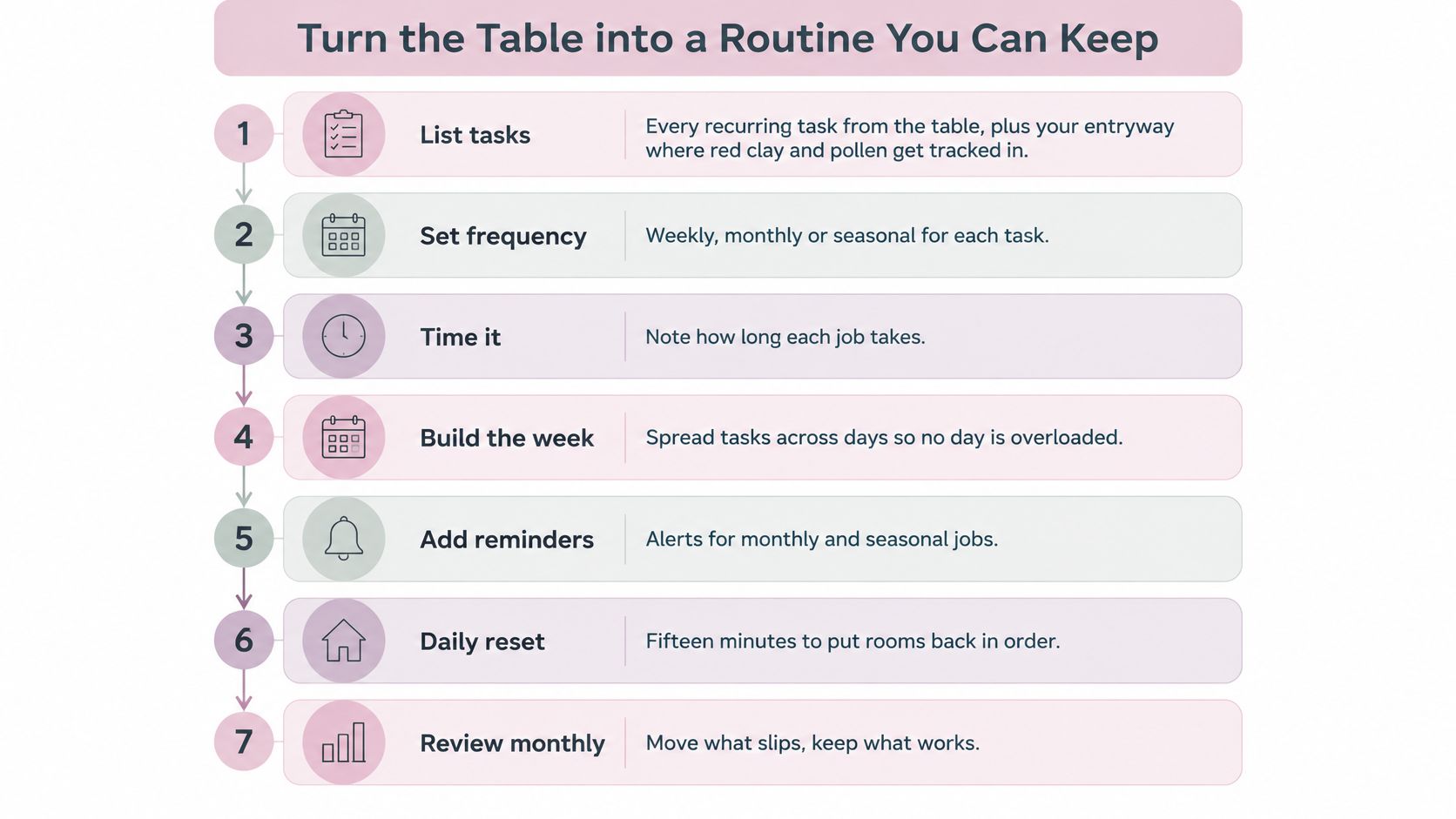
List the work your home needs. Copy the recurring tasks from the table and add trouble spots, such as the entryway where pollen and clay collect. Choose a starting frequency that matches your household rather than a more ambitious plan you can't sustain.
Time a normal week. Include carrying supplies, clearing surfaces, laundering cloths, and putting equipment away. A bathroom job takes longer when you first have to relocate toiletries and find a clean brush.
Name an owner for each task. Write that person's initials beside weekly and monthly jobs, including supply purchases and appointment booking. Ownership means noticing when the job is due and finishing it, not waiting for another person to give instructions.
Build around your existing commitments. Put kitchen resets on the daily calendar, bathrooms midweek, and vacuuming before mopping on a suitable weekday. Leave the most crowded evening free of heavy chores so a late commute doesn't derail everything.
Try protected weeknight blocks. For example, reserve two 30-to-45-minute tidy-up sessions, then stop when the planned work is complete. Keep detailed cleaning out of those blocks unless it's specifically scheduled, or a quick pickup can become an unfinished cabinet project.
Make the plan visible. Use a shared calendar with reminders or a printed card on the pantry door. Monthly and seasonal jobs especially need reminders because they're easy to forget until buildup becomes obvious.
Review after four weeks. Note what slipped and why, then move those jobs to a lighter day, divide them, or reduce frequency where use permits. Don't postpone food messes or heavily used bathrooms because the calendar is crowded.
A sample family week
For a hypothetical family of four with a dog, wipe counters and clear dishes after breakfast and dinner. Check for pet messes after the morning walk, schedule vacuuming and mopping for Monday, clean bathrooms Tuesday, and reserve Wednesday evening for a 30-minute pickup.
On Wednesday, that means doing the normal kitchen care and the planned tidy-up, not repeating Monday's floors. That distinction keeps the routine manageable.
A missed task needs a new place on the calendar, not a bigger promise to do everything Saturday.
If you're unsure how much work to keep at home, we can help you choose a cleaning schedule during Maid in America's free estimate.
Seasonal Deep Cleaning for Georgia Homes
| Season | Georgia focus | Deep-clean tasks |
|---|---|---|
| Late winter to spring (March to May) | Pollen and red clay tracked indoors | Dust ceiling fans, vents, window sills and screens; wash entryway mats and rugs |
| Early summer (June to August) | Humidity and mildew risk | Clean exhaust fans, check under sinks, wash shower curtains, clean trash bins |
| Fall (September to November) | Heating season and indoor dust | Vacuum upholstery, dust heating vents before first use, clean inside cabinets |
| Holiday hosting (November to December) | Extra guests and traffic | Refresh guest bathrooms and kitchen appliances, or book a Top-to-Bottom Deluxe visit |
| As needed | Move, renovation or long vacancy | Move-in or move-out clean, or post-construction cleaning for fine dust |
Use these as planning windows, not fixed weather deadlines. Homeowners and renters in Cartersville, Woodstock, and Marietta can adjust the same calendar to what's happening indoors.
Spring is a good time to address surfaces above eye level before tackling floors. Capture fan-blade dust with a microfiber sleeve or pillowcase, then clean sills and washable mats. The spring deep-cleaning checklist can help you separate that larger reset from ordinary upkeep.
High fixtures need stable access rather than reaching from furniture.

Plan around moisture and occupancy
In humid summer weather, check under sinks before cleaning away staining or residue. An active leak needs repair, not repeated wiping. Clean accessible exhaust-fan covers safely, wash shower curtains according to their care instructions, and scrub trash bins before odors linger.
Fall cabinet cleaning goes more smoothly when you remove contents by section instead of emptying the entire kitchen. Before holiday hosting, prioritize guest bathrooms and the appliances you'll use. An oven interior needs cooling and product contact time, so it isn't a last-minute task before dinner.
Moves and renovations follow access and completion dates rather than seasons. Coordinate move-in or move-out work with belongings leaving the space, and schedule post-construction cleaning after dust-producing work finishes.
For the seasonal reset, replace a monthly detail session with one focused project. Don't add every seasonal job to an already full weekly routine.
When a Recurring Professional Visit Makes Sense
Professional help earns its place when the work exceeds your available time or physical capacity. It doesn't require a spotless starting point, and it doesn't mean handing over every household task.
Look for the work you keep postponing
- The routine keeps slipping. If, for example, you miss the weekly plan for three weeks running, reconsider the workload rather than adding more reminders.
- Work or caregiving leaves little capacity. A predictable appointment can cover heavier chores while residents keep responsibility for immediate messes.
- Detailed jobs never get scheduled. Persistent grout buildup or neglected appliance interiors may need a separate scope instead of being squeezed into maintenance time.
At Maid in America, Basic maintenance cleaning supports ongoing upkeep, with recurring visits available weekly, biweekly, every three weeks, or monthly. Top-to-Bottom Deluxe/deep cleaning suits a first detailed visit or seasonal reset; move-in/move-out cleaning supports renters, landlords, and real estate agents; post-construction cleaning addresses renovation dust and residue.
Request add-ons in advance, including inside the oven or fridge, baseboards, cabinets, interior windows, grout, laundry, dishes, and upholstery vacuuming. Our guide to recurring house cleaning services helps clarify how scheduled upkeep fits into household care.
Agree on the split
Daily spills and urgent pet messes can't wait for an appointment. Bathrooms, floors, and dusting are stronger candidates for scheduled help, with the exact work recorded in the agreed cleaning plan.
Office cleaning in West Cobb and HOA clubhouse and community amenity cleaning need their own schedules based on occupancy. For heavily used shared spaces, the CDC's shared-space guidance calls for at least daily attention to frequently touched surfaces, rather than applying a quiet-home routine everywhere.
Scheduling also matters for businesses whose staff work away from the office. A plumbing business owner coordinating customer calls alongside office access may find Heyline's overview of plumbing call answering options useful for that separate administrative need.
Continuity matters: A familiar cleaner can follow the agreed priorities without the household having to explain them from scratch each time.
We usually send one dedicated cleaner rather than a large team, and clients often get to know their cleaner by name. Our carefully selected and trained professionals are licensed, bonded, and insured and work with natural, low-odor products for consistent, personalized care.
Request a Free Estimate from Maid in America
Bring your preferred frequency and the names assigned to weekly and monthly tasks to your estimate conversation. Those details show what you can realistically maintain and which jobs you'd like help handling.
Maid in America is a locally and privately owned house cleaning and maid service in Kennesaw and Acworth, GA. During the free estimate, we'll talk through rooms, pets, allergies, household sensitivities, and priorities to help choose an appropriate schedule. Mention delicate finishes, difficult access, or a room that needs extra attention before the work is settled, because every visit follows a detailed cleaning plan and add-ons must be requested in advance.
Prepare the details that matter
- Your space: Identify the rooms used regularly and any areas that stay closed.
- Your priorities: Name the tasks that cause the most stress or physical strain.
- Your timing: Explain work schedules, hosting plans, or move-related deadlines.
We serve homeowners, renters, and businesses in Kennesaw, Acworth, Woodstock, Cartersville, West Cobb, Marietta, Dallas, Hiram, and Powder Springs, plus nearby communities across Cobb, Paulding, and Bartow counties.
Pricing depends on the size and current condition of your home, the service you select, the frequency, and any add-ons, so the details above directly shape your quote. A larger home or one that hasn't been professionally cleaned in a while takes more time than a well-kept smaller space, and the estimate is where that difference gets worked out.
Clients rate Maid in America 4.9 stars across more than 400 public reviews. Our health-conscious approach uses carefully chosen, natural, low-odor products, a good fit for households with sensitivities, without promising that cleaning can solve a medical concern.
Add sparkle and shine with your health in mind. Choose a starting rhythm you can live with, then arrange your first visit around the work that matters most.
Maid in America offers personalized cleaning to help turn your house cleaning schedule into dependable upkeep. Request a free estimate online at Maid in America or call 770-427-4448 to discuss your priorities and book your first visit.





Maid in America provides reliable, personalized cleaning with natural products for homes, offices, and communities across West Georgia. Licensed, bonded, and insured, we’re locally and privately owned.
Get in touch with us today!
info@maidinamericaga.com