What Is Deep Cleaning and When Your Home Needs One
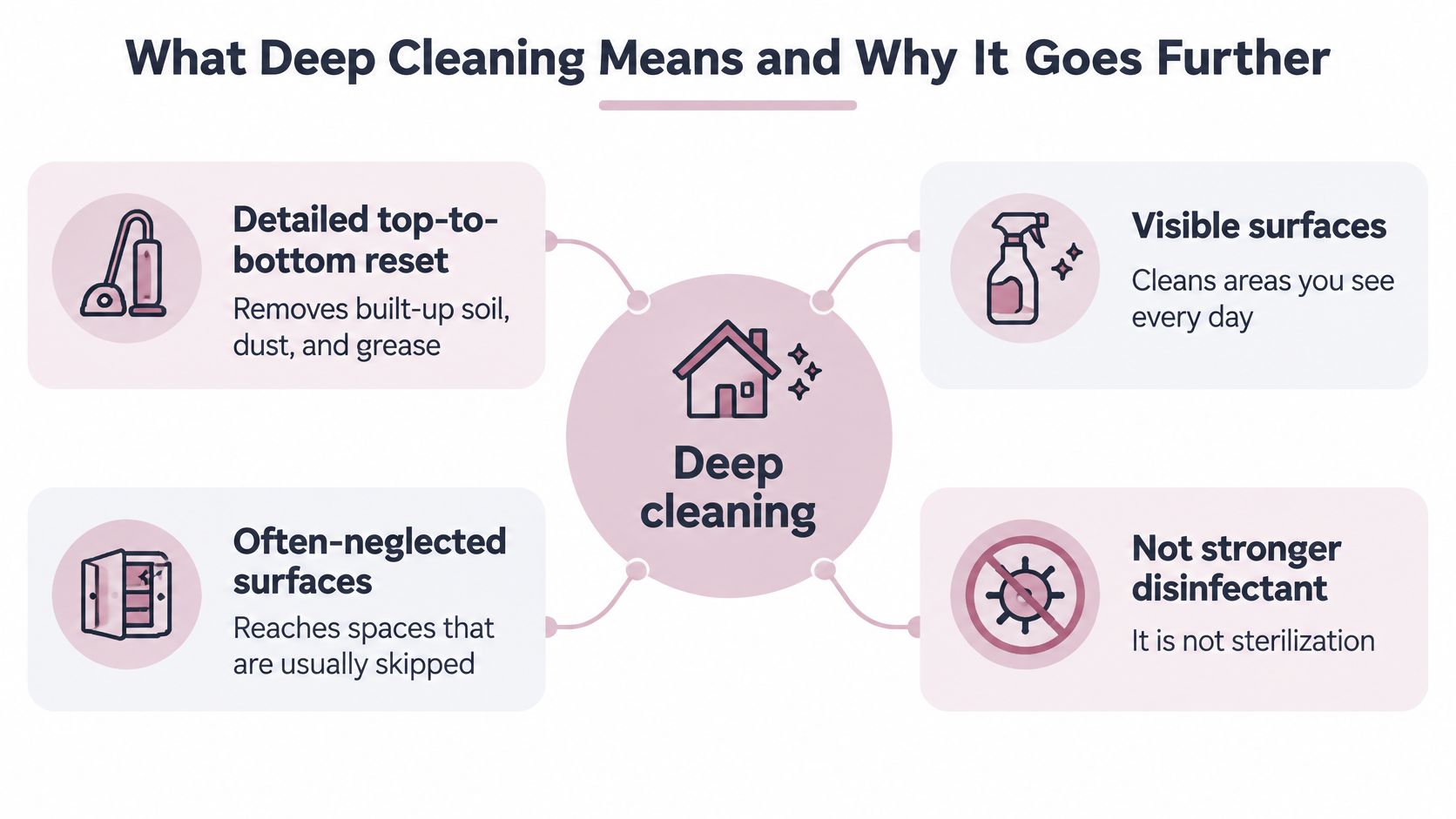
Deep cleaning is a detailed top-to-bottom reset that removes built-up dust, soil, and grime from visible and often-neglected surfaces, not a stronger disinfectant. You're probably asking what is deep cleaning because your Kennesaw or Acworth home looks tidy at a glance, yet the baseboards are dusty, the ceiling fan blades are coated, and Georgia pollen and red clay keep collecting at the entry. That's the gap a deep clean closes. It gives busy families, commuters, and retirees a clean baseline that routine care can maintain.
Table of Contents
- What Deep Cleaning Means and Why It Goes Further
- Deep Cleaning vs Regular Cleaning Side by Side
- Room-by-Room Deep Cleaning Checklist
- Common Triggers for Booking a Deep Clean
- Health and Safety Benefits and What Deep Cleaning Cannot Fix
- How Long a Deep Clean Takes and What Changes the Price
- How to Prepare Your Home Before a Deep Clean
- Deep Cleaning Questions Homeowners Ask
- Request a Free Deep Cleaning Estimate from Maid in America
What Deep Cleaning Means and Why It Goes Further
A home can look tidy while dust remains on ceiling fans, cabinet fronts, and baseboards. Deep cleaning addresses those overlooked surfaces along with the areas used every day. Its scope is defined by the surfaces covered, not by using a stronger product.
For a first professional visit in Kennesaw, Acworth, or Woodstock, Maid in America's Deluxe Top-to-Bottom Cleaning provides detailed care for homes that need more than routine maintenance. The work can include kitchens, bathrooms, floors, furniture, cabinet exteriors, fixtures, and trim. Standard whole-home cleaning also includes high cobweb removal, baseboard dusting, detailing light switches and doorknobs, and sanitizing high-touch surfaces.
The order matters
Cleaning proceeds from high surfaces to low ones. The Clean phase includes high and low dusting, hand dusting and wiping, washing and scrubbing, dry shining and polishing, vacuuming, and mopping with a solution suited to the flooring. Working in that order helps keep loosened dust from settling on surfaces already cleaned.
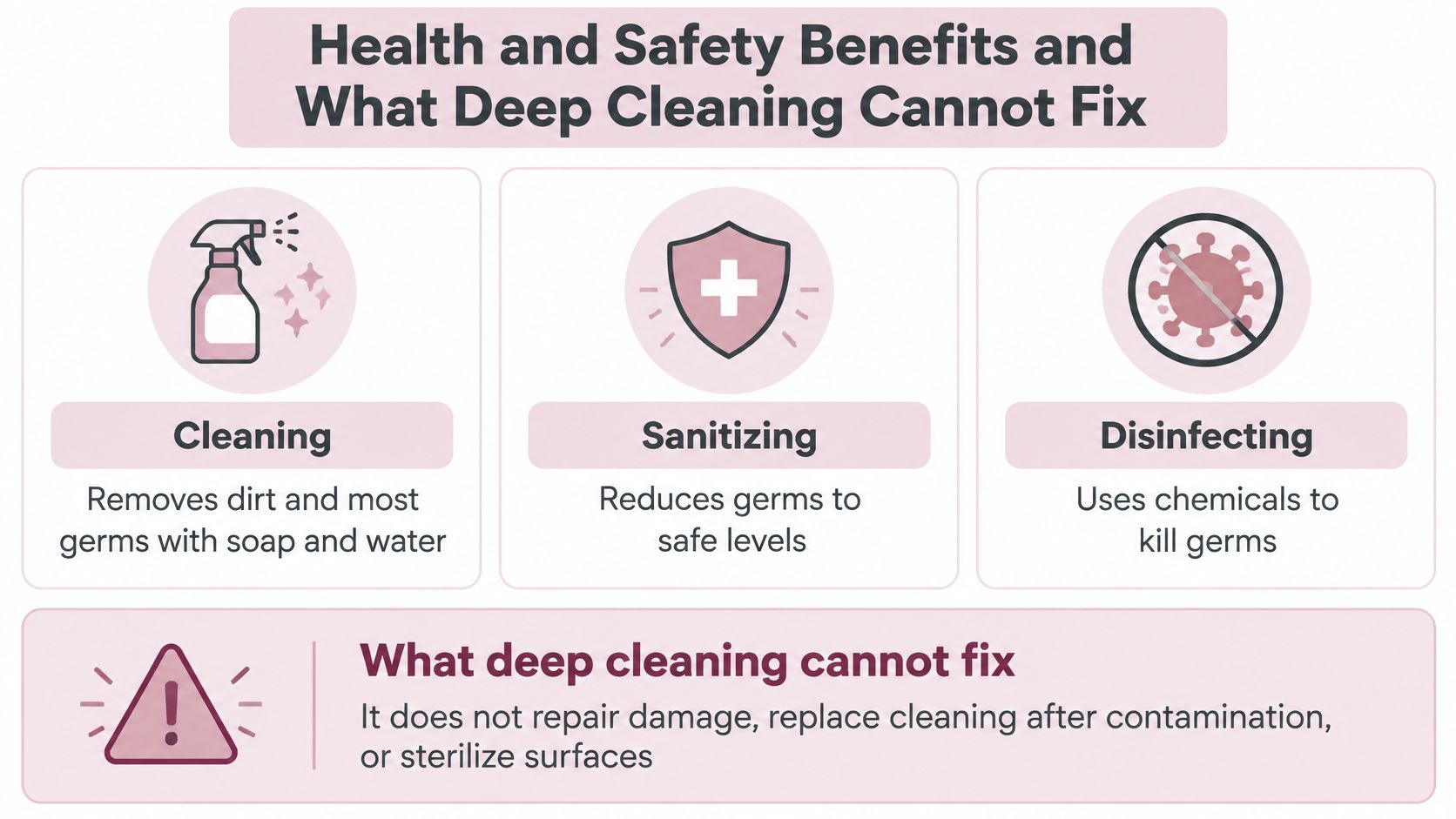
A deep clean removes built-up soil from surfaces. It does not sterilize a home or automatically call for disinfectant on every surface. In humid West Georgia homes, cleaning can remove visible pollen and red-clay residue from accessible surfaces, but it cannot control the moisture conditions that contribute to persistent dampness.
Deep Cleaning vs Regular Cleaning Side by Side
| Aspect | Regular Cleaning | Deep Cleaning |
|---|---|---|
| How often | Weekly, biweekly, every three weeks, or monthly | First visit, seasonal reset, move-related, or after renovation |
| Surfaces covered | Kitchens, bathrooms, floors, furniture, mirrors, trash, and accessible surfaces | Those areas plus neglected surfaces in a Top-to-Bottom Deluxe clean, such as walls, ceilings, fixtures, trim, and detail work agreed at booking |
| Dust handling | Surface dusting and vacuuming of visible areas | Damp dusting from high surfaces down, then vacuuming with filtration on rugs and upholstery |
| Edges and details | Visible areas kept neat | Door frames, light switches, doorknobs, and appliance exteriors |
| Optional add-ons | Not included in a maintenance visit | Oven or fridge interior, interior windows, grout, laundry, dishes, and upholstery when requested ahead |
| Visit length | Shorter, repeatable visit | Longer visit, often most of a day on a larger or long-neglected home |
| Main goal | Keep the home maintained | Reset the home so routine cleaning stays manageable |
Scope is the first real difference. Regular cleaning keeps visible living areas in order between resets. Deep cleaning reaches the trim, fixtures, cabinet exteriors, walls, and ceilings that routine visits skip, so grime doesn't keep building underneath an otherwise neat surface.
Dust handling is the second. A deep clean removes settled dust from the top of the room downward with damp methods, then vacuums. Dust doesn't drift back onto clean counters and floors an hour later.
In Acworth, Kennesaw, and Woodstock, red clay tracked in on shoes and spring pollen collect on entry floors, door frames, and window sills faster than maintenance visits can clear them. That's why a home that has never had a full detailed clean should start with the deep visit. Afterward, weekly, biweekly, every-three-weeks, or monthly basic cleaning can hold the result.
Top-to-Bottom Deluxe is the deep-clean service. Oven or fridge interiors, grout, interior windows, laundry, dishes, baseboards, cabinets, and upholstery vacuuming are add-ons only when requested ahead, so they're included in the estimate and the cleaner arrives ready for them.
Room-by-Room Deep Cleaning Checklist
Work in the order a cleaner works. High surfaces first, then fixtures, cabinetry and trim, then furniture and floors, so dust always falls toward areas you haven't finished yet.
| Room | Deep-clean tasks | Often skipped |
|---|---|---|
| Kitchen | Degrease range hood and cabinet fronts, clean inside the microwave, wipe cabinet tops, detail backsplash and sink fixtures | Cabinet tops, under the sink, behind the range |
| Bathrooms | Scrub grout and tile, descale faucets and showerheads, clean exhaust fan covers, wipe toilet base and behind the toilet | Caulk lines, vent covers, door tracks |
| Bedrooms | Dust ceiling fans and light fixtures, wipe baseboards and door frames, vacuum mattress edges, clean under beds | Ceiling fans, closet shelves, window tracks |
| Living areas | Wipe light switches and door trim, vacuum upholstery and cushions, damp-dust blinds and window sills, clean behind furniture | Behind sofas, entertainment units, blind slats |
| Entry and hallways | Clean the front door and frames, wipe door handles, detail baseboards, vacuum stair edges | Door tops, coat-closet shelves, stair risers |
| Floors throughout | Vacuum with HEPA-filter machine, mop with the solution suited to the flooring, edge along baseboards | Under area rugs, vent registers, floor edges |
Kitchen and bathrooms need the most detail
In the kitchen, grease film builds on cabinet tops and the range hood long before counters look dirty. Degrease those surfaces, clean inside the microwave, and detail the backsplash and sink fixtures. Behind the range and under the sink are worth checking because crumbs and moisture collect where you rarely look.
Bathrooms need scrubbing, not just wiping. Scrub grout and tile, descale faucets and showerheads with a product suited to the finish, clean exhaust fan covers, and wipe the toilet base and the floor behind it. Caulk lines and shower door tracks hold residue that a quick spray won't remove.
Bedrooms, living areas, and entries
Dust ceiling fans and light fixtures with a damp microfiber cloth, wipe baseboards and door frames, and vacuum under beds and behind sofas and entertainment units. For bedding beyond stripping sheets, Protect-A-Bed explains how to clean a mattress safely, which helps you separate mattress care from the surface vacuuming done during a visit. Damp-dust blinds and sills, then vacuum cushions and upholstery.
The EPA guidance on indoor air and duct cleaning recommends dusting with a damp cloth because moisture helps keep settled dust from becoming airborne again, and says a HEPA-filter vacuum can help reduce dust escaping back into the room. It also cautions that vacuuming can stir up dust, so people with asthma or allergies should avoid the area while it's being vacuumed.
Let sensitive family members leave the room during vacuuming and return once the air settles. It's a small step that makes the visit easier.
Finish with floors. Vacuum with suitable filtration, mop with the solution suited to your flooring, and edge carefully along baseboards. Entry halls in Cobb and Cherokee homes need extra passes where red clay and pollen collect.
This checklist is what you confirm on the estimate. Inside the oven or fridge, grout, interior windows, and upholstery are done when requested in advance. Laundry rooms, hobby rooms, and pet areas may need their own added time.
Common Triggers for Booking a Deep Clean
A home can look tidy while dust and residue build up in places routine cleaning does not reach. A first visit, a seasonal reset, or a change in how the home is used can be a good time to book detailed top-to-bottom care.
In West Georgia, spring pollen collects on sills, blinds, and entry floors. During humid summers, kitchens, bathrooms, and laundry areas may need closer attention as moisture and daily use leave residue. A deep clean removes surface buildup. It does not fix a leak or persistent condensation.
Life events that expose neglected surfaces
- Holiday hosting: Before guests arrive, include often-overlooked areas such as ceiling fans, baseboards, guest bathrooms, and kitchen cabinet fronts.
- Moves: Move-In and Move-Out Cleaning prepares an empty or mostly empty home for moving, listing, or turnover, with detailed attention to kitchens, bathrooms, floors, cabinets, appliances, closets, baseboards, and accessible surfaces.
- Renovation: After contractors have finished and removed construction debris, Post-Construction Cleaning addresses fine dust on accessible surfaces, trim, sills, fixtures, and cabinets, along with floors and finishing details.
- Illness in the home: Detailed cleaning removes soil from surfaces. For confirmed contamination, coronavirus cleanup by Sensitive Environmental is a separate specialist service.
Busy households and homes with changing needs may also benefit from a reset when high surfaces and less-used areas have fallen behind. For help choosing a suitable schedule, see how often to deep clean your house.
Humidity deserves a separate check. The EPA mold and moisture resource directory recommends keeping indoor relative humidity below 60 percent, ideally between 30 and 50 percent when possible. A basic humidity meter is sold at most hardware and home goods stores. Check bathrooms and laundry areas after cleaning.
Musty smells, residue on light fixtures, and dust that returns quickly can signal that a space needs attention. Cleaning removes surface soil, while leaks and persistent condensation require repair.
Health and Safety Benefits and What Deep Cleaning Cannot Fix
Three actions get blurred together, and separating them protects your family from both under-cleaning and unnecessary chemicals. Cleaning removes dirt and most germs with soap or detergent and water. Sanitizing reduces germs to levels considered safe, and disinfecting uses chemicals to kill what remains.
The CDC household cleaning and disinfecting guidance says ordinary cleaning with soap and water removes most germs in most situations, while disinfection is generally unnecessary unless someone is sick, has recently visited, or is at higher risk. When you do disinfect high-touch points like doorknobs, light switches, and countertops, the surface must stay visibly wet for the label-specified contact time. Spraying and wiping dry immediately doesn't give the product time to work.
For a fuller breakdown, see our explanation of the difference between cleaning, sanitizing, and disinfecting. The practical point is simple. Remove soil first, then add disinfection only where the situation calls for it.
What a deep clean can and cannot do
A thorough clean means less settled dust returned to the air when damp methods are used, less buildup on high-touch surfaces, and a fresher home without heavy fragrance. Maid in America uses natural, low-odor products, carefully selected and trained cleaners, and usually one dedicated cleaner per home, with only the chemistry each surface needs.
- Persistent odors: The source, such as trapped moisture or soiled soft materials, must be removed or repaired.
- Mold from ongoing moisture: Leaks, condensation, and humidity need correction, sometimes professional remediation.
- Renovation dust still in the air: Settled dust can be captured, but repeated work or ventilation may be needed while particles continue settling.
- Volatile chemicals: Products or building materials releasing fumes need source control and ventilation, not repeated surface wiping.
Never mix cleaners or disinfectants. A stronger smell isn't proof a surface is cleaner or safer.
I recommend describing the goal clearly. You're aiming for a healthier home with fewer harsh chemicals, not making medical promises cleaning can't support.
How Long a Deep Clean Takes and What Changes the Price
A deep clean takes longer than routine maintenance because the work covers more surfaces in greater detail. A first visit to a home with substantial buildup will generally take longer than a seasonal reset in a home that receives regular care.
| Factor | Effect on Time | Effect on Price |
|---|---|---|
| Home size and room count | More rooms and square footage add labor time | The estimate reflects the size of the job |
| Buildup and condition | Heavy grime or a long gap since the last detailed clean adds time | More labor can increase the estimate |
| Clutter on surfaces | Clear counters and floors make surfaces easier to reach | The estimate reflects the time needed to access and clean the space |
| Pets and fur | Fur may require extra attention on accessible surfaces and floors | Share details about pets so the estimate accounts for the home's condition |
| Add-ons requested | Oven or fridge interiors, interior windows, grout, laundry, dishes, or upholstery add time | Add-ons are priced when requested in advance |
| First visit vs. later maintenance | A first detailed clean generally takes longer than later maintenance visits | A reset and recurring service are estimated separately |
The time and price depend on the home's condition and the work requested. For a useful estimate, share the home size, rooms to be cleaned, pets, time since the last detailed clean, and any add-ons. The deep cleaning cost factors explain how these details shape an estimate.
Maid in America's Deluxe Top-to-Bottom Cleaning provides detailed care for first visits, seasonal resets, special occasions, and homes that need more than routine maintenance. The estimate covers the service selected, and add-ons must be requested in advance. If other home services are being scheduled, coordinate their timing with the cleaning appointment. The Crown Point pest control timing guide discusses timing between pest treatments and cleaning.
The scope matters as much as square footage. Ask what is included in the selected service, and arrange any requested add-ons before the visit so the cleaning plan and estimate match.
How to Prepare Your Home Before a Deep Clean
A little preparation the day before lets your cleaner spend paid time cleaning, not moving piles. You don't need to clean first. You need to provide access.
- Clear floors and counters: Move personal items, toys, mail, and small appliances you don't want handled, so every listed surface can be reached.
- Secure valuables and papers: Put medications, jewelry, cash, and important documents in a drawer or closet.
- Request add-ons in advance: Oven or fridge interiors, grout, interior windows, laundry, dishes, and upholstery vacuuming must be booked ahead to be on the plan.
- Confirm appliance work: If you want inside the oven, fridge, or other appliances cleaned, arrange interiors and exteriors in advance and empty items that would block access.
- Handle trash your way: Empty bins and set out extra liners, or leave trash for the cleaner to remove and reline.
- Share household sensitivities: Tell us about pets, allergies, asthma, and odor sensitivities, so products and timing suit your household.
- Plan room access: Keep sensitive people and pets out of areas during vacuuming and while products dry, and open a window for airflow when weather allows.
What ready really means: No clutter blocking floors, access to every room on the booking, and pets secured. That's enough.
Your cleaner brings supplies, so you don't need to provide products or equipment. Leave a note about priorities, such as a guest bath that matters most or a home office that shouldn't be entered.
Deep Cleaning Questions Homeowners Ask
How often is another deep clean needed
After a detailed reset, many homes move to weekly, biweekly, every-three-weeks, or monthly basic cleaning. Consider another Deluxe Top-to-Bottom Cleaning when seasonal buildup, hosting, a move, or renovation dust calls for more than routine maintenance. The right timing depends on the home's condition and your priorities.
Are appliance interiors and other extras automatic
No. Oven and refrigerator interiors, grout, interior windows, and upholstery are add-ons. Request them before the visit so they can be included in the estimate and cleaning plan.
Who comes to the house
Maid in America usually assigns one experienced cleaner whenever possible. A consistent assignment helps keep household preferences, access notes, and pet routines familiar.
What about offices and shared spaces
Maid in America offers office cleaning. The cleaning plan can account for the space's use and priorities.
Request a Free Deep Cleaning Estimate from Maid in America
A home that needs detailed care may be a good fit for Top-to-Bottom Deluxe cleaning, whether you are preparing for a move, addressing post-construction dust, or resetting after pollen season. For ongoing upkeep, Maid in America offers Basic maintenance on weekly, biweekly, every-three-weeks, or monthly schedules. The recommended service depends on the home's condition and your priorities.
Maid in America is a locally and privately owned cleaning company serving homes and offices in Cobb, Paulding, and Bartow counties. Its professionals are licensed, bonded, and insured, arrive with supplies, and use natural, low-odor products. The company provides one experienced cleaner whenever possible and has a 4.9-star average across 400+ public reviews.
If pollen, red clay, and built-up grime have gone beyond what routine tidying can handle, a deep clean can address dirt on accessible surfaces. It does not replace disinfecting or resolve indoor-air problems. For an estimate, share your rooms, sensitivities, and priorities through the Maid in America website.



Maid in America provides reliable, personalized cleaning with natural products for homes, offices, and communities across West Georgia. Licensed, bonded, and insured, we’re locally and privately owned.
Get in touch with us today!
info@maidinamericaga.com