How to Clean Up Broken Glass Safely: Finding Tiny Shards
A drinking glass slips off the counter during dinner prep in your Kennesaw kitchen. There's water under the table, the dog is coming to investigate, and your first instinct is to grab a kitchen towel. Leave the towel where it is. Move everyone away, put on closed-toe shoes, and look at what broke before you start cleaning.
Knowing how to clean up broken glass starts with sorting the hazard, not sweeping faster. A clean tumbler on tile needs a different response from glass hidden in dishwater, a damaged window, or a broken fluorescent bulb. The safest approach protects you during collection and whoever handles the waste afterward.
Table of Contents
- Which Cleanup Path Your Break Needs
- Containing Broken Glass Before You Lift It
- How to Collect Broken Glass Step by Step
- Finding the Tiny Shards Most Cleanups Miss
- Confirm the Floor Is Clear Then Book Help
Which Cleanup Path Your Break Needs
A dropped water glass on a dry kitchen floor is usually a contained cleanup. A cracked patio pane, glass hidden in standing water, or a break mixed with blood or chemicals calls for a different response. Keep people out of the affected area, then sort the break before choosing tools.
| Type of break | Tools and handling | Where fragments go | Call a professional? |
|---|---|---|---|
| Small clean drinking glass on a hard floor | Broom, dustpan, tongs or forceps, adhesive tape, damp disposable towel | Rigid container, closed and labeled as needed | Usually no |
| Large pane, picture frame, or furniture glass | Heavy gloves and cardboard; keep people and pets back | Rigid, puncture-resistant container | Yes for glass set in a window frame |
| Glass lying in soapy or standing water | Expose the pieces without reaching into concealed debris; use tongs and a dustpan | Rigid container | Yes if pieces are large or difficult to reach |
| Glass with blood or bodily fluids | Do not touch by hand; use tongs or forceps | Closable, puncture-resistant sharps container | Yes, use trained help |
| Glass with chemical residue or unknown material | Stop ordinary cleaning; restrict access and ventilate if safe | Appropriate hazardous-waste process, not ordinary trash | Yes |
| Fluorescent or mercury-containing bulb | Do not vacuum; ventilate, then use stiff cardboard and sticky tape for fine powder | Sealed container, handled according to local hazardous-waste rules | Check local hazardous-waste rules |
Gloves do not make hand-picking safe. For glass contaminated with blood or bodily fluids, use mechanical tools rather than direct hand contact. If someone has been cut, reassess the cleanup: remaining fragments may now be contaminated.
When ordinary cleaning stops
Glass in water needs a different approach from dry fragments. Expose the pieces without reaching into concealed debris, and do not sweep them toward a drain. Cloth towels and ordinary cloth mops can retain shards and transfer them elsewhere.
Leave glass retained in a window frame to a glazier. Heavy gloves are backup protection, not a reason to pull a pane from its supports. Renovation cleanup is also a separate job: post-construction cleaning focuses on fine dust and finishing details after contractors have completed the work and removed debris.
Disinfecting contaminated glass is not a matter of spraying and continuing. The disinfectant label determines the required contact time, and contaminated glass still needs appropriate handling and disposal. Natural cleaning solutions do not replace procedures for biological or chemical hazards. If the contents are hazardous or unknown, keep the area isolated and get trained help.
Containing Broken Glass Before You Lift It
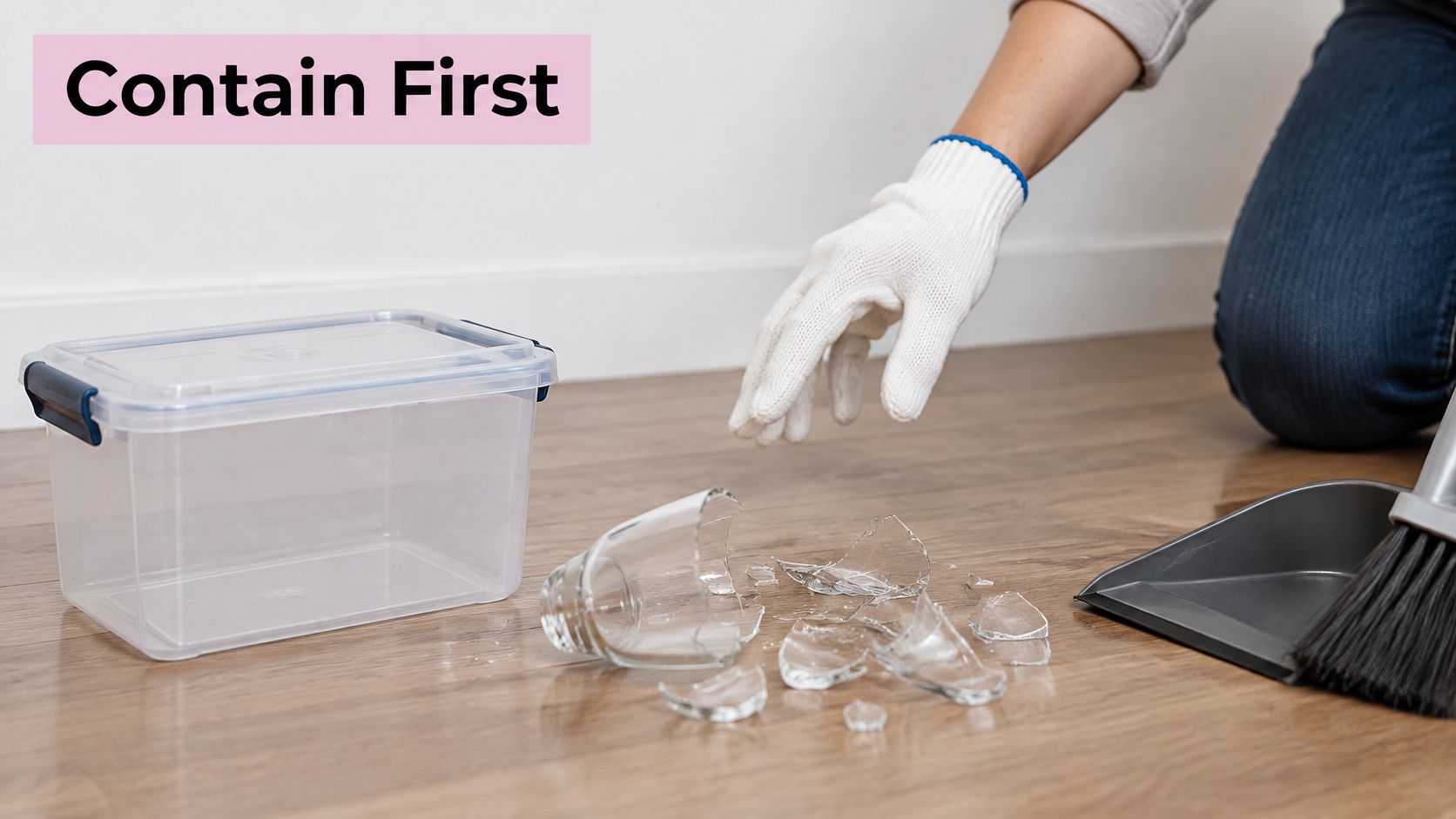
Have the disposal container beside the work area before lifting the first fragment. Carrying an open dustpan across a busy kitchen creates another opportunity to drop glass where someone will walk.
Prepare a container that protects the next person
- Choose a rigid, puncture-resistant container. Use a designated broken-glass container or another suitable container with a secure closure. A thin trash bag isn't adequate, and an ordinary storage tub shouldn't be assumed puncture-resistant just because it feels stiff.
- Set fragments inside without pressure. Don't crush pieces, compact the contents, or push glass down to make room. Choose a larger container if the lid won't close without force.
- Include contaminated cleanup materials. Used tape and disposable towels from a clean household break belong with the collected glass. Don't leave them loose on the counter or put them back with reusable supplies.
- Close before carrying. Secure the lid or closure while the container is still resting on a stable surface. Mark it clearly as broken glass, and use the required hazard labeling and waste route when contamination is involved.
For contaminated material, container selection alone doesn't make ordinary trash disposal appropriate. Blood-contaminated sharps need a designated sharps process; chemical, medication, or unknown residues require guidance suited to the substance.
The EPA's common-recyclables guidance advises keeping broken glass out of household recycling because fragments can injure workers and damage sorting equipment. Don't put loose shards into the recycling bin, even when intact bottles are accepted locally.
Check disposal arrangements before collection day
Homeowners, renters, office managers, and HOA staff in Kennesaw, Acworth, and Cartersville shouldn't assume they share the same disposal arrangements. Ask the waste hauler whether contained broken glass belongs in regular trash, requires separate presentation, or needs a designated drop-off. A workplace container's fill line is an operating rule for that container, not a universal household limit.
Protect the next handler: The person lifting your trash won't know where the glass landed or how sharp it is. The closed container and clear marking must communicate the hazard.
Never sweep fragments into floor drains, shake a towel that caught glass, or carry debris uncovered. For a mercury-containing bulb, leave the room temporarily while it ventilates and follow the specialized cleanup route rather than treating the powder as ordinary dirt.
If you're cut, stop cleaning and wash the injury immediately with soap and water. Seek medical assessment when contamination is possible, glass may remain in the wound, or the injury is significant.
How to Collect Broken Glass Step by Step
For a small, uncontaminated household break, work deliberately from the outside of the affected area toward the main debris. Gather a stiff broom, dustpan, tongs or forceps, stiff cardboard, adhesive tape, disposable paper towels, and the prepared container.
The CDC's laboratory safety guidance recommends mechanical tools such as forceps, disposable scoops, and tongs rather than hands, and identifies broom-and-dustpan collection for noncontaminated glass. The same tool-first principle is useful in a family kitchen or shared office.
Collect without spreading fragments
Clear the area. Keep children, pets, and visitors out of the room, and step back in closed-toe shoes. Don't let someone squeeze past the spill while you work, because they can carry fragments into another room.
Protect your hands. Wear cut-resistant or heavy-duty gloves, but never search for fragments with bare or gloved fingers. Gloves provide backup protection while you use tools; they don't make a hand an appropriate scoop.
Lift the large pieces mechanically. Use tongs, forceps, or stiff cardboard to move substantial fragments into the rigid container. Support pieces from below where practical, and don't stack them in your palm or hold them against your body.
Sweep with short, controlled strokes. Work from the outer edge toward the break point, then guide the debris into a dustpan resting flat on the floor. Fast, broad strokes can flick pieces underneath cabinets or beyond the area you've isolated.
Use adhesive tape for fine fragments. Press the sticky side against the floor, grout lines, and nearby hard surfaces, then lift it away. Replace loaded tape rather than repeatedly pressing a glass-covered strip into another spot.
Finish with a damp disposable towel. Use gentle passes after the visible debris is gone, folding the used surface inward as you work. A dry cloth can move fragments around, while shaking any towel releases what it has captured.
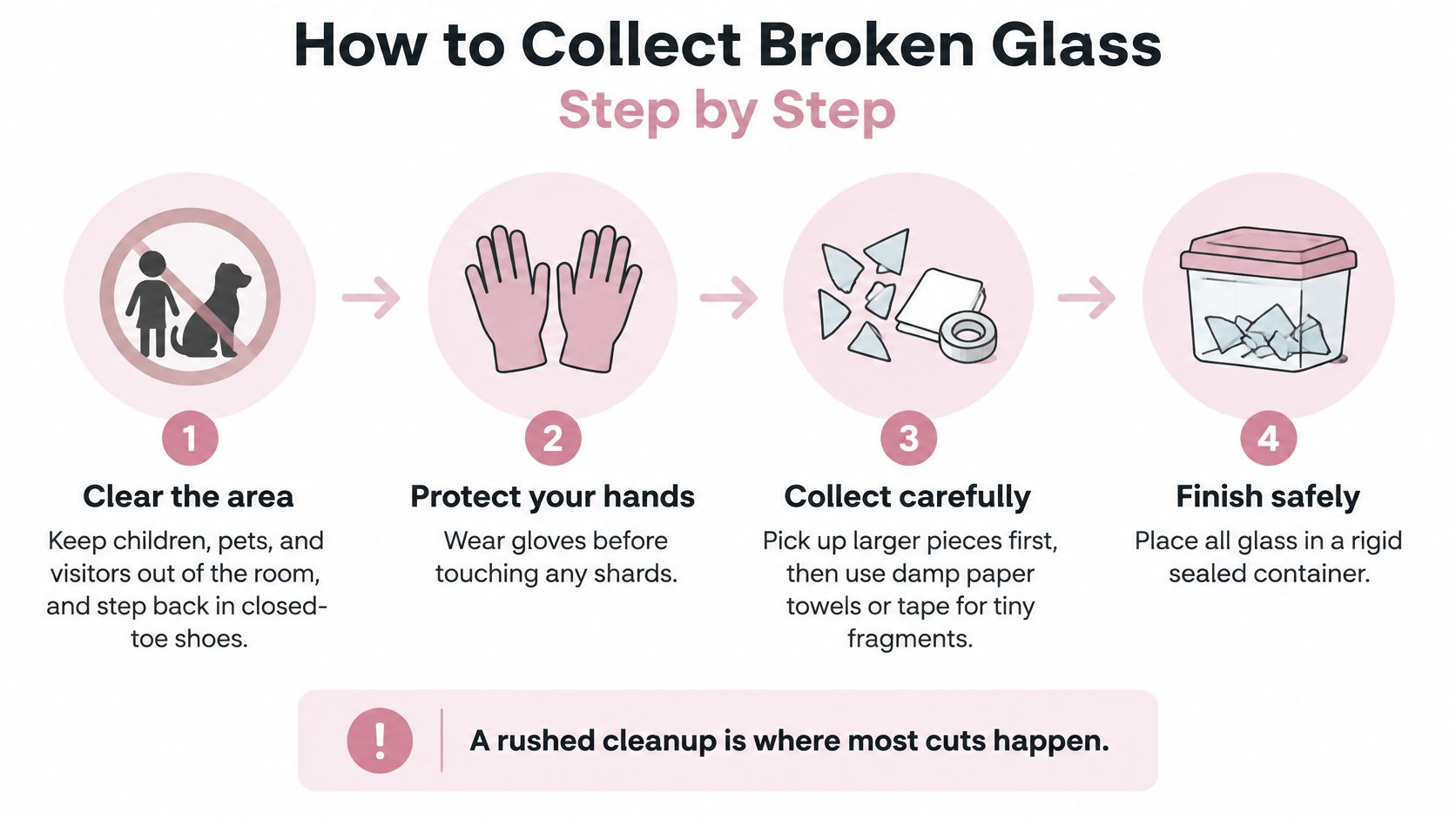
The gloves shown in a collection guide should always be understood as protection while using tools, not permission to grasp shards. Keep your fingers away from the working edge of cardboard and from the underside of tape or towels that have touched the debris.
Why the vacuum stays put initially
Vacuuming first trades visible debris for a hidden hazard inside the machine. Glass can damage components, remain in the hose or collection pathway, and spread when the machine is emptied. A household vacuum also isn't a substitute for a mercury-bulb or hazardous-material response.
No bare hands, no vacuum first. Use mechanical tools even when you're wearing gloves.
For offices and HOA amenities, keeping a broom and dustpan accessible is more useful than relying on whatever someone finds in a supply closet. Facility managers arranging bulk dust pan orders for procurement can use Material Handling USA's equipment listings to plan consistent collection tools across shared spaces.
Don't return the broom and dustpan to storage with fragments still caught along the lip or bristles. Inspect them without running your fingers over the edges, and remove retained pieces mechanically into the container. The collection stage is complete when another careful sweep and tape pass collect no visible glass, not merely when the central pile has disappeared.
Finding the Tiny Shards Most Cleanups Miss
The gap beneath a cabinet or furniture leg is an easy place to miss glass. You can clear the open floor and still leave fragments just beyond the broom's reach, especially if the first sweep pushed debris outward.
Check beyond the impact point, including the route anyone took immediately after the break. In a Marietta rental or Woodstock office, that may mean inspecting the doorway and adjoining hard floor, not just the space beneath the dropped glass.
Where shards hide and how to check
| Hiding spot | Why shards hide | How to check |
|---|---|---|
| Beneath baseboards and furniture | Shards slide under when swept | Direct a low-angle flashlight beam along the floor edge |
| Grout lines and tile joints | Tiny fragments lodge between tiles | Press tape across the joint and lift it |
| Carpet and rug pile | Shards sit in the fibers and are hard to see | Make a tape pass, then press and lift a damp disposable towel |
| Hardwood cracks and gaps | Fine pieces drop into seams | Shine a flashlight along the seam, then use tape |
| Door thresholds and tracks | Foot traffic pushes shards into the track | Run a folded damp disposable towel along the accessible track without exposing fingers |
| Shoes, socks, and pet paws | Shards stick to soles and fur after walking the area | Inspect soles and paws before anyone leaves the room |
Don't flood seams to flush glass out. Use controlled collection, then follow a surface-appropriate maintenance method, such as this guidance for cleaning linoleum flooring, once the sharp debris is gone.
Make the final pass deliberate
- Lower the light. If you can remain safely positioned, switch off overhead lights and sweep a flashlight beam across the floor from a low angle. Transparent fragments can become easier to spot when they reflect that beam.
- Test suspect spots. Press fresh tape over each questionable point and lift it to inspect what sticks. Don't brush a sparkling speck with your fingertip to identify it.
- Repeat until clear. Continue tape-and-wipe passes until you see no reflective points. On carpet, pressing and lifting a damp disposable towel can collect fibers and fragments that a broom misses, but it doesn't prove deep pile is free of glass.
If carpet still feels questionable, keep it inaccessible and seek appropriately equipped help. Don't test it by walking barefoot.
Check shoes and pet paws before reopening the room. Keep pets away until the floor is clear, and get veterinary help rather than digging out an embedded shard.
Confirm the Floor Is Clear Then Book Help
Keep the room closed until the sealed glass container is out of the living area and the floor inspection is complete. Check the area again later in good light, especially along edges and walking routes.
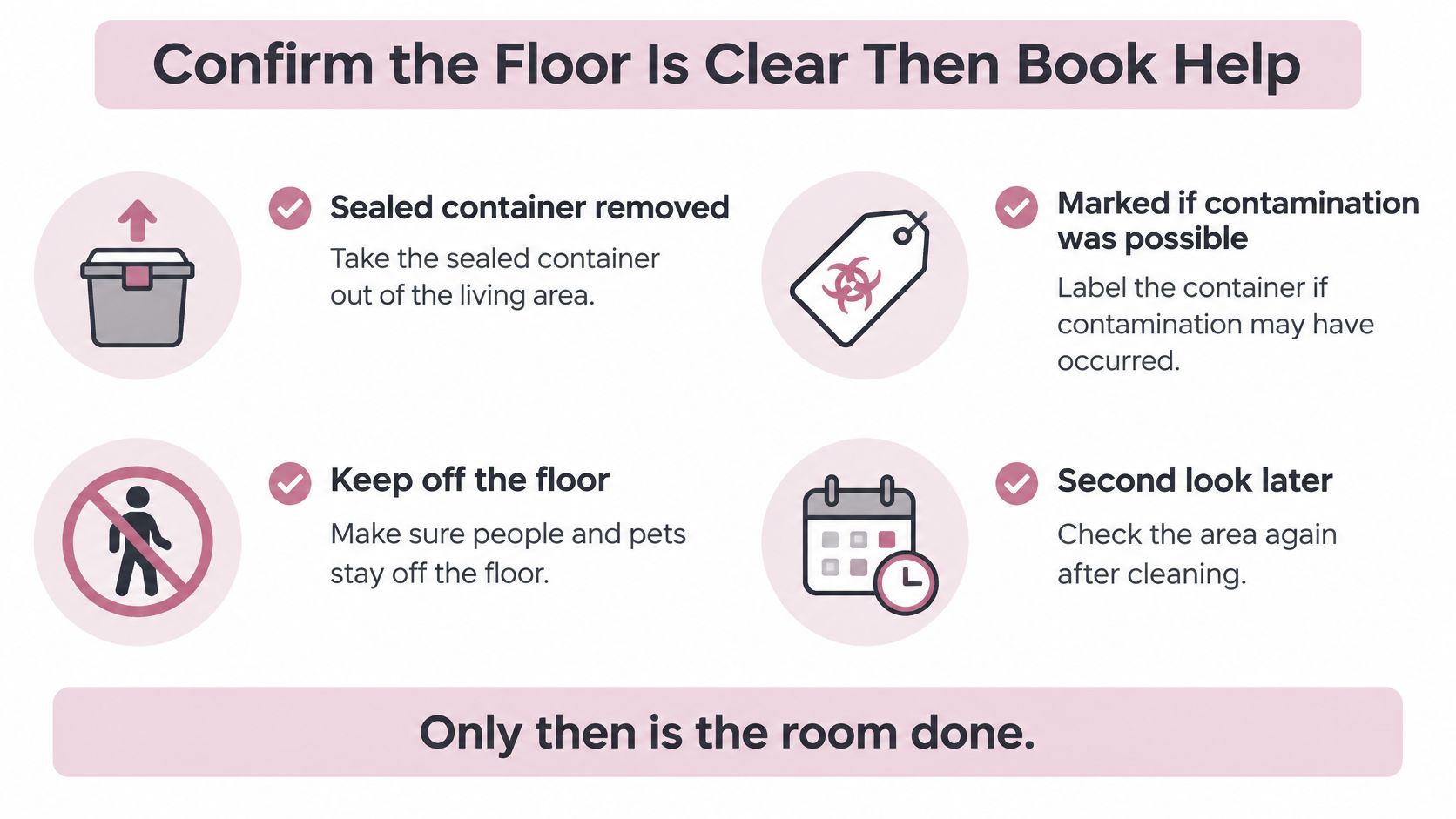
Call appropriately equipped help for contaminated glass, glass still held in a frame, widespread breakage, or a cleanup that still feels incomplete. Maid in America does not handle biohazard or mercury waste. For a separate window concern, Breaking Glass Co. explains how to spot window seal failure early. Do not handle a damaged pane to investigate a seal problem.
Arrange routine cleaning after the hazard is resolved
Maid in America is a locally owned cleaning company based in Kennesaw, Georgia. Its professionals are licensed, bonded, and insured, and the company serves Kennesaw, Acworth, Woodstock, Marietta, Dallas, Hiram, Powder Springs, Cartersville, and nearby communities across Cobb, Paulding, and Bartow counties.
Its cleaning services include post-construction cleaning after contractors finish and remove construction debris. The service addresses fine dust, floors, accessible surfaces, fixtures, cabinet exteriors, kitchens, bathrooms, mirrors, windows, and finishing details. For a concern about your cleaning, call 770-427-4448 so the office can review the details with you.
After the glass hazard is resolved, Maid in America offers residential and office cleaning with natural, low-odor products. Call 770-427-4448 or visit Maid in America to request an estimate.





Maid in America provides reliable, personalized cleaning with natural products for homes, offices, and communities across West Georgia. Licensed, bonded, and insured, we’re locally and privately owned.
Get in touch with us today!
info@maidinamericaga.com