Cleaning Linoleum Flooring the Right Way in 2026

Spring pollen has settled across the kitchen floor, someone has tracked red clay in from the yard, and a damp mop seems like the quickest fix. But if that floor is linoleum, the wrong cleaner or too much water can leave dull patches, sticky residue, or damage at the seams. A few careful choices make cleaning linoleum flooring simpler, safer for the finish, and easier to fit into a busy home or shared space in Kennesaw, Acworth, and nearby communities.
Table of Contents
Why Linoleum Deserves Its Own Cleaning Playbook
A Kennesaw kitchen can look like it needs a serious scrub after a rainy afternoon: grit by the door, a paw print near the water bowl, and a sticky splash beside the stove. Before reaching for a strong degreaser, make sure the floor is linoleum. The name is often used loosely for resilient flooring, but linoleum is a distinct material, not a generic term for vinyl.
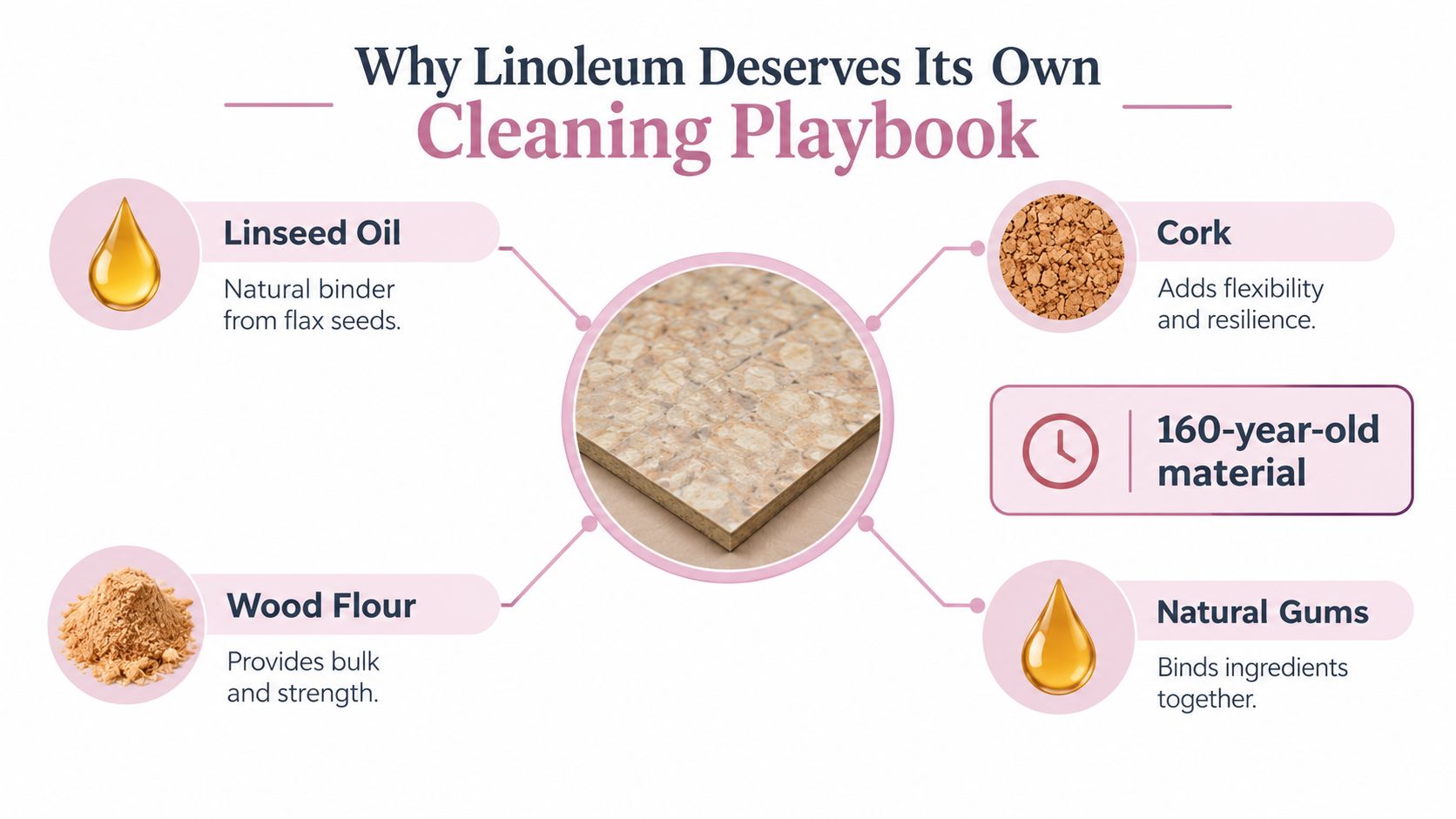
Traditional linoleum is made by pressing oxidized linseed oil, pine rosin or other gums, cork powder or wood flour, and pigments onto a backing such as canvas, burlap, or jute. English inventor Frederick Walton patented the material and named it in 1860; commercial production began in England in 1864. It was a common floor covering from the 1860s through the 1940s, giving it a history of more than 160 years (historical documentation of linoleum's development).
Vinyl is a plastic floor covering, while laminate has a layered construction and a printed surface. Linoleum's ingredients and finish vary, too. Historical documentation identifies plain, jaspe, inlaid, and printed types, so a cleaning approach that suits one floor may not suit another. If you're unsure what's installed, check paperwork or ask the flooring manufacturer rather than assuming a surface is vinyl.
Start with identification: The floor's name and finish matter more than a bottle label promising a universal clean.
Excessive water, aggressive solvents, and strongly alkaline chemicals can affect linoleum. That's why a cautious maintenance plan starts with the material itself, not with a powerful product. For HOA board members setting expectations for shared spaces, this guidance for HOA board members can help frame floor care as part of practical common-area maintenance.
The Four-Step Routine for Daily and Weekly Care
Red clay at the entrance and a sticky drink spill near the kitchen need different handling. Collect dry grit before it gets dragged under a mop, blot the spill, then damp-clean the soiled area. The routine stays the same: remove loose soil, use compatible chemistry, treat remaining spots, and dry the surface.
Four steps that work
Sweep or vacuum first. Use a soft brush attachment or microfiber dust mop for grit, pollen, crumbs, and pet hair. During Georgia's spring pollen season, entrances in Kennesaw and Acworth may need more frequent attention than quieter rooms. Lift dry red clay tracked in from a West Cobb yard before adding water. Otherwise, mopping spreads the soil and can scrub grit across the finish.
Damp-mop with neutral detergent. The manufacturer's linoleum cleaning and care recommendations give a pH around 6–8 for routine care and around pH 8–10 for periodic cleaning. Check that the cleaner suits your floor's finish, then follow its label dilution rather than guessing a stronger mix. Wring the mop thoroughly and work in manageable sections. Reserve mildly alkaline chemistry for soil that neutral detergent cannot remove, rather than making it the weekly default.
Spot-clean fresh messes. Blot spills promptly. Use a little diluted neutral detergent for remaining residue, with gentle agitation if needed. A white or red nylon pad may be suitable, but check the finish's care instructions before using it. Avoid solvents, and stop scrubbing if the surface changes appearance.
Dry and check. Pick up remaining moisture with a clean, dry microfiber mop or towel, especially at seams and edges. Humid Georgia summers can slow drying. Keep air circulating during cleaning and drying, and leave the area closed to foot traffic until dry.
Let visible soil set the wet-cleaning schedule.
| Step | Frequency | Product pH | Tool | Watch Out For |
|---|---|---|---|---|
| Dry soil removal | Daily in busy areas, or as needed | None | Soft-brush vacuum or microfiber dust mop | Dragging grit across the finish |
| Damp mopping | When soil calls for it | Around 6–8 | Well-wrung microfiber mop | Pooled water |
| Periodic cleaning | When neutral detergent isn't enough | Around 8–10 | Compatible floor-care tools | Stronger chemistry becoming routine |
| Drying and inspection | After wet cleaning | None | Dry microfiber mop or towel | Damp seams and edges |
For a home, HOA clubhouse, or small office, schedule dry soil removal around traffic and damp mopping around actual dirt. When comparing surfaces for future work, Premier Builders on practical tile choices provides a separate flooring reference. Keep linoleum's maintenance requirements tied to its own material and finish.
Choosing Low-Odor Products That Actually Protect the Floor
A cleaner marketed as natural or green isn't automatically low-odor, gentle on linoleum, or appropriate for every household. Dose, ventilation, and residue matter more than reassuring wording on the front of a bottle. Some cleaning products can release volatile organic compounds into indoor air as they evaporate, and rinsed product can enter wastewater.
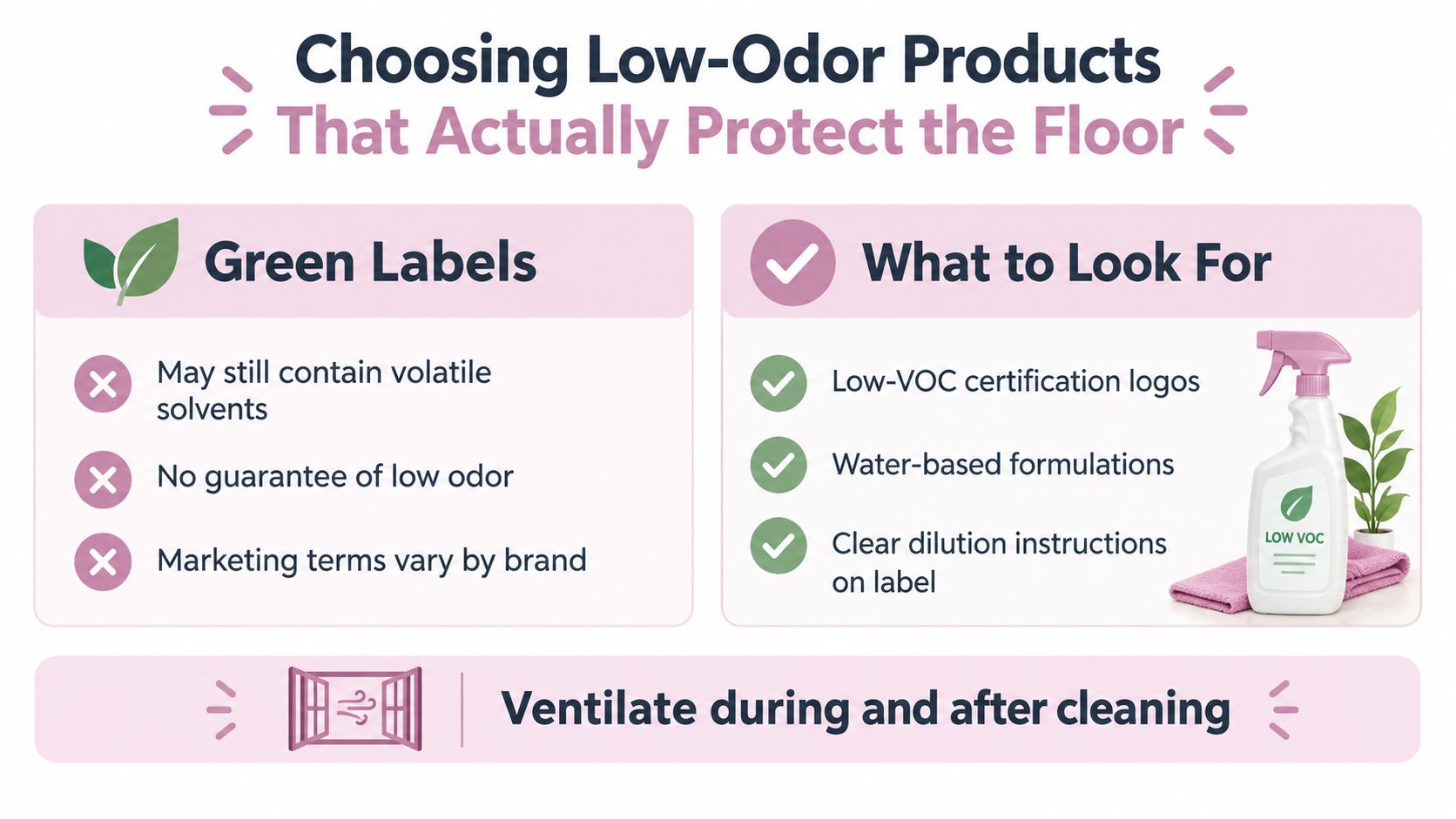
Read the label for the intended surface, dilution instructions, and precautions. Use the least concentrated compatible cleaner that does the job. Avoid fragrance-heavy formulas and strong solvents if a lower-odor product will work, and don't use a high-alkaline stripper for routine soil. More product doesn't mean a better result; extra concentrate can leave a film that attracts dirt or feels tacky underfoot.
Ventilation and residue are part of the method
California air-quality guidance advises using only the amount needed, ventilating during cleaning and for several hours afterward, and rinsing where appropriate. EPA guidance recommends fresh air when a product may release VOCs and warns against mixing household cleaners. Follow the cleaner's label and the flooring manufacturer's care instructions, especially when deciding whether a rinse is needed.
That balance matters in a family kitchen, a home where a retiree is aging in place, or an HOA clubhouse that residents use soon after cleaning. Keep the solution controlled, prevent it from pooling at seams, and dry the floor promptly. Low-odor work should feel comfortable without relying on added fragrance to signal that the floor is clean.
If a DIY mix is under consideration, check its ingredients and acidity rather than assuming a pantry product is harmless. This overview of soap for the floor is a useful place to compare simple cleaning choices with the needs of the surface. Low-moisture cleaning can be a sensible approach, but marketing claims about environmental benefits should be evaluated as claims about a particular product or system, not universal outcomes.
Spot and Stain Removal for Real Georgia Messes
The safest first move is usually to lift the mess before it dries, then use a small amount of diluted neutral detergent. Don't attack every mark with the strongest cleaner under the sink. A gentle tool and patient wiping are less likely to damage the finish than an abrasive scrub.
| Stain or Scuff | First Response | Cleaning Solution | Tool | Avoid |
|---|---|---|---|---|
| Red clay from a yard | Let loose soil dry, then sweep or vacuum it up | Diluted neutral detergent | Microfiber cloth or mop | Smearing wet clay across the floor |
| Scuffs in a hallway | Wipe the mark gently | Diluted neutral detergent | White or red nylon pad | Abrasive powder or rough scouring pad |
| Food and drink spills | Blot promptly, lifting solids first | Diluted neutral detergent | Soft cloth or microfiber mop | Leaving sticky residue to dry |
| Pet accident | Blot up liquid and clean the area | Diluted neutral detergent, used as directed | Clean cloth | Strong fragrance, solvents, or flooding |
| Damp-area mildew concern | Remove surface soil and dry the area promptly | Compatible neutral detergent | Microfiber cloth | Mixing products or saturating seams |
Red clay can leave a stubborn-looking smear if you wet it before removing the grit. Sweep up dry particles first, then damp-wipe the remaining mark. In a Marietta or Woodstock hallway, black scuffs from shoes may respond to light pressure with a nylon pad; stop if the surface begins to look dull.
For food spills after holiday hosting, lift crumbs or sauce rather than pushing them into the texture. Blot liquid, clean with the diluted detergent, and dry the spot. For a pet accident, focus on prompt removal and residue control. Don't try to mask odor with a heavily perfumed product.
A bathroom in humid Powder Springs can stay damp longer than expected. If you see mildew-like growth, remove surface dirt gently and dry the area, but don't combine bleach, vinegar, or other cleaners. If discoloration persists, the source may be beneath the finish or related to moisture, and stronger scrubbing may make the damage worse. For adjacent tiled areas where grout needs its own care, this reference to grouting techniques for home renovations is relevant, but grout products shouldn't be transferred to linoleum.
A Quarterly Deep Clean Without Damaging the Finish
A clubhouse floor that stays tacky after mopping needs a closer look before another pass with cleaner. Quarterly cleaning is a checkpoint, not an automatic stripping appointment. Deep-clean only when soil remains after routine care, and test the method in an inconspicuous area. The floor's coating and installation instructions take priority.
Controlled cleaning, then complete removal
Linoleum needs compatible chemistry and controlled moisture. Choose the cleaner and dilution specified for the finish; a stronger mix can leave more residue rather than remove more soil. Low odor alone does not establish compatibility or indoor-air safety, so follow ventilation instructions rather than fragrance claims.
For an intensive clean, the manufacturer's technical linoleum care guide specifies 5–15 minutes of dwell time, keeping the solution wet, and mechanical scrubbing at approximately 175–350 revolutions per minute with a suitable red pad. Those settings belong to that procedure, not every linoleum floor.
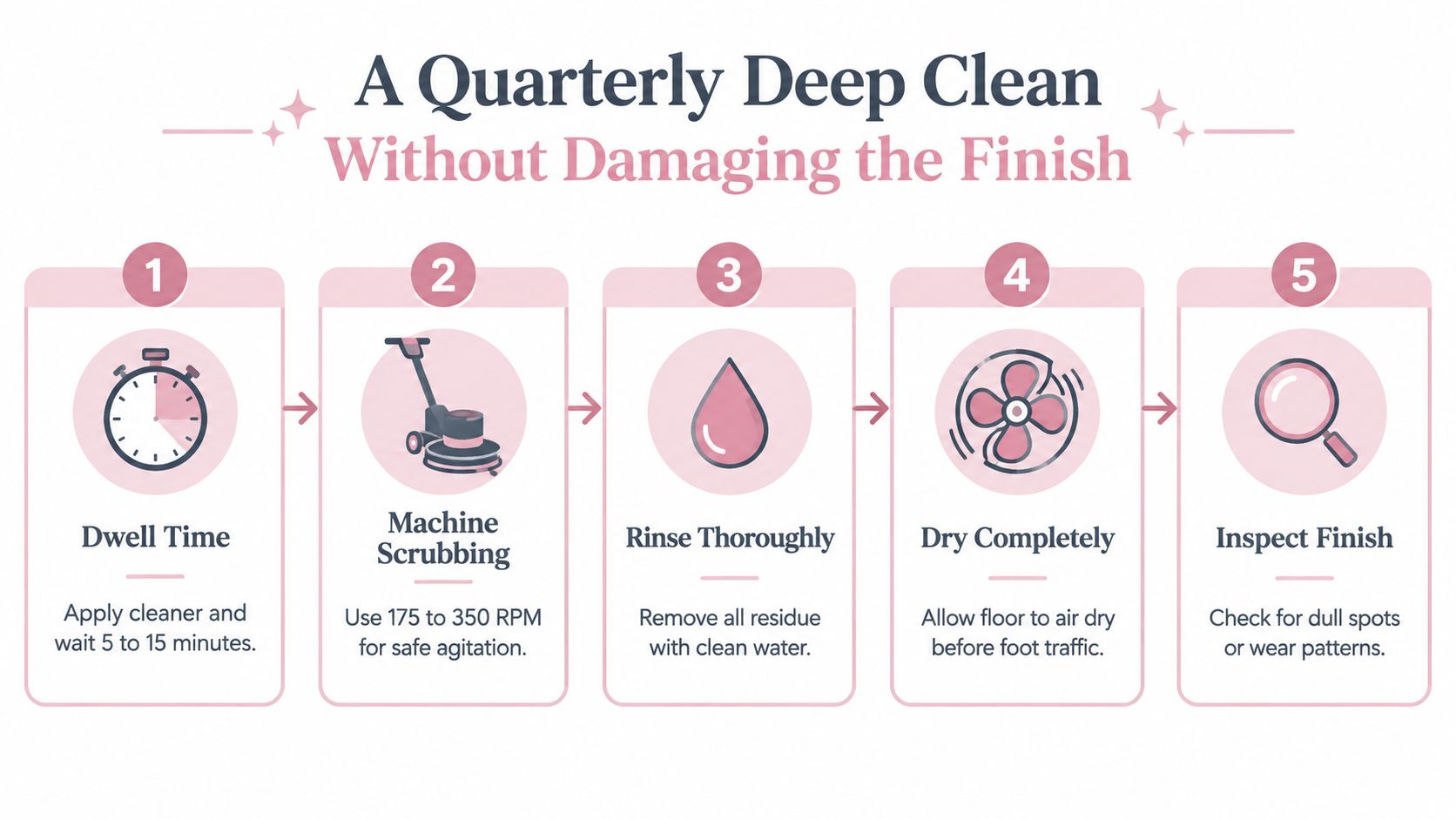
Work in areas small enough to recover the solution before it dries:
- Remove loose grit with a vacuum or broom.
- Apply the compatible cleaner at the instructed dilution, avoiding pooling.
- Agitate gently with approved equipment and a compatible pad. Stop if the finish changes appearance.
- Extract and rinse according to the care instructions, removing loosened soil and cleaner residue.
- Dry completely before reopening the area to foot traffic.
Recovery matters as much as scrubbing.
For a new installation, Forbo's Marmoleum care guidance specifies avoiding wet cleaning for at least five days so the adhesive can dry and cure. Follow the instructions for the actual product and adhesive rather than applying a general waiting period.
Persistent haze, yellowing, sticky residue, or dull patches can indicate buildup or finish wear. More agitation may worsen the appearance. The distinction between deep cleaning versus regular cleaning helps set a realistic scope: remove embedded soil without treating every blemish as dirt. If gentle cleaning leaves the mark unchanged or the finish is unknown, get a professional floor-care assessment before escalating.
Five Linoleum Myths That Cost Homeowners Money
Linoleum's resilience can make it seem as if it can tolerate any cleaning method. It can't. A few common habits risk the finish, seams, or appearance without improving the clean.
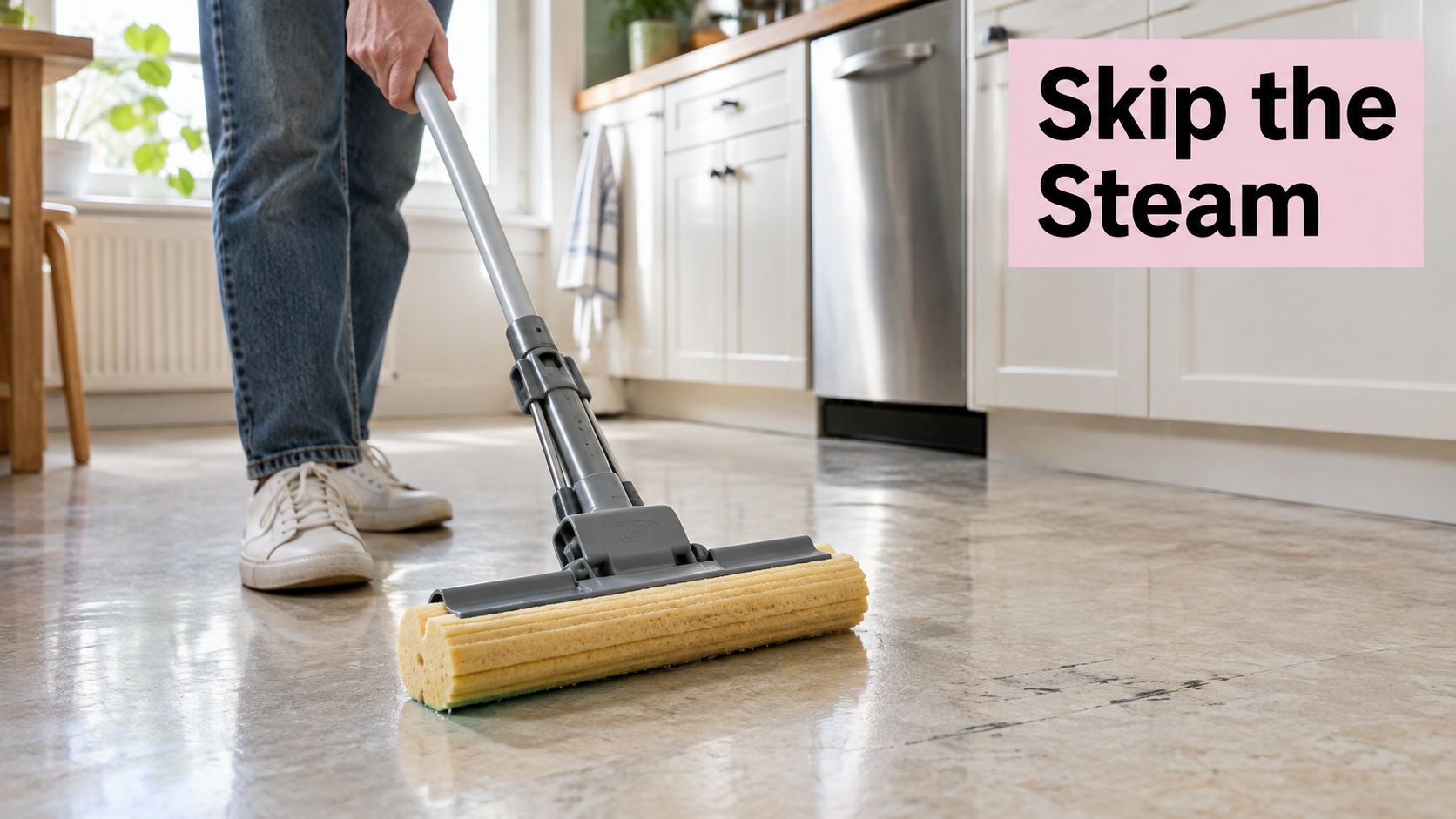
“A steam mop is fine because it uses water.” Heat and moisture can be hard on seams and the floor's construction. Use a well-wrung damp mop unless the manufacturer specifically approves another method.
“Bleach is the universal answer.” Strong products can affect color or surface finish, and bleach shouldn't be mixed with other cleaners. Choose a compatible neutral detergent for routine cleaning instead.
“Wax always restores shine.” Some older floors may have care requirements different from modern finishes, but adding polish or wax without checking the manufacturer can create buildup. Confirm the finish and product instructions first.
“More water means a deeper clean.” Flooding can drive moisture toward seams and edges. A controlled damp mop and prompt drying remove soil without leaving standing liquid.
“Linoleum and vinyl can share the same routine.” They're different materials, so a cleaner or method chosen for vinyl isn't automatically appropriate for linoleum. Identify the floor and follow its care instructions.
A dull floor doesn't always need a stronger product. Sometimes residue from repeated use is the problem, and adding another cleaner can make the film harder to remove. This explanation of sticky, streaky floors after cleaning can help distinguish residue from ordinary soil.
A 12-Month Linoleum Care Schedule for Homes and Amenities
A useful schedule adjusts to traffic, use, and the time people spend in a space. Forbo says routine care depends on those conditions and calls for at least daily routine cleaning in commercial settings. A family kitchen, an office corridor, and an HOA clubhouse won't collect the same soil, so set the rhythm around actual use rather than applying one calendar to every floor.
| Period | Homes | Offices and HOA Amenities |
|---|---|---|
| Daily or as needed | Sweep entryways and promptly blot spills | Remove loose soil from entrances and busy walkways |
| Weekly | Damp-mop when the floor needs it, then dry | Check high-traffic areas and damp-clean where needed |
| Quarterly, or when soil calls for it | Inspect for residue and deep-clean only as the finish permits | Schedule a controlled deep clean when routine care no longer removes soil |
| Seasonal and annual review | Reassess entrance mats, furniture protection, and product choices | Review traffic patterns, care instructions, and shared-space cleaning responsibilities |
In spring, pollen can collect at entry doors in Kennesaw and Acworth. Dry soil removal is especially useful before damp mopping, because wetting a layer of grit spreads it across the surface. In summer, humidity across Cobb County can slow drying, so keep the mop well wrung and allow air to move through the room.
Busy families may prefer a short daily sweep near the door and a damp mop when spills or traffic make it necessary. Retirees aging in place may value a predictable routine that leaves no wet floor unattended. For an office or HOA community amenity, assign someone to notice tracked soil, refresh entrance care, and coordinate wet cleaning around occupancy.
Holiday hosting is another sensible checkpoint. Before guests arrive, deal with accumulated soil and spot marks rather than using a new, untested cleaner on the whole floor. After gatherings, lift food spills and grit promptly, then return to the usual routine. For newly installed flooring, hold off on wet cleaning until the installation-specific waiting period has passed.
Recurring cleaning can help households and shared spaces keep floors on a consistent schedule without leaving every task to one busy resident or employee. In the area served by Maid in America, that may mean coordinating care for a home in Woodstock or Marietta, an office in West Cobb, or an HOA clubhouse used by residents throughout the week. The same basic principle applies everywhere: match the method to the material, use only the cleaner needed, and leave the floor dry.
Maid in America is a locally and privately owned cleaning service in Kennesaw and Acworth, owned by Vicky Bates, and offers basic maintenance, deep, move-in/move-out, office, and HOA amenity cleaning with carefully selected, trained cleaners. Request a free estimate online from Maid in America or call 770-427-4448 to discuss low-odor cleaning that fits your home or shared space.





Maid in America provides reliable, personalized cleaning with natural products for homes, offices, and communities across West Georgia. Licensed, bonded, and insured, we’re locally and privately owned.
Get in touch with us today!
info@maidinamericaga.com