Soap for the Floor: Safer Home Cleaning in 2026

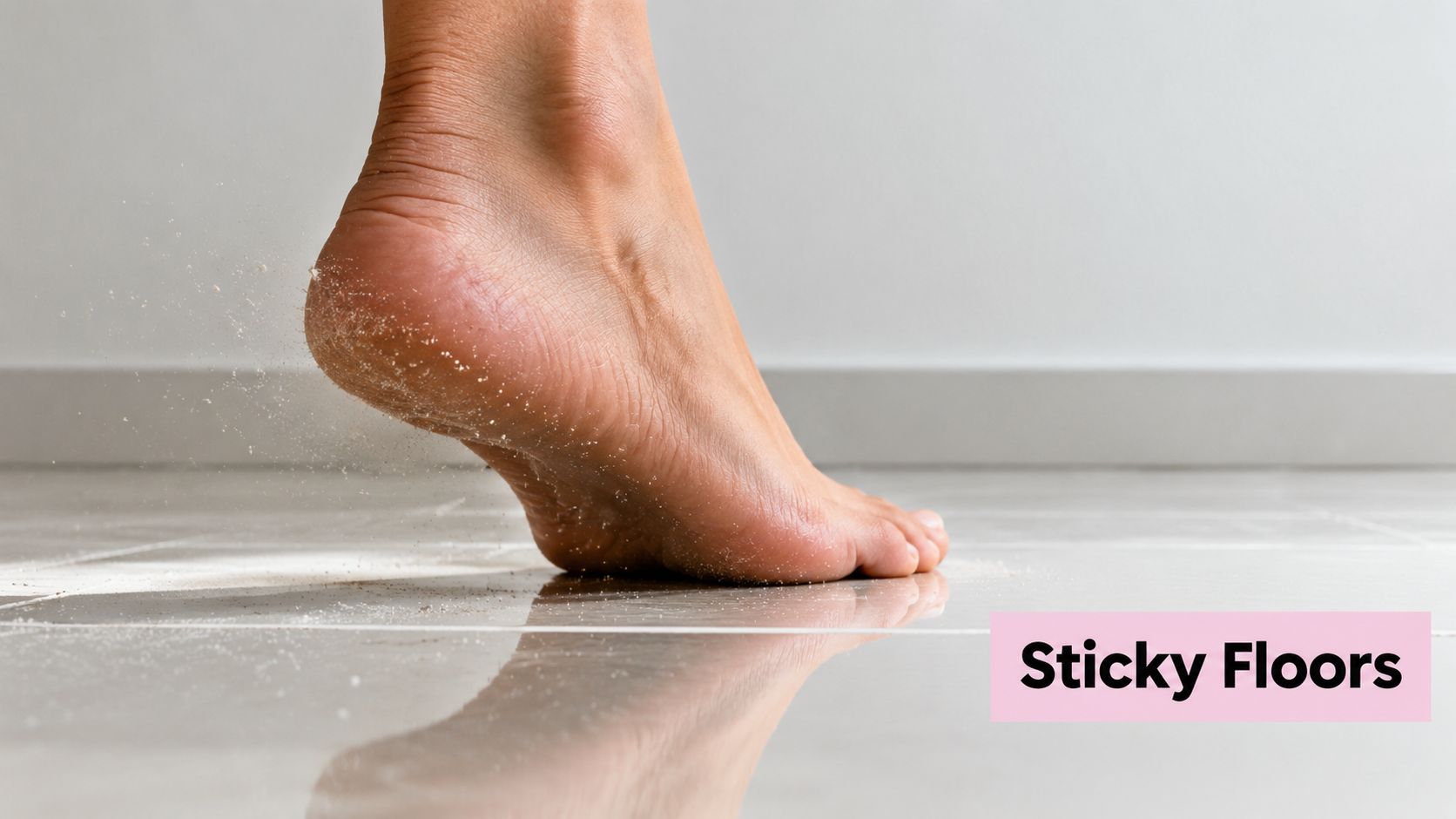
A bare foot finds the problem before your eyes do. You mop after a week of Georgia spring pollen, red clay tracked in from outside, and the usual kitchen spills. The floor looks brighter, yet within hours it feels tacky, picks up dust, or leaves a dull mark on your socks. In a busy Kennesaw or Acworth home, that can make cleaning feel like it created another chore.
The answer usually isn't more soap. Soap for the floor has a useful cleaning role, but the right formula, dilution, floor finish, and removal method matter more than thick suds or a strong fragrance. This guide breaks down what residue is doing, why traditional soap can conflict with modern surfaces, and how homeowners, renters, offices, and HOA communities across West Georgia can clean with fewer harsh chemicals and better surface control.
Table of Contents
Why Your Floors Feel Sticky After Mopping
You finish mopping the entryway before guests arrive. The surface looks shiny, but the next morning it feels slightly gummy under bare feet. Dust from the hallway clings to it, paw prints stand out more clearly, and the floor seems to soil faster than it did before cleaning.
That pattern often points to cleaner residue, not a floor that needs even more product. Soap and detergent help loosen soil, but the mop still has to pick up the dirty solution. If a concentrated mixture is spread across the room and left behind, excess surfactant can dry into a film. That film may look glossy while making the surface feel sticky or attracting new particles.
For a closer look at why floors can remain tacky after cleaning, see this practical explanation of what causes sticky, streaky floors even after you have cleaned them.
Why older cleaning advice can mislead
Before synthetic detergents became widespread, household soap was a major floor-cleaning material for washable surfaces such as oilcloth, wooden floors, and linoleum. A documented account of early-1900s British housework describes oilcloth washed on hands and knees with a scrubbing brush, hot water, and soapy water, using Sunlight carbolic soap. Washing soda was also used to soften hard water, so the method depended on soap, heat, scrubbing, and water chemistry rather than a specialized floor product. The historical account of household cleaning shows why one general-purpose bar could serve several jobs at the time.
Modern floors changed the equation. Vinyl, laminate, sealed wood, polished tile, and sealed stone often rely on manufactured coatings or tightly joined seams. A soap that was practical for heavily scrubbed oilcloth may leave a film on a low-maintenance finish.
Practical rule: A floor that looks shiny isn't necessarily clean or safe. Check how it feels underfoot, whether footprints reappear quickly, and whether the mop water is being removed rather than redistributed.
The same issue appears in a Marietta office, a Woodstock rental, or an HOA clubhouse. High traffic brings in pollen, grit, and outdoor soil, but adding more soap can turn those particles into a residue problem. The goal is not maximum suds. It's controlled soil removal with the least product and moisture the surface can tolerate.
How Soap Actually Cleans Floors
Soap works because its molecules can interact with both water and oily soil. A surfactant has a water-repelling portion that associates with grease and organic soil, plus a water-attracting portion that works with the cleaning solution. This lowers water's surface tension, improves wetting, helps emulsify greasy material, and keeps loosened particles suspended until the solution is removed. This plain-language guide to cleaning chemistry explains the roles of surfactants, solvents, and chelating agents in that process.
The important phrase is until the solution is removed. A mop can loosen soil without taking it away. If the mop head is overloaded, the water is dirty, or the cleaner is over-diluted or over-applied, the floor receives a thin layer of suspended dirt and cleaning ingredients instead of a clean finish.
True soap versus detergent-based cleaner
Traditional soap is made from fatty-acid salts. In mineral-rich water, those salts can react with dissolved calcium and magnesium. The result is insoluble soap scum that can redeposit on the floor, increasing haze and giving additional soil something to cling to.
Detergent-based floor cleaners usually offer more predictable performance because their surfactants are designed to keep working across a broader range of water conditions. Some formulas also use solvents to loosen particular soils or chelating ingredients to manage hardness. That doesn't make every detergent suitable for every surface. It means the product's chemistry is more specialized than a general-purpose bar dissolved in a bucket.
If a commercial property has recurring buildup, a professional deep cleaning floor services resource can help explain why maintenance cleaning and restorative floor care aren't the same task. Routine mopping removes ordinary tracked soil. It may not remove years of incompatible product residue or finish wear.
What the mop has to accomplish
Effective floor cleaning has three jobs:
- Loosen soil: Use a compatible cleaner and enough agitation to detach tracked-in material.
- Suspend soil: Let the surfactant hold loosened particles in the liquid rather than letting them settle back onto the floor.
- Remove the solution: Change contaminated water, use a properly wrung mop, and rinse when the label or surface requires it.
A strong-smelling product doesn't prove that any of these jobs happened. Neither does a bucket full of foam. In a home dealing with summer humidity, frequent foot traffic, or clay at the entry, measured dilution and clean removal usually matter more than adding a second pour of soap.
The cleanest floor is the one with the least loosened soil and cleaner left behind, not the one with the most bubbles.
Matching Floor Soap to Hardwood, Tile, and Vinyl
A cleaner can be gentle in one room and unsuitable in another. Before choosing soap for the floor, identify the material and the finish. Sealed hardwood, ceramic tile, and vinyl respond differently to moisture, pH, and residue.
Sealed hardwood
Finished wood generally needs minimal moisture and a cleaner intended for the finish. Use a dry or lightly damp microfiber mop, avoid saturating seams, and follow the flooring manufacturer's instructions. Traditional oil soap or a heavily alkaline mixture can leave a film or place unnecessary stress on the coating, especially when repeated cleaning compounds the residue.
Engineered and solid wood floors aren't invitations to wet mop. A lightly damp tool can remove routine soil, but standing water, steam, wax, and unsuitable oil-based products can create problems. In an Acworth home with humid summers, moisture control matters just as much as product selection.
Ceramic and porcelain tile
Tile generally tolerates more moisture than wood, but the grout, finish, and surrounding materials still matter. A neutral-based cleaner with controlled dilution is a sensible routine choice for polished or semi-polished tile. Avoid assuming that a highly alkaline soap is automatically better because it cuts grease. Stronger chemistry can be inappropriate for a finish or neighboring surface.
A tile-care guideline recommends lukewarm water and a neutral household detergent for routine maintenance, while cautioning against overly acidic or basic products, abrasive tools, floor polishers, and waxes. Its example dilution applies to the named product only, not to every soap. These tile-cleaning guidelines reinforce the need to follow the product label rather than copy a ratio from another cleaner.
Vinyl and sealed stone
Vinyl benefits from a mild, low-residue formula that won't cloud or leave a sticky layer. Sealed marble and granite also need a compatible product, while acid-sensitive stone such as marble or limestone can be damaged by acidic cleaners. A representative professional hard-surface cleaner uses pH-neutral conditions for laminate, ceramic tile, vinyl, and sealed stone, with solvents, surfactants, and pH-regulating ingredients. Its product information illustrates why a surface-specific formula is safer than treating every room with the same household soap.
| Floor type | Safer routine approach | Common mistake |
|---|---|---|
| Sealed hardwood | Lightly damp microfiber and a wood-compatible, pH-neutral cleaner | Saturating seams or using oil soap without checking the finish |
| Ceramic or porcelain tile | Measured neutral cleaner, nonabrasive tool, and appropriate rinsing | Adding extra soap because tracked soil is heavy |
| Vinyl | Mild, low-residue cleaner with controlled moisture | Leaving a cloudy or sticky film behind |
| Marble, limestone, or other sensitive stone | Product approved for that stone and finish | Using acidic or highly alkaline household mixtures |
The label in an infographic can simplify a comparison, but it can't replace the flooring manufacturer's care instructions. If you're unsure whether a surface is sealed, waxed, porous, or coated, test an inconspicuous area before cleaning the entire room.
The Slippery Truth About Excess Soap
More soap feels like more effort, but it doesn't necessarily produce a cleaner floor. A heavy mixture can dry into a transparent film, and repeated applications can build that film until the surface becomes slick or attracts grime.
Slip prevention guidance warns that excess soap may leave a slippery layer. Accumulated soap or wax can also cover surfaces that help increase friction and reduce traction. This safety guidance on preventing slips and falls recommends using soap sparingly and rinsing until cleaner residue is gone.
Where the risk shows up first
A residue problem matters anywhere people move quickly or expect reliable footing:
- Entryways: Red clay, grit, and moisture can combine with cleaner film near doors.
- Bathrooms: Bare feet and splashes make slick residue easier to notice.
- Family rooms: Children and pets move across the floor without thinking about traction.
- Shared spaces: An office, HOA clubhouse, or community amenity needs a consistent process that doesn't leave a slippery finish for the next person.
Older adults aging in place may also benefit from floors that feel clean without feeling slick. That doesn't mean every shiny surface is dangerous, and it doesn't mean soap should never be used. It means dilution and removal are part of safety, not optional finishing touches.
Clean first, rinse when needed
If a floor feels tacky after mopping, don't immediately add another layer of cleaner. Review the product dilution, use a clean mop head, and follow the label's rinsing directions. A properly wrung microfiber mop and fresh rinse water can help remove what the first pass loosened.
Surface check: After the floor dries, walk across it with clean feet or a clean indoor shoe. Stickiness, haze, quick resoiling, or visible streaks suggest that the process needs adjustment.
A shiny floor may only reflect a thin layer of soap. On tile, residue can make footprints more obvious. On vinyl, it may create clouding. On sealed wood, it can dull the finish. For a busy family in Kennesaw or a small workplace in Dallas, a low-residue routine is easier to maintain than repeated attempts to restore a surface that has been over-soaped.
Navigating Natural, Green, and Safer Choice Labels
“Natural,” “plant-based,” and “pet-safe” don't answer the same question. Natural may describe an ingredient's origin. Plant-based may describe part of a formula. Pet-safe may refer to intended use when the label is followed. None of those phrases alone confirms that a product is right for sealed wood, laminate, vinyl, tile, or stone.
The EPA Safer Choice program offers a more structured screening method. It evaluates every ingredient against human-health and environmental criteria, including concerns related to aquatic life, persistence, and certain toxicity categories. EPA's Safer Choice information explains why a certification with ingredient-level review carries more meaning than a vague green claim.
Separate the questions
When comparing floor cleaners, ask four different questions instead of looking for one magic label:
- Is it compatible? Check the flooring manufacturer's instructions and the cleaner's approved surfaces.
- What remains after cleaning? Look for low-residue performance and consider whether rinsing is required.
- What does the label verify? Distinguish ingredient review from marketing language.
- How should it be used indoors? Follow dilution, ventilation, storage, and no-mixing instructions.
Low odor can make cleaning more comfortable, but it doesn't prove that a product is residue-free or suitable for every finish. Likewise, a plant-derived surfactant still needs correct dilution and complete removal. EPA's Safer Choice framework also considers environmental behavior, including the preference for surfactants that break down readily because surfactants can affect aquatic life.
For households with children or pets, keep cleaning products in their original containers, follow the label, never mix products, and store them out of reach. A “green” appearance on the bottle doesn't remove the need for basic handling precautions.
A practical local standard
A health-conscious cleaning routine in Marietta, Kennesaw, Acworth, or Powder Springs can use natural, low-odor products while still asking hard questions about finish compatibility and residue. That approach is more useful than treating “natural” as a universal safety verdict. For a related discussion of product language and household use, see whether natural cleaning products are safe for pets.
The phrase “Add sparkle and shine with your health in mind” works best when it describes a process, not just a scent or label. Choose a compatible formula, use the lowest effective concentration, keep people off wet floors, and remove the cleaning solution fully.
Choosing and Using Floor Soap Safely
A reliable floor-cleaning routine starts before the mop touches the bucket. Identify the surface, read the care instructions, and select a low-odor cleaner that matches the finish. A pH-neutral product is a useful routine threshold for many modern hard surfaces, but the flooring manufacturer remains the final authority.
A repeatable process
- Remove dry soil first. Sweep or vacuum grit, pollen, and red clay so the mop doesn't turn loose particles into wet sludge.
- Check the floor. Treat sealed wood, tile, vinyl, laminate, and stone as different surfaces.
- Measure the cleaner. Follow the label. Extra soap increases residue risk rather than guaranteeing a cleaner result.
- Control moisture. Use a lightly damp microfiber tool on wood and avoid standing water near seams.
- Work with clean equipment. Replace or rinse a contaminated mop head instead of spreading dirty solution.
- Rinse when directed. Remove remaining cleaner with clean water or the method approved for that floor.
- Inspect after drying. Look for haze, tackiness, streaks, or a slippery feel before returning rugs and furniture.
A dish soap such as Dawn may have useful household applications, but it isn't automatically a floor cleaner. This guide to other uses for Dawn dish soap is a reminder to separate a product's general usefulness from its compatibility with a specific finish.
Maid in America, owned by Vicky Bates, provides basic maintenance cleaning, Top-to-Bottom Deluxe/deep cleaning, move-in/move-out cleaning, post-construction cleaning, office cleaning, and HOA clubhouse and amenity cleaning across Kennesaw, Acworth, Woodstock, Cartersville, West Cobb, Marietta, Dallas, Hiram, Powder Springs, and nearby communities. The locally and privately owned company is licensed, bonded, and insured, uses carefully selected and trained cleaners, and usually sends one dedicated cleaner instead of a large team. Recurring service is available weekly, biweekly, every 3 weeks, or monthly, with add-ons such as inside ovens or refrigerators, baseboards, cabinets, interior windows, grout, laundry, dishes, and upholstery vacuuming.
Request a free estimate from Maid in America online or by calling 770-427-4448. Whether sticky residue is affecting a busy Kennesaw home, an Acworth rental, a Marietta office, or an HOA amenity, the team can match basic or deep floor cleaning to the surface and your household's priorities.





Maid in America provides reliable, personalized cleaning with natural products for homes, offices, and communities across West Georgia. Licensed, bonded, and insured, we’re locally and privately owned.
Get in touch with us today!
info@maidinamericaga.com