Move Out Cleaning List for Tenants: 8 Key Areas
The boxes are gone, the truck has pulled away, and the rental finally looks empty. Then you notice the grease around the stovetop, dust in the closet corners, grout that still looks dull, or pollen packed into the window tracks. Those small details can make a home look unfinished during the final walkthrough, even when the main rooms appear tidy.
Start with your lease, move-out instructions, and original move-in condition report. Your cleaning plan should bring the property back to its documented level of cleanliness, not promise to repair damage or erase ordinary wear. California's official tenant guidance, for example, distinguishes cleaning needed to restore the move-in level from damage beyond normal wear and tear, and it recommends documenting the condition before departure through its tenant move-out guidance.
Renters in Kennesaw, Acworth, Marietta, and nearby Georgia communities also deal with spring pollen, red clay tracked indoors, humid bathrooms, and HOA rules for boxes, bulk trash, or overflowing bins. The practical approach is to clean what you can verify, photograph the empty property, and record damage separately.
Maid in America is a locally owned, licensed, bonded, and insured cleaning company serving these communities with carefully selected, low-odor products and personalized service. Here's a room-by-room move out cleaning list for tenants, organized around the areas landlords and property managers usually notice first.
Table of Contents
1. Clean and Degrease Kitchen Appliances Inside and Out
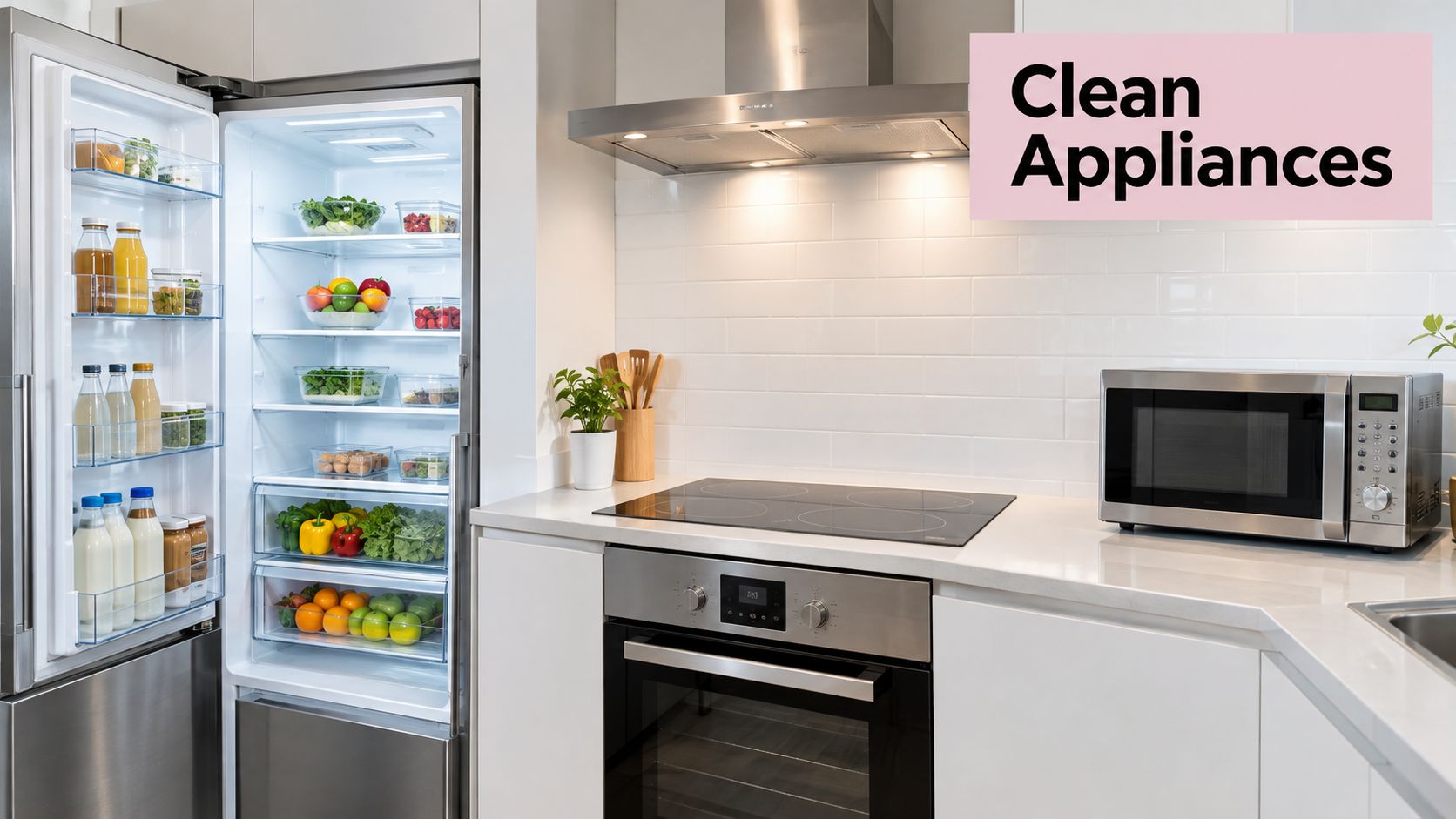
Kitchen appliances can make a clean rental look neglected when they still carry grease, food residue, spills, or odors. Work from the outside inward, starting with appliance handles, control panels, doors, stovetops, and the area around the range hood. Then clean the oven, microwave, refrigerator, and dishwasher interiors if your lease or move-out instructions require them.
The oven and refrigerator deserve special attention because tenants often wipe visible surfaces while leaving baked-on grease, dried spills, shelf edges, drawers, seals, and corners untouched. Remove shelves and racks only if the manufacturer's instructions allow it, and let washed parts dry before replacing them. Don't use abrasive pads on stainless steel or coated surfaces, and don't mix cleaning products.
Prioritize the surfaces an inspector can open
A property manager may open the refrigerator, microwave, cabinets, or oven during a walkthrough. Use a soft cloth and a suitable low-odor degreaser on food-contact areas, then wipe with clean water so no residue remains. Natural products can reduce harsh smells, but “natural” does not mean every product is safe for every finish. Test an inconspicuous area first.
Maid in America offers inside oven and inside fridge add-ons for deeper accumulation that ordinary maintenance cleaning may not address. If you're comparing options, ask whether the service includes appliance interiors, which products are used, and whether the completed work is recorded on a checklist. You can also review these safe vinegar uses for kitchen appliances, while still checking appliance-care instructions before applying any solution.
Practical rule: Photograph the oven interior, refrigerator shelves, stovetop, and microwave after they're dry. Open doors and drawers in the photos so the condition is easier to verify.
Clean appliances early enough to allow drying and a second inspection. A final photo should show a clean, empty refrigerator, an oven without visible buildup, and a stovetop free from grease. If a burner, seal, shelf, or control is broken, list it as a maintenance or damage issue instead of treating it as a cleaning problem.
2. Scrub and Sanitize All Bathrooms, Including Grout and Tile
Bathrooms draw attention because residue remains visible on shiny fixtures, glass, tile, and grout. Clean the toilet bowl, seat, lid, base, tank exterior, and surrounding floor. Scrub the tub or shower, rinse away soap residue, clean faucets and sink basins, polish mirrors, and wipe the vanity, cabinet fronts, and accessible shelves.
Georgia humidity can make bathroom surfaces stay damp longer, especially where ventilation is limited. Give grout, caulk, shower corners, drains, and the area behind the toilet a deliberate inspection. Dark staining that responds to cleaning may be removable residue. Cracked caulk, loose tile, swollen materials, or recurring moisture damage require written documentation and may need maintenance attention.
Treat grout as a separate decision
Grout often needs more time than a quick bathroom wipe-down. A narrow brush, controlled moisture, and a product compatible with the grout and sealer can work better than aggressive scrubbing. Bleach-based products may leave a strong odor and can damage some materials or finishes, so ask for a lower-odor approach and avoid promising that any product will remove permanent discoloration.
Maid in America offers grout cleaning as an add-on, which is useful when floor and shower grout remain visibly soiled after ordinary bathroom cleaning. The distinction between cleaning, sanitizing, and disinfecting also matters. Those terms describe different levels of treatment, as explained in this guide to cleaning, sanitizing, and disinfecting.
Take photographs only after surfaces have dried. Include the shower floor, grout lines, toilet base, vanity, mirror, and floor edges. If a stain remains after reasonable cleaning, photograph it and note that it was not removable rather than scrubbing until the surface is damaged.
3. Vacuum, Dust, and Clean All Interior Windows and Windowsills
During a final walkthrough, daylight exposes dust on glass, pollen on sills, debris in tracks, and residue around frames. Clean the interior glass, frame, sill, corners, and accessible tracks. If the exterior is not safely reachable, do not climb or lean out. Confirm with the landlord whether exterior cleaning is included in the move-out requirements.
Spring pollen is especially noticeable in Kennesaw and Acworth. Red clay dust can also collect on lower sills after it is tracked through entryways. Humidity may leave condensation marks or a hazy film around the glass and frame. Start with a dry vacuum attachment to remove loose debris from each track. Adding moisture too soon turns dust into paste and spreads it along the frame.
Detail the edges, not only the glass
Use a lint-free cloth and a mild, low-odor glass solution, following these streak-free window cleaning steps for a professional finish. Apply only enough solution to lift residue. Excess product creates streaks, and a dirty cloth just moves grime around. Clean one window at a time, then inspect the glass from different angles before moving on.
Wipe the sill, frame, corners, and track. Large windows and numerous tracks take longer than expected, so complete this work before the final floor cleaning. If you hire help, define an interior window cleaning add-on in writing, including whether it covers glass, frames, sills, and tracks.
Take photographs in consistent daylight after the surfaces dry. Include a clean sill and track in the record, particularly after pollen season. Also check HOA move-out requirements in communities around Marietta and Woodstock, since they may set separate expectations for cleaning or handoff access.
Clean windows can make an empty home look brighter during showings. They do not require unsafe exterior work or correction of failed seals, cracked panes, damaged screens, or broken hardware. Record those conditions separately and notify the property manager in writing.
4. Dust, Wipe, and Organize All Interior Baseboards and Trim
Baseboards collect the evidence of everyday living. Dust settles along their top edge, shoes leave marks near doorways, and furniture can rub against corners. Light-colored trim makes these problems obvious, particularly in empty rooms where there's no furniture to distract the eye.
Run a vacuum brush along the full length of the baseboards before wiping them. Use a slightly damp microfiber cloth and a mild solution suitable for painted wood, vinyl, or the existing finish. Heavy moisture can damage some materials, and excessive scrubbing can remove paint rather than remove dirt. Start with a small hidden area if you're unsure.
Work from the room perimeter inward
Clean door trim, thresholds, accessible wall edges, and the tops of baseboards. Pay close attention to hallways, bedrooms, entryways, and areas where moving boxes rubbed against the wall. If a scuff lifts with gentle cleaning, it's a cleaning task. If the paint is chipped, the trim is cracked, or the mark remains because the surface is damaged, photograph it instead of escalating the pressure.
A baseboards add-on can be worthwhile in an empty rental because furniture no longer blocks the lower edges. Ask the cleaner to define whether trim, door frames, and accessible fixtures are included. Maid in America uses low-odor products and trained cleaners, with one dedicated cleaner usually sent to each home instead of a large team. That arrangement can make it easier to discuss specific areas that need attention.
Clean the upper surfaces first and the floor last. Dust that falls from trim should land on a floor you haven't finished.
Take close photographs of prominent baseboards after wiping them, especially in rooms with white trim. Don't use a magic eraser or strong solvent automatically. Those products can dull paint or remove finish, creating a repair issue where a light mark was previously only a cleaning issue.
5. Deep Clean Kitchen Cabinets, Doors, and Hardware
Cabinet fronts show fingerprints and cooking film, while handles collect concentrated residue from repeated use. Wipe doors, drawer fronts, frames, side panels, and hardware. Pay extra attention to the cabinet nearest the stove, the area above the cooking surface, and handles that may look clean from a distance but feel tacky to the touch.
Empty every cabinet and drawer before cleaning. Vacuum crumbs from corners, then wipe the interior with a controlled amount of moisture. Cabinet interiors are especially important when a spill has dried around a shelf edge or drawer track. Don't soak unfinished wood, laminate seams, or particleboard. Use a product suited to the cabinet material, and dry the surface promptly.
Separate removable grime from cabinet damage
Grease and fingerprints are usually cleaning concerns. Swollen panels, peeling laminate, broken hinges, missing knobs, deep scratches, and water damage are different. Photograph those conditions and compare them with your move-in report. A cleaner can remove residue, but shouldn't be expected to repair a damaged finish.
Maid in America can include cabinet cleaning as an add-on, including interiors when specified. Ask for the exact scope before the appointment. “Cabinets cleaned” might mean exterior doors only, while your property manager may expect shelves, drawers, and the inside of the sink cabinet. Written details prevent a mismatch at inspection.
Use a soft microfiber cloth for hardware and dry it afterward to reduce water spots. Clean the kitchen in a sequence that avoids new fingerprints. Once cabinets are dry, keep them closed and take photographs with doors or drawers open. A dated image of empty, wiped interiors is more useful than a general photograph of the kitchen from across the room.
This area can matter in a Georgia rental because humidity and cooking residue combine around sinks and ranges. Ventilate as the property allows, but don't leave windows open if pollen or rain could create a new problem. If your HOA or lease includes instructions about discarded shelf liners, leftover cleaning supplies, or bulk items, follow those instructions rather than leaving materials inside the cabinets.
6. Thoroughly Vacuum, Mop, and Detail All Flooring and Floor Transitions
Floors cover more visible area than almost any other surface, and moving day creates fresh debris. Vacuum carpets, rugs, closet floors, corners, and edges. Mop tile, vinyl, laminate, or other hard flooring with a solution appropriate for that material. Never assume more water or stronger chemicals produce a better result. Excess moisture can damage wood, laminate seams, and some adhesives.
Red clay tracked into a Powder Springs or Woodstock rental may appear as fine orange dust along thresholds, while pet hair and lint gather under furniture that has now been removed. Work from the farthest room toward the exit so you don't walk across finished areas. Vacuum before mopping, and leave transitions, corners, and doorways for a deliberate final pass.
Use the floor type as your guide
Carpet may need ordinary vacuuming, spot treatment, or a separate carpet service depending on the lease and the documented condition. Don't rent equipment or apply a treatment without checking whether the landlord requires a particular method. Hardwood and laminate usually need limited moisture. Tile may need more attention at grout lines and floor transitions, but aggressive scrubbing can damage some surfaces.
- Carpet: Vacuum edges, closets, and visible traffic paths, then document stains that remain after reasonable spot cleaning.
- Hard floors: Use a compatible, low-residue solution and avoid leaving standing water.
- Transitions: Clean doorways, thresholds, corners, and the strips where one flooring type meets another.
- Appliance areas: Clean accessible spaces beneath or beside appliances only when they can be reached safely without moving heavy equipment.
A floor-cleaning checklist for homeowners can help you think through edges and transitions, but your lease and flooring manufacturer's care requirements take priority. Photograph floors after they're dry, using enough light to show the condition without exaggerating ordinary wear.
If a carpet is permanently stained, a plank is gouged, or a tile is cracked, cleaning won't change the underlying condition. Record it separately, including whether it appeared in the move-in report. The useful handoff record distinguishes cleanable dirt, ordinary wear, and actual damage.
7. Clean and Organize Closets, Shelves, and Storage Areas
A closet can look clean when its door is closed and unfinished when the inspector opens it. Remove every hanger, box, bag, and personal item. Vacuum or sweep the floor, wipe shelves and rods, clean the corners, and check the space above the door or along the baseboard. Look for cobwebs and dust around light fixtures, but don't remove or alter fixtures that are loose or unsafe.
Closets are also where tenants leave forgotten items. Check the back of shelves, the floor behind doors, storage cabinets, laundry areas, and any assigned space listed in the lease. Photograph the area only after it's empty. An organized closet isn't the legal standard everywhere, but an empty, dust-free storage area is much easier for a landlord to inspect.
Don't confuse organization with disposal
You're responsible for removing your belongings and following the property's disposal instructions. You may not be permitted to leave usable items for the next tenant, and HOA communities can have specific rules about boxes, furniture, recycling, or collection days. Ask the landlord, property manager, or HOA manager before leaving anything beside a bin.
Use a vacuum attachment for corners and a lightly damp cloth for shelves. Wood shelving may need a finish-safe product, while wire racks can often be wiped and dried. Avoid placing scented products in a closet to mask odors. Strong fragrance can create a new complaint and doesn't resolve moisture, pet residue, or a contaminated surface.
In Acworth and Marietta, a final closet check is especially useful when the move has happened in stages. One person can photograph each empty storage area while another checks the move-out list. Save those files with the address and move-out date. If a shelf is cracked or a rod is missing, capture it as a condition issue rather than treating it as dust.
8. Remove Trash, Recycling, and Leave the Property Move-In Ready
The final reset begins with removal, not polishing. Take out trash, recycling, boxes, food, cleaning supplies, and personal belongings. Check behind doors, inside drawers, on patios or balconies where permitted, in laundry areas, and around appliances. A home can be freshly cleaned and still fail a handoff if the tenant leaves bags or unwanted items behind.
Coordinate disposal with the property's pickup instructions. HOA communities may restrict where bins can sit or how bulky materials are handled. If the scheduled collection won't occur before the walkthrough, ask the property manager what to do. Don't assume leaving full bins outside is acceptable.
Complete the handoff in writing
Once the home is empty, make a slow final walk-through. Confirm that keys, garage remotes, access cards, and other devices are returned as instructed. Ask whether utilities should remain active for inspection or transfer, and confirm the forwarding-address process for deposit correspondence.
- Photograph every room: Capture wide views of bedrooms, living areas, hallways, bathrooms, kitchen, closets, and storage spaces.
- Record detail areas: Include appliances, cabinets, floors, windows, baseboards, and any agreed add-ons.
- Save handoff evidence: Keep the move-out date, key-return confirmation, written messages, and original move-in inventory together.
- List unresolved conditions: Note damage, permanent stains, leaks, broken fixtures, or pre-existing defects separately from cleaning completion.
A whole-house cleaning checklist can help you catch overlooked surfaces before you leave. Your final message to the landlord should state that your belongings and trash have been removed, cleaning is complete, and keys were returned according to the agreed process. Request written confirmation of the inspection and deposit accounting rather than relying only on a verbal conversation.
Federal housing guidance also distinguishes ordinary turnover work from tenant-caused damage. Basic cleaning and repairs needed to prepare a unit for the next occupant are not automatically tenant damages, so a checklist should document both the work you completed and conditions that cleaning cannot resolve in the applicable housing guidance.
Move-Out Cleaning: 8-Task Comparison
| Item | Implementation Complexity (🔄) | Resource Requirements (⚡) | Expected Outcomes (⭐📊) | Ideal Use Cases (💡) | Key Advantages (⭐) | Quick Tip (💡) |
|---|---|---|---|---|---|---|
| Clean and Degrease Kitchen Appliances Inside and Out | Medium 🔄, interior degreasing and oven work may need add-on | Moderate ⚡, degreasers, scrapers, brushes; possible professional oven service | High ⭐📊, removes odors, baked-on grease; reduces deposit deductions | Kitchens with heavy cooking residue or upcoming inspections | Prevents fees; food-safe natural products protect finishes ⭐ | 💡 Prioritize oven/refrigerator interiors and photograph results |
| Scrub and Sanitize All Bathrooms, Including Grout and Tile | Medium–High 🔄, grout and mold require focused effort | Moderate–High ⚡, grout brushes, anti-mold solutions, good ventilation; possible pro | High ⭐📊, reduces mold flags and health concerns; improves inspection outcomes | Humid climates, older tile, or visible grout staining | Addresses inspection focal points; improves health/safety compliance ⭐ | 💡 Request grout as a dedicated add-on and document with photos |
| Vacuum, Dust, and Clean All Interior Windows and Windowsills | Medium 🔄, detailed sill and track work can be time-consuming | Low–Moderate ⚡, squeegee, microfiber, vacuum, small tools; optional exterior service | Medium–High ⭐📊, boosts light and perceived cleanliness; prevents window-related notes | Spring pollen season or properties with many windows | Immediate visual impact; prevents deposit deductions for dirty windows ⭐ | 💡 Clean early to avoid pollen resettle; use streak-free technique |
| Dust, Wipe, and Organize All Interior Baseboards and Trim | Low–Medium 🔄, linear work but labor-intensive if very dirty | Low ⚡, microfiber cloths, mild cleaners, time for scuff removal | Medium ⭐📊, high visual payoff; reduces cosmetic deductions | Properties with light-colored trim or visible scuffs | Quick ROI on appearance; signals thoroughness ⭐ | 💡 Work room-by-room and photograph clean trim |
| Deep Clean Kitchen Cabinets, Doors, and Hardware | Medium 🔄, different materials require different approaches | Moderate ⚡, low-odor degreasers, cloths, polish; interior cleaning optional | High ⭐📊, improves kitchen assessment and protects finishes | Greasy kitchens, dated ventilation, or shown frequently | Protects finishes; polished hardware enhances perceived value ⭐ | 💡 Use material-appropriate cleaners; clean hardware last to avoid fingerprints |
| Thoroughly Vacuum, Mop, and Detail All Flooring and Floor Transitions | High 🔄, large surface area and stain treatment needs | High ⚡, commercial vacuum, mops, spot removers; possible professional carpet/hardfloor service | Very High ⭐📊, largest influence on final inspection and deposit outcome | Homes with light carpets, red clay tracking, pets, or heavy traffic | Prevents common flooring deductions; reveals true property condition ⭐ | 💡 Vacuum multiple directions; allow floors to dry before walkthrough |
| Clean and Organize Closets, Shelves, and Storage Areas | Low 🔄, straightforward but often overlooked | Low ⚡, vacuum/sweep, wipes, extendable duster, time to empty shelves | Medium ⭐📊, improves perception and prevents storage-area notes | Properties with built-in storage or inspected closets | Signals comprehensive care; quick to improve inspection impression ⭐ | 💡 Empty, clean ceilings/corners, and photograph for records |
| Remove Trash, Recycling, and Leave the Property Move-In Ready | Medium 🔄, requires coordination with schedules and landlords | Moderate ⚡, proper disposal, bulky-item coordination, documentation tools | Very High ⭐📊, enables immediate re-leasing and increases likelihood of full deposit return | Final move-out stage, HOA rules, or scheduled handoffs | Minimizes vacancy time; demonstrates professional completion ⭐ | 💡 Coordinate pickup times, confirm landlord instructions, and document final walkthrough |
Protect the Deposit With a Documented Final Reset
A strong move-out process is less about making the rental look perfect and more about making the condition clear. Remove belongings and trash first. Clean the kitchen and bathrooms while the home is empty, then detail windows, baseboards, cabinets, closets, floors, and other surfaces named in the lease or property instructions. Finish with a dry, empty-property walkthrough.
The most useful record combines the original move-in condition report, lease language, dated photographs, written communication, and key-return confirmation. Photograph every room from a consistent position, then capture close-ups of appliances, cabinets, grout, floors, windows, closets, and any area that was previously questioned. Keep the files organized by room so you can find the relevant image if a landlord asks about a specific surface.
Documentation can reduce ambiguity, but it doesn't override local law or the lease. California's tenant guidance provides a useful example of how the process can work. It describes cleaning deductions as limited to restoring the unit to its move-in cleanliness level, allows certain deductions for damage beyond ordinary wear and tear, provides for a requested pre-move-out inspection, and generally gives the landlord 21 days after move-out to return the deposit or provide an itemized statement. For deductions exceeding $125, the guidance requires supporting invoices or receipts, with additional work details when the landlord performs the work according to the California Courts tenant guidance. Rules differ elsewhere.
Georgia renters should pay attention to the distinction between routine cleaning and tenant-caused damage. Georgia law allows deductions for unpaid rent, unpaid fees, cleaning costs, and damage beyond ordinary wear and tear, while ordinary deterioration from intended use is not treated the same way under Georgia's security-deposit statute. For some larger landlords or properties managed by an agent, Georgia guidance describes a signed damage list and a tenant opportunity to inspect and dispute listed conditions in the Georgia Landlord-Tenant Handbook. Read the current law and your lease for the process that applies to your property.
Cleaning can remove grease, dust, pollen, soap residue, red clay, and ordinary surface soil. It can't repair a cracked door, replace missing hardware, correct a leak, restore permanently stained carpet, or resolve hidden moisture damage. Photograph those conditions, describe them accurately, and notify the landlord or property manager in writing.
Maid in America provides move-in and move-out cleaning in Kennesaw, Acworth, Woodstock, Cartersville, West Cobb, Marietta, Dallas, Hiram, Powder Springs, and nearby communities in Cobb, Cherokee, Paulding, Douglas, and Bartow counties. The service can address kitchens, bathrooms, floors, cabinets, appliances, closets, baseboards, and accessible surfaces, with add-ons such as inside ovens or refrigerators, interior windows, grout, laundry, dishes, upholstery vacuuming, and cabinets.
The company is locally and privately owned by Vicky Bates, licensed, bonded, and insured, with a 4.9-star Google rating and recognition as Best Home Cleaning Service by Around Acworth Magazine. Maid in America uses natural, low-odor products and carefully selected, trained cleaners. Whenever possible, one dedicated cleaner is sent to each home, so clients often get to know their cleaner by name. The same practical approach supports recurring service, office cleaning, and HOA clubhouse and community amenity cleaning.
If a deadline is tight, hiring help can be sensible when the property is vacant, the kitchen or bathrooms need detailed work, or you need a consistent checklist for handoff. It's still important to confirm included areas, exclusions, access requirements, product preferences, and whether photographs or a completion record are provided. A professional receipt documents a service, but it doesn't replace the lease, move-in report, photographs, or local legal requirements.
For a move-out reset in Kennesaw, Acworth, Marietta, Woodstock, or a nearby community, request a free estimate from Maid in America online or call 770-427-4448. Explain the property's condition, the landlord's requirements, and the surfaces that need special attention so the cleaning plan matches the final walkthrough.
Maid in America provides move-in and move-out cleaning with natural, low-odor products, trained cleaners, and personalized service for renters, homeowners, landlords, and property managers across Kennesaw, Acworth, Woodstock, Marietta, Dallas, Hiram, Powder Springs, Cartersville, and nearby communities. Request a free estimate from Maid in America or call 770-427-4448 to plan a documented final reset before your handoff.




Maid in America provides reliable, personalized cleaning with natural products for homes, offices, and communities across West Georgia. Licensed, bonded, and insured, we’re locally and privately owned.
Get in touch with us today!
info@maidinamericaga.com