How to Get Grape Juice Stains Out Fast

A glass of grape juice tips during breakfast, a child reaches for a napkin, and suddenly purple liquid is spreading across a shirt, rug, or sofa cushion. In Kennesaw and Acworth homes, busy mornings, holiday hosting, and family gatherings leave little time for trial and error. The first response matters, but the safest response depends on what the stain touched, how old it is, and whether heat has already been used.
The reliable way to get grape juice stains out isn't to grab the strongest cleaner in the cabinet. Blot first, control moisture, test before treating, and match the method to the material. The same decision-making helps protect clothing, synthetic carpet, colored upholstery, HOA clubhouse furnishings, and office flooring across West Georgia.
Table of Contents
Why Grape Juice Stains Behave Differently
A fresh spill on a pale shirt can look nearly purple-black. The color comes from anthocyanins, plant pigments that change form as acidity changes. Concord grape juice had a mean pH of 3.59 ± 0.03 in its published research on grape juice and anthocyanin color. At pH 3 or lower, anthocyanins generally appear red. Around pH 4 to 6, they can become much less visible or even colorless.
A lighter-looking mark is not necessarily a clean mark. An acidic or alkaline solution may alter the pigment's visible form while sugars, acids, and residue remain in the fibers. Test any vinegar, detergent, or other solution on a concealed area of dyed fabric first. This matters even more for colored upholstery, synthetic carpet, and shared furnishings in West Georgia homes or HOA spaces, where discoloration can be harder to disguise than the original spill.
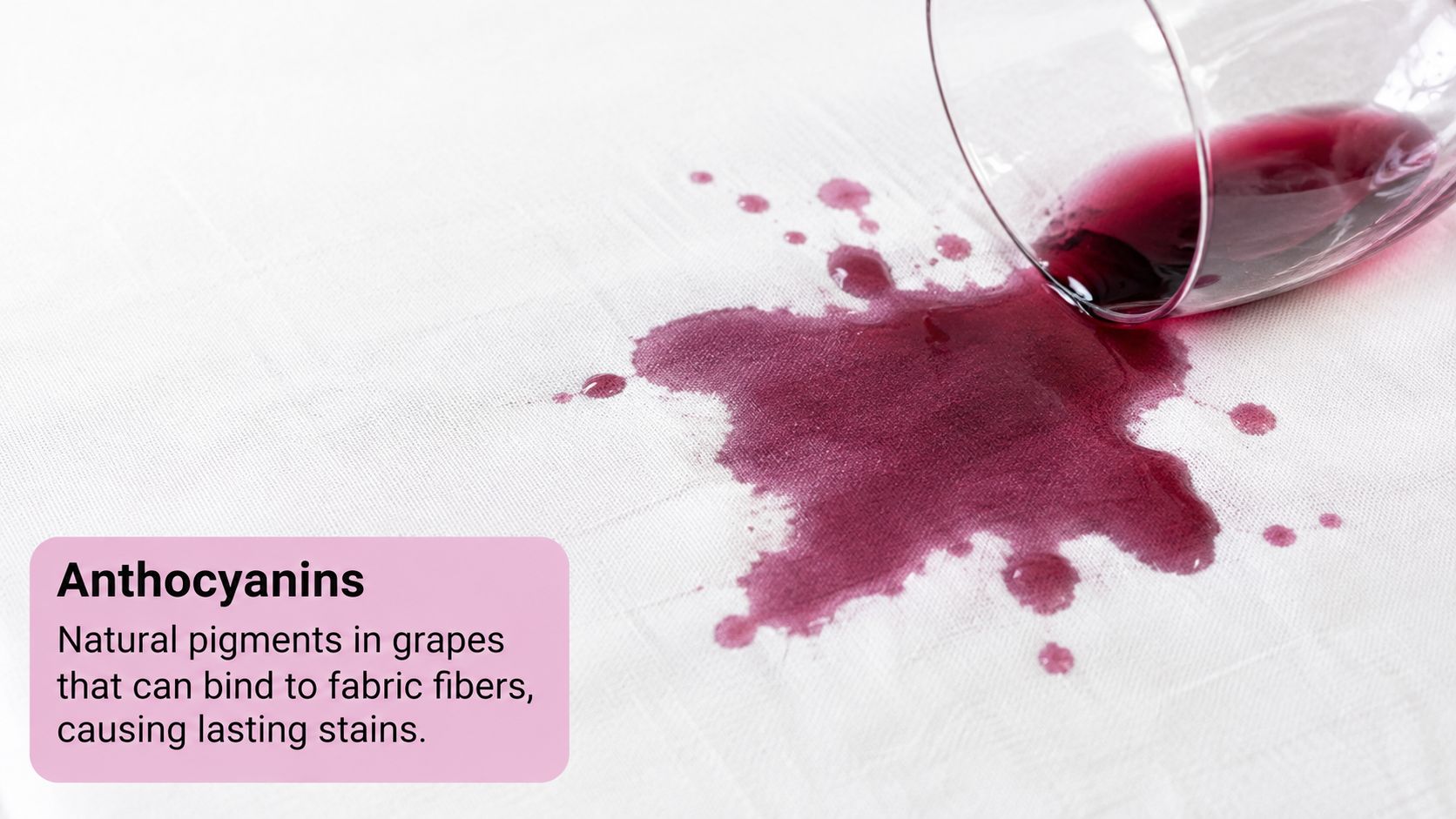
Why heat and rubbing create trouble
Rubbing spreads concentrated pigment through additional fibers and can roughen delicate textiles. Heat may set the stain or drive chemical changes before liquid has been extracted, so a dryer, iron, or hot rinse is a poor first move.
Anthocyanins are comparatively stable in strongly acidic conditions below pH 3, while heating at neutral or alkaline pH significantly reduces their total concentration, as described in the research cited above. That chemistry explains why a stain can change color during treatment without leaving the material.
Storage conditions also alter grape pigments. In a controlled study of Merlot and Ruby grape juices held at 5, 25, and 35°C, anthocyanin losses at the warmer temperatures reached 95 to 99.9%. Losses at 5°C were lower but still substantial, 50 to 60% for Merlot and 74 to 81% for Ruby according to the storage study. Warmer samples developed more polymeric color, browning, and haze. Fabric results will vary, but the handling rule is clear:
Blot and dilute before the spill dries. Do not add heat while visible color remains.
Matching the Method to Fabric and Stain Age
The first question isn't which product to buy. It's what kind of surface are you treating? A cotton shirt can usually be flushed and laundered. A polyester cushion, synthetic carpet, wool rug, or viscose chair needs more controlled moisture and less physical agitation.
Treatment timing also varies by fiber. University of Illinois Extension advises treating stains before laundering because washing and drying can make them almost impossible to remove in its grape-stain guidance. A textile study cited by that guidance rated 34 of 54 fresh cotton or cotton-blend specimens effective, compared with 9 of 54 set specimens. The same study found that timing and remover type weren't significant for polyester. That means “act quickly” is especially important for cotton and blends, but it isn't a universal prediction for every synthetic surface.
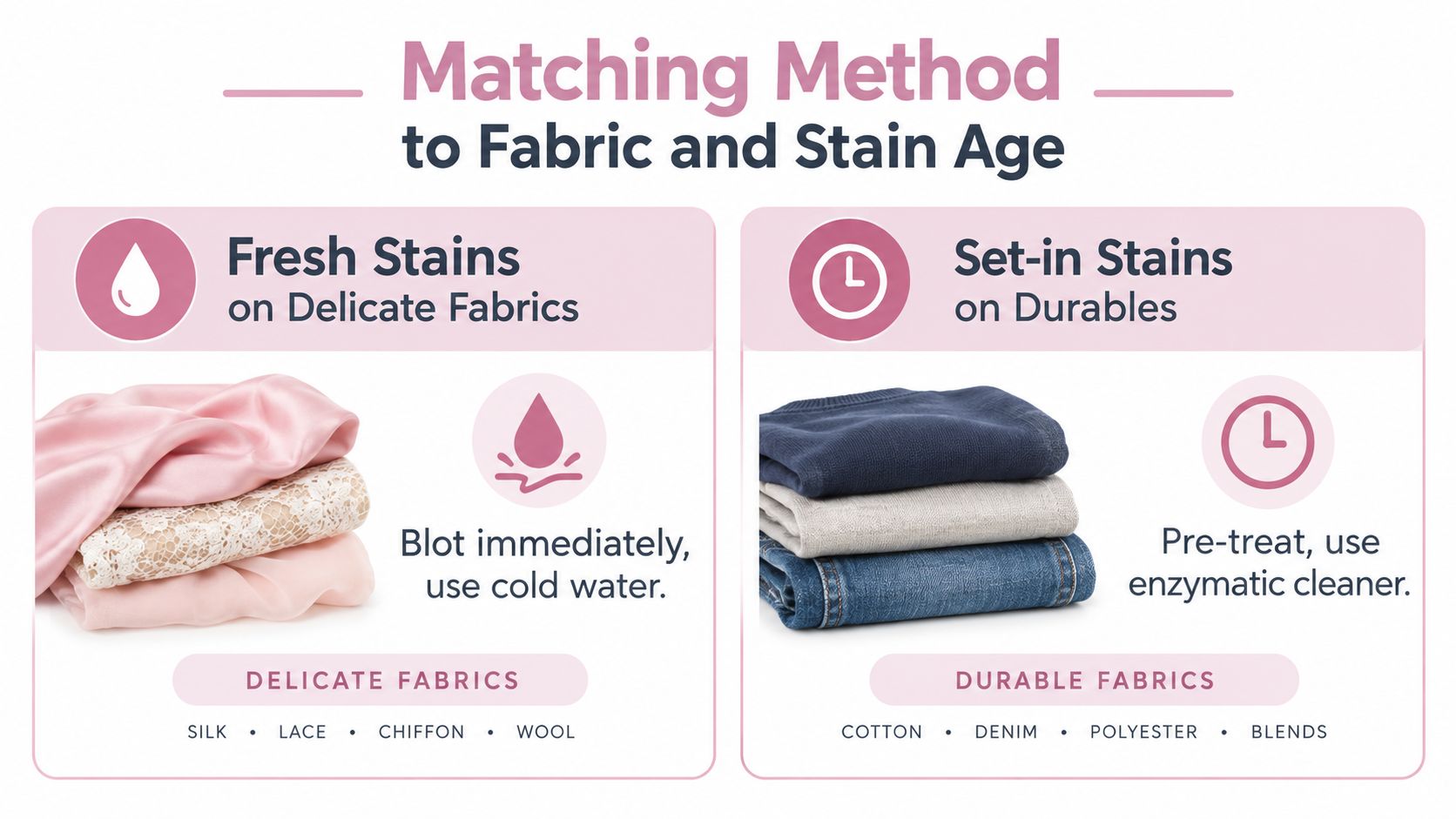
Use this decision path
| Situation | Safer starting point | Main risk |
|---|---|---|
| Fresh washable cotton or blend | Reverse-side cool-water flush, then controlled detergent treatment | Driving pigment deeper by rubbing |
| Colored polyester clothing or upholstery | Blot, test colorfastness, and use small amounts of solution | Dye transfer or a water ring |
| Synthetic carpet | White-cloth blotting, outside edge toward the center, careful rinsing | Over-wetting the backing |
| Stain already through a dryer | Avoid more heat, test a suitable pretreatment, reassess after treatment | Permanent discoloration or fiber damage |
| Wool, silk, viscose, antique textile, or valuable rug | Stop after excess removal and seek material-appropriate care | Irreversible texture, dye, or backing damage |
For a fresh mark, gentle extraction usually beats aggressive chemistry. For a dried or heat-exposed mark, repeated experimentation can create a larger damaged area than the original stain. Before using vinegar anywhere in a home, review this practical guide to safe and effective vinegar uses for kitchen appliances, then keep the stain treatment limited to the material-specific steps below.
Removing Grape Juice from Clothing and Washable Fabrics
A grape-juice splash on a school shirt or tablecloth is easiest to correct before it reaches the dryer. Lift excess liquid with a clean white cloth or paper towel. Don't rub. Friction spreads pigment and can roughen the fabric surface.
A controlled fabric process
Flush from the reverse side. Hold the stained area under cool running water, directing the flow so pigment exits through the front instead of moving deeper into the weave.
Test the solution. Check an inside seam or another hidden area, especially on dyed clothing, delicate textiles, or unfamiliar blends.
Mix a neutral detergent solution. Combine 1 teaspoon of nonalkaline, nonbleaching detergent with 1 cup of lukewarm water, following the University of Georgia fruit-stain protocol.
Blot, don't scrub. Apply the mixture with a clean white cloth, working from the outside toward the center. Shift to a clean section as the cloth picks up color.
Use white household vinegar carefully. Blot with vinegar on a separate cloth, repeat the detergent step, and rinse with clean water. Stop if the test area changes color or dye transfers.
Launder only after treatment. For a stubborn mark, use an enzyme-containing pretreatment or soak for at least 30 minutes, then wash at the warmest temperature allowed by the care label. The American Cleaning Institute's stain-removal guide provides related laundry guidance.
Avoid chlorine bleach unless the label permits it. Oxygen-based products may suit some colored fabrics, but test first and consider this discussion of OxiClean and fabric vibrancy before use. The garment label and hidden-area test take priority.
Laundry rule: Inspect the garment in good light before it enters the dryer. Heat can make residual discoloration harder to correct.
In Acworth and Kennesaw homes, a stained school shirt may move quickly from washer to dryer. If a shadow remains, treat the garment again instead of applying heat. Families reducing harsh chemicals should use measured amounts and rinse thoroughly rather than combine homemade remedies. See our guide to natural cleaning products safe for pets for options that reduce odor and sensitivity concerns while treating laundry stains.
Cleaning Grape Juice Stains from Carpet and Upholstery
A tipped glass at an HOA clubhouse, a child's spill on a sofa, or juice tracked across a carpet needs a different response from a washable shirt. Carpet and upholstery cannot be rinsed under running water, and excess moisture can reach the backing, padding, or cushion core. Use controlled blotting with small amounts of solution, adjusting the method for the fiber, stain age, and any heat already applied.
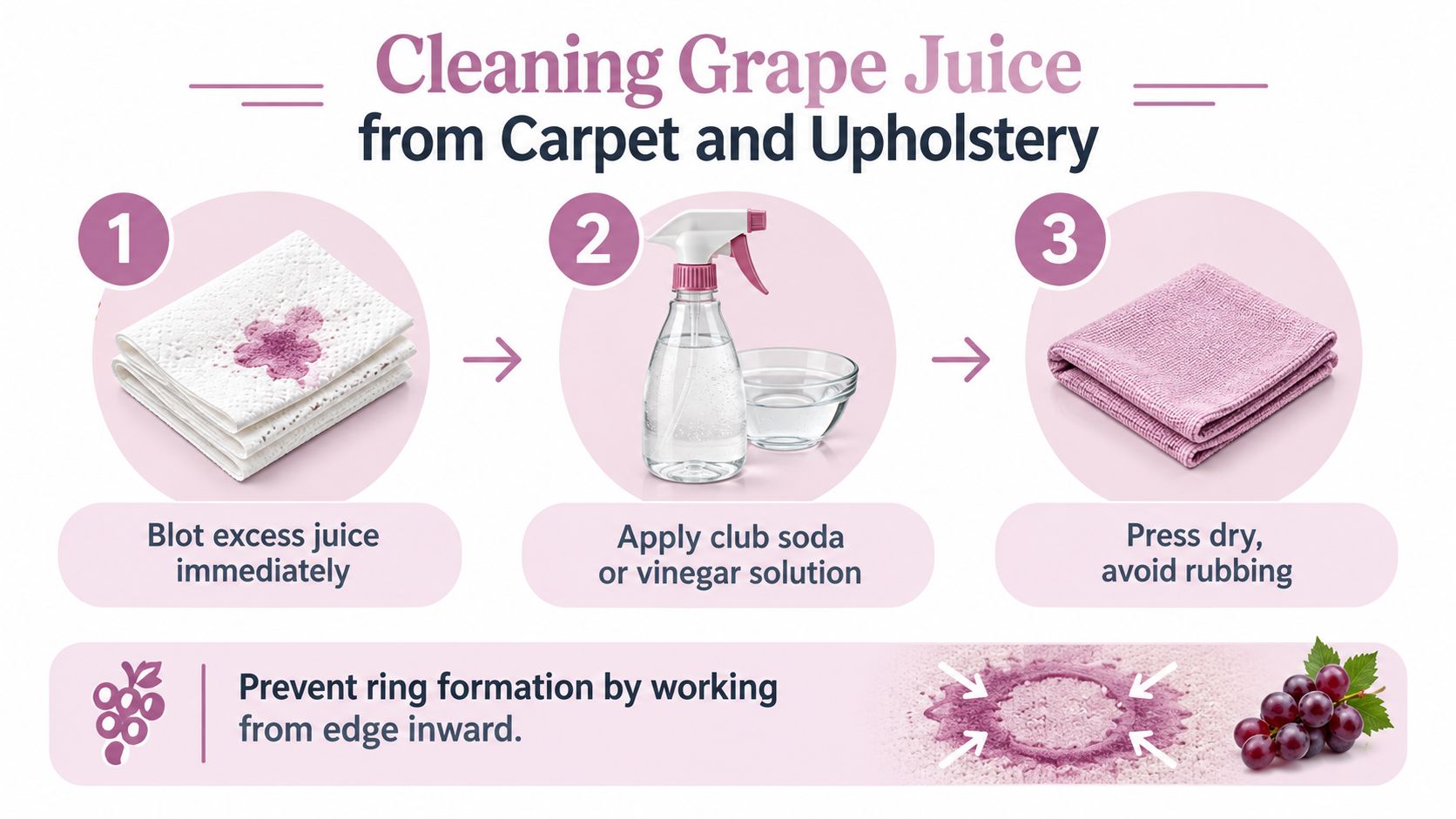
Carpet and upholstery steps
Absorb the spill. Press white cloths onto fresh juice. Replace each cloth as it picks up color. For an older mark, remove loose residue first without grinding it deeper into the pile.
Contain the moisture. Apply a small amount of the neutral detergent solution described earlier. Work from the outer edge toward the center to limit spreading and reduce ring formation.
Blot after every application. Press with a dry section of cloth to remove loosened color and moisture. Scrubbing can distort fibers, while flooding can push juice into carpet backing or upholstery padding.
Rinse away residue. Use a separate cloth lightly dampened with white vinegar, repeat the detergent step, then sponge with clean water. The University of Georgia carpet protocol emphasizes controlled application, moisture removal, and thorough drying.
Reset the pile and dry. Lift the carpet pile once the area is nearly dry. Let the surface dry fully without added heat. Heat can make remaining discoloration harder to correct.
If a shadow remains, apply a laundry presoak lightly and leave it for 10 to 15 minutes while the treated pad stays moist. Rinse and re-blot. Do not combine vinegar with chlorine bleach or other oxidizers. Avoid strong alkaline mixtures unless the fiber manufacturer approves them.
For upholstery, check the care label before using liquid. Stop if dye transfers, the backing becomes wet, or a ring starts forming. Use this step-by-step fabric stain care when the upholstery construction is unfamiliar.
Moisture matters as much as chemistry. Small applications followed by careful extraction are safer than soaking a cushion or carpet pad.
In Marietta, Dallas, and Powder Springs homes, offices, and HOA clubhouses, synthetic flooring and shared furniture must dry completely before regular use resumes. These stain-removal tips for furniture and carpet provide further guidance on controlled treatment.
When Home Treatment Should Stop and Professional Help Is Safer
A grape-juice spill on colored upholstery, a mattress, or a valuable garment can worsen with every extra product. University of Tennessee guidance advises removing excess, using cool water, and blotting instead of rubbing for stains such as grape juice in its textile-care material. Peroxide, oxygen bleach, acids, detergent mixtures, and hot water each carry different risks for fibers, dyes, finishes, and colorfastness.
Stop home treatment when a test or treatment produces:
- Color transfer: Dye appears on the white cloth.
- A growing ring: The wet edge spreads beyond the original spill.
- Backing damage: Carpet backing or upholstery feels softened, distorted, or unusually wet.
- A persistent shadow: Surface residue is gone, but discoloration remains after one careful treatment.
- A sensitive material: The item is wool, silk, viscose, antique, hand-finished, or valuable.
Do not respond to these warning signs with a stronger mixture. Repeated wetting can spread the stain, weaken backing, and create a larger repair area. Heat can also set remaining color, so pause before using a dryer, steamer, iron, or heated carpet machine.
Fabric construction affects the outcome as much as the cleaner. A U.S. Department of Defense textile evaluation cited in the same guidance found that soil-release finishes could remove more than 90% of tested staining medium after one laundering while preserving colorfastness. That result is not a household grape-juice removal rate. It does show why a treated, washable fabric may respond differently from an uncoated rug, upholstery textile, or delicate garment.
The safer next step is to stop adding chemicals, record the fiber and care label, and contact a professional who can identify the material and control moisture. This choice protects family furnishings, office interiors, and HOA community spaces from unnecessary oxidizers, strong odors, dye loss, and repeated saturation.
Quick Reference Checklist and Next Steps
Save this short sequence for the next spill:
- Blot immediately. Use a clean white cloth and lift excess liquid without rubbing.
- Identify the surface. Separate washable cotton or blends from polyester, synthetic carpet, upholstery, wool, silk, viscose, and antique textiles.
- Check the stain age. Fresh marks deserve prompt dilution. Dried or dryer-exposed stains need a more cautious plan.
- Test first. Use an inconspicuous area to check for dye transfer, fading, texture change, or an altered stain color.
- Use small amounts. On carpet and upholstery, work from the outside toward the center and remove moisture after each cycle.
- Rinse residue. Detergent, vinegar, glycerin, and other treatments can leave material behind if they aren't removed appropriately. The Smithsonian Museum Conservation Institute's stain-removal guidance explains that grape- and wine-type stains can contain sugars, tannins, acids, and sometimes alcohol, and that glycerin must be rinsed out with water.
- Avoid heat. Don't use a dryer, direct heat, or prolonged sunlight while visible discoloration remains.
- Stop early when safety changes. Color transfer, water rings, backing moisture, or fiber damage means the next step should be professional advice, not a stronger mixture.
Georgia spring pollen, red clay tracked indoors, humid summers, and holiday hosting already put extra pressure on floors and fabrics. In busy Kennesaw and Acworth households, as well as homes and businesses in Woodstock, Cartersville, Marietta, Dallas, Hiram, and Powder Springs, a calm response protects the surface better than a rushed search for the most powerful cleaner. The same principle applies to offices, rentals, HOA clubhouses, and community amenities across Cobb, Cherokee, Paulding, Douglas, and Bartow counties.
For routine upkeep, choose basic maintenance cleaning when surfaces need attention, Top-to-Bottom Deluxe/deep cleaning for a reset, or move-in/move-out cleaning when a property is changing hands. Office cleaning, post-construction cleaning, and recurring service on a weekly, biweekly, every 3 weeks, or monthly schedule can also reduce the buildup that makes fresh spills harder to manage. Add-ons include inside oven or fridge, baseboards, cabinets, interior windows, grout, laundry, dishes, and upholstery vacuuming.
Maid in America provides licensed, bonded, and insured cleaning for homes, offices, and HOA community spaces using carefully selected, low-odor products and trained cleaners. Request a free estimate by visiting Maid in America online or calling 770-427-4448, and get practical support for a cleaner, healthier home across West Georgia.


.svg)


Maid in America provides reliable, personalized cleaning with natural products for homes, offices, and communities across West Georgia. Licensed, bonded, and insured, we’re locally and privately owned.
Get in touch with us today!
info@maidinamericaga.com