Mold & Mildew: How To Tell If There’s a Problem
It can be challenging to identify mold and mildew in your bathroom because it most often grows in areas we homeowners don’t see because these are areas that may not be visible. It’s unlikely you will see it under your flooring or actually behind the shower wall itself…it’s like a ghost, invisible to the eye, but it is hauntingly there!
Spores love all the conditions that it can thrive on in a bathroom. Its food is moisture and humidity. So if it is so hard to see, what are you to be looking for? Since mildew is a type of mold, let’s understand the difference.
By definition: Mildew is a specific type of mold that develops on the surface of damp walls, doors, shower grouting, and similar areas. It appears as small, flat black spots and occasionally has a powdery texture. The term *mold is broader, as it is intended to encompass multiple mold species.
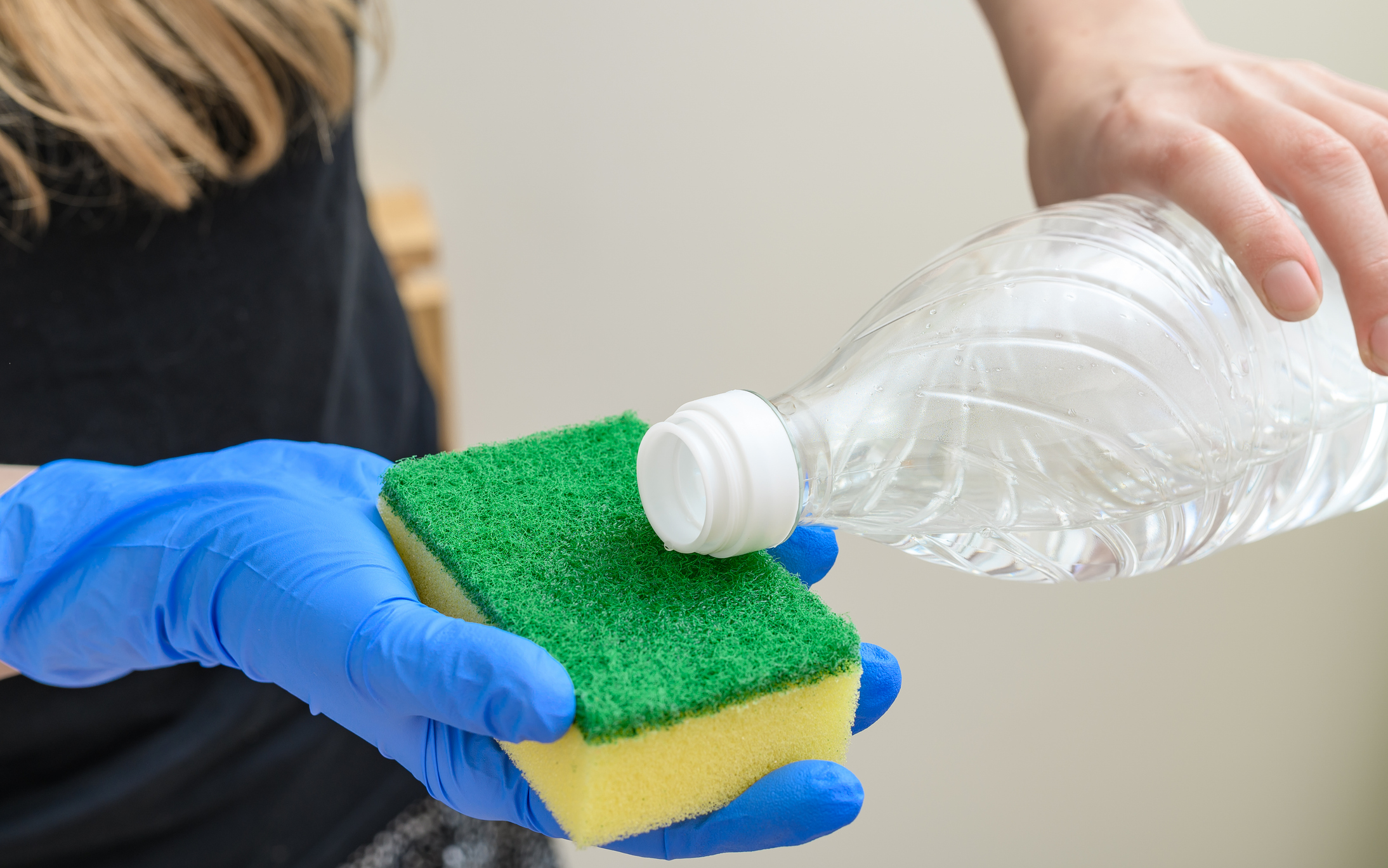
Mildew can usually be cleaned up fairly easily because it grows on wet surfaces and is less harmful but it can cause allergic reactions so you want to get rid of it. If you like using non-toxic solutions for cleaning like we at Maid in America prefer, vinegar will work. Keep a spray bottle of it handy in the shower for the occasional spritz where needed. Bleach works as well, but bleach is a very toxic substance and should never be inhaled or come in contact with your skin!
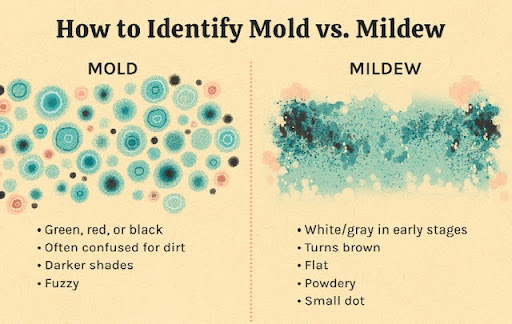
How to identify Mold from Mildew, and determine if you have a problem.
HOW DO YOU KNOW IF YOU HAVE A PROBLEM? Here are the signs to tell if the mold is a more serious problem…
- Your health will tell you there is a serious issue when you are experiencing headaches, dizziness, coughing and respiratory problems. Black mold, stachybotrys chartarum,can cause serious health issues!
- You will see black splotches in wet areas like behind the toilet or under the sink. Spores in mold feed off of the condensation in these areas & can spread rapidly.
- You will smell a musty or earthy type odor, and that sign could be dangerous to your health. The ‘earthy’ odor is likely from spores growing on wood, drywall or insulation.
- Ants may start living in your bathroom. They love moist wood, so watch out for a potential infestation.
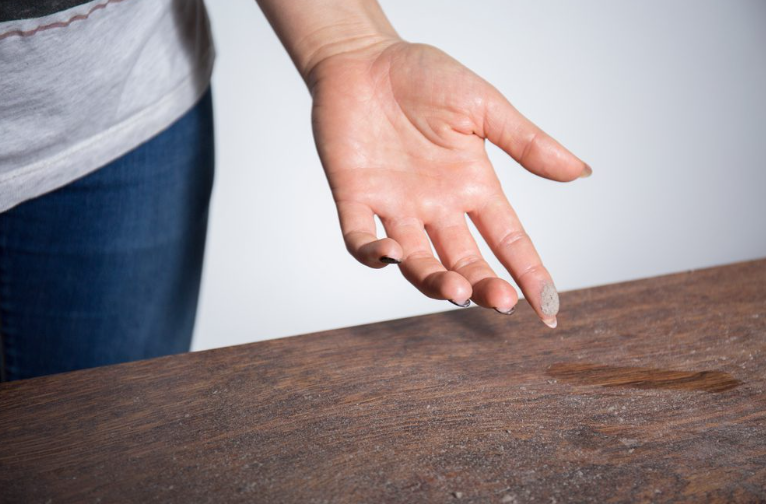
- If you start seeing “dirt-like” particles beware. It may even look slimy.
- Your walls may begin to look discolored or the wallpaper starts to peel or the plaster starts to crumble due to mold growing behind the wall tiles. Gaps in your grout or caulk are also a sign. Unfortunately, this can be a result of tile and grout not being properly sealed.
- The flooring seems ‘spongy’. If this is the case, mold colonies may have grown into the porous, rotting plywood underneath, as it is constantly absorbing the moisture in this area.
HOW TO PREVENT MOLD:
The biggest, most proactive measure you can take towards PREVENTING mold from invading your bathroom is simple. Cut off the water supply by reducing the moisture! Turn on the bathroom exhaust fan while taking a shower to allow for proper ventilation. When you finish your shower, open the door for more ventilation and even add a fan to the room. You can also open a bathroom window or turn on the a/c to improve humidity. Mold loves dark spaces so turn on light during the day for a few hours – use an energy-efficient light.
If you have a mold issue, you may actually need to hire a local mold remediation service. Our 2 favorites are:
PuroClean at https://www.puroclean.com/canton-ga-puroclean-north-metro-atlanta/
All Dry at https://www.myalldry.com/
Get your space TESTED for mold by https://moldplustesting.com/
Get your free cleaning quote today with Maid in America so we can help with the cleaning of your bathroom and other spaces.
https://maidinamericaga.com/quote/ and check out our current specials at https://maidinamericaga.com/promo/
To set up regular house cleaning services in Kennesaw, Cartersville, Canton, Douglasville and more, call Maid In America!